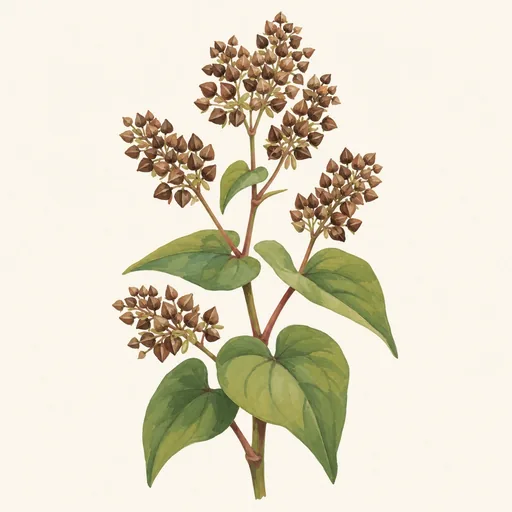
Buckwheat
Fagopyrum esculentum · Polygonaceae
- Sow outdoors1–3 weeks after the last frostApr 17 – May 7
- Space10–15 cm (4–6 in) apart
- Harvest70–90 days after plantingJun 26 – Aug 26
Description
Buckwheat (Fagopyrum esculentum) is a fast-growing, annual flowering plant primarily cultivated for its seeds, which are used as a gluten-free grain alternative and in various culinary dishes. Despite its name, it is not a cereal grain but a member of the polygonaceae family, closely related to rhubarb and sorrel.
Typically reaching heights of 2 to 4 feet, buckwheat features broad, heart-shaped leaves and delicate white to pale pink flowers that bloom throughout the summer. The plant is often praised for its ability to thrive in poor soil conditions, making it an excellent choice for beginner gardeners. It prefers well-drained soils and full sunlight, and it can be sown in spring or late summer, with a quick maturity time of about 10 to 12 weeks.
Buckwheat is highly beneficial for the ecosystem. It attracts beneficial insects and pollinators, making it a common cover crop. Additionally, its deep-root system helps improve soil structure and prevents erosion. Buckwheat's ability to suppress weeds is another advantage, as it grows rapidly and can outcompete many undesirable plants.
In clinical and culinary contexts, buckwheat is valued for its nutritional profile, being rich in protein, fiber, and essential minerals. Buckwheat flour is often used in baking, particularly in recipes for pancakes and noodles, as well as in gluten-free products. Overall, buckwheat serves as a versatile crop for both sustenance and ecological management in gardens.
Growing Conditions
0.6–1.2 m (2–4 ft) tall, 15–30 cm (6–12 in) wide
- Smallest
- Largest
Full sun, 6+ hours
Tolerates part sun
Moderate
Keep evenly moist, not soggy.
Ideal 15–25 °C (59–77 °F)
Survives down to 0 °C (32 °F).
pH 5–7 · acidic to neutral
Photos
Photo credits
Where it Grows
Planting
When to Plant
Buckwheat (Fagopyrum esculentum) is a versatile and fast-growing plant that offers many benefits in the garden, including improving soil health, acting as a cover crop, and attracting beneficial insects. For successful cultivation, timing is crucial. Here’s a guide to help you determine the best time to plant buckwheat.
Ideal Planting Time
-
Growing Season:
- Buckwheat is typically planted in the spring or late summer. Spring planting is best after the last frost when the soil temperature reaches around 55°F (13°C). This usually occurs in late April to early June, depending on your geographic location.
- For a late summer crop, plant buckwheat approximately 6 to 8 weeks before your first expected frost in the fall. This often is in late July to early September. Buckwheat matures quickly, generally within 10 to 12 weeks.
-
Soil Temperature:
- The optimal soil temperature for buckwheat germination is between 60°F to 70°F (15°C to 21°C). Planting too early in cooler soil can lead to poor germination rates.
-
Weather Conditions:
- Buckwheat thrives in warm, moist conditions. Be mindful of your local climate's weather patterns; avoid planting during particularly hot or dry spells, as this can stress the plants and hinder their growth.
Signs of Readiness
-
Frost Dates:
- Refer to local frost date calendars to determine the best timeframe for planting. You want to avoid planting too close to the first expected frost in the fall.
-
Seed Availability:
- Ensure that seeds are fresh and suitable for planting. Buckwheat seeds are generally sown at a depth of 1 to 2 inches (2.5 to 5 cm).
-
Soil Preparation:
- Before planting, prepare the soil by tilling to a fine texture and ensuring proper drainage. A soil pH between 6.0 and 7.0 is ideal for buckwheat.
Special Considerations
- Companion Planting: Buckwheat can be intercropped with other fast-growing plants or used as a cover crop to suppress weeds and improve soil structure.
- Pest Attraction: Planting buckwheat can attract pollinators and beneficial insects, making it a great addition to a diverse garden.
By paying attention to soil temperature, frost dates, and local climatic conditions, you can effectively determine the best time to plant buckwheat, allowing for a successful and bountiful crop. Happy gardening!
How to Plant
Planting buckwheat (Fagopyrum esculentum) is a straightforward process that can greatly benefit your garden. Best sown in late spring to early summer, buckwheat thrives in well-drained soil with a pH range of 5.0 to 7.0. The ideal soil temperature for planting should be around 55°F (13°C) or warmer.
To plant, follow these steps:
-
Site Preparation: Clear the area of weeds and debris. Loosen the soil to a depth of about 12 inches and incorporate organic matter, such as compost, to enhance fertility.
-
Sowing Seeds: Scatter seeds evenly at a rate of 50-100 pounds per acre or about 1-2 ounces per 100 square feet. Seeds should be planted about 1 inch deep and spaced 4 to 6 inches apart. For small gardens, sowing by hand works well.
-
Watering: After planting, gently water the area if the soil is dry. Buckwheat is drought-resistant but appreciates moisture, especially during germination, which typically takes 7-14 days.
-
Maintenance: As buckwheat grows, it usually requires little maintenance, but keep an eye on weeds. Suitable for a cover crop, it can be cut or tilled under when it flowers, enriching the soil with organic matter.
By following these guidelines, you can successfully cultivate buckwheat, which will also attract beneficial pollinators!
Growth Timeline
- Germination 3–7 days
- Growing 70–90 days
- Harvest 1–2 weeks
Planting Calendar
- Sow outdoors: 1–3 weeks after the last frost
- Germination: 3–7 days
- Sow outdoors: Apr 17 – May 7
- Harvest: Jun 26 – Aug 26
Care
Watering
When watering a Buckwheat plant, the key lies in understanding its water needs throughout its growth stages. Initially, after sowing seeds, ensure consistent moisture to promote germination, providing about 1 inch of water per week. Once the plants establish, they become quite drought-tolerant, requiring less frequent watering. However, during flowering and seed development, adequate moisture is crucial to enhance yield and prevent stress, so consider increasing watering to about 1-2 inches per week depending on weather conditions. It's best to water deeply and less frequently, encouraging deep root growth. Monitoring the soil moisture is vital; allow the top inch of soil to dry out between watering sessions. Mulching around the plants can help retain moisture and reduce evaporation. Always water in the early morning or late afternoon to minimize evaporation and prevent fungal diseases.
Pruning
Pruning buckwheat (Fagopyrum esculentum) is less about shaping the plant and more about managing its growth for optimal yield. The best strategy involves a few key steps. First, pruning is typically not required because buckwheat grows quickly and can self-regulate its height. However, if the plants are overcrowded, thin them out by removing some seedlings at the base to improve air circulation and sunlight penetration. This helps reduce disease risk and supports better seed development.
If you’re managing buckwheat for cover cropping, cut it back just before flowering to enhance biomass and nutrient retention. Always use clean, sharp tools to minimize damage and disease transmission. Timing is crucial; prune in the late afternoon or on a cloudy day to reduce stress on the plant. Overall, minimal intervention is preferred to maintain the natural vigor and growth habits of buckwheat.
Weeding
Weeding around buckwheat is essential for maintaining healthy growth and maximizing yield. The best strategy involves a combination of proactive and reactive measures. Start by preparing the soil properly before planting, ensuring that it is free from weeds. This can be done through methods such as tilling or using a stale seedbed technique, where you cultivate the soil and allow weeds to germinate before planting buckwheat.
Once buckwheat is established, regular monitoring is crucial. Hand-pulling is often effective for small patches of weeds, especially before they set seed. If weeds are more stubborn, consider using shallow hoeing, taking care not to disturb the buckwheat roots. Chemical herbicides should generally be avoided, as buckwheat is sensitive to many herbicides. Mulching around the plants can also suppress weed growth and conserve moisture. By being diligent and combining these strategies, you can keep weeds at bay and support your buckwheat's growth.
Mulching
Mulching a Buckwheat plant effectively involves using organic materials that retain moisture, suppress weeds, and improve soil quality as they break down. Begin by preparing a layer of mulch about 2 to 4 inches thick, using options like straw, shredded leaves, or grass clippings. Apply the mulch once the soil has warmed up and the Buckwheat plants have established, usually when they are at least a few inches tall. This timing helps reduce competition from weeds while promoting healthy growth.
Ensure the mulch is spread evenly around the base of the plants, avoiding the stem to prevent rot. Buckwheat is typically a short-term crop, so reapplying mulch may not be necessary throughout its lifecycle. Monitor the mulch layer for decomposition and replenish as needed, particularly if the mulch begins to thin or becomes overly compacted. This strategy supports the plant's growth while enhancing the surrounding soil environment.
Fertilizing
When fertilizing buckwheat, it’s essential to focus on its growth stage and soil conditions. Buckwheat thrives in relatively poor, well-drained soils, so excessive fertilization is usually unnecessary. Before planting, a soil test can help determine nutrient needs. If needed, a light application of a balanced fertilizer or compost can be introduced to improve soil fertility without overwhelming the plant.
During early growth, it's beneficial to use a low-nitrogen fertilizer to promote strong root development and avoid excessive foliage at the expense of flowers. As buckwheat is a short-season crop, applying nutrients in the form of a side-dressing around two weeks after germination can support healthy growth. Additionally, buckwheat can also benefit from its natural ability to fix phosphorus, aiding nutrient cycling in the soil. Generally, maintaining a light fertilization strategy will yield the best results for this fast-growing, beneficial cover crop.
Thinning
- Thin seedlings to prevent overcrowding, allowing for better air circulation and sunlight exposure.
Pest Management
- Monitor for pests such as aphids and beetles. Use organic pesticides or introduce beneficial insects as needed.
Harvesting
- Harvest when the seed heads turn brown and dry. Cut the plants at the base and allow them to dry further if necessary before threshing.
Growing in Containers
Not well suited to growing in pots.
Propagation
From seed
- Wait until frost danger has passed and the soil has warmed.
- Choose a sunny spot and clear away weeds.
- Sow seeds directly about 1 inch (2.5 cm) deep.
- Keep the soil lightly moist until seedlings emerge.
- Thin crowded seedlings if growing buckwheat for grain.
Companion Plants
Good neighbors
- Potatoes: Flowering buckwheat planted in nearby strips attracts beneficial insects that help control potato pests.
- Cabbage: Buckwheat flowers provide nectar for parasitic wasps that attack cabbage caterpillars.
Common Problems
- Brown or crispy leaf edges
- Wilting
- Bleached or scorched patches
- Leaves dropping
Frost damage is an injury caused when plant tissues become cold enough for ice to form or for cells to lose water to…
- Holes in leaves
- Stems chewed or cut through
- Flowers or buds dropping
Birds are a class of animals, not a single pest species. In gardens, their effects depend on the species, season, and…
- White powdery coating
- Yellowing leaves
- Curled or cupped leaves
- Distorted new growth
Powdery mildew is a group of fungal diseases, not a single species. Different fungi infect different hosts, including…
- Powdery mildew
- Aphids
- Root rot from waterlogged soils
Nutrition
Nutritional Benefits
- Buckwheat is high in complex carbohydrates and dietary fiber, providing sustained energy.
- It is a source of plant proteins and contains essential amino acids.
Nutritional Composition (per 100g)
| Nutrient | Amount | % Daily Value |
|---|---|---|
| Calories | 343 kcal | - |
| Protein | 13.3 g | 26% |
| Total Fat | 3.4 g | 5% |
| Saturated Fat | 0.6 g | 3% |
| Carbohydrates | 71.5 g | 24% |
| Dietary Fiber | 10.0 g | 40% |
| Sugars | 0.9 g | - |
| Calcium | 18 mg | 2% |
| Iron | 2.2 mg | 12% |
| Magnesium | 231 mg | 58% |
| Phosphorus | 347 mg | 35% |
| Potassium | 508 mg | 15% |
| Zinc | 2.4 mg | 16% |
| Selenium | 8.7 mcg | 16% |
| Vitamin B1 (Thiamine) | 0.1 mg | 9% |
| Vitamin B2 (Riboflavin) | 0.2 mg | 12% |
| Vitamin B3 (Niacin) | 7.0 mg | 35% |
| Vitamin B6 | 0.2 mg | 12% |
| Folate | 30 mcg | 8% |
| Vitamin E | 0.6 mg | 3% |
Varieties
Buckwheat, known scientifically as Fagopyrum esculentum, is primarily recognized for its grain-like seeds and its importance in various agricultural practices. While it is not a cereal grain in the traditional sense, it is often utilized similarly in cooking and food production. There are several common varieties of buckwheat that growers may choose from, each with distinct characteristics suited for particular climates and uses.
The most widely cultivated variety is the common buckwheat, which is used primarily for grain production. It has a relatively short growing season, making it a favorite among gardeners looking to maximize yields within limited timeframes. Additionally, there is Tartary buckwheat (Fagopyrum tataricum), which is notable for its high antioxidant content and is more tolerant of poor soils and harsher climates. It is primarily grown in regions of Asia and is often used in traditional foods.
Another variety is the bitter buckwheat, which tends to have a higher saponin content, giving it a less palatable taste. While not commonly grown for human consumption, it plays a role in some traditional uses and as a medicinal plant. Additionally, there are cultivar variations of common buckwheat that have been developed for specific traits, such as disease resistance and yield improvement.
Despite their differences, all buckwheat varieties share common attributes, such as fast growth and the ability to improve soil health by attracting beneficial insects and adding organic matter. As such, they are often planted as cover crops and in companion planting setups, making them versatile options for both small-scale gardeners and larger agricultural operations. Understanding the various buckwheat types allows gardeners to select the most appropriate variety for their growing conditions and desired outcomes.
Health Benefits
Buckwheat, a gluten-free seed often mistaken for a grain, offers numerous health and wellness benefits that make it a popular choice among health-conscious individuals. Rich in essential nutrients, including protein, fiber, and antioxidants, buckwheat supports overall health. Its high fiber content aids digestion, helping to regulate bowel movements and prevent constipation. The presence of essential amino acids, particularly lysine, makes it a valuable protein source for vegetarians and vegans.
Additionally, buckwheat is known for its ability to help regulate blood sugar levels, making it beneficial for individuals with diabetes. The low glycemic index of buckwheat ensures a slow release of sugar into the bloodstream, preventing spikes and crashes in energy. Furthermore, the flavonoids present in buckwheat, such as rutin and quercetin, possess anti-inflammatory properties that promote heart health by improving circulation and reducing blood pressure.
This pseudo-grain also contributes to weight management, as its fiber content promotes a feeling of fullness, reducing overall calorie intake. Furthermore, buckwheat is loaded with vitamins and minerals like magnesium, zinc, and B vitamins, supporting energy metabolism and immune function. Overall, incorporating buckwheat into one's diet can lead to a multitude of health benefits, making it a versatile choice for various culinary applications.
Fun Facts
- Buckwheat is not a true grain; it is actually a seed from a plant that is related to rhubarb and sorrel, making it a gluten-free option for those with celiac disease or gluten intolerance.
- The flowers of the buckwheat plant are typically white or pink and are highly attractive to pollinators, particularly bees, making it a beneficial plant for supporting local ecosystems in gardens.
- Buckwheat has a rapid growth cycle, maturing in as little as 10 to 12 weeks, which allows it to be used as an excellent cover crop to improve soil health and prevent erosion.
- It is rich in nutrients, including protein, fiber, and essential minerals like magnesium and manganese, making it a nutritious addition to diets around the world, especially in Asian cuisine.
- Buckwheat is often used as a rotational crop, helping to suppress weeds and improve soil fertility, which can lead to healthier and more productive garden beds when followed by other crops.
Notice an error or have a question about Buckwheat? Contact us