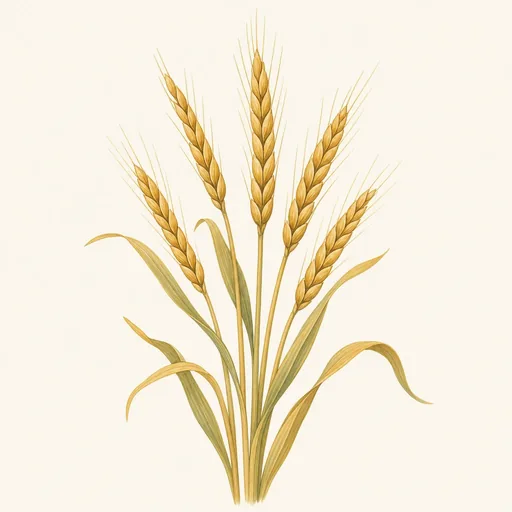
Einkorn
Triticum monococcum · Poaceae
- Sow outdoors2–4 weeks before the last frostMar 13 – Apr 2
- Plant in autumn4–8 weeks before the first autumn frostAug 30 – Oct 3
- Space10–15 cm (4–6 in) apart
- Harvest100–140 days after plantingJun 21 – Sep 10
Description
Einkorn is an ancient wheat grown for its small, golden grains. It was among the first cereals domesticated in the Fertile Crescent and remains a minor crop rather than a major commercial wheat. Cultivated einkorn is an annual grass with slender stems, narrow leaves, and compact, upright seed heads bearing long awns. Each spikelet typically holds a single grain, which gives the plant its name: “einkorn” means “one grain” in German.
Unlike modern bread wheat, einkorn is diploid, with two sets of chromosomes. Its grains are hulled: tough glumes cling to them after threshing, so an additional dehulling step is needed before milling or cooking. The kernels can be ground into flour or cooked whole in soups, porridges, and grain salads. Einkorn flour has a mildly nutty, sweet flavor and behaves differently from standard wheat flour. Its gluten forms a relatively weak dough, so loaves tend to be denser unless recipes are adapted. Einkorn contains gluten and is not safe for people with celiac disease.
The crop grows best in full sun and well-drained soil. It tolerates relatively poor soils and cool conditions and may require fewer inputs than high-yielding modern wheats, though yields are generally lower. Sowing time varies with climate: farmers may plant it in autumn where winters are suitable or in spring in colder areas. Plants are harvested when the seed heads have dried and the grains are mature.
Today einkorn is grown on a modest scale in parts of Europe and western Asia, especially by farmers interested in traditional cereals, regional foods, and agricultural diversity. Its long cultivation history and distinctive grain make it valuable both as a food crop and as genetic material for wheat research.
Growing Conditions
0.6–1.2 m (2–4 ft) tall
- Smallest
- Largest
Full sun, 6+ hours
Moderate
Keep evenly moist, not soggy.
Ideal 15–25 °C (59–77 °F)
Survives down to −29 °C (−20 °F).
pH 6–7.5 · neutral to alkaline
Where it Grows
Planting
When to Plant
Planting time depends on whether you have a winter or spring einkorn variety. Sow winter einkorn in autumn, early enough for seedlings to emerge and establish before the ground freezes—often about four to six weeks beforehand. In mild-winter areas, local wheat-growing schedules are a better guide than a frost date, since the soil may never freeze. Winter varieties need a period of cold to flower and produce grain reliably; planting them in spring may give poor results.
Sow spring einkorn as soon as the soil is workable and has warmed to roughly 40°F (4°C). Early planting gives it time to grow and fill its grain before summer heat and drought arrive. Avoid sowing into waterlogged soil, which can rot seed or hinder emergence. If the seed packet does not identify the variety, ask the supplier whether it needs winter chilling before choosing a planting date.
How to Plant
Choose a sunny spot with well-drained soil. Remove weeds and loosen the top few inches of soil, then rake the surface reasonably level. Einkorn tolerates relatively low-fertility ground; avoid heavy applications of nitrogen fertilizer, which can encourage weak stems and lodging. If you are growing for grain, allow enough space for a small stand rather than scattering a few isolated plants.
Use viable seed sold for planting, ideally a variety suited to your region. Einkorn is often sold with the hull still around each grain; these hulled units can be planted as supplied. Do not assume grain sold for eating will germinate, particularly if it has been heat-treated. Make shallow furrows about 6–8 inches (15–20 cm) apart, distribute the seed evenly, and cover it with about 1–2 inches (2.5–5 cm) of soil. Firm the soil gently so seed makes good contact, then water if the ground is dry. Keep the seedbed moist, not soggy, until seedlings emerge. You can also broadcast seed evenly over a prepared bed, then rake it in and firm the soil, but rows make weeding easier. Thin or weed crowded patches as needed while plants are young.
Growth Timeline
- Germination 5–10 days
- Growing 100–140 days
- Harvest 1–2 weeks
Planting Calendar
- Sow outdoors: 2–4 weeks before the last frost
- Autumn planting: 4–8 weeks before the first autumn frost
- Germination: 5–10 days
- Sow outdoors: Mar 13 – Apr 2
- Autumn planting: Aug 30 – Oct 3
- Harvest: Jun 21 – Sep 10
Care
Care Calendar
- Feed · Mar 27 – Apr 23
For spring sowing, add a little compost before planting instead of feeding in autumn. - Feed · Sep 13 – Oct 17
For autumn sowing, work a little compost into the soil before planting. - Protect · Jun 5 – Aug 6
Net ripening heads if birds are taking the grain.
Watering
Einkorn is a cool-season grain that usually needs less irrigation than many garden vegetables. Keep the seedbed moist, but not waterlogged, until seedlings are established. After that, water according to rainfall and soil conditions rather than on a fixed schedule. During a prolonged dry spell, give the crop a thorough watering that moistens the root zone, then let the soil surface dry before watering again. Moisture is especially useful as stems elongate, heads emerge, and grain begins to fill; severe drought at these stages can reduce yield. Established plants can tolerate some dryness, so avoid keeping the ground constantly wet. If possible, water at soil level or early in the day so foliage dries quickly. Reduce irrigation as the heads mature and turn golden. Wet soil late in the season can delay drying and make harvesting more difficult.
Weeding
Start with a clean seedbed: remove perennial weeds and prepare the soil before sowing. Young einkorn seedlings compete poorly with fast-growing weeds, so check the plot regularly during establishment and early tillering, when plants begin producing additional shoots. Pull weeds by hand or use a shallow hoe between rows while the crop is small. Work carefully to avoid disturbing einkorn’s roots, and remove weeds before they set seed. Once the grain forms a dense stand, its canopy helps shade out later weeds, and working between plants becomes less practical. Keep paths and plot edges clear so weed seeds do not spread into the crop. Where grass weeds are common, rotate einkorn with broadleaf crops; grasses growing among grain are particularly difficult to separate. Avoid herbicides unless a product is specifically labeled for the crop and your location.
Mulching
Mulch is usually unnecessary within a densely sown einkorn stand. A layer thick enough to suppress weeds could also obstruct emerging grain seedlings, while damp organic material around young plants may shelter slugs. Instead, rely on a well-prepared seedbed, timely weeding, and the crop’s own canopy for weed control. In a small garden plot, you can mulch paths or the spaces between widely separated rows with clean straw or another weed-free material. Keep it off the seeded row until plants have emerged, and do not pile it against the stems. Path mulch can reduce mud and help prevent new weeds from establishing without interfering with the grain. If you use straw, check that it is free of ripe weed seeds and unwanted grain heads, which could germinate and complicate harvest.
Fertilizing
Base fertilizer decisions on a soil test if one is available. Einkorn can grow in relatively low-fertility soil and generally needs less added nitrogen than a high-yielding modern wheat crop. Before sowing, incorporate well-finished compost if the soil is poor, or apply nutrients recommended by the test. Avoid heavy applications of manure or nitrogen fertilizer: lush, weak stems are more likely to lodge, or fall over, before harvest. If established plants look pale and growth is poor, check for dry soil, waterlogging, and other causes before adding fertilizer. Any needed nitrogen is most useful early in growth, not as the grain approaches maturity. Phosphorus, potassium, and lime should also be guided by soil conditions rather than applied routinely. Keep fresh manure off a crop grown for edible grain, and follow local guidance for manure use.
Pest Management
Inspect the crop regularly, especially from seedling emergence through grain filling. Aphids may gather on leaves and stems; birds and rodents may feed on ripening heads. Small plots can be protected with securely fixed, wildlife-safe netting before grain becomes attractive, but check it often so animals do not become trapped. Slugs can damage seedlings in damp conditions, particularly where plant debris provides cover. Good drainage and a tidy seedbed help reduce this risk. Einkorn can also develop cereal diseases, including rusts and smuts. Use healthy seed from a reputable source, allow air to move through the stand, and rotate with non-cereal crops rather than growing grain in the same place every year. Remove heavily diseased plants where practical. Identify a pest or disease before treating it; use only controls labeled for edible grain crops in your area.
Harvesting
Harvest when most stems and heads have turned golden and the grains inside feel hard rather than soft when pressed with a fingernail. Choose a dry day after dew has evaporated. For a small plot, cut the stalks with a sickle, shears, or another sharp tool, then tie them into loose bundles or spread them in a dry, well-ventilated place to finish drying. Protect the crop from rain, birds, and rodents. When fully dry, thresh the heads to release the grain and winnow away loose chaff. Einkorn is a hulled wheat: threshing does not necessarily remove its tightly attached hulls. Dehull the grain with suitable equipment before milling or cooking, taking care not to crush the kernels. Store thoroughly dried grain in clean, pest-resistant containers in a cool, dry place; moisture in stored grain encourages mold.
Growing in Containers
Grows well in a pot of at least 20 litres (5.3 US gallons), with drainage holes. Best kept outdoors.
Propagation
From seed
- Choose viable einkorn seed suited to autumn or spring sowing in your area.
- Prepare a weed-free bed in well-drained soil.
- Sow the seed about 2–3 cm deep in rows.
- Water gently and keep the soil moist until seedlings emerge.
Common Problems
- Yellowing leaves
- Sticky residue on leaves
- Black sooty coating
- Curled or cupped leaves
Aphids are small, soft-bodied insects that feed by piercing plants and drawing out sap. The group includes many…
- Holes in leaves
- Stems chewed or cut through
- Flowers or buds dropping
Birds are a class of animals, not a single pest species. In gardens, their effects depend on the species, season, and…
- Orange or rust-colored spots
- Spots on leaves
- Yellowing leaves
- Leaves dropping
Rust is a group of plant diseases caused by fungi in the order Pucciniales, not a single species. Different rust fungi…
- White powdery coating
- Yellowing leaves
- Curled or cupped leaves
- Distorted new growth
Powdery mildew is a group of fungal diseases, not a single species. Different fungi infect different hosts, including…
- Weeds: Slow early growth can leave young einkorn vulnerable to competition.
- Lodging: Tall stems may bend or fall in wind or heavy rain, especially with excessive nitrogen fertilizer.
- Fungal diseases: Rusts, powdery mildew, and smuts can affect einkorn, although susceptibility varies by variety and growing conditions.
- Aphids and birds: Aphids feed on growing plants, while birds may eat ripening grain.
- Difficult processing: The grain remains enclosed in a tough hull after threshing and must be dehulled before use.
Varieties
- Monlis: An Italian einkorn cultivar used in food and agricultural research.
- Hammurabi: A named cultivated einkorn variety grown for grain.
Health Benefits
Einkorn is used primarily as a food grain, commonly milled into flour for bread, pasta, and other baked goods. As a whole grain, it provides dietary fiber and nutrients such as protein, iron, zinc, and magnesium. The amounts vary with the variety, soil, and processing. Keeping the bran and germ in the flour generally preserves more fiber and minerals than refining it.
Its fiber can support normal digestion, and using whole-grain einkorn in place of refined grains can be part of a balanced eating pattern. Einkorn also contains carotenoid pigments, including lutein, but its presence in the grain does not establish that eating einkorn prevents eye disease. Some people choose einkorn for its flavor or because they find foods made from it easier to eat; claims that it is generally healthier or more digestible than modern wheat are not well established.
Einkorn contains gluten and is not safe for people with celiac disease. People with wheat allergy should also avoid it unless advised otherwise by a clinician. It should not be treated as a remedy for gluten intolerance or any other medical condition. Its most dependable wellness role is as one possible whole-grain food in a varied diet.
Fun Facts
- Einkorn was among the earliest grains domesticated in the Fertile Crescent, roughly 10,000 years ago.
- Its name comes from the German for “one grain,” referring to the usual single grain in each spikelet.
- Einkorn is diploid, with 14 chromosomes; common bread wheat has 42.
- Its grains retain their hulls at harvest, unlike those of most modern bread wheat.
- Cultivated einkorn is known botanically as Triticum monococcum.
Notice an error or have a question about Einkorn? Contact us