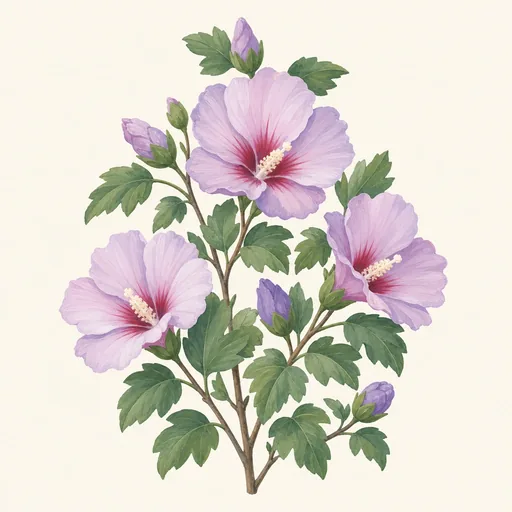
Rose of Sharon
Hibiscus syriacus · Malvaceae
- Plant outFrom the last frost until 4 weeks afterApr 10 – May 14
- Plant in autumn6–8 weeks before the first autumn frostAug 30 – Sep 19
- Space1.8–3 m (6–10 ft) apart
Description
The Rose of Sharon (Hibiscus syriacus) is a deciduous flowering shrub belonging to the Malvaceae family. Originating from East Asia, it is widely popular in gardens and landscapes due to its hardiness and vibrant blooms. Typically, the plant can reach heights of 8 to 12 feet with a similar spread, making it an excellent choice for hedges or specimen plantings.
One of the most attractive features of the Rose of Sharon is its large, showy flowers that bloom from summer into early fall. The flowers can be found in a variety of colors, including white, pink, blue, and purple, often with contrasting centers. Each flower can measure up to 3–4 inches in diameter, attracting bees and butterflies, which makes it beneficial for pollinator gardens.
The foliage consists of green, lobed leaves that provide a lush backdrop for the flowers. Rose of Sharon is known for its adaptability, thriving in a variety of soil types, though it prefers well-drained soil. It can tolerate drought and is also resistant to many pests and diseases, making it a low-maintenance option for gardeners.
Pruning is recommended in late winter or early spring to maintain shape and encourage more robust flowering. While it is often grown as a single plant, it can also be cultivated in groups for a more dramatic effect. Overall, the Rose of Sharon is an excellent choice for those looking to add vibrant color to their garden with minimal upkeep.
Growing Conditions
2.4–3.6 m (8–12 ft) tall, 1.8–3 m (6–10 ft) wide
- Smallest
- Largest
Full sun, 4+ hours
Tolerates part sun
Moderate
Keep evenly moist, not soggy.
Ideal 18–30 °C (64–86 °F)
Survives down to −29 °C (−20 °F).
pH 5.5–7.5 · neutral
Photos
Photo credits
Where it Grows
Planting
When to Plant
Understanding Rose of Sharon (Hibiscus syriacus)
The Rose of Sharon, known scientifically as Hibiscus syriacus, is a hardy deciduous shrub that blooms in late summer. Its stunning blossoms can add dramatic color to your garden and attract pollinators. Knowing the right time to plant is crucial for ensuring its health and vibrancy.
Optimal Planting Season
The best time to plant a Rose of Sharon is during the early spring or the fall. Here’s a closer look at each season:
-
Spring Planting: Early spring, after the last frost, is the most common time for plantings. This gives the plant several months to establish itself before the heat of summer. Ideally, aim to plant when the soil temperature reaches around 60°F (15°C).
-
Fall Planting: Late summer to early fall can also be a suitable time for planting, particularly in warmer climates. This allows the plant to root firmly before the onset of winter. Be mindful to plant at least 6 weeks before the first predicted frost to allow adequate time for establishment.
Soil Temperature and Weather Conditions
It's important to consider soil temperature and climatic conditions when deciding to plant. Use a soil thermometer to check that the soil has warmed sufficiently in the spring. If you’re planting in the fall, make sure that the weather remains mild enough for the plant to acclimate. Avoid planting during extreme weather conditions, such as when there is prolonged heat or a significant frost.
Observing Local Conditions
Different regions may have varied planting times:
- In warmer USDA Hardiness Zones (7-9), spring planting season can stretch longer.
- In cooler zones (4-6), it’s better to lean towards spring planting.
It also helps to observe local gardening patterns—consult local gardeners, nurseries, or gardening groups for specific planting times tailored to your area.
Conclusion
In summary, the ideal time to plant Rose of Sharon is in early spring after the danger of frost has passed, or in the fall while ensuring ample time for rooting before winter. By paying attention to local weather conditions and soil temperature, you can ensure that your Rose of Sharon thrives beautifully in your garden!
How to Plant
Planting a Rose of Sharon (Hibiscus syriacus)
Rose of Sharon is a hardy, deciduous shrub that blooms profusely in summer, making it a popular choice among gardeners. To successfully plant this charming shrub, follow these essential steps.
-
Choosing the Right Time: The best time to plant a Rose of Sharon is in the spring or fall when the temperatures are moderate.
-
Selecting a Location: Choose a sunny spot that receives at least 6 hours of direct sunlight daily. Well-drained soil is crucial; Rose of Sharon thrives in loamy or sandy soils.
-
Preparing the Soil: Before planting, amend the soil with organic matter, such as compost, to improve its nutrient content and drainage.
-
Digging the Hole: Prepare a planting hole that is twice as wide and as deep as the root ball of the plant. This width encourages healthy root growth.
-
Planting the Shrub: Carefully remove the Rose of Sharon from its container. Place it in the center of the hole, ensuring that the top of the root ball is level with the ground surface. Fill in with soil, gently packing it down to eliminate air pockets.
-
Watering: Water generously after planting to help settle the soil. During the first growing season, keep the soil consistently moist.
With proper care, your Rose of Sharon will flourish, providing vibrant blooms and attracting pollinators to your garden.
Planting Calendar
- Plant outdoors: from the last frost until 4 weeks after
- Autumn planting: 6–8 weeks before the first autumn frost
- Plant out: Apr 10 – May 14
- Autumn planting: Aug 30 – Sep 19
Care
Care Calendar
- Prune · Feb 27 – Apr 2
Remove dead wood and shorten or thin branches before new growth begins. - Mulch · Apr 24 – May 28
Apply a 2–3-inch layer around the base, keeping it clear of the stems. - Deadhead · Aug 30 – Oct 31
Remove developing seedpods from fertile cultivars to limit self-sowing.
Watering
Watering a Rose of Sharon (Hibiscus syriacus) effectively is crucial for its health and blooming capability. The best strategy involves a deep watering approach. This means providing the plant with a slow, thorough soak, allowing the water to penetrate the root zone by applying it at the base of the plant rather than overhead.
Water the plant deeply once or twice a week, depending on weather conditions; during hot or dry spells, you may need to increase frequency. It's important to ensure the soil is well-draining to prevent root rot. Monitoring soil moisture can help; when the top inch of soil feels dry, it's time to water. Mulching around the base can help retain moisture and regulate temperature. Finally, avoid watering in the late afternoon or evening to reduce the risk of fungal diseases.
Pruning
Pruning a Rose of Sharon (Hibiscus syriacus) is essential for maintaining its shape and promoting better flowering. The best strategy is to prune during late winter or early spring while the plant is still dormant, typically before new growth begins. Start by removing any dead, damaged, or diseased branches to encourage healthier growth. Next, thin out the interior branches to improve air circulation and sunlight penetration, which helps reduce pest and disease risks.
Cut back the previous year’s growth by approximately one-third to one-half to promote fuller, bushier growth and increase flowering potential. Always make cuts just above a leaf node or bud to encourage branching. Shape the plant as desired, keeping in mind that Rose of Sharon can tolerate heavy pruning. Remember to use sharp, clean tools to prevent injury to the plant and reduce the spread of disease. After pruning, consider applying mulch and a balanced fertilizer to support new growth.
Weeding
Weeding around a Rose of Sharon (Hibiscus syriacus) is essential for promoting its health and vitality. The best strategy involves several steps:
-
Timing: Weed during the growing season when the soil is moist, making it easier to pull out unwanted plants, including their roots. Early morning or late afternoon is ideal to avoid the heat.
-
Manual Removal: Use hand tools or your fingers to remove weeds, ensuring you pull them out from the roots to prevent regrowth. This method is especially effective around young Rose of Sharon plants.
-
Mulching: Apply organic mulch, such as wood chips or bark, around the base of the plant. This not only suppresses weed growth but also retains soil moisture and improves soil quality as it decomposes.
-
Routine Maintenance: Regularly inspect the area around the Rose of Sharon for any new weed growth. Quick action can prevent weeds from competing for nutrients and water.
By implementing these techniques, you can keep your Rose of Sharon thriving and reduce competition from weeds.
Mulching
Mulching a Rose of Sharon (Hibiscus syriacus) is essential for promoting healthy growth and conserving moisture. The best strategy involves several key steps:
-
Timing: Apply mulch in early spring after the soil warms up, or late fall to protect the roots during winter.
-
Material: Use organic materials like shredded bark, wood chips, or straw. These break down over time, enriching the soil.
-
Depth: Spread the mulch evenly to a depth of 2-3 inches around the base of the plant, extending out to the drip line. Avoid piling mulch against the trunk to prevent rot.
-
Maintenance: Check the mulch level periodically and replenish as needed, especially after heavy rainfall or wind, to maintain adequate coverage.
Effective mulching will help regulate soil temperature, suppress weeds, and provide nutrients, making your Rose of Sharon thrive throughout its growing season.
Fertilizing
Fertilizing a Rose of Sharon (Hibiscus syriacus) is essential for promoting vibrant blooms and healthy growth. The best strategy involves a few key steps:
-
Timing: Apply fertilizer in early spring, just as new growth begins, and again in mid-summer for a boost during the flowering period. This timing helps meet the plant's nutrient demands when it is actively growing.
-
Choosing Fertilizer: Use a balanced, slow-release fertilizer with an N-P-K ratio around 10-10-10 or 10-20-20. This ensures that the plant receives essential nutrients like nitrogen for foliage growth, phosphorus for blooms, and potassium for overall health.
-
Application: Follow package instructions for application rates. Generally, spread the fertilizer evenly around the base of the plant, avoiding direct contact with stems, and water thoroughly after application to help nutrients penetrate the soil.
-
Soil Testing: Consider testing soil pH and nutrient levels before fertilizing. Roses of Sharon thrive in slightly acidic to neutral soil (pH 6.0-7.0), and amendments may be needed based on test results.
By implementing this fertilization strategy, your Rose of Sharon will flourish, showcasing its beautiful blossoms throughout the growing season.
Growing in Containers
Grows well in a pot of at least 60 litres (16 US gallons), with drainage holes. Best kept outdoors.
Propagation
From seed
- Collect dry seedpods in autumn and remove the seeds.
- Sow seeds about ¼ inch deep in spring.
- Keep the mix lightly moist until seedlings emerge.
- Transplant seedlings once they are sturdy enough to handle.
From cuttings
- Take 4–6-inch cuttings from healthy, nonflowering new growth in early summer.
- Remove the leaves from the lower half of each cutting.
- Insert the cuttings into moist, well-draining propagation mix.
- Keep them humid in bright, indirect light.
- Pot them up after roots develop.
Common Problems
- Yellowing leaves
- Sticky residue on leaves
- Black sooty coating
- Curled or cupped leaves
Aphids are small, soft-bodied insects that feed by piercing plants and drawing out sap. The group includes many…
- Holes in leaves
- Insects visible on the plant
- Wilting
The Japanese beetle is an introduced scarab beetle that feeds on many garden plants, including roses, grapes, beans…
- Yellowing leaves
- Sticky residue on leaves
- Black sooty coating
- Curled or cupped leaves
Whiteflies are a family of tiny, sap-feeding insects that infest vegetables, ornamentals, and greenhouse plants…
- Pale speckles or stippling
- Yellowing leaves
- Brown or crispy leaf edges
- Fine webbing
Spider mites are tiny, plant-feeding arachnids in the family Tetranychidae, not insects. Several species attack garden…
- Spots on leaves
- Yellowing leaves
- Leaves dropping
Fungal leaf spot is a general name for diseases caused by many different fungi, not a single species. These fungi…
Varieties
Its large flowers have a soft blue-violet color and a tuft of small central petals.
- violet-blue blooms
- lacy centers
It bears lavender flowers with extra petals clustered at their centers.
- lavender blooms
- lacy centers
Its upright, narrow shape suits spaces where a broad shrub would not fit.
- narrow habit
- purple-pink blooms
Cream-edged leaves add interest before its pink flowers appear.
- variegated foliage
- double pink blooms
- little to no seed
It produces large, single white flowers and sets very few seeds.
- white blooms
- little to no seed
Its large pink flowers have a conspicuous dark red eye.
- pink blooms
- red centers
Its single blue-violet flowers have a dark reddish center.
- blue-violet blooms
- red centers
More about varieties
Common Varieties of the Rose of Sharon (Hibiscus syriacus)
The Rose of Sharon, known scientifically as Hibiscus syriacus, is a deciduous shrub that is beloved for its showy flowers and ability to thrive in various conditions. This plant is favored by gardeners for its low maintenance requirements and extended blooming season. Below are some of the common varieties of the Rose of Sharon, each offering unique characteristics:
-
'Blue Satin'
- Description: This variety features striking blue flowers with a prominent red center, creating a vibrant contrast. It is known for its upright growth habit and bushy foliage.
- Height: Typically reaches 8 to 12 feet.
- Bloom Time: Blooms from summer through fall.
-
'White Pillar'
- Description: Featuring pure white blossoms with a subtle throat, 'White Pillar' is appreciated for its compact and columnar growth, making it suitable for smaller gardens or as a focal point.
- Height: Generally grows to about 8 to 10 feet.
- Bloom Time: Flowers appear in mid-summer and last into the fall.
-
'Lavender Chiffon'
- Description: This variety showcases beautiful lavender-colored blooms with a delicate double structure. The soft pastel shade adds elegance to any garden setting.
- Height: Grows to approximately 8 to 10 feet tall.
- Bloom Time: Starts blooming in late summer and continues into early fall.
-
'Diana'
- Description: 'Diana' is known for its large, pure white flowers, often featuring a subtle touch of pink at the center. Its full, lush foliage serves as a backdrop for the eye-catching flowers.
- Height: Can reach 8 to 12 feet.
- Bloom Time: Blooms from late summer until early fall.
-
'Sugar Tip'
- Description: A unique variety, 'Sugar Tip' features striking variegated leaves with creamy white margins. The lavender flowers provide a stunning contrast to the foliage.
- Height: Generally grows to about 5 to 7 feet tall.
- Bloom Time: Blooms late summer through fall.
-
'Sunny Side Up'
- Description: Noted for its cheerful yellow flowers with dark red centers, 'Sunny Side Up' brings a burst of color to gardens. Its compact growth makes it suitable for borders.
- Height: Reaches about 4 to 6 feet tall.
- Bloom Time: Flowers in late summer.
-
'Red Heart'
- Description: As the name suggests, 'Red Heart' features deep pink flowers with a dark red eye, creating a striking appearance. This variety has a bushy growth habit.
- Height: Typically grows to 10 to 12 feet.
- Bloom Time: Blooms from midsummer into early autumn.
When selecting a variety of Rose of Sharon for your garden, consider the mature size, flower color, and overall growth habit to find the best fit for your landscape. With proper care, these versatile shrubs can thrive, providing beauty and interest throughout the growing season.
Health Benefits
The Rose of Sharon, scientifically known as Hibiscus syriacus, is not only celebrated for its ornamental beauty but also carries several health and wellness applications. Traditionally, various parts of the plant have been used in folk medicine, primarily in Asian cultures.
One of the most notable applications is its use for respiratory health. The leaves and flowers are often brewed in teas, which are believed to help soothe coughs and support overall lung function. The plant's anti-inflammatory properties may contribute to alleviating symptoms of bronchitis or other respiratory conditions.
Additionally, the Rose of Sharon is rich in antioxidants, particularly flavonoids and phenolic compounds, which can help combat oxidative stress and inflammation in the body. These compounds are linked to improved heart health and may aid in lowering blood pressure.
Moreover, the plant's fibrous root has been used in traditional remedies to treat digestive issues, promoting a healthy gut. While scientific evidence is still emerging, incorporating the Rose of Sharon into herbal preparations may offer a variety of wellness benefits, making it a valuable addition to garden spaces not only for aesthetics but also for potential health applications.
Fun Facts
-
Diverse Colors: The Rose of Sharon produces blooms in a wide range of colors, including white, pink, lavender, and purple, which can add vibrant highlights to gardens from late summer to fall.
-
Attracts Pollinators: This plant is a favorite among pollinators, especially bees and butterflies, making it an excellent choice for a pollinator-friendly garden.
-
Hardy Nature: Rose of Sharon is known for its toughness and adaptability, thriving in a variety of soil types, from sandy to clay, and tolerating drought conditions once established.
-
Fast-Growing Shrub: This deciduous shrub can grow quickly, reaching heights of 8 to 12 feet with a spread of 3 to 10 feet, making it ideal for creating privacy screens or hedges in landscapes.
-
Cultural Significance: In various cultures, the Rose of Sharon holds symbolic meanings, including beauty and love, and it is referenced in literature and religious texts, further enhancing its allure in gardens around the world.
Notice an error or have a question about Rose of Sharon? Contact us