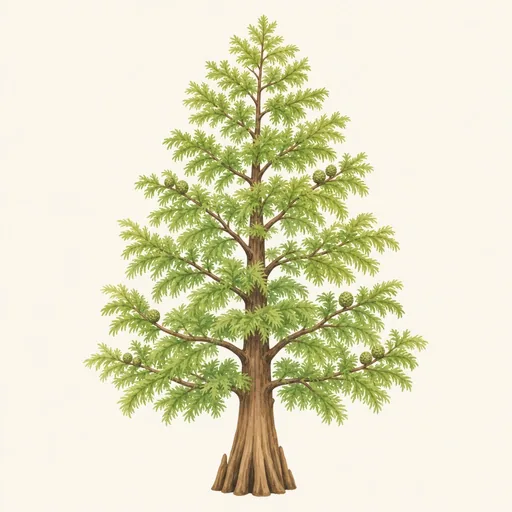
Bald Cypress
Taxodium distichum · Cupressaceae
- Plant outFrom 4 weeks before the last frost until the last frostMar 13 – Apr 16
- Plant in autumn6–8 weeks before the first autumn frostAug 30 – Sep 19
- Space6–12 m (20–39 ft) apart
Description
The Bald Cypress (Taxodium distichum) is a remarkable deciduous conifer native to the southeastern United States, thriving in wetland areas such as swamps, riverbanks, and estuaries. Known for its unique ability to tolerate both waterlogged and dry conditions, this tree can grow up to 70 feet tall and has a broad, pyramidal crown that provides excellent shade. The bark is a distinctive reddish-brown, fibrous, and deeply furrowed, contributing to its rugged appearance.
One defining feature of the Bald Cypress is its "knees," which are woody projections that emerge from the root system, often seen above water. The exact purpose of these knees is still debated, with some theories suggesting they help with aeration and stability in saturated soils.
In terms of foliage, the Bald Cypress has soft, needle-like leaves that are vibrant green in spring and turn a warm russet-orange in the fall before dropping in winter. This deciduous trait sets it apart from many other conifers, which retain their needles year-round.
As an ornamental tree, the Bald Cypress is valued for its adaptability, impressive size, and aesthetic appeal in landscape design. It can be grown in various settings, from parks to residential gardens. Its ability to thrive in wet soils makes it an excellent choice for rain gardens or areas prone to flooding. Overall, the Bald Cypress is a resilient and versatile tree, perfect for those interested in adding a majestic, low-maintenance plant to their garden.
Growing Conditions
15–30 m (49–98 ft) tall, 6–12 m (20–39 ft) wide
- Smallest
- Largest
Full sun, 6+ hours
Tolerates part sun
Moderate
Keep evenly moist, not soggy.
Ideal 18–30 °C (64–86 °F)
Survives down to −34 °C (−29 °F).
acidic to neutral
Photos
Photo credits
Where it Grows
Planting
When to Plant
The Bald Cypress is a unique and attractive tree native to the wetlands of the southeastern United States. It is well-known for its adaptability to various soil types and water conditions, making it a favorite among gardeners and landscapers alike. Knowing when to plant a Bald Cypress is crucial for ensuring its successful establishment.
Ideal Planting Time
When to Plant:
- The best time to plant a Bald Cypress is during the early spring or fall. This timing allows the tree to establish its roots before facing extreme temperature fluctuations—whether hot summers or cold winters.
Spring Planting:
- In spring, aim to plant after the last frost date for your area. This ensures that the new shoots can grow without being damaged by late frosts. The soil should be warm enough to encourage root growth, typically when temperatures reach above 50°F (10°C).
Fall Planting:
- Fall planting can be done a few weeks before the first frost date. This allows the tree to establish roots while the soil is still warm, giving it a good chance of thriving when spring arrives. Ensure there is enough time for rooting before the ground freezes.
Site Preparation
Choosing the Right Location:
- Bald Cypress trees thrive in full sun but can tolerate partial shade. Select a planting site that receives at least six hours of sunlight each day.
- These trees prefer moist, well-drained soil; however, they can also grow in wetter conditions. If you’re planting in an area that floods occasionally or has a high water table, the Bald Cypress will happily adapt.
Soil Conditions:
- While they are tolerant of a variety of soil types, ensure that the planting site has good drainage. Heavy clay soils can be amended with organic matter to improve drainage.
By considering the right time for planting and ensuring appropriate environmental conditions, you can successfully grow a Bald Cypress that will enhance your landscape for years to come.
How to Plant
Planting a Bald Cypress (Taxodium distichum), a majestic tree celebrated for its adaptability and unique aesthetics, requires careful consideration for optimal growth.
Site Selection: Choose a location with adequate space for the tree's broad canopy, ideally in full sun to partial shade. Bald Cypress thrive in moist, well-drained soils but can tolerate a variety of conditions, including wetland areas.
Timing: The best time to plant is in early spring or fall, allowing the roots to establish before the heat of summer or the frost of winter sets in.
Preparation: Dig a hole twice the width and the same depth as the root ball. Loosen the soil around the hole to encourage root penetration.
Planting: Remove the tree from its container and gently loosen any tightly bound roots. Place the tree in the center of the hole, ensuring that the flare (where the trunk meets the roots) is level with or slightly above the soil surface. Fill in the hole with native soil, avoiding the use of fertilizers at this stage.
Watering: Water thoroughly after planting, keeping the soil consistently moist for the first few months to help establish the roots. Mulching can also help retain soil moisture and suppress weeds.
With proper care, your Bald Cypress will thrive, adding beauty to your landscape for years to come.
Planting Calendar
- Plant outdoors: from 4 weeks before the last frost until the last frost
- Autumn planting: 6–8 weeks before the first autumn frost
- Plant out: Mar 13 – Apr 16
- Autumn planting: Aug 30 – Sep 19
Care
Care Calendar
- Prune · Feb 13 – Apr 2
Remove dead or damaged branches while the tree is dormant. - Mulch · Mar 27 – May 7
Spread 2–3 inches of mulch over the root area, keeping it clear of the trunk.
Watering
Bald Cypress (Taxodium distichum) prefers moist, well-drained soils but can tolerate a range of conditions, including periodic flooding. When establishing a Bald Cypress, the best watering strategy involves deep watering. During the first growing season, provide the tree with 1 to 2 inches of water per week, either through rainfall or supplemental irrigation, focusing on saturating the root zone. This helps encourage deep root development.
As the tree matures, reduce watering frequency, especially if planted in a suitable, moisture-retaining site. Monitor the tree’s health—yellowing leaves may indicate overwatering, while brown, crispy foliage often signals drought stress. In particularly dry spells, a monthly deep watering is beneficial. Mulching around the base can help retain moisture and reduce competition from weeds. Overall, maintain a balance between moisture and drainage to ensure a healthy, thriving Bald Cypress.
Pruning
Pruning a Bald Cypress (Taxodium distichum) is best done during late winter to early spring before new growth begins. This timing helps to minimize stress on the tree and reduces the risk of disease entering open wounds. Start by removing any dead, damaged, or diseased branches to promote overall health. Ensure to make clean cuts, ideally at a branch junction, to encourage proper healing.
Avoid heavy pruning of mature Bald Cypress trees; instead, aim for light maintenance pruning. This includes thinning out crowded areas to improve air circulation and light penetration, as well as shaping the tree gently to maintain its natural form. If significant size reduction is necessary, it's advisable to do so gradually over several years rather than all at once, which can shock the tree. Regularly assess the tree's condition to decide on additional pruning needs.
Weeding
Weeding around a Bald Cypress (Taxodium distichum) is essential for its health and growth, especially as this tree is typically found in moist, swampy areas. A strategic approach involves several key steps:
-
Timing: Weeding is best done during early spring or late summer when many weeds are actively growing, making them easier to identify and remove.
-
Hand Removal: For precision, pulling weeds by hand or using a hoe can be effective, ensuring that the roots are completely removed to prevent regrowth.
-
Mulching: After weeding, apply a layer of organic mulch, such as wood chips or bark, about 2-3 inches deep around the base of the Bald Cypress. This helps suppress weeds, retain moisture, and improve soil health.
-
Regular Maintenance: Regular checks every few weeks will help keep the area around your Bald Cypress clear of weeds, promoting optimal growth and health for the tree.
Mulching
Mulching is an essential part of caring for Bald Cypress (Taxodium distichum), helping to retain moisture, suppress weeds, and regulate soil temperature. The best strategy involves the following steps:
-
Select the Right Mulch: Organic materials such as shredded bark, wood chips, or straw are excellent choices. They break down over time, enriching the soil.
-
Timing: Apply mulch in early spring as new growth begins, or in late fall after the first frost, allowing time for the mulch to settle before winter.
-
Depth: Spread the mulch to a depth of 2-4 inches, ensuring it covers a circular area extending 2-3 feet around the base of the tree. Avoid excessive layering near the trunk to prevent moisture retention and potential rot.
-
Replenishment: Monitor the mulch layer and replenish as necessary, especially in the summer months when evaporation rates are higher.
By following these guidelines, you can effectively support the health and growth of your Bald Cypress.
Fertilizing
Fertilizing Bald Cypress (Taxodium distichum) effectively enhances growth and overall health. The best strategy involves a balanced approach, taking into consideration the tree's age and location.
For younger trees, a slow-release fertilizer with an NPK ratio of 10-10-10 or 12-12-12 is ideal, applied in early spring to promote new growth. A general guideline is to apply about 1 pound of fertilizer for every inch of trunk diameter.
For mature Bald Cypress, consider a soil test to assess nutrient needs. If the soil is deficient, a similar balanced fertilizer can be applied, but focus on areas where the tree roots extend, typically under the canopy.
Watering after fertilization ensures nutrients penetrate the soil. It's essential not to over-fertilize, as excessive nutrients can harm the tree and nearby ecosystem. Regular monitoring of tree health will help adjust future fertilization plans.
Growing in Containers
Not well suited to growing in pots.
Propagation
From seed
- Collect mature cones in autumn and let them dry until they release their seeds.
- Keep the seeds in a moist medium in the refrigerator for about 60 days.
- Sow the seeds shallowly in moist seed-starting mix.
- Keep the mix consistently moist until seedlings emerge.
- Transplant seedlings after they develop sturdy roots.
From cuttings
- Take softwood cuttings from a young tree in late spring or early summer.
- Remove the foliage from the lower part of each cutting.
- Dip the cut ends in rooting hormone.
- Insert the cuttings into a moist, well-drained rooting medium.
- Keep them humid and out of direct sun until they root.
Common Problems
- Pale speckles or stippling
- Yellowing leaves
- Brown or crispy leaf edges
- Fine webbing
Spider mites are tiny, plant-feeding arachnids in the family Tetranychidae, not insects. Several species attack garden…
- Yellowing leaves
- Sticky residue on leaves
- Black sooty coating
- Stunted growth
Scale insects are small, sap-feeding insects that settle on garden and houseplants. Adults often look like bumps on…
- Yellowing leaves
- Brown or crispy leaf edges
- Stunted growth
Iron chlorosis is a nutrient disorder in which a plant cannot obtain enough usable iron to make chlorophyll. It is not…
Varieties
A relatively narrow choice for landscapes with limited horizontal space.
- narrow
- upright
A smaller, narrow-growing selection suited to gardens where the species would be too large.
- compact
- slow-growing
Its trailing branches form a mound unless a central stem is trained upright.
- weeping
- sculptural
An upright selection with a comparatively small footprint.
- narrow
- upright
More about varieties
Bald cypress, scientifically known as Taxodium distichum, is a unique and adaptive tree native to the southeastern United States. This deciduous conifer is renowned for its distinctive foliage and ability to thrive in wetlands, often growing in both waterlogged and well-drained soils. Several varieties and cultivars of bald cypress have been developed for ornamental use and landscape design. Below are some of the common varieties:
1. Taxodium distichum (Native Bald Cypress) This is the standard species which can grow to heights of 50-70 feet, characterized by its conical shape and feathery, soft green leaves. As the seasons change, the leaves turn vibrant shades of yellow to reddish-brown in the fall before dropping.
2. Taxodium distichum var. imbricarium (Pond Cypress) Similar in appearance to the native bald cypress, the pond cypress is often found in growing conditions that are more consistently flooded, such as along swamp edges. Its leaves are typically shorter and more scale-like than the native variety.
3. 'Shawnee Brave' This cultivar is favored for its narrow growth habit, making it ideal for smaller landscapes. It maintains a straight trunk and can grow to about 40-50 feet tall. ‘Shawnee Brave’ also displays excellent resistance to disease and pest issues.
4. 'Peve Minaret' A dwarf and compact variety, 'Peve Minaret' reaches a height of about 15-20 feet, making it suitable for gardens with limited space. It has a distinctive columnar shape, which gives it a striking appearance and provides great ornamental value.
5. 'Cascade Falls' This weeping form of bald cypress produces cascading branches that create a graceful, flowing appearance. It typically reaches 10-15 feet in height but can spread wider due to its drooping limbs. This variety is often used in water gardens or as a focal point in landscaped areas.
6. 'Gold Cypress' A cultivar noted for its unique golden-yellow foliage that brightens up a landscape, ‘Gold Cypress’ is most striking during the spring season. This variety typically grows to about 40 feet and can provide a beautiful contrast when planted alongside darker green plants.
Conclusion When selecting a variety of bald cypress for your garden or landscaping project, it's essential to consider the specific growing conditions, including soil type, moisture levels, and space available. Understanding the characteristics of these common varieties can help gardeners choose the best fit for their aesthetic and functional needs. As these trees mature, they can provide both beauty and significant ecological benefits, making them a treasured addition to any garden.
Health Benefits
The Bald Cypress (Taxodium distichum), primarily recognized for its ecological significance and aesthetic appeal, also possesses several health and wellness applications, particularly in traditional medicine.
Historically, the bark and leaves of the Bald Cypress have been used by Indigenous peoples for various ailments. The bark contains compounds believed to have antimicrobial properties, making it a candidate for treating infections. Additionally, the tree's foliage has been used in herbal remedies to alleviate respiratory issues, such as coughs and colds, by acting as an expectorant.
Furthermore, the wood of the Bald Cypress is valued for its durability and resistance to rot, often used in building and crafting. This contributes to wellness in another way; environments enriched with natural materials like cypress are thought to promote mental well-being due to their calming and grounding presence. The tree's adaptations, such as its ability to thrive in wetland ecosystems, emphasize resilience and strength, qualities that may inspire personal wellness and self-care practices.
While contemporary medical research may not extensively validate these traditional uses, the Bald Cypress remains an important symbol of nature’s potential role in health and well-being, emphasizing the intersection of botany and holistic health approaches.
Fun Facts
-
Unique Adaptations: Bald cypress trees are known for their unique ability to thrive in wet, swampy environments, often found in the Southeastern United States. They can tolerate flooding and can even grow with their roots submerged for extended periods.
-
Knees for Stability: One of the most distinctive features of the bald cypress is its "knees," or pneumatophores. These are root structures that protrude above the waterline and may help with stability and gas exchange, allowing the tree to thrive in waterlogged conditions.
-
Cypress Swamps: When planted in groups, bald cypress trees contribute significantly to the biodiversity of swamp ecosystems. They provide habitat for various wildlife, including birds, amphibians, and fish, playing a crucial role in the health of wetlands.
-
Deciduous Conifer: Unlike many conifers that retain their needles year-round, the bald cypress is a deciduous tree, shedding its fine, feathery leaves in the fall. This ability to drop leaves helps the tree conserve water and energy during dryer winter months.
-
Longevity and Size: Bald cypress trees are known for their impressive longevity and size, with some specimens living for over 1,000 years. They can grow up to 120 feet tall and have trunks that can reach diameters of over 3 feet, making them a striking presence in landscapes.
Notice an error or have a question about Bald Cypress? Contact us