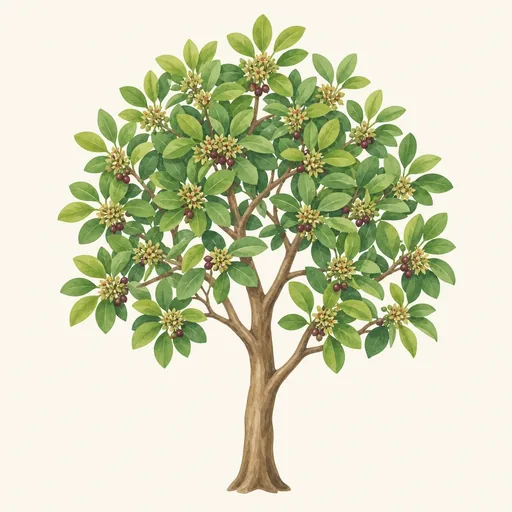
Sandalwood
Santalum sandalorumn · Santalaceae
Description
Sandalwood refers to several species of small trees in the genus Santalum, best known for their fragrant heartwood. The most notable species is Santalum album, commonly referred to as Indian sandalwood, which is highly prized for its essential oil and aromatic qualities.
Generally, sandalwood trees are semi-parasitic, meaning they can extract nutrients from the roots of neighboring plants, which aids in their growth. The tree typically grows to about 10-15 meters (33-50 feet) in height and features leathery, dark green leaves that are oval-shaped. The flowers are small, yellowish, and appear in clusters, usually blooming during the late summer.
Sandalwood is primarily cultivated for its heartwood, which contains a valuable essential oil used in perfumes, cosmetics, and traditional medicine. The oil has a warm, woody scent and has been used for centuries in various cultural practices, including incense in spiritual rituals. The tree requires a tropical to subtropical climate and well-drained, sandy soils for optimal growth, often thriving in areas with moderate rainfall.
Propagation is typically done through seeds or cuttings, but it requires careful management due to the tree’s slow growth and the lengthy maturation period before the heartwood can be harvested—often taking 15-30 years. Due to its overexploitation and legal harvesting regulations in some regions, sustainable practices are essential for sandalwood cultivation.
Overall, sandalwood is valued not only for its economic importance but also for its role in cultural heritage.
Growing Conditions
4–10 m (13–33 ft) tall, 3–6 m (10–20 ft) wide
- Smallest
- Largest
Full sun, 6+ hours
Tolerates part sun
Moderate
Keep evenly moist, not soggy.
Ideal 20–35 °C (68–95 °F)
Survives down to −1 °C (30 °F).
pH 6–8 · neutral to alkaline
Photos
Photo credits
Where it Grows
Planting
When to Plant
Sandalwood, known for its aromatic heartwood, is a tropical to subtropical tree that thrives in specific conditions. Understanding the ideal planting time for sandalwood can enhance your chances of a successful growth cycle. Here are key factors to consider when deciding when to plant sandalwood:
1. Climate Requirements Sandalwood trees (genus Santalum) generally prefer warm climates, typically thriving in USDA hardiness zones 9-11. These regions experience mild winters and warm summers, which is crucial for the growth of sandalwood. Planting during the warm months when temperatures consistently exceed 60°F (15°C) is ideal.
2. Seasonal Timing In most areas, the best time to plant sandalwood is at the beginning of the rainy season or just before the onset of significant rainfall. This timing allows young trees to establish their roots and utilize the moisture efficiently.
-
Tropics & Subtropics: For regions around the equator, planting should be timed with the main rainy season, which can vary based on local climatic conditions; generally, this can be between March and May or September and November.
-
Temperate Regions: If you are in a more temperate area, wait until the risk of frost has passed and the soil has warmed in spring. This typically occurs between late April and early June, depending on your specific location.
3. Soil Preparation Before deciding when to plant, ensure your soil is well-prepared. Sandalwood prefers well-drained soils with a slightly acidic to neutral pH. Preparing the soil a few weeks before your intended planting date allows for soil amendments or adjustments, ensuring optimal conditions for growth.
4. Seedling vs. Mature Planting If you're starting with seedlings, they can typically be planted once they reach a height of about 1-2 feet and are sturdy enough to withstand wind and rain. If you’re transplanting a more mature sandalwood tree, ensure that it is done during a cooler portion of the year or during the rainy season to minimize transplant shock.
5. Observation of Local Conditions Always observe local weather patterns and environmental conditions, as they can significantly influence the best planting times. It’s beneficial to consult with local agricultural extensions or gardening clubs for tailored advice pertaining to your microclimate.
Conclusion Timing is crucial when planting sandalwood to ensure successful growth and establishment of this unique tree. By considering local climate, rainfall patterns, soil conditions, and specific planting methods, amateur gardeners can enjoy the aromatic and often economically valuable returns of successfully cultivating sandalwood.
How to Plant
Planting Sandalwood (Santalum spp.)
Sandalwood trees are renowned for their fragrant heartwood, commonly used in perfumes and incense. To successfully plant sandalwood, consider the following steps:
-
Location: Choose a warm, sunny spot with well-draining soil to promote healthy growth. Sandalwood thrives in tropical and subtropical climates, so ensure the temperature does not drop significantly.
-
Soil Preparation: Sandalwood prefers sandy or loamy soils. Amend heavy clay soils with compost or sand to enhance drainage. The ideal pH level is slightly acidic to neutral (around 6.0 to 7.0).
-
Seeds or Seedlings: Seeds require scarification to improve germination rates; nick the seed coat and soak it in water for 24 hours before planting. Alternatively, you can obtain young seedlings from a nursery, which are easier for beginners.
-
Planting: Space plants about 10 to 15 feet apart, as they can grow large. Dig a hole twice as wide as the root ball and deep enough for it to sit slightly above ground level to prevent water accumulation.
-
Companion Planting: Sandalwood is hemiparasitic, meaning it benefits from host plants (like legumes) that provide nutrients.
-
Watering and Care: Water regularly but avoid waterlogging. Mulch around the base to retain moisture and suppress weeds. Fertilize sparingly, as excessive nutrients can hinder growth.
By following these guidelines, you can create optimal conditions for your sandalwood tree to thrive, yielding beautiful foliage and fragrant wood over time.
Growth Timeline
- Establishing 15 years
- First flowers possible years 15–30
Care
Care Calendar
- Mulch · Apr 10 – May 14
Apply a thin layer of organic mulch, keeping it clear of the trunk. - Prune · Apr 10 – May 28
Remove dead wood and lightly shape young trees without heavy pruning. - Protect · Sep 27 – Oct 24
Move potted trees and their host plants to a bright, frost-free place.
Watering
When it comes to watering Sandalwood (Santalum spp.), a well-planned strategy is essential for promoting healthy growth. These trees prefer well-drained soil and can suffer from root rot if overwatered. The best practice is to allow the top few inches of soil to dry out between waterings. Typically, watering every 1-3 weeks is appropriate, but frequency can vary based on climate and soil type.
Morning is the optimal time to water, ensuring that moisture soaks in before the heat of the day evaporates it. Use a deep watering technique to encourage deep root growth; this means applying water slowly at the base of the plant. During the hot seasons, you may need to increase the frequency, while in cooler months, you can reduce it. Additionally, avoid overhead watering to minimize disease risk. Regularly check the soil moisture with your finger to make informed adjustments as needed.
Pruning
Pruning Sandalwood (Santalum species) is essential to maintain its health and encourage optimal growth, especially since it is a slow-growing tree. The best strategy involves careful timing and techniques.
Timing: Late winter or early spring, just before the active growth period, is ideal for pruning. This timing helps minimize stress and encourages vigorous new growth.
Technique: Begin by removing any dead, damaged, or diseased branches to promote overall tree health. Thin out overcrowded areas to improve light penetration and air circulation. Focus on maintaining a desired shape, ensuring that lower branches do not compete with the upper canopy. It’s recommended to prune lightly; over-pruning can weaken the plant and disrupt its natural growth pattern.
Regular, minor pruning is more beneficial than drastic cuts and helps the Sandalwood develop its characteristic form while enhancing future flowering and essential oil production.
Weeding
Weeding around a Sandalwood plant (Santalum spp.) requires a careful approach to prevent damage while promoting healthy growth. The best strategy involves several key steps:
-
Hand Weeding: Use your hands to gently pull out weeds, being cautious not to disturb the Sandalwood's roots, which are sensitive. Ideally, this should be done when the soil is moist, making it easier to remove weeds entirely.
-
Mulching: Apply a 2-3 inch layer of organic mulch around the base of the Sandalwood plant. This helps suppress weed growth, retains soil moisture, and provides nutrients as it decomposes.
-
Regular Monitoring: Check the area frequently, particularly after rains, to catch any emerging weeds early.
-
Avoid Chemicals: Refrain from using herbicides, as they can harm the Sandalwood plant.
-
Cultivation Practices: Maintain good soil health through aeration and proper watering practices, which can discourage weed growth.
By combining these strategies, you can effectively manage weeds without harming your Sandalwood plant.
Mulching
Mulching is an essential practice for nurturing Sandalwood (Santalum album) plants, particularly in promoting moisture retention and soil health. To effectively mulch your Sandalwood:
-
Choose the Right Mulch: Organic materials such as wood chips, straw, or shredded bark are ideal as they decompose over time, enriching the soil with nutrients.
-
Prepare the Area: Before applying mulch, clear the soil around the base of the plant to remove weeds and debris, which can compete for resources.
-
Apply a Thick Layer: Spread a layer of mulch 2 to 4 inches thick, keeping it about 3 inches away from the trunk to prevent rot and discourage pests.
-
Water After Mulching: Ensure the plant is well-watered before applying mulch to help the roots settle and encourage moisture retention.
-
Monitor Regularly: Check periodically for signs of decomposition or weed growth, replenishing mulch as necessary to maintain coverage and protect your Sandalwood plant.
Fertilizing
Fertilizing a Sandalwood plant (Santalum spp.) requires careful consideration, as these trees grow naturally in nutrient-poor soils. To encourage healthy growth and optimal oil production, start by selecting a balanced, slow-release fertilizer with a low nitrogen content, typically around a 1:2:1 NPK ratio. Apply the fertilizer sparingly, about once every six months, during the growing season, which usually spans from spring to early summer.
Before fertilization, ensure the soil is moist to prevent root burn. Additionally, incorporating organic matter, like compost, can enhance soil structure and microbial activity, promoting overall health without overwhelming the plant with nutrients. Monitoring for signs of deficiency, such as yellowing leaves, can help you adjust your fertilization strategy appropriately. Remember, less is more when it comes to feeding Sandalwood; over-fertilizing can hinder growth and affect oil quality.
Growing in Containers
Not well suited to growing in pots.
Propagation
From seed
- Remove the pulp from ripe sandalwood fruits and clean the seeds.
- Soak the seeds in water for 24 hours.
- Sow them about 1 cm deep in a free-draining seed mix.
- Keep the mix warm and lightly moist while the seeds germinate.
- Plant a suitable host nearby so the seedling can form root connections.
Companion Plants
Good neighbors
- Pigeon pea: It is a well-documented host plant whose roots young sandalwood trees can tap for water and nutrients.
- Earleaf acacia: It is used as a long-term host for sandalwood in cultivation.
Common Problems
- Seedlings collapse at soil level
- Soft or rotting stems
- Brown, mushy roots
- Wilting
Damping off is a disease of seeds and young seedlings, not a single organism with one scientific name. It can be…
- Yellowing leaves
- Wilting
- Stunted growth
- Leaves dropping
Root rot is a general name for the decay of plant roots, not a single disease with one scientific name. It can result…
- Holes in leaves
- Insects visible on the plant
- Stems chewed or cut through
- Wilting
Caterpillars are the larval stage of butterflies and moths, not a single species. Many feed on garden plants, although…
- Brown or crispy leaf edges
- Wilting
- Bleached or scorched patches
- Leaves dropping
Frost damage is an injury caused when plant tissues become cold enough for ice to form or for cells to lose water to…
Varieties
Sandalwood is a highly valued aromatic wood that has been used for centuries in various cultural and religious practices, as well as in the production of essential oils and perfumes. The most notable species of sandalwood belong to the genus Santalum, with several varieties cultivated for their fragrant heartwood. Here are the most common varieties of the sandalwood plant:
1. Santalum album (Indian Sandalwood)
- Description: This is the most well-known and commercially significant variety of sandalwood. It is native to India and Indonesia and is renowned for its high-quality heartwood and essential oil.
- Uses: The wood is extensively used in incense, perfumes, and traditional medicine. It is also commonly used in religious and ceremonial contexts, especially in Hinduism and Buddhism.
- Cultivation: This species thrives in tropical and subtropical climates, requiring well-draining soil and moderate rainfall.
2. Santalum spicatum (Australian Sandalwood)
- Description: Native to Australia, this variety is also valued for its timber and oil, though its scent is often described as less sweet compared to Santalum album.
- Uses: It is used in the production of essential oils, cosmetics, and in the carving of various wooden items due to its density and durability.
- Cultivation: Santalum spicatum can tolerate harsher conditions compared to Indian sandalwood, making it suitable for arid regions.
3. Santalum paniculatum (Hawaiian Sandalwood)
- Description: This species is found in Hawaii and is known for its aromatic wood. The fragrance of its essential oil is also sought after.
- Uses: Similar to other sandalwoods, it is used in incense and perfumes, and it has cultural significance in native Hawaiian traditions.
- Cultivation: Hawaiian sandalwood prefers well-drained, volcanic soils and can be cultivated in a variety of conditions typical of the Hawaiian islands.
4. Santalum ellipticum
- Description: Another species native to Hawaii, Santalum ellipticum is also known for its fragrant properties but is less commercially exploited than the other varieties.
- Uses: It has traditional uses among native Hawaiians and is occasionally harvested for its wood and oil.
- Cultivation: This species grows in a variety of island ecosystems, often found in coastal or lowland forests.
Conclusion
The sandalwood plant is a remarkable species known for its fragrant heartwood and wide range of uses. Among the common varieties, Santalum album, Santalum spicatum, Santalum paniculatum, and Santalum ellipticum stand out for their unique properties and significance in both cultural and commercial contexts. Each variety offers distinct characteristics, making them valuable to gardeners and collectors alike. When considering cultivating sandalwood, it's essential to understand the specific requirements for each species and their growing conditions to ensure successful cultivation.
Health Benefits
Sandalwood, particularly from the species Santalum album, is renowned for its wide array of health and wellness applications, primarily due to its fragrant oil and aromatic heartwood. Traditionally used in Ayurvedic medicine, sandalwood is celebrated for its anti-inflammatory, antiseptic, and calming properties.
One of its most prominent uses is in aromatherapy. Sandalwood essential oil is believed to alleviate stress and promote mental clarity, making it an excellent choice for those seeking relaxation and meditation. Its soothing scent can help reduce anxiety and improve mood, contributing to overall mental well-being.
In skincare, sandalwood oil is utilized for its astringent and antibacterial properties. It can aid in treating acne, soothing irritation, and hydrating dry skin. Many natural beauty products incorporate sandalwood for its aromatic benefits and skin-enhancing qualities.
Moreover, sandalwood has cultural significance; it is commonly used in rituals and spiritual practices. The wood is often burned, producing a fragrant smoke believed to purify the environment and enhance meditation. This multifaceted plant secures its place not just in culinary uses but as an essential element of holistic wellness.
Fun Facts
-
Aromatic Heartwood: Sandalwood, primarily from the species Santalum album, is renowned for its fragrant heartwood, which can be distilled into essential oil and is prized in perfumery and incense-making.
-
Slower Growth: Sandalwood trees are slow-growing and can take up to 15 years to mature enough for harvesting, making them a long-term investment in the context of sustainable forestry.
-
Parasitic Nature: Sandalwood trees are semi-parasitic; they require a host plant to establish their roots and absorb nutrients. They often grow alongside other trees, benefiting from their host plants.
-
Cultural Significance: In many cultures, particularly in India, sandalwood has deep cultural and religious significance, often used in rituals, ceremonies, and traditional medicine.
-
Conservation Concerns: Due to overharvesting and deforestation, many sandalwood species are now considered endangered, sparking conservation efforts aimed at protecting and sustainably managing sandalwood resources.
These intriguing aspects of sandalwood reflect not only its importance in horticulture and industry but also the need for responsible cultivation practices.
Notice an error or have a question about Sandalwood? Contact us