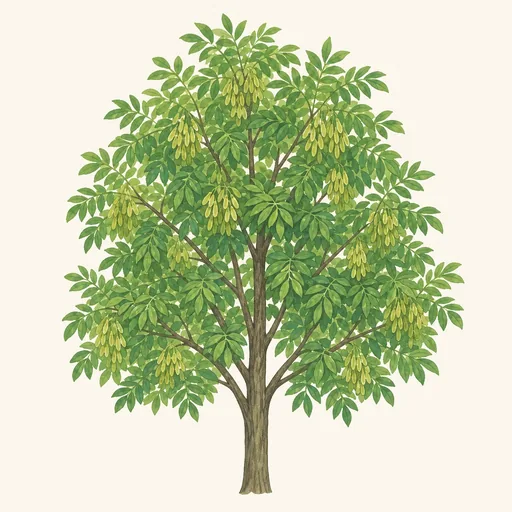
Green Ash
Fraxinus pennsylvanica · Oleaceae
- Plant outFrom 4 weeks before to 2 weeks after the last frostMar 13 – Apr 30
- Plant in autumn6–8 weeks before the first autumn frostAug 30 – Sep 19
- Space12–18 m (39–59 ft) apart
Description
The Green Ash (Fraxinus pennsylvanica) is a deciduous tree native to North America, particularly thriving in the eastern and central regions of the United States. It is a member of the Oleaceae family, which also includes olive and lilac. Green Ash commonly grows 40 to 60 feet tall with a spread of 25 to 50 feet, making it a suitable choice for urban landscaping and parks.
This species is characterized by its sturdy, upright structure and broad canopy, providing ample shade. The leaves are compound and usually consist of 5 to 9 leaflets, which are glossy and dark green during the growing season, turning a vibrant yellow in fall. Green Ash trees are known for their bark, which is grayish and furrowed, giving it a distinctive textured appearance.
Green Ash prefers well-drained soils and can tolerate a range of soil types, including both dry and moist conditions. It is moderately drought-tolerant and can thrive in urban areas, making it a popular choice for street planting. This species is also relatively resilient to various pests and diseases, though it has been affected by the emerald ash borer, a significant pest threatening many ash species.
Aside from its ornamental value, Green Ash contributes to the ecosystem by providing habitat for wildlife and supporting local biodiversity. However, due to the emerald ash borer, potential gardeners should consider their specific location and any local tree management regulations before planting. Overall, the Green Ash is celebrated for its adaptability and aesthetic appeal in a variety of landscapes.
Growing Conditions
15–21 m (49–69 ft) tall, 11–15 m (36–49 ft) wide
- Smallest
- Largest
Full sun, 4+ hours
Tolerates part sun
Moderate
Keep evenly moist, not soggy.
Survives down to −40 °C (−40 °F)
acidic to neutral to alkaline
Photos
Photo credits
Where it Grows
Planting
When to Plant
When considering the right time to plant a Green Ash, it's essential to understand its growth habits and environmental preferences. Here, we will cover the optimal timing for planting, along with some considerations to help ensure successful establishment.
Timing for Planting
1. Ideal Seasons:
- Spring: The best time to plant a Green Ash is in the spring, after the last frost date. This timing allows the tree to establish its root system before the heat of summer.
- Fall: Autumn is another suitable time for planting, typically between late September and early November. This period provides cool soil temperatures that help stimulate root growth while the air temperatures remain mild.
2. Soil Temperature Consideration:
- Green Ash prefers soil temperatures between 60°F to 75°F (15°C to 24°C) for optimal growth. Planting during spring or early fall will generally meet this requirement.
3. Local Climate:
- Before planting, check your local climate conditions. Green Ash is adaptable to various soils and can thrive in USDA hardiness zones 3 through 9, making it suitable for many regions. However, extreme temperatures, particularly in winter, can affect the tree’s establishment and growth if planted too late in fall.
Pre-Planting Considerations
1. Site Selection:
- Choose a location that receives full sun, with at least 6 hours of direct sunlight daily. Green Ash is tolerant of various soil types, including clay, loam, and sandy soils, but good drainage is crucial.
2. Soil Preparation:
- Prior to planting, test your soil’s pH and nutrient levels. Green Ash thrives in slightly acidic to neutral soil (pH 6.0 to 7.0). Amend the soil as needed with organic matter or fertilizers based on your soil test results.
3. Watering Needs:
- Ensure adequate watering after planting, particularly during the first growing season. This helps the tree acclimate to its new environment and promotes healthy growth.
Conclusion
In summary, the best times to plant a Green Ash are in the spring after the last frost or in the fall before the ground freezes. By considering local climate conditions, selecting a suitable site, and preparing the soil adequately, you can set the stage for a robust Green Ash that will thrive in your garden for years to come. Always keep an eye on soil and moisture levels to aid in the establishment of this resilient tree.
How to Plant
Planting Green Ash (Fraxinus pennsylvanica)
Planting Green Ash trees can be a rewarding endeavor, as they are known for their adaptability and vigor. Here’s a step-by-step guide to ensure successful establishment.
-
Site Selection: Choose a location that receives full sun to partial shade. Green Ash prefers well-drained soils but can tolerate poor conditions, making it versatile for various landscapes.
-
Timing: The best time to plant is during the early spring or fall when temperatures are cooler and moisture levels are higher, promoting root establishment.
-
Preparation: Before planting, dig a hole that is twice as wide as the root ball and not deeper than the ball itself. Loosen the soil at the bottom to help roots penetrate.
-
Planting: Remove the tree from its container, being careful not to damage the roots. Place it in the center of the hole, ensuring that the top of the root ball is level with the soil surface. Fill in around the roots with the original soil, making sure to pack it gently.
-
Watering: After planting, water thoroughly to eliminate air pockets. Continue watering regularly, especially during dry spells, until the tree is established.
By following these steps, your Green Ash can thrive, providing shade and beauty to your landscape.
Planting Calendar
- Plant outdoors: from 4 weeks before to 2 weeks after the last frost
- Autumn planting: 6–8 weeks before the first autumn frost
- Plant out: Mar 13 – Apr 30
- Autumn planting: Aug 30 – Sep 19
Care
Care Calendar
- Prune · Feb 13 – Apr 2
Remove dead or damaged branches; hire an arborist for large limbs. - Mulch · Mar 27 – May 14
Renew a broad mulch ring, keeping mulch off the trunk. - Protect · Oct 11 – Nov 14
Guard young trunks against winter sunscald and animal damage.
Watering
Watering a Green Ash (Fraxinus pennsylvanica) requires a thoughtful approach to ensure optimal growth and health. This deciduous tree thrives in well-draining soil and prefers a consistent moisture level, especially during its early years.
Initially, watering should be deep and thorough, typically once a week, especially during dry spells. Aim for about 1 inch of water per week, which can include rainfall. To check moisture levels, insert your finger into the soil about 2-3 inches deep; if it feels dry, it’s time to water.
As the tree matures, adjust the watering frequency based on seasonal weather conditions. During hot summers, more frequent watering might be necessary. However, be cautious of overwatering, as Green Ash is susceptible to root rot. Mulching around the base helps retain soil moisture and regulate temperature. Regular monitoring will promote a healthy, thriving tree.
Pruning
Pruning a Green Ash (Fraxinus pennsylvanica) is vital for maintaining its health, shape, and vigor. The best strategy involves several key steps:
-
Timing: Prune in late winter or early spring, before new growth begins. This minimizes stress and encourages robust regrowth.
-
Tools: Use clean, sharp pruning tools to ensure clean cuts and reduce the risk of disease transmission.
-
Remove Dead or Diseased Wood: Start by cutting away any dead, damaged, or diseased branches to promote overall health.
-
Thin Crowns: Selectively thin the canopy to improve air circulation and light penetration, which helps prevent fungal diseases.
-
Shape the Tree: Focus on maintaining a balanced shape, removing any branches that cross or rub against each other.
-
Limit Size: Avoid heavy pruning; aim to remove no more than 20% of the foliage in one season to prevent shock.
Proper pruning enhances the beauty and longevity of your Green Ash while fostering its natural growth habits.
Weeding
Weeding around a Green Ash (Fraxinus pennsylvanica) involves a careful approach to avoid harming the young plant while maintaining its health.
First, use mulching to suppress weed growth; a layer of organic mulch, like wood chips or shredded bark, can effectively block sunlight from reaching weed seeds and retain soil moisture.
Next, hand-pull weeds, especially annuals and small perennials, as they are less likely to disrupt the root system of your Green Ash. For larger, perennial weeds, consider cutting them back to the ground rather than uprooting them to minimize disturbance.
Timing is crucial; weed when the soil is moist to make uprooting easier. Regularly monitor the area around your Green Ash, especially during the growing season, and tackle any emerging weeds promptly. Avoid using chemical herbicides near young trees to prevent unintended damage to the plant's health.
Mulching
Mulching is an effective strategy for promoting the health of a Green Ash (Fraxinus pennsylvanica). To mulch your Green Ash, begin by selecting an organic mulch material, such as wood chips, bark, or shredded leaves, which will improve soil structure as it decomposes.
Apply a layer of mulch, 2 to 4 inches thick, around the base of the tree, extending outward to the drip line. Avoid piling the mulch directly against the trunk, as this can lead to rot and pest issues. Instead, leave a small space around the trunk to ensure proper airflow and moisture absorption.
Mulching helps retain soil moisture, suppress weeds, and regulate soil temperature. Replenish the mulch annually to maintain its effectiveness and enhance soil fertility. By following these guidelines, your Green Ash will thrive and become more resilient to environmental stresses.
Fertilizing
Fertilizing a Green Ash (Fraxinus pennsylvanica) effectively requires a thoughtful approach to ensure healthy growth and development. The best strategy is to perform soil testing first, which helps determine existing nutrient levels and pH balance. Generally, a balanced, slow-release fertilizer with a ratio such as 10-10-10 or 15-15-15 is suitable for Green Ash trees.
Application should occur in early spring before new growth begins. Spread the fertilizer evenly around the tree's root zone, avoiding direct contact with the trunk. Watering the area afterward will help dissolve the fertilizer, allowing nutrients to penetrate the soil.
It's advisable not to over-fertilize, as excess nitrogen can lead to rapid growth that may weaken the tree and make it susceptible to pests and diseases. Regular monitoring for signs of nutrient deficiencies will also guide future fertilizing efforts.
Growing in Containers
Not well suited to growing in pots.
Propagation
From seed
- Collect mature samaras in autumn.
- Remove the wings and soak the seeds overnight.
- Place the seeds in a moist medium in the refrigerator for about 90 days.
- Sow the seeds about 1 cm deep in well-drained potting mix.
- Keep the mix moist until seedlings emerge.
From cuttings
- Take cuttings from healthy new shoots in early summer.
- Remove the lower leaves and dip the cut ends in rooting hormone.
- Insert the cuttings into a moist, free-draining rooting mix.
- Keep them humid and in bright, indirect light.
- Pot up cuttings after roots develop.
Common Problems
- Wilting
- Stunted growth
- Leaves dropping
- Stems chewed or cut through
Borers are the larvae of various moths, beetles, flies, and other insects that feed inside plant tissue. “Borers” is a…
- Spots on leaves
- Brown or crispy leaf edges
- Bleached or scorched patches
- Leaves dropping
Anthracnose is a name for several fungal diseases, not a single species. Depending on the plant, the cause may be a…
- Orange or rust-colored spots
- Spots on leaves
- Yellowing leaves
- Leaves dropping
Rust is a group of plant diseases caused by fungi in the order Pucciniales, not a single species. Different rust fungi…
- Yellowing leaves
- Sticky residue on leaves
- Black sooty coating
- Stunted growth
Scale insects are small, sap-feeding insects that settle on garden and houseplants. Adults often look like bumps on…
Varieties
A male selection that avoids the winged seeds produced by female trees.
- seedless
- male
A male selection grown for shade without seed litter.
- seedless
- male
More about varieties
The Green Ash, scientifically known as Fraxinus pennsylvanica, is a deciduous tree that belongs to the olive family (Oleaceae). Known for its adaptability and resilience, the Green Ash is often used in landscaping and urban settings. Here are some common varieties of the Green Ash:
-
'Marshall's Seedless'
- This cultivar is particularly praised for being a male version of the Green Ash, meaning it does not produce seeds. This trait makes it a favorite for urban environments where seed litter can be cumbersome. 'Marshall's Seedless' is known for its drought tolerance and robust growth rate.
-
'Patmore'
- The 'Patmore' Green Ash is well-loved for its uniform growth and attractive canopy. This variety can withstand harsh environmental conditions and exhibits excellent resistance to the Emerald Ash Borer, a significant pest threatening Ash trees. Its vibrant green foliage turns a bright yellow in the fall.
-
'Cimmaron'
- This cultivar is recognized for its unique reddish-orange fall color, which is more vivid than that of other Green Ash varieties. The 'Cimmaron' is a hardy tree that thrives in various soil types and conditions, making it a versatile choice for different landscapes.
-
'Autumn Purple'
- As the name suggests, the 'Autumn Purple' variety is valued for its striking purple-red foliage in the fall. This aesthetic beauty, along with its capacity to adapt to different soils and urban pollution, makes it a popular choice for ornamental plantings.
-
'Summit'
- Another selection known for its resilience, the 'Summit' Green Ash features a strong upright growth pattern and dense canopy. It is also regarded for its ability to resist typical ash pests, including the Emerald Ash Borer, making it a practical choice for sustainable landscaping.
Growth Characteristics Green Ash trees typically reach heights of 50-70 feet and have a spread of about 30-50 feet. Their leaves are typically pinnately compound, with 5 to 9 leaflets that showcase a rich green color in the spring and summer. The trees are known for their ruggedness, often tolerating poor soil conditions and drought.
Uses in Landscaping Due to its hardiness and adaptability, the Green Ash is often utilized in various landscaping situations, from residential yards to urban parks. Its shade-providing nature makes it particularly popular in areas looking for canopy coverage.
Conclusion When choosing a variety of Green Ash for your garden, consider factors such as space, soil conditions, and desired aesthetic outcomes. Each variety offers distinct benefits that can enhance both the beauty and utility of your outdoor spaces.
Health Benefits
The Green Ash (Fraxinus pennsylvanica) is a versatile tree native to North America and has some notable health applications, primarily through its extracts and compounds. Traditionally, various parts of the tree have been used in herbal medicine. The bark, in particular, has been employed for its diuretic and anti-inflammatory properties. Indigenous peoples utilized the bark to make teas that purportedly helped alleviate fever and pain.
Modern herbalists often focus on the extract of Green Ash for its potential anti-inflammatory benefits, which may assist in treating conditions like arthritis. Additionally, the tree contains flavonoids, which are antioxidants that can help combat oxidative stress in the body. This may contribute to overall wellness by supporting the immune system and reducing the risk of chronic diseases.
Furthermore, the Green Ash's wood is valued for its strength and flexibility, making it a preferred material for athletic equipment like baseball bats. Its role in urban landscaping also contributes indirectly to wellness by improving air quality, enhancing aesthetic appeal, and providing shade, which can promote outdoor activities and mental well-being.
While research is ongoing, the Green Ash demonstrates potential in natural health applications, meriting further exploration in modern herbalism.
Fun Facts
-
Native Habitat: Green ash (Fraxinus pennsylvanica) is a native tree to North America, commonly found in wetland areas, along rivers, and in floodplains, showcasing its adaptability to various soil types and moisture levels.
-
Rapid Growth: This deciduous tree is known for its fast growth rate, often reaching heights of 50 to 60 feet within just a few years, making it a popular choice for quick shade and landscaping.
-
Distinctive Leaves: The leaves of the Green ash are compound, made up of 5 to 9 leaflets that are pointed and serrated. They turn a vibrant golden-yellow in the fall, providing seasonal color to gardens and landscapes.
-
Diverse Wildlife Support: Green ash produces seeds known as samaras, which are flat and winged, attracting various bird species and providing food for wildlife. Its presence supports the ecosystem by serving as habitat and nourishment for many animals.
-
Urban Resilience: Due to its tolerance for urban conditions such as pollution, soil compaction, and drought, Green ash is often used in city landscaping. However, it is worth noting that it has been susceptible to the emerald ash borer, an insect pest that poses threats to ash populations.
Notice an error or have a question about Green Ash? Contact us