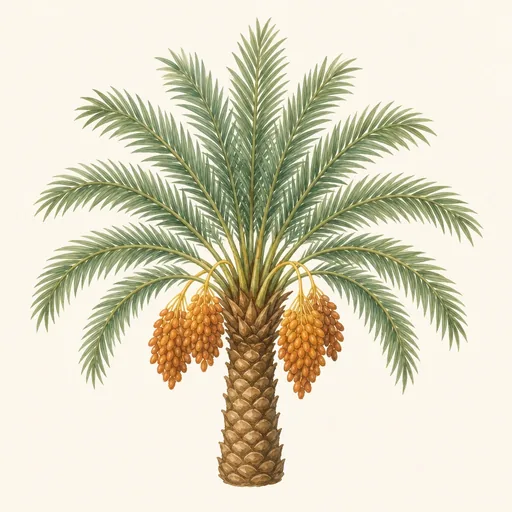
Date Palm
Phoenix dactylifera · Arecaceae
- Plant out2–8 weeks after the last frostApr 24 – Jun 11
- Space8–10 m (26–33 ft) apart
- BloomAfter 4–8 years
Description
The Date Palm (Phoenix dactylifera) is a tall, flowering plant native to the Middle East and North Africa, valued primarily for its sweet, edible fruit, the date. This perennial palm is easily recognizable due to its slender trunk and distinctive crown of feathery, arching fronds that can reach up to 20 feet long. When fully mature, a date palm typically grows to be between 50 to 75 feet tall.
The tree thrives in hot, arid climates, making it well-suited for desert environments. It requires full sunlight and well-draining soil, often found in sandy or loamy conditions. Date palms are dioecious, meaning that individual plants are either male or female. Only the female plants produce the sweet fruit, which develops in large clusters called bunches. These clusters can contain hundreds of dates, which are harvested when ripe—typically in late summer to early fall.
In addition to their fruit, date palms have cultural significance in various regions, symbolizing prosperity and peace. They are often planted as ornamental trees in landscaping due to their striking appearance.
For gardeners looking to cultivate date palms, it is important to note that these trees can take several years to begin fruiting—usually around 4 to 8 years after planting. While they require minimal maintenance, ensuring adequate water during dry periods and managing pests, such as the red palm weevil, can help optimize growth and fruit production. Overall, the Date Palm is a resilient and rewarding plant for both ornamental and agricultural purposes.
Growing Conditions
15–25 m (49–82 ft) tall, 6–10 m (20–33 ft) wide
- Smallest
- Largest
Full sun, 6+ hours
Moderate
Keep evenly moist, not soggy.
Ideal 25–38 °C (77–100 °F)
Survives down to −7 °C (19 °F).
pH 6–8.5 · neutral to alkaline
Photos
Photo credits
Where it Grows
Planting
When to Plant
When considering the cultivation of Date Palm (Phoenix dactylifera), timing is crucial to ensure the plant's optimal growth and health. Here are the key factors that will help you determine when to plant a Date Palm:
Climate and Hardiness Zones Date Palms thrive in hot, arid climates and are best suited for USDA Hardiness Zones 9-11. They require plenty of sunlight and prefer temperatures that consistently exceed 100°F (37°C) during the day, especially during the growing season. Understanding your local climate is the first step in determining the right planting time.
Seasonal Planting Guidelines
- Spring Planting: It is generally recommended to plant Date Palms in the spring, ideally after the last frost, which allows the palms to establish their root systems before the heat of summer. For most regions that meet the climatic requirements, late March to early June is particularly favorable.
- Fall Planting: In regions with very mild winters, early fall can also be a suitable time for planting. This allows the plant to establish itself during the cooler months before the harsher heat of summer arrives.
Soil Preparation and Conditions Before planting, it is essential to ensure that the soil is well-draining and sandy, as Date Palms are sensitive to waterlogged conditions. Preparing the soil ahead of planting season will facilitate better root establishment, which is critical for the health of the palm.
Watering Schedule Newly planted Date Palms require regular watering but need to avoid over-saturation. Understanding your local rainfall patterns will help you determine the best watering schedule, typically once a week, or more frequently in extremely hot weather.
Seedlings vs. Established Trees If you're planting seedlings or young Date Palms, they might require different timing considerations compared to established trees. Young palms will benefit from the warm soil temperatures in spring, while established palms can be planted during their dormant periods in the cooler months in milder climates.
Conclusion By considering your climate, soil conditions, and seasonal weather patterns, you can determine the optimal time to plant Date Palms. Successful planting lays the foundation for a thriving Date Palm that can provide delicious fruit for years to come. Be sure to monitor the weather and prepare adequately to ensure that your Date Palm gets the best start possible.
How to Plant
Planting a Date Palm (Phoenix dactylifera) requires careful consideration of its specific needs for optimal growth. Here’s a step-by-step guide for successful planting:
-
Choose the Right Location: Date Palms thrive in full sun and prefer well-draining soil. Select a space with plenty of sunlight, away from shade from buildings or large trees.
-
Prepare the Soil: Amend the soil with organic matter or sand to ensure it drains well. Date Palms naturally grow in sandy, loamy soils and do not tolerate waterlogged conditions.
-
Planting Time: The best time to plant is in spring or early summer, as this allows the palm to establish before cooler temperatures set in.
-
Dig the Hole: Create a hole that is twice as wide and as deep as the root ball of your Date Palm. This ensures ample space for root development.
-
Position the Palm: Place the Date Palm in the center of the hole, ensuring that the top of the root ball is level with the soil surface. Backfill with soil, gently tamping down to eliminate air pockets.
-
Watering: After planting, water the palm thoroughly to help settle the soil. Keep the soil moist but not soggy during the first few months as the palm establishes itself.
-
Mulching: Apply a layer of mulch around the base to retain moisture and suppress weeds, but avoid contact with the trunk.
By following these steps, you'll give your Date Palm the best chance to thrive and produce its sweet fruits in the years to come.
Growth Timeline
- Establishing 4 years
- First flowers possible years 4–8
Planting Calendar
- Plant outdoors: 2–8 weeks after the last frost
- Plant out: Apr 24 – Jun 11
Care
Care Calendar
- Prune · Mar 27 – May 14
Remove only fully dead fronds, taking care not to damage the trunk. - Feed · Apr 10 – Aug 6
Feed with a palm fertilizer according to its label during active growth. - Protect · Oct 18 – Nov 28
Wrap young palms during freezes and remove the covering when temperatures rise.
Watering
Watering a Date Palm (Phoenix dactylifera) requires a balanced approach to ensure optimal health and growth. Start by establishing a consistent watering schedule. During the growing season (spring and summer), these palms thrive on regular watering to keep the soil consistently moist but not soggy. A good rule of thumb is to provide water when the top inch of soil feels dry to the touch.
In contrast, reduce watering in fall and winter, allowing the soil to dry out more completely between waterings, as the palm enters a dormant phase. Ensure that your pot has proper drainage to prevent root rot, as Date Palms are susceptible to overwatering. Utilizing a soaker hose or drip irrigation can help deliver moisture gradually, promoting deep root growth. Additionally, monitor leaf color; yellowing can indicate overwatering, while browning tips may suggest underwatering, allowing you to adjust your watering strategy accordingly.
Pruning
Pruning a Date Palm (Phoenix dactylifera) is essential for maintaining its health and aesthetics. The best strategy involves timing, technique, and safety. Pruning should typically occur in late winter or early spring before new growth begins. This timing promotes healthy regrowth and minimizes stress on the plant.
Begin by using clean, sharp pruning tools to prevent disease transmission. Remove dead or damaged fronds by cutting them at the base without injuring the trunk. Only prune the lower, older fronds, as palms naturally shed their own older leaves. Avoid excessive pruning, as removing too many fronds can stress the palm and inhibit fruit production.
For safety, wear gloves and protective eyewear, as fronds can have sharp edges. Always step back to assess the palm's shape during pruning, ensuring a balanced look. Regular maintenance every few years helps keep the Date Palm healthy and visually appealing.
Weeding
Weeding around a Date Palm (Phoenix dactylifera) requires careful attention to protect its root system and maintain soil health. The best strategy is a combination of manual and preventive methods.
Firstly, regularly inspect the area around the palm to identify weeds. Hand-pulling is effective for small or young weeds, as it minimizes root disturbance around the palm. Use a hoe or a weeding knife to cut weeds at the soil level for larger infestations, being cautious not to injure the palm's roots.
Mulching is an excellent preventive tactic; apply a 2-3 inch layer of organic mulch like wood chips or straw to suppress weed growth and retain moisture. This also enriches the soil as it decomposes. Lastly, avoid using chemical herbicides near the Date Palm, as they may harm the plant. Regular monitoring and maintenance will help keep the area around your Date Palm healthy and weed-free.
Mulching
Mulching a Date Palm (Phoenix dactylifera) effectively enhances its health and growth. Start by choosing an organic mulch like wood chips, straw, or shredded leaves, ensuring it is free of pests and diseases. Apply a 2-4 inch layer around the base of the palm, keeping the mulch about 6 inches away from the trunk to prevent rot and fungal issues.
Timing is crucial; apply mulch in late spring or early summer when temperatures rise. This helps retain moisture and regulate soil temperature, which is essential for the Date Palm’s root stability. Regularly check the mulch level throughout the growing season, replenishing as needed to maintain the recommended thickness. Additionally, consider integrating a weed barrier fabric beneath the mulch to minimize competition for nutrients. Proper mulching not only conserves moisture but also improves soil health, making it an excellent practice for ensuring the vitality of Date Palms.
Fertilizing
Fertilizing a Date Palm (Phoenix dactylifera) effectively is crucial for promoting healthy growth and fruit production. The best strategy involves a balanced approach tailored to the tree's needs and growth stage.
Start with a high-quality, slow-release fertilizer high in potassium, which supports fruiting. A typical formulation might contain a ratio of N-P-K (Nitrogen-Phosphorus-Potassium) such as 8-2-12 or similar. Fertilization should occur during the active growing season, usually in late spring and early summer.
Apply the fertilizer evenly around the base of the palm, avoiding direct contact with the trunk to prevent burn. Following the manufacturer's guidelines for application rates is essential, as over-fertilizing can harm the plant.
Lastly, monitor soil moisture; proper watering alongside fertilization encourages nutrient absorption and enhances the health and productivity of your Date Palm.
Growing in Containers
Grows well in a pot of at least 40 litres (11 US gallons), with drainage holes. Can be grown indoors as a houseplant.
Propagation
From seed
- Remove the flesh from ripe dates and rinse the seeds.
- Soak the seeds in water for 24–48 hours.
- Sow them in a free-draining seed mix and keep them warm and lightly moist.
- Pot up seedlings after they develop several leaves.
From offsets
- Choose a well-rooted basal offshoot from a mature palm.
- Carefully expose its base and retain as many roots as possible.
- Separate it from the parent with a clean, sharp tool.
- Plant it promptly in free-draining soil.
- Keep the soil lightly moist while it establishes.
Companion Plants
Good neighbors
- Pomegranate: Pomegranates are traditionally grown beneath widely spaced date palms in irrigated oasis gardens, where they benefit from some shade in intense heat.
- Alfalfa: Alfalfa is traditionally grown between date palms in irrigated oasis systems and fixes nitrogen.
Common Problems
- Yellowing leaves
- Sticky residue on leaves
- Black sooty coating
- Stunted growth
Scale insects are small, sap-feeding insects that settle on garden and houseplants. Adults often look like bumps on…
- Pale speckles or stippling
- Yellowing leaves
- Brown or crispy leaf edges
- Fine webbing
Spider mites are tiny, plant-feeding arachnids in the family Tetranychidae, not insects. Several species attack garden…
- Yellowing leaves
- Wilting
- Stunted growth
- Leaves dropping
Fusarium wilt is a soilborne fungal disease that affects many garden crops and ornamentals, including tomatoes, beans…
- Spots on leaves
- Yellowing leaves
- Leaves dropping
Fungal leaf spot is a general name for diseases caused by many different fungi, not a single species. These fungi…
- Brown or crispy leaf edges
- Wilting
- Bleached or scorched patches
- Leaves dropping
Frost damage is an injury caused when plant tissues become cold enough for ice to form or for cells to lose water to…
Varieties
Produces large, soft dates where summers are hot enough to ripen them.
- large fruit
- soft
- rich flavor
Produces firm, translucent dates that store well.
- amber fruit
- firm
- sweet
Its fruit can be eaten crisp and yellow or left to ripen until soft.
- yellow fruit
- soft when ripe
- sweet
Produces firm, sweet dates suitable for storage.
- firm
- golden fruit
- good storage
More about varieties
The Date Palm, scientifically known as Phoenix dactylifera, is a cherished crop primarily cultivated in arid and semi-arid regions. There are numerous varieties of date palms, which vary in terms of the size, shape, and sweetness of their fruit. Here are some of the most common varieties:
1. Medjool Medjool dates are one of the most popular and widely recognized varieties. Characterized by their large size, caramel-like flavor, and soft, chewy texture, they are often referred to as the "queen of dates." Medjool dates are typically harvested when they are fully ripe and are commonly enjoyed as a natural sweet snack.
2. Deglet Noor Known as the "date of light," Deglet Noor dates are medium-sized with a semi-dry texture and a distinctive sweet, nutty flavor. They are primarily grown in Algeria and Tunisia but have become a staple in date production worldwide. Due to their versatile nature, they are often used in cooking and baking as a natural sweetener and added to various dishes.
3. Barhi Barhi dates have a unique round shape and are known for their sweet and rich flavor. They are often consumed fresh, as they have a soft, juicy texture when harvested in their yellow stage of development. The Barhi dates can also be dried to enhance their sweetness and flavor profile, making them popular for various culinary applications.
4. Khadrawy Khadrawy dates are recognized for their soft texture and dark brown color once fully ripe. They are known for their sweet taste and high moisture content, which makes them an excellent choice for snacking. Khadrawy dates are typically enjoyed fresh but can also be used in desserts and other culinary preparations.
5. Ajwa Ajwa dates are a revered variety in many cultures, especially in the Middle East, due to their association with religious significance. These dates are small and soft with a dark brown color and a pleasant taste. Known for their numerous health benefits, Ajwa dates are often consumed fresh and are prized for their unique flavor and texture.
6. Sukkary Sukkary dates are known for their sweetness, soft texture, and golden brown color. Widely produced in Saudi Arabia, they are a favorite among those who appreciate a very sweet, sugary taste. Sukkary dates can be enjoyed fresh or used in a variety of traditional dishes.
7. Dayri Dayri dates, also known as "Iraqi dates," are long, thin, and possess a soft and chewy texture. They are noted for their mildly sweet flavor and are often consumed fresh. This variety is primarily cultivated in Iraq, and it boasts high-quality fruit that is favored in both domestic and international markets.
Conclusion Each of these varieties of Date Palm contributes uniquely to the culinary landscape and has its own cultural significance. When cultivating date palms or incorporating them into a garden, it’s essential to choose the variety that best suits the climate, soil conditions, and personal taste preferences. Understanding these differences can help gardeners and hobbyists appreciate the diversity found within this ancient and esteemed plant species.
Health Benefits
The Date Palm (Phoenix dactylifera) is renowned not only for its sweet, nutrient-rich fruit but also for its various health and wellness applications. Dates are primarily valued for their high energy content, providing a natural source of sugars like glucose, fructose, and sucrose, making them an excellent snack for energy boosts.
Rich in dietary fiber, dates promote digestive health and can help alleviate constipation. Their antioxidant properties, attributed to compounds like flavonoids and carotenoids, combat oxidative stress and inflammation. Dates are also a source of essential minerals, including potassium and magnesium, which are vital for heart health and muscle function.
Traditional medicine often utilizes dates for their potential health benefits. They are thought to support cardiovascular health, reduce the risk of stroke, and aid in blood sugar regulation due to their low glycemic index when consumed in moderation. Additionally, dates can enhance bone health due to their content of calcium, phosphorus, and magnesium.
In cultural practices, particularly in the Middle East, dates are celebrated for their role in energy replenishment during fasting and are often used in remedies for various ailments. Thus, the Date Palm serves as a remarkable example of how a single plant can provide multiple health benefits while contributing to cultural traditions.
Fun Facts
-
Ancient Cultivation: The date palm is one of the earliest cultivated fruit trees in human history, believed to have been domesticated over 6,000 years ago in the Middle East, making it a significant agricultural crop in ancient civilizations.
-
Longevity: Date palms are incredibly durable; they can live for over 100 years and continue to produce fruit well into their later years, often showcasing impressive productivity.
-
Nutritional Powerhouse: Dates, the fruit of the date palm, are rich in essential nutrients, including fiber, potassium, magnesium, and various vitamins. They are a popular natural sweetener and are often used in healthy snacks and desserts.
-
Exceptional Resilience: Date palms are highly adaptable and thrive in arid, desert environments. They can withstand extreme temperatures and require minimal water once established, making them a vital resource in regions with limited rainfall.
-
Symbol of Fertility and Prosperity: In many cultures, particularly in the Middle East, the date palm is a symbol of fertility, prosperity, and resilience. Its cultural significance is reflected in traditional practices, folklore, and art, highlighting its importance beyond just agriculture.
Notice an error or have a question about Date Palm? Contact us