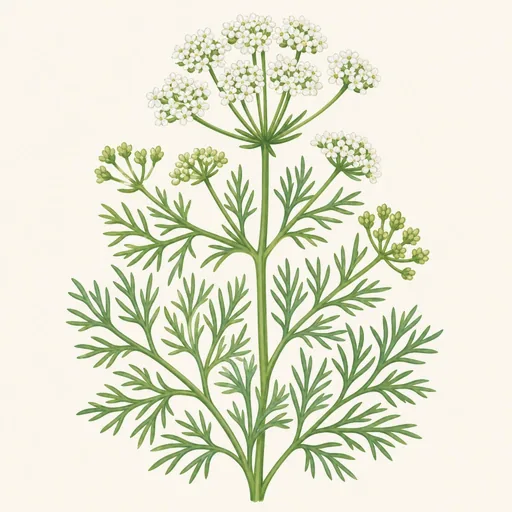
Anise
Pimpinella anisum · Apiaceae
- Sow outdoorsFrom the last frost until 2 weeks afterApr 10 – Apr 30
- Space15–30 cm (6–12 in) apart
- Harvest100–120 days after plantingJul 19 – Sep 18
Description
Anise is an annual herb in the carrot family, Apiaceae, grown chiefly for its sweetly aromatic seeds. Native to the eastern Mediterranean and Southwest Asia, it has a slender, branching stem that typically reaches 30–60 cm (12–24 in) tall. Its lower leaves are rounded and toothed, while leaves higher on the stem become more finely divided. Small white flowers appear in loose, umbrella-shaped clusters called umbels. Each flower develops into a small, ridged, gray-green fruit; the “anise seeds” sold for cooking are actually these dried fruits.
The fruits have a warm, sweet flavor reminiscent of licorice, largely due to the aromatic compound anethole. They are used whole or ground in breads, pastries, sweets, spice mixtures, and liqueurs. Fresh leaves can also be used sparingly as an herb. Although anise and star anise have similar flavors, they come from unrelated plants: star anise is the fruit of a tree, not this annual herb. The flowers attract small pollinating insects, making anise a useful addition to a sunny herb garden as well as a culinary crop.
Anise grows best in full sun and well-drained soil. Sow seeds directly outdoors after the danger of frost has passed, because seedlings have a taproot and do not transplant easily. Keep the soil evenly moist during germination, then water during prolonged dry spells without leaving the roots waterlogged. Plants need a reasonably long, warm growing season for their fruits to ripen. Harvest the flower heads when the fruits turn gray-brown but before they scatter; dry the heads thoroughly, then separate and store the fruits in an airtight container. In colder climates, anise is usually grown only through the summer and resown each year. It is distinct from fennel, another member of the carrot family whose seeds have a similar flavor.
Growing Conditions
45–90 cm (1–3 ft) tall, 20–30 cm (8–12 in) wide
- Smallest
- Largest
Full sun, 6+ hours
Tolerates part sun
Moderate
Keep evenly moist, not soggy.
Ideal 18–27 °C (64–81 °F)
Survives down to 0 °C (32 °F).
pH 6–7.5 · neutral
Where it Grows
Planting
When to Plant
Plant anise (Pimpinella anisum) in spring, after the last expected frost, when the soil has warmed to at least 60°F (16°C). It is a frost-tender annual, so a few mild days are not enough: check your local frost dates and wait until cold nights have passed. Anise grows best with a long, sunny season and usually needs about 100–120 frost-free days to produce ripe seeds. If your growing season is short, start seeds indoors about four to six weeks before the last frost in biodegradable pots, then plant the pots out after frost danger has passed. Otherwise, sow directly outdoors; anise has a taproot and does not transplant easily. In places with very hot summers, planting promptly once spring soil is warm gives plants more time to establish before peak heat. Expect germination to be slower in cool soil, even if the air feels pleasantly warm.
How to Plant
Choose a site with full sun and loose, well-drained soil. Clear weeds, loosen the top several inches of soil, and mix in a modest amount of compost if the ground is poor. Avoid heavy applications of nitrogen fertilizer, which can encourage leafy growth at the expense of seeds. Anise develops a taproot, so direct sowing is usually the easiest and most reliable method.
Sow seeds about ¼ inch (6 mm) deep. Place several seeds every 6–8 inches (15–20 cm), with rows roughly 18–24 inches (45–60 cm) apart. Gently firm the soil and water with a fine spray so the seeds stay in place. Keep the surface consistently moist, not soggy, until seedlings emerge; germination may take two to three weeks. Once seedlings have several true leaves, thin them to one sturdy plant every 6–12 inches (15–30 cm).
If you started seeds indoors, plant each biodegradable pot at the same depth it was growing, without disturbing the roots. Water after planting. As the plants grow, water during dry spells and remove competing weeds, especially while seedlings are small. In a container, use a deep pot with drainage holes so the taproot has room to develop.
Growth Timeline
- Germination 10–21 days
- Growing 100–120 days
- Harvest 2–3 weeks
Planting Calendar
- Sow outdoors: from the last frost until 2 weeks after
- Germination: 10–21 days
- Sow outdoors: Apr 10 – Apr 30
- Harvest: Jul 19 – Sep 18
Care
Care Calendar
- Thin · Apr 24 – May 21
Thin direct-sown seedlings to about 6–8 inches apart without disturbing the remaining roots. - Mulch · May 1 – May 28
Apply a light mulch after seedlings are established, keeping it away from the stems.
Watering
Keep the soil evenly moist while anise seeds germinate and seedlings establish; a gentle spray helps avoid washing the shallowly sown seeds away. Once plants are growing strongly, water when the top 2–3 cm (about 1 inch) of soil feels dry. Soak the root zone rather than giving frequent, light sprinkles, then let excess water drain. Anise grows best in well-drained soil and can suffer if its roots remain waterlogged. During hot, dry weather, check the soil more often, especially as plants flower and develop seeds: prolonged drought at this stage can reduce the harvest. Water at soil level when possible and avoid routinely wetting the foliage, which may encourage fungal disease. Containers dry out faster than garden beds and may need more frequent checks. Reduce watering as seed heads mature, but do not let young plants repeatedly wilt.
Weeding
Weed regularly while anise is young. Its seedlings grow slowly at first and compete poorly with fast-growing weeds for light, water, and nutrients. Before sowing, clear the bed of existing weeds and their roots. After emergence, pull small weeds by hand or use a shallow hoe between rows; work carefully near the plants because anise has a taproot and dislikes root disturbance. Thin crowded anise seedlings to the spacing recommended on the seed packet so the remaining plants have room to develop. Continue removing weeds until the foliage fills in, paying particular attention to weeds that are about to set seed. A light mulch can suppress new growth, but check beneath it for persistent weeds. Avoid herbicides near plants grown for culinary use unless the product is specifically labeled for that use and its directions can be followed.
Mulching
Once anise seedlings are established, apply a light layer of clean straw, shredded leaves, or another loose organic mulch between plants. Mulch helps slow weed growth and limits rapid drying during warm weather. Keep it a few centimetres away from stems so the bases stay dry, and leave emerging seedlings uncovered. In a cool, wet climate or heavy soil, use only a thin layer: anise needs drainage, and a thick, damp mulch can keep the soil too wet. Check moisture beneath the mulch before watering rather than judging by the surface alone. Replenish material if it decomposes or blows away, but do not pile it against flowering plants. Near harvest, keep mulch clean and low enough that it does not tangle with fallen or cut seed heads. Mulching is helpful, not essential, if the bed stays weed-free and adequately moist.
Fertilizing
Anise usually needs little fertilizer in reasonably fertile garden soil. Before sowing, work a modest amount of finished compost into poor soil to improve its structure and provide a gentle supply of nutrients. If possible, use a soil test to guide any additional fertilizer; applying more than the soil needs wastes nutrients. Avoid heavy applications of manure or high-nitrogen fertilizer, which can encourage lush leafy growth at the expense of flowers and seeds. If plants remain pale and grow poorly despite adequate light, water, and drainage, a light application of a balanced fertilizer according to its label may help. Keep fertilizer off the leaves and water it in as directed. Do not place concentrated fertilizer against young stems or seeds. Container-grown anise may exhaust its potting mix sooner than plants in the ground, but feed sparingly and follow the product’s container directions.
Pest Management
Inspect anise regularly, especially tender shoots and the undersides of leaves, for aphids or other pests. A small aphid colony can often be removed with a gentle stream of water; repeat checks before considering a treatment. Caterpillars may also feed on this carrot-family plant. Identify them before acting: some are butterfly larvae, and a few chewed leaves may be tolerable. Encourage beneficial insects with diverse flowering plants nearby, and avoid routine insecticide spraying. If a pest is causing substantial damage, choose a product labeled for edible herbs and the identified pest, and follow all label directions. Avoid spraying open flowers when bees and other pollinators are visiting. Good spacing, drainage, and watering at soil level help limit fungal problems. Remove badly diseased material, and do not leave affected plant debris in the bed after harvest.
Harvesting
Harvest anise for its seeds after the flower clusters have dried and the seeds have turned gray-brown, but before they begin dropping freely. Seed heads may ripen at different times, so check them often and cut mature clusters in stages if needed. Harvest on a dry day after dew has evaporated. Snip the stems below the heads, then place them in a paper bag or spread them on a tray in a warm, dry, well-ventilated place out of direct sun. Once fully dry, rub the heads gently to release the seeds and separate them from the chaff. Store clean, dry seeds in an airtight container away from heat and light; label it with the harvest date. You can also pick a few young leaves for fresh use, but avoid stripping the plants if seeds are your main crop.
Growing in Containers
Grows well in a pot of at least 10 litres (2.6 US gallons), with drainage holes. Best kept outdoors.
Propagation
From seed
- Sow seeds directly outdoors after the last frost, once the soil has warmed.
- Cover seeds with about ¼ inch (6 mm) of soil.
- Keep the soil lightly moist until seedlings emerge.
- Thin seedlings to about 6–12 inches (15–30 cm) apart.
Companion Plants
Good neighbors
- Coriander: Anise is traditionally grown alongside coriander and is reported to encourage its growth.
- Cabbage: Anise flowers attract beneficial insects, including parasitic wasps that prey on cabbage caterpillars.
Common Problems
- Yellowing leaves
- Sticky residue on leaves
- Black sooty coating
- Curled or cupped leaves
Aphids are small, soft-bodied insects that feed by piercing plants and drawing out sap. The group includes many…
- White powdery coating
- Yellowing leaves
- Curled or cupped leaves
- Distorted new growth
Powdery mildew is a group of fungal diseases, not a single species. Different fungi infect different hosts, including…
- Spots on leaves
- Yellowing leaves
- Leaves dropping
Fungal leaf spot is a general name for diseases caused by many different fungi, not a single species. These fungi…
- Aphids: These sap-sucking insects cluster on tender growth and can distort leaves. A firm spray of water often dislodges them.
- Powdery mildew: White, powdery patches are more likely when plants are crowded and air circulation is poor.
- Root rot and damping-off: Waterlogged soil can kill seedlings or cause established plants to decline. Use well-drained soil and avoid overwatering.
- Premature bolting: Heat or drought stress can make plants flower before they produce much foliage.
Varieties
- Standard anise (Pimpinella anisum): The form most commonly sold to gardeners; named cultivars are uncommon.
- Spanish anise: A regional seed-trade type, not a distinct botanical variety.
- Egyptian anise: Another regional seed-trade type rather than a distinct botanical variety.
Health Benefits
Anise has a long history of use as a culinary spice and herbal remedy. Its sweet, licorice-like flavor comes largely from anethole, an aromatic compound in its fruits (often called seeds). Anise tea is traditionally used after meals for bloating, gas, and mild indigestion. It has also been used in teas and lozenges intended to soothe coughs, although strong clinical evidence for these uses is limited. Using anise in ordinary food amounts is not the same as treating a medical condition.
Research has found potentially useful effects from anise compounds in laboratory studies, but those results do not establish that anise can prevent or cure disease in people. Anise is sometimes promoted to increase breast-milk supply; evidence is insufficient, and concentrated preparations should not be used for this purpose without medical advice.
Culinary amounts are generally well tolerated, but allergic reactions are possible, particularly in people sensitive to related plants such as fennel, celery, or coriander. Anise essential oil is much more concentrated than the spice and should not be swallowed casually or given to children. If you are pregnant, breastfeeding, take medication, or have persistent symptoms, ask a healthcare professional before using anise medicinally.
Fun Facts
- Anise “seeds” are technically the plant’s small, dried fruits.
- Anise belongs to the carrot family, Apiaceae, and bears clusters of tiny white flowers called umbels.
- Star anise has a similar flavor but comes from an unrelated tree.
- Anise flavors foods and drinks including biscotti, ouzo, and pastis.
- Its flowers attract small pollinating insects.
Notice an error or have a question about Anise? Contact us