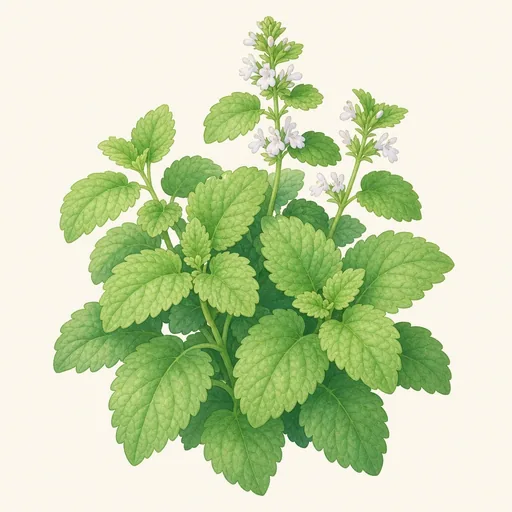
Lemon Balm
Melissa officinalis · Lamiaceae
- Start indoors6–8 weeks before the last frostFeb 13 – Mar 5
- Sow outdoorsFrom the last frost until 2 weeks afterApr 10 – Apr 30
- Plant outFrom the last frost until 2 weeks afterApr 10 – Apr 30
- Space30–45 cm (12–18 in) apart
- Harvest70–90 days after plantingJun 19 – Aug 19
Description
Lemon balm is a perennial herb in the mint family, Lamiaceae. It forms bushy clumps of branching, square stems, usually 30–90 cm tall. Its soft, opposite leaves are oval to heart-shaped, with scalloped edges and a lightly wrinkled surface. Bruising the foliage releases a fresh, sweet lemon scent. Small white to pale yellow flowers appear in the leaf axils during summer and attract bees and other pollinators. The plant can spread by seed and by slowly expanding clumps, and may self-sow freely in favorable conditions.
Native to parts of southern Europe and western Asia, lemon balm is now cultivated and naturalized across many temperate regions. It grows best in fertile, well-drained soil with consistent moisture, though established plants tolerate short dry spells. Full sun promotes compact growth where summers are mild; partial afternoon shade helps prevent scorching in hotter climates. Cut stems back after flowering to encourage fresh leaves and limit unwanted seedlings. In cold areas, the aboveground growth dies back in winter and returns from its roots in spring.
The leaves are used fresh or dried to flavor herbal tea, cold drinks, salads, and desserts. Their citrus aroma is strongest before flowering and fades with prolonged cooking or storage, so fresh leaves are often added near the end of preparation. Harvest by snipping stems above a pair of leaves, leaving enough foliage for regrowth. Lemon balm also has a long history of traditional herbal use, particularly in soothing teas, but it should not be treated as a substitute for medical care. Unlike some other mints, it does not typically spread through vigorous underground runners. Gardeners can grow it in pots to keep it close to the kitchen and help manage self-seeding.
Growing Conditions
30–90 cm (1–3 ft) tall, 45–60 cm (18–24 in) wide
- Smallest
- Largest
Part sun, 3+ hours
Tolerates full sun, part shade
Moderate
Keep evenly moist, not soggy.
Ideal 15–25 °C (59–77 °F)
Survives down to −34 °C (−29 °F).
pH 6–7.5 · acidic to neutral
Where it Grows
Planting
When to Plant
Plant lemon balm outdoors in spring, after the last expected frost, when the soil has begun to warm. Established plants tolerate cold, but young seedlings are more vulnerable, so wait if frosty nights are still likely. For an earlier start, sow seeds indoors about 6–8 weeks before your last expected frost date, then move the seedlings outside once frost danger has passed. Acclimate indoor-grown plants gradually to outdoor sun and wind over about a week before transplanting.
You can also sow seeds directly in the garden after the last frost. In places with mild winters, early autumn is another option for planting established seedlings or divisions: allow several weeks for their roots to settle in before cold weather arrives. If you are buying a potted plant, check that it is healthy and not severely root-bound; it can go into the ground whenever conditions are mild and you can keep it watered while it establishes.
How to Plant
Choose a spot with well-drained soil and full sun to partial shade. In hot climates, some afternoon shade helps keep the leaves from wilting. Loosen the soil and mix in a modest amount of compost if it is poor; avoid heavy feeding, which can encourage soft, less flavorful growth. Leave about 18–24 inches between plants to allow for their bushy habit and good airflow.
To transplant, dig a hole as deep as the root ball and a little wider. Gently loosen any circling roots, set the plant at the same depth it grew in its pot, fill around it, and water thoroughly. Keep the soil evenly moist while the plant establishes; afterward, water when the upper soil begins to dry.
For seeds, press them onto moist soil or cover them only very lightly, since they need light to germinate. Keep the surface consistently moist until seedlings appear, then thin them to the spacing above. Lemon balm can spread by self-seeding and expanding clumps. If you want to keep it contained, grow it in a pot at least 12 inches wide with drainage holes, using potting mix rather than garden soil. Snipping off flower stalks before seeds form also helps limit its spread.
Growth Timeline
- Germination 7–21 days
- Seedlings indoors 3–8 weeks
- Growing in the garden 70–90 days
- Harvest 16–24 weeks
Planting Calendar
- Start seeds indoors: 6–8 weeks before the last frost
- Sow outdoors: from the last frost until 2 weeks after
- Plant outdoors: from the last frost until 2 weeks after
- Germination: 7–21 days
- Start indoors: Feb 13 – Mar 5
- Sow outdoors: Apr 10 – Apr 30
- Plant out: Apr 10 – Apr 30
- Harvest: Jun 19 – Aug 19
Care
Care Calendar
- Prune · Mar 27 – Apr 30
Cut dead stems back to the base as new growth appears. - Divide · Mar 27 – May 14
Divide crowded clumps every few years and replant the vigorous sections. - Pinch out · May 1 – Jul 9
Pinch stem tips to encourage bushy, leafy growth. - Deadhead · Jun 5 – Sep 3
Remove flower stalks before they set seed to limit spreading.
Watering
Keep lemon balm evenly moist while it establishes. Water deeply when the top inch of soil feels dry, rather than giving it frequent light sprinkles. Once established, plants in the ground tolerate short dry spells, but prolonged drought can slow growth and make leaves less tender. A useful starting point is about 1 inch of water per week from rain and irrigation combined; adjust for heat, soil type, and how quickly the soil dries. Container plants need checking more often, especially in warm, windy weather. Water at the base in the morning so the leaves stay dry, and use a pot with drainage holes. If the soil remains soggy, water less often: lemon balm grows best in moist but well-drained soil, not waterlogged ground. Wilting that persists after the day cools is a sign to check soil moisture.
Pruning
Pinch the tips of young stems to encourage a bushier plant. During the growing season, trim long or floppy stems as needed, cutting just above a pair of leaves. If the plant begins to flower and you want tender leaves rather than seeds, cut it back before the flowers mature. A substantial midsummer trim can prompt a flush of fresh growth; leave several inches of leafy stems so the plant can recover. Remove damaged or diseased growth when you notice it, and clean your cutting tools before using them on other plants. Lemon balm dies back in cold winters, so dead stems can be cleared away in late winter or early spring. Avoid a hard cutback just before frost, when new growth may not have time to mature. Regular pruning also helps limit self-seeding, though it will not stop an established clump from spreading outward.
Weeding
Keep the area around young lemon balm plants free of weeds, which compete for water, nutrients, and light before the herb fills out. Pull weeds when the soil is slightly damp, grasping them near the base so their roots come up with them. Work gently around the crown: shallow cultivation can damage lemon balm’s roots or break off new shoots. A narrow hand tool is useful for removing weeds between stems without disturbing much soil. Once established, lemon balm’s leafy growth shades some weeds, but check the edges of the clump and any bare patches regularly. Remove weeds before they set seed, especially persistent grasses and other perennials whose roots become tangled with the herb. If lemon balm itself appears where you do not want it, pull young seedlings promptly. Cutting off flower stems before they set seed reduces the number of volunteer plants in nearby beds.
Mulching
Apply a 1–2 inch layer of organic mulch, such as shredded leaves or fine bark, around lemon balm after the soil warms in spring. Mulch helps retain moisture, suppress weeds, and protect the soil from splashing onto the leaves. Leave a small gap around the crown and stems rather than piling mulch against them, which can keep the base too damp. In hot weather, check beneath the mulch before watering: the surface may look dry while the soil underneath is still moist. Replenish the layer as it decomposes, but avoid building it up year after year. In containers, a thin mulch layer can slow drying, though the potting mix still needs regular moisture checks. In cold climates, a loose layer of leaves can help buffer the roots during winter; pull excess material away from emerging shoots in spring. Mulch will not reliably contain lemon balm’s spreading clump or its self-sown seedlings.
Fertilizing
Lemon balm usually needs little fertilizer, particularly when grown in garden soil improved with compost. In spring, a thin top-dressing of finished compost is generally enough to support new growth. If plants in poor soil remain small or pale despite appropriate light and watering, use a balanced fertilizer at the label rate rather than applying extra in hopes of faster growth. Too much fertilizer, especially nitrogen, can encourage soft, lush growth without improving the leaves you harvest. Container plants have a limited supply of nutrients: refresh their potting mix when needed, or feed lightly during active growth according to the product label. Do not fertilize a dry, stressed plant without watering appropriately first, and avoid feeding heavily late in the season where winters are cold. Before adding fertilizer to an established bed, consider whether crowding, soggy soil, or insufficient light—not a nutrient shortage—is the real cause of weak growth.
Pest Management
Check the undersides of leaves and tender shoots while harvesting. Aphids or spider mites may occasionally gather there; a firm spray of water can dislodge a small infestation. Remove badly affected stems and reassess the plant before treating it. If pests persist, an insecticidal soap labeled for edible plants may help when applied exactly as directed, including any harvest interval. Avoid spraying open flowers, where pollinators visit. Slugs and snails may chew leaves, particularly in damp, sheltered spots; remove hiding places, check plants in the evening, and hand-pick pests if practical. Good spacing, watering at soil level, and prompt removal of affected foliage help reduce fungal problems such as leaf spots and powdery mildew. Discard badly diseased leaves rather than harvesting them. Because lemon balm is a leafy herb, prevention and selective pruning are preferable to routine pesticide use; always identify the problem before choosing a treatment.
Harvesting
Harvest lemon balm once the plant has enough growth to spare. Snip individual leaves for immediate use, or cut stems just above a pair of leaves to encourage branching. For a larger harvest, take no more than about one-third of the plant at a time so it can regrow readily. Leaves are often at their most fragrant before flowering, but they can be picked throughout the growing season. Harvest in the morning after dew has dried, choosing clean, healthy foliage. Remove leaves from the stems and use them fresh, or dry them promptly in a shaded, well-ventilated place; high heat can diminish their aroma. Store fully dried leaves in an airtight container away from light. Repeated light harvests also help keep the plant compact. Allow enough time for recovery after a major cutting, and avoid stripping the plant shortly before the first expected frost.
Growing in Containers
Grows well in a pot of at least 10 litres (2.6 US gallons), with drainage holes. Can be grown indoors as a houseplant.
Propagation
From seed
- Sow seeds on the soil surface in spring.
- Press them in lightly and keep the soil moist.
- Provide light and warmth until they germinate.
- Transplant seedlings after the last frost.
From cuttings
- Take a healthy, nonflowering stem cutting in spring or early summer.
- Remove the lower leaves.
- Place the stem in moist potting mix.
- Keep it humid and out of direct sun until roots form.
- Pot up the rooted cutting.
By division
- Dig up an established clump in spring or autumn.
- Separate it into pieces with roots and shoots.
- Replant the divisions promptly.
- Water them well.
Companion Plants
Good neighbors
- Squash: Flowering lemon balm attracts bees that can help pollinate squash flowers.
- Cucumbers: Flowering lemon balm attracts bees that can help pollinate cucumber flowers.
Common Problems
- Yellowing leaves
- Sticky residue on leaves
- Black sooty coating
- Curled or cupped leaves
Aphids are small, soft-bodied insects that feed by piercing plants and drawing out sap. The group includes many…
- White powdery coating
- Yellowing leaves
- Curled or cupped leaves
- Distorted new growth
Powdery mildew is a group of fungal diseases, not a single species. Different fungi infect different hosts, including…
- Pale speckles or stippling
- Yellowing leaves
- Brown or crispy leaf edges
- Fine webbing
Spider mites are tiny, plant-feeding arachnids in the family Tetranychidae, not insects. Several species attack garden…
- Yellowing leaves
- Wilting
- Stunted growth
- Leaves dropping
Root rot is a general name for the decay of plant roots, not a single disease with one scientific name. It can result…
- Spreading: Lemon balm self-seeds readily and can take over nearby beds if flower heads are left in place.
- Powdery mildew and leaf spot: These can develop in humid conditions, especially where plants are crowded.
- Aphids and spider mites: Both may feed on the leaves, particularly on stressed plants.
- Root rot: Poorly drained, persistently wet soil can damage the roots.
Varieties
Its yellow-green leaves are brightest in partial shade, where they are less likely to scorch.
- golden foliage
- lemon scented
Cream-edged leaves add color to a herb bed while retaining the familiar lemon-balm scent.
- variegated foliage
- lemon scented
This selection is grown for its pronounced lemon scent.
- strongly scented
- vigorous
More about varieties
- ‘Aurea’: Green leaves splashed with golden yellow.
- ‘Variegata’: Green leaves marked with creamy white.
- ‘All Gold’: Bright golden foliage that benefits from some afternoon shade in hot climates.
Health Benefits
Lemon balm has a long history of use as a calming herb, commonly prepared as a tea. Small human studies suggest that certain lemon balm preparations may temporarily reduce feelings of stress or support sleep, but the studies have used different doses and extracts. They do not establish that an ordinary cup of tea treats anxiety or insomnia.
It is also traditionally used for indigestion and bloating. Some research has examined lemon balm in combination with other herbs for digestive symptoms, making it difficult to tell how much benefit lemon balm provides on its own.
A standardized topical lemon balm cream has been studied for cold sores caused by herpes simplex virus. Limited evidence suggests it may ease symptoms or help sores heal, but it does not cure the infection or replace prescribed antiviral treatment when that is needed.
For most adults, lemon balm tea is generally well tolerated, though it may cause drowsiness. Ask a healthcare professional before using concentrated extracts or supplements, particularly if you take sedatives or thyroid medication. Safety during pregnancy and breastfeeding has not been well established. Use lemon balm for comfort or enjoyment, not as a substitute for medical care.
Fun Facts
- The genus name Melissa comes from the Greek word for “honeybee”; its small flowers attract bees.
- Lemon balm belongs to the mint family and has the square stems typical of many mints.
- Crushing a leaf releases its distinctive lemon scent.
- Cutting off flower heads before they set seed helps keep the plant from spreading.
Notice an error or have a question about Lemon Balm? Contact us