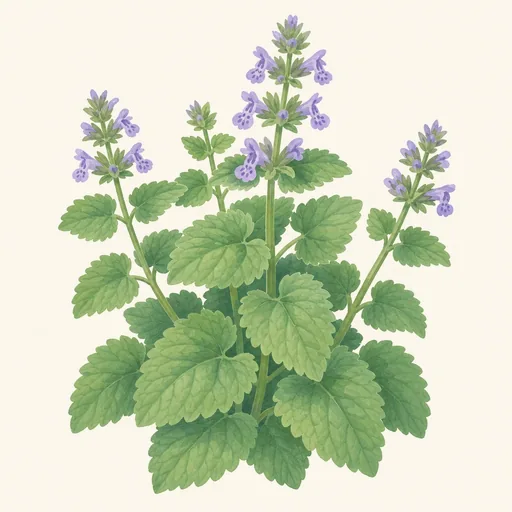
Catnip
Nepeta cataria · Lamiaceae
- Start indoors6–8 weeks before the last frostFeb 13 – Mar 5
- Sow outdoorsFrom the last frost until 2 weeks afterApr 10 – Apr 30
- Plant outFrom the last frost until 2 weeks afterApr 10 – Apr 30
- Space30–45 cm (12–18 in) apart
- Harvest70–90 days after plantingJun 19 – Aug 19
Description
Catnip is a hardy, aromatic perennial herb in the mint family. It forms upright, branching stems, usually 30–100 cm (1–3 ft) tall, with opposite, heart-shaped to triangular leaves. The softly hairy, gray-green leaves have toothed edges and release a pungent, minty scent when crushed. From late spring through summer, and sometimes into autumn, clusters of small white to pale pink flowers appear at the stem tips. The blossoms often have purple speckles and attract bees and other pollinators. Like many mints, catnip has square stems.
Native to parts of Europe and Asia, catnip is widely cultivated and has become naturalized elsewhere, especially in temperate regions. It grows along roadsides, on disturbed ground, and around old gardens. In a garden, it does best in full sun and well-drained soil. Established plants tolerate dry conditions but dislike persistently wet roots. Cutting them back after flowering encourages fresh growth and may bring a second flush of blooms. Catnip self-sows readily, so removing spent flower heads can limit unwanted seedlings. It can be propagated from seed, stem cuttings, or division.
Catnip is best known for its effect on many domestic cats. Its leaves and stems contain nepetalactone, a compound that can trigger sniffing, rubbing, rolling, or playful behavior. Not every cat responds, and the reaction is brief. Dried foliage is often put in cat toys, though its scent fades in storage. People also grow catnip for its flowers and sometimes steep its leaves in herbal tea. Catnip is distinct from catmint, a common name used for several other Nepeta species and garden hybrids. Anyone who is pregnant, taking medication, or treating a health condition should seek medical advice before using catnip medicinally.
Growing Conditions
60–90 cm (2–3 ft) tall, 45–60 cm (18–24 in) wide
- Smallest
- Largest
Full sun, 4+ hours
Tolerates part sun, part shade
Moderate
Keep evenly moist, not soggy.
Ideal 15–27 °C (59–81 °F)
Survives down to −40 °C (−40 °F).
pH 6–7.5 · neutral
Where it Grows
Planting
When to Plant
Plant catnip outdoors in spring, after the last expected frost, when the soil is workable and no longer waterlogged. Established plants tolerate cold, but young seedlings are easier to establish once hard freezes have passed. For an earlier start, sow seeds indoors about six to eight weeks before your area’s last frost date. Move the seedlings outside after frost danger has passed, gradually exposing them to outdoor conditions over about a week first. You can also sow seeds directly outdoors after the last frost. In areas with mild winters, fall sowing is another option: the seeds can remain in the soil and germinate when conditions suit them in spring. If you are planting nursery-grown catnip, choose a cool, cloudy day or plant in the evening to reduce transplant stress. Avoid planting during a heat wave, and keep new plants watered while they establish. Divide established plants in spring or early fall.
How to Plant
Choose a spot with well-drained soil and at least six hours of sun a day. Catnip also grows in partial shade, especially where afternoons are hot. Loosen the soil and remove weeds; avoid adding large amounts of fertilizer or rich compost, which can encourage soft, floppy growth. To start seeds indoors, press them onto moist seed-starting mix and cover them only lightly, about 1/8 inch (3 mm) deep. Keep the mix moist but not soggy until they sprout. If sowing outdoors, prepare a fine seedbed and plant the seeds just as shallowly. Thin or transplant seedlings so mature plants stand about 18–24 inches (45–60 cm) apart. Set transplants at the same depth they grew in their pots, firm the soil gently, and water thoroughly. Keep watering regularly until the roots establish; afterward, let the soil dry somewhat between waterings. For a container, use potting mix and a pot at least 10–12 inches (25–30 cm) wide with drainage holes. Protect young plants with a small wire cage if neighborhood cats visit: rolling and digging can damage seedlings. Catnip can self-seed freely, so remove spent flower heads if you do not want it to spread.
Growth Timeline
- Germination 7–21 days
- Seedlings indoors 3–8 weeks
- Growing in the garden 70–90 days
- Harvest 12–18 weeks
Planting Calendar
- Start seeds indoors: 6–8 weeks before the last frost
- Sow outdoors: from the last frost until 2 weeks after
- Plant outdoors: from the last frost until 2 weeks after
- Germination: 7–21 days
- Start indoors: Feb 13 – Mar 5
- Sow outdoors: Apr 10 – Apr 30
- Plant out: Apr 10 – Apr 30
- Harvest: Jun 19 – Aug 19
Care
Care Calendar
- Prune · Mar 13 – Apr 30
Cut back dead stems to make room for new growth. - Divide · Mar 27 – May 14
Divide crowded established clumps every few years. - Pinch out · May 1 – Jun 4
Pinch young stem tips to encourage bushier growth. - Deadhead · Jun 5 – Aug 20
Remove spent flower spikes before they set seed if you do not want volunteers.
Watering
Water newly planted catnip regularly through its first growing season. Check the soil before watering: if the top inch or two feels dry, soak the root area thoroughly, then let excess water drain. In the ground, established catnip usually needs water only during extended dry spells. Water deeply rather than giving frequent light sprinkles, which encourage shallow roots. Plants in containers dry out faster; check them often in hot weather and water when the upper inch of potting mix is dry. Use a pot with drainage holes, and empty any saucer that holds standing water. Aim water at the soil rather than the foliage, especially in humid weather. Catnip tolerates some drought better than constantly wet roots, so do not keep the soil soggy. Wilting during prolonged heat can signal a need for water, but check the soil first.
Pruning
Pinch the tips of young catnip plants once they are growing strongly to encourage branching and a bushier shape. During the growing season, trim leggy stems just above a pair of leaves. After the first flush of flowers, cutting stems back by roughly one-third can encourage fresh growth and sometimes a second bloom. If you want leaves for drying, you can cut before or as flowering begins; if you want flowers for pollinators, leave some stems uncut. Remove damaged or diseased growth when you see it, using clean shears. Catnip readily self-seeds, so clip off spent flower heads before they shed seed if you do not want seedlings nearby. Leave some stems standing over winter if desired, then clear away dead growth in early spring. Avoid cutting a stressed plant back severely during intense heat or drought.
Weeding
Keep the area around young catnip free of weeds until the plants have filled out. Weeds compete for light, moisture, and nutrients, and a crowded planting can have poorer air circulation. Pull small weeds by hand after rain or watering, when their roots come out more easily. If you use a hoe, work shallowly so you do not damage catnip roots. Check regularly in spring, when weeds grow quickly. Space plants so you can reach between them rather than letting surrounding vegetation close in. Once established, catnip competes fairly well, but occasional hand-weeding still helps keep the planting tidy. Distinguish weeds from catnip seedlings before pulling: catnip can drop seed and appear beyond its original spot. Remove unwanted seedlings while they are small, before their roots become established. A modest layer of mulch can reduce germination, but it will not replace checking for weeds.
Mulching
Spread about 1–2 inches of loose organic mulch, such as shredded leaves or fine bark, around catnip to slow weed growth and reduce moisture loss. Keep mulch a few inches away from the stems and crown; piling damp material against the plant can encourage rot. Because catnip prefers well-drained conditions, use a light layer rather than a thick, moisture-trapping blanket, especially in heavy soil or a wet climate. Add mulch after the soil has warmed in spring, and replace it as it breaks down. In a hot, dry location, mulch can help newly planted catnip establish without needing such frequent watering. Check the soil beneath it before irrigating, since the surface may look dry while the root area remains moist. If plants are in pots, a thin layer is optional; good drainage and an appropriate watering routine matter more.
Fertilizing
Catnip grows well in average, well-drained soil and usually needs little fertilizer. At planting, mix some compost into poor soil if needed, without making the bed overly rich. For established plants, a thin layer of compost in spring is generally sufficient; water it in, or let rainfall carry nutrients into the soil. Avoid routine heavy applications of high-nitrogen fertilizer. They can produce soft, lush growth at the expense of a compact plant, and extra feeding is rarely necessary for useful leaf harvests. If growth is weak, first check sunlight, drainage, watering, and crowding rather than assuming a nutrient shortage. Container-grown catnip may exhaust its potting mix faster; if it is growing poorly despite suitable care, use a balanced liquid fertilizer diluted according to its label during active growth. Do not fertilize a drought-stressed plant or feed heavily near the end of the season.
Pest Management
Catnip has relatively few serious pest problems, but inspect new growth and leaf undersides regularly. Aphids may cluster on tender stems; a firm spray of water can dislodge a small infestation. Spider mites are more likely in hot, dry conditions and may cause fine stippling or webbing. Remove badly affected leaves and correct watering problems without leaving the soil soggy. If needed, use insecticidal soap labeled for the pest and edible herbs, following its directions, including any harvest interval. Give plants room for air circulation and water at soil level to limit fungal problems such as powdery mildew. Prevent root rot with well-drained soil and containers that drain freely. Cats are often the most noticeable visitors: rolling or digging can break young plants, so protect them with a wire cage or barrier until they are sturdy. Avoid spraying flowers visited by pollinators.
Harvesting
Harvest catnip once a healthy plant has enough stems to spare, preferably just before or as flowers begin to open. Choose a dry morning after the dew has evaporated. With clean scissors, cut leafy stems just above a pair of leaves so the plant can branch and regrow. Take no more than about one-third to one-half of a vigorous plant at a time, and harvest more lightly from young or stressed plants. You can pick individual leaves for immediate use throughout the growing season. For storage, tie small, loose bundles of stems or spread them in a single layer in a shaded, well-ventilated place. When the leaves are fully dry and crumble easily, strip them from the stems and seal them in an airtight container away from heat, light, and moisture. Label and date the container; the scent fades with time. Keep drying and stored catnip out of reach of cats.
Growing in Containers
Grows well in a pot of at least 10 litres (2.6 US gallons), with drainage holes. Can be grown indoors as a houseplant.
Propagation
From seed
- Sow seeds indoors 6–8 weeks before the last frost, or outdoors after frost danger passes.
- Press seeds onto moist seed-starting mix and cover very lightly.
- Keep the mix moist and provide bright light.
- Transplant seedlings after frost, spacing them about 18–24 inches apart.
From cuttings
- Take 4–6-inch cuttings from healthy, nonflowering stems in spring or early summer.
- Remove leaves from the lower half of each cutting.
- Insert the stems into moist, well-draining potting mix.
- Keep them in bright, indirect light until rooted, then pot them up.
By division
- Dig up an established clump in spring.
- Separate it into sections with roots and shoots attached.
- Replant the sections promptly in well-drained soil.
- Water them until established.
Companion Plants
Good neighbors
- Cabbage: Gardeners commonly plant catnip near cabbage because its scent may deter flea beetles and cabbage moths.
- Broccoli: Catnip is commonly paired with broccoli for its potential to deter flea beetles and cabbage moths.
Common Problems
- Yellowing leaves
- Sticky residue on leaves
- Black sooty coating
- Curled or cupped leaves
Aphids are small, soft-bodied insects that feed by piercing plants and drawing out sap. The group includes many…
- Pale speckles or stippling
- Yellowing leaves
- Brown or crispy leaf edges
- Fine webbing
Spider mites are tiny, plant-feeding arachnids in the family Tetranychidae, not insects. Several species attack garden…
- White powdery coating
- Yellowing leaves
- Curled or cupped leaves
- Distorted new growth
Powdery mildew is a group of fungal diseases, not a single species. Different fungi infect different hosts, including…
- Yellowing leaves
- Wilting
- Stunted growth
- Leaves dropping
Root rot is a general name for the decay of plant roots, not a single disease with one scientific name. It can result…
- Root rot: Wet, poorly drained soil can cause yellowing and wilting. Let the soil dry between waterings.
- Powdery mildew: A white coating may develop on leaves, especially where air circulation is poor. Space plants and avoid wetting the foliage.
- Aphids and spider mites: These can damage new growth or cause leaf stippling; a firm spray of water often helps.
- Cats and self-seeding: Visiting cats may flatten young plants, while spent flowers can produce unwanted seedlings. A small cage protects new growth; deadheading limits spread.
Varieties
- Common catnip (Nepeta cataria): The usual green-leaved plant grown for its aromatic foliage and white flowers.
- Lemon catnip (N. cataria var. citriodora): A form with a noticeable lemon scent, often grown for herbal tea.
- Golden catnip (N. cataria ‘Aurea’): A golden-leaved cultivar grown chiefly for its foliage.
Health Benefits
Catnip is best known for its effects on cats, but people have also used its leaves in herbal teas. Traditionally, catnip tea has been taken for relaxation, mild digestive discomfort, and occasional sleeplessness. These are traditional uses, not well-established medical benefits: good-quality human studies are too limited to show that catnip reliably treats anxiety, insomnia, or digestive conditions.
For cats, smelling catnip can prompt rolling, rubbing, play, or a brief burst of activity. The response usually lasts only several minutes, and some cats do not respond at all. This makes catnip useful as an enrichment tool: a little dried leaf in a toy or on a scratching post may encourage play or exploration. Eating it can sometimes cause vomiting or diarrhea, especially in large amounts.
Catnip tea is generally used in modest amounts, but its safety has not been well studied. Avoid medicinal use during pregnancy, and ask a healthcare professional before using it if you take sedating medicines, have a medical condition, or plan to give it to a child. Catnip should not replace proven treatment for persistent symptoms.
Fun Facts
- Catnip’s best-known scent compound is nepetalactone, released when the leaves are bruised.
- Sensitivity to catnip varies among cats; some show no obvious response.
- After reacting to catnip, a cat typically becomes temporarily less responsive to it.
- Catnip is in the mint family and has the square stems typical of many mints.
- Its small flowers attract bees and other pollinators.
Notice an error or have a question about Catnip? Contact us