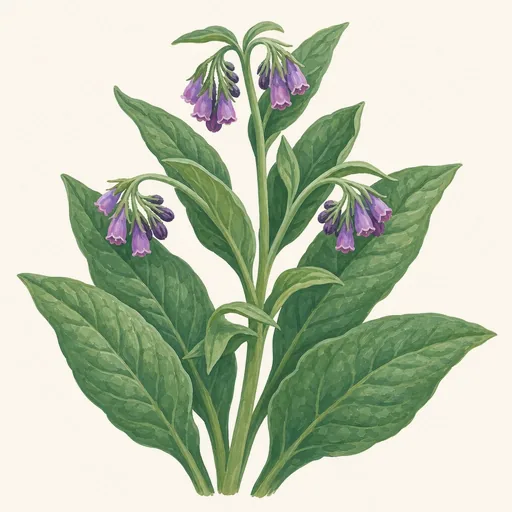
Comfrey
Symphytum officinale · Boraginaceae
- Plant outFrom 4 weeks before to 2 weeks after the last frostMar 13 – Apr 30
- Plant in autumn4–8 weeks before the first autumn frostAug 30 – Oct 3
- Space60–90 cm (2–3 ft) apart
- Harvest60–90 days after plantingMay 12 – Aug 19
Description
Comfrey is a hardy, long-lived perennial in the borage family, Boraginaceae. Native to much of Europe and parts of western Asia, it grows along streambanks, in damp meadows, and beside ditches. It forms a clump of large, pointed, rough, hairy leaves that can reach 30 cm (12 in) or more in length. Stout, bristly stems typically rise 60–120 cm (2–4 ft). From late spring into summer, nodding clusters of tubular flowers appear, ranging from cream or pale pink to purple. Bumblebees readily visit them.
Gardeners grow comfrey for its abundant foliage and deep, fleshy roots. The leaves can be cut several times during the growing season and added to compost or used as mulch, returning nutrients to the soil as they decay. It prefers fertile, moisture-retentive soil and full sun to partial shade. Established plants tolerate some drought but grow best with regular moisture. Propagation is usually by root division or root cuttings. Even small root pieces left in the ground may regrow, so choose a permanent site and avoid digging around the crown. Some plants sold as Russian comfrey are hybrids (Symphytum × uplandicum), not S. officinale. Sterile selections are often preferred where self-seeding would be troublesome.
Comfrey has a history of use in herbal preparations, but its leaves and roots contain pyrrolizidine alkaloids that can damage the liver. Do not eat it or drink comfrey tea. Avoid applying homemade preparations to broken skin, and seek medical advice before using a comfrey product. Its coarse growth may crowd smaller plants. Cut back spent stems to tidy the clump and reduce seed production where plants set seed. Wear gloves if the scratchy hairs irritate your skin.
Growing Conditions
0.6–1.2 m (2–4 ft) tall, 60–90 cm (2–3 ft) wide
- Smallest
- Largest
Full sun, 2+ hours
Tolerates part sun, part shade
Moderate
Keep evenly moist, not soggy.
Ideal 15–25 °C (59–77 °F)
Survives down to −40 °C (−40 °F).
acidic to neutral to alkaline
Where it Grows
Planting
When to Plant
Plant comfrey in early spring, once the soil has thawed and is workable. You do not need to wait for the last frost: established comfrey tolerates cold, though a hard frost may damage tender new leaves. Spring planting gives root cuttings, divisions, and young plants a full growing season to establish. In places with mild winters, early autumn is another good option, provided there are at least four to six weeks before the ground freezes. Avoid planting during summer heat or into waterlogged or frozen soil.
Your planting material also matters. Root cuttings and crown divisions are commonly planted while the plant is dormant or just beginning to grow in spring. A container-grown plant can go into the ground whenever conditions are mild and you can keep it watered during establishment. Common comfrey can be grown from seed, but the popular cultivar ‘Bocking 14’ is sterile and must be propagated from roots or divisions.
How to Plant
Choose the site carefully: comfrey develops deep roots, regrows from root pieces left in the soil, and can be difficult to remove. Give it a permanent spot away from vegetable beds you regularly dig. A fertile, moist but well-drained soil is ideal, in full sun or partial shade. Loosen the ground and mix in compost if the soil is poor. Allow about 2–3 feet (60–90 cm) between plants so their large leaves have room to spread.
For root cuttings, use healthy pieces roughly 2–4 inches (5–10 cm) long. Lay them horizontally in shallow furrows, cover with about 1–2 inches (2.5–5 cm) of soil, and water. For a crown division, plant with its growing buds at or just below the soil surface. Set a container-grown plant at the same depth it grew in its pot, then firm the soil gently around it. Water well after planting and keep the soil evenly moist, not soggy, until new growth shows that the plant is established. Mulch around, but not over, the crown to limit weeds and conserve moisture. If planting ‘Bocking 14’, buy root cuttings or divisions from a trusted source; it will not grow from seed.
Growth Timeline
- Growing in the garden 60–90 days
- Harvest 16–24 weeks
Planting Calendar
- Plant outdoors: from 4 weeks before to 2 weeks after the last frost
- Autumn planting: 4–8 weeks before the first autumn frost
- Plant out: Mar 13 – Apr 30
- Autumn planting: Aug 30 – Oct 3
- Harvest: May 12 – Aug 19
Care
Care Calendar
- Mulch · Mar 27 – Apr 30
Spread compost or organic mulch around emerging plants, keeping it off the crown. - Prune · May 8 – Aug 20
Cut established plants back for leaf harvest, allowing them to regrow between cuts. - Deadhead · May 8 – Jul 23
Remove spent flowers from seed-producing comfrey before seeds form.
Watering
Keep newly planted comfrey evenly moist while its roots establish. Water deeply when the upper few centimeters of soil dry out, rather than giving frequent light sprinkles; in dry weather, this may mean watering about once a week. Adjust for rainfall, soil type, and heat. Established comfrey has a deep root system and usually needs little supplemental water, though a long drought can slow leaf growth. Water during extended dry spells if you want a steady supply of leaves, especially after cutting, when new shoots are developing. Direct water onto the soil instead of the foliage to help limit leaf diseases. Comfrey grows best in moisture-retentive but well-drained soil: persistently soggy ground can damage the crown and roots. A layer of mulch helps the soil stay evenly moist.
Pruning
Cut back damaged or untidy leaves as needed with clean shears. For a productive planting, you can cut most of the foliage several times during the growing season, leaving roughly 5–10 cm (2–4 in) of growth above the crown so it can regrow. Let a new plant establish before making heavy cuts, and allow several weeks between harvests. Stop repeated cutting toward the end of the season so the plant can replenish its roots before winter. If you want to support pollinators, leave some flowering stems standing until the blooms fade. Removing spent flower stalks before seeds mature can reduce self-seeding in fertile forms of comfrey; sterile cultivars do not produce viable seed. Wear gloves when handling the coarse, hairy leaves, which can irritate skin. Remove dead top growth after it dies back.
Weeding
Keep the area around young comfrey plants free of weeds until the broad leaves form a dense canopy. Pull small weeds by hand or use a shallow hoe, taking care not to nick comfrey’s crown or roots. Comfrey can regrow from root pieces left in the soil, so digging or cultivating deeply around it may spread it rather than control it. Once established, the plant shades out many nearby weeds, but check its edges regularly for persistent grasses and other perennials. A layer of organic mulch can suppress weed seedlings and make hand-weeding easier. Give comfrey enough space that you can reach its base without damaging neighboring plants. If it appears outside its allotted area, remove new shoots promptly and dig out as much of their roots as possible; repeated removal may be needed.
Mulching
Spread about 5–8 cm (2–3 in) of compost, shredded leaves, or other organic mulch over the soil around comfrey. Keep mulch a few centimeters away from the crown so moisture does not remain trapped against new shoots. Mulch conserves water, moderates soil temperature, and suppresses weeds, which is especially useful while plants are establishing. Top it up as it decomposes, but avoid building a thick, soggy layer. In cold climates, mulch can also buffer the soil after the foliage dies back, although established comfrey is generally hardy. Comfrey leaves can be used as mulch around other plants; chop or spread them in a thin layer so they do not form a wet mat. Use leaves without roots or mature seeds, and remember that moving root fragments can establish unwanted plants.
Fertilizing
Comfrey grows vigorously in fertile soil. Before planting, incorporate compost into the bed; for established plants, a layer of compost around the crown in spring is usually sufficient. Plants cut repeatedly for mulch or compost remove nutrients from the bed with every harvest, so replenish the soil with compost or another appropriate fertilizer as needed. If growth is weak despite adequate moisture and light, a soil test can show whether nutrients or soil pH need attention. Follow fertilizer label rates rather than applying extra nitrogen automatically: excessive feeding is unnecessary for many home plantings and can encourage overly soft growth. Comfrey’s deep roots take up nutrients from the soil, but the plant does not create those nutrients. Returning cut leaves to the same bed recycles some of them; taking leaves elsewhere gradually depletes the planting area.
Pest Management
Comfrey is usually trouble-free once established. Check tender spring shoots for slugs and snails, particularly in damp, sheltered spots; remove them by hand, clear nearby hiding places, or use a bait labeled for garden use if damage is serious. Aphids may gather on new growth or flower stalks. A firm spray of water often dislodges them, and beneficial insects commonly provide further control. Powdery mildew or other leaf diseases may appear where foliage stays damp and air circulation is poor. Space plants adequately, water at soil level, and remove badly affected leaves. Discard diseased foliage rather than using it as mulch. Inspect plants before treating them: minor leaf damage rarely justifies a pesticide on a vigorous plant. If you do use a product, check that its label permits use on comfrey and follow all directions.
Harvesting
Harvest leaves once a comfrey plant is well established, usually after its first growing season. During active growth, cut leaves or stems with clean shears, leaving about 5–10 cm (2–4 in) above the crown. An established plant can often provide several cuts between late spring and early autumn if moisture and soil fertility are adequate; let it regrow between cuts and stop before cold weather so its roots can recover. Leave some flowers for bees if you do not need every leaf. Wear gloves and long sleeves, as the bristly foliage can irritate skin. Use harvested leaves for compost or as mulch, without including pieces of root that could spread the plant. Do not harvest comfrey for food or tea: it contains pyrrolizidine alkaloids that can cause serious liver harm when ingested.
Growing in Containers
Grows well in a pot of at least 40 litres (11 US gallons), with drainage holes. Best kept outdoors.
Propagation
From cuttings
- Dig up a section of mature root in spring.
- Cut it into pieces about 5–10 cm long.
- Lay the pieces horizontally under 2–5 cm of soil.
- Water them and keep the soil lightly moist until shoots appear.
By division
- Lift an established clump in spring or autumn.
- Separate crown pieces, keeping a bud and roots on each.
- Replant the pieces promptly at their original depth.
- Water them in well.
From seed
- Use seed from fertile common comfrey; sterile cultivars do not produce viable seed.
- Sow the seed shallowly in moist seed-starting mix.
- Keep the mix moist until seedlings emerge.
- Transplant seedlings after they develop several true leaves.
Companion Plants
Good neighbors
- Apple: Comfrey is commonly grown beneath apple trees to attract pollinators and provide leaves for mulch.
Common Problems
- Orange or rust-colored spots
- Spots on leaves
- Yellowing leaves
- Leaves dropping
Rust is a group of plant diseases caused by fungi in the order Pucciniales, not a single species. Different rust fungi…
- Holes in leaves
- Slime trails
- Stems chewed or cut through
Slugs and snails are soft-bodied mollusks that feed on many garden plants. Snails carry a visible shell; most slugs…
- Slugs and snails may chew young leaves.
- Powdery mildew or rust can develop on foliage, especially where plants are crowded.
- Roots may rot in persistently waterlogged soil.
- Established plants are difficult to remove: even small root fragments can regrow. Seed-producing types may also spread beyond their planting area.
Varieties
A seedless selection commonly grown for leaves used in compost and mulch.
- sterile
- vigorous
- compost crop
A seedless selection grown for its abundant foliage.
- sterile
- vigorous
More about varieties
- Common comfrey (Symphytum officinale): The traditional medicinal species; it can spread by seed as well as by root fragments.
- Russian comfrey (Symphytum × uplandicum): A vigorous hybrid often grown for mulch and compost material.
- ‘Bocking 14’: A sterile Russian comfrey selection valued for abundant leaves; it spreads by roots, not seed.
- ‘Bocking 4’: Another Russian comfrey selection, traditionally grown as a fodder crop.
Health Benefits
Comfrey has a long history of use as a poultice or salve for bruises, sprains, and minor aches. Today, its best-known wellness use is in commercial topical preparations for short-term relief of muscle or joint discomfort. Some clinical studies of specific comfrey-root products have reported reduced pain from sprains, back pain, or knee osteoarthritis. Those findings do not establish that homemade remedies have the same benefits.
Comfrey contains allantoin, a compound associated with skin-conditioning and tissue-repair processes. It is sometimes used in products intended to soothe irritated skin, but evidence for treating wounds is limited. Do not apply comfrey to broken skin, where unwanted compounds may be absorbed more readily.
The major safety concern is that comfrey contains pyrrolizidine alkaloids, which can damage the liver. Do not eat comfrey or drink comfrey tea. Concentrations vary among plants and preparations, so homemade ointments are hard to assess for safety. Even with commercial topical products, follow the label and use them only for the recommended period. Avoid comfrey during pregnancy or breastfeeding, for children, and if you have liver disease; ask a healthcare professional before using it for a persistent injury or pain.
Fun Facts
- Comfrey’s old nickname, “knitbone,” reflects its historical use on injuries—not a proven ability to mend bones.
- Its bell-shaped flowers attract bees, including bumblebees.
- Gardeners often cut its leaves for mulch or add them to compost.
- ‘Bocking 14’ does not produce viable seed, but a piece of its root can grow into a new plant.
- Comfrey leaves are noticeably hairy and can feel rough to the touch.
Notice an error or have a question about Comfrey? Contact us