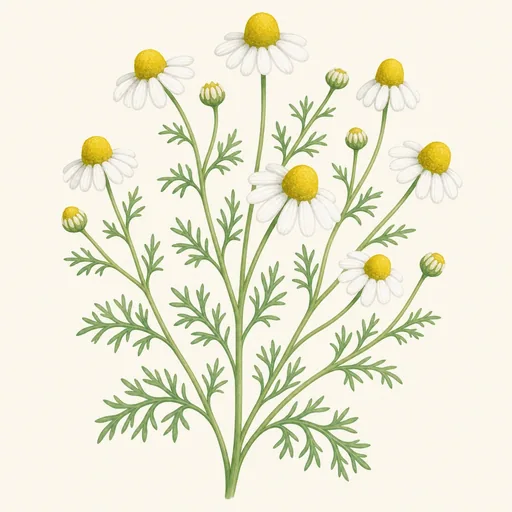
Chamomile
Matricaria chamomilla · Asteraceae
- Start indoors4–6 weeks before the last frostFeb 27 – Mar 19
- Sow outdoorsFrom 2 weeks before to 2 weeks after the last frostMar 27 – Apr 30
- Plant outFrom the last frost until 2 weeks afterApr 10 – Apr 30
- Space15–30 cm (6–12 in) apart
- Harvest60–90 days after plantingJun 9 – Aug 19
Description
Chamomile is an aromatic annual herb in the daisy family, grown for its small flowers, which are commonly dried for herbal tea. Its finely divided, feathery leaves grow on branching stems that typically reach 20–60 cm in height. Each flower head has a yellow central disc surrounded by white ray florets. As the head matures, the disc becomes cone-shaped and hollow inside—a useful feature for distinguishing German chamomile from similar-looking plants. The flowers have a sweet, apple-like scent.
Chamomile grows best in full sun and well-drained soil. It tolerates relatively poor soil but does not thrive in waterlogged ground. Seeds need light to germinate, so gardeners usually press them onto the soil surface rather than burying them deeply. Sow outdoors after the last hard frost, or start plants indoors and transplant them carefully. In suitable conditions, chamomile may self-seed and return the following year. Its open flowers attract pollinators and other beneficial insects.
Harvest flower heads when the white petals have opened and the yellow centres are prominent. Pick them on a dry day, then spread them in a thin layer away from direct sunlight until thoroughly dry. Store the dried flowers in an airtight container. They are most often steeped in hot water to make a mild, fragrant infusion. Chamomile has a long history of traditional use for relaxation and digestive discomfort, but evidence for particular health benefits varies, and it should not replace medical treatment. People allergic to plants in the daisy family may react to chamomile. The name can also refer to Roman chamomile, a different, low-growing perennial species; this description refers to German chamomile.
Growing Conditions
30–60 cm (12–24 in) tall, 20–30 cm (8–12 in) wide
- Smallest
- Largest
Full sun, 4+ hours
Tolerates part sun
Moderate
Keep evenly moist, not soggy.
Ideal 15–24 °C (59–75 °F)
pH 5.5–7.5 · acidic to neutral
Where it Grows
Planting
When to Plant
Plant chamomile when the weather is cool to mild and the soil can be kept evenly moist while seeds germinate. For German chamomile, an annual, sow outdoors in spring once the soil is workable and severe freezes are unlikely. You can start seeds indoors about four to six weeks before your last expected frost, then move seedlings outside after they have been gradually accustomed to outdoor conditions. In areas with mild winters, you can also sow German chamomile in autumn for spring growth. Roman chamomile is a perennial. Plant seeds or nursery plants in spring after the last hard frost, or in early autumn where winters are mild, allowing several weeks for roots to establish before freezing weather. If you are unsure which chamomile you have, check the seed packet or plant label: the two types have similar growing needs, but their annual and perennial life cycles affect when you plant them.
How to Plant
Choose a spot with well-drained soil and at least six hours of sun. In very hot climates, some afternoon shade can help. Chamomile grows well in ordinary garden soil; avoid heavily fertilized beds, which can encourage leafy growth at the expense of flowers. Loosen the top few inches of soil, remove weeds, and rake the surface level before sowing.
Chamomile seeds are tiny and need light to germinate. Scatter them thinly over the soil, press them gently into the surface, and leave them uncovered or add only the lightest dusting of soil. Water with a gentle spray so the seeds do not wash away. Keep the surface consistently moist, but not soggy, until seedlings appear, usually within one to three weeks. Thin German chamomile seedlings to about 6–9 inches apart and Roman chamomile to about 8–12 inches apart.
If starting seeds indoors, use a seed-starting mix and the same shallow-sowing method. Gradually expose seedlings to outdoor conditions over about a week before transplanting them. Set nursery plants at the same depth they grew in their pots, water them thoroughly, and keep the soil lightly moist while they establish. Once established, water when the upper soil begins to dry rather than keeping the bed constantly wet.
Growth Timeline
- Germination 7–14 days
- Seedlings indoors 2–7 weeks
- Growing in the garden 60–90 days
- Harvest 6–10 weeks
Planting Calendar
- Start seeds indoors: 4–6 weeks before the last frost
- Sow outdoors: from 2 weeks before to 2 weeks after the last frost
- Plant outdoors: from the last frost until 2 weeks after
- Germination: 7–14 days
- Start indoors: Feb 27 – Mar 19
- Sow outdoors: Mar 27 – Apr 30
- Plant out: Apr 10 – Apr 30
- Harvest: Jun 9 – Aug 19
Care
Care Calendar
- Divide · Mar 27 – May 14
Divide established Roman chamomile clumps every few years. - Thin · Apr 17 – May 14
Thin crowded German chamomile seedlings so they have room to grow. - Deadhead · May 22 – Aug 6
Pick flower heads regularly to encourage more blooms.
Watering
Water newly sown chamomile gently so the soil stays evenly moist until seedlings establish. After that, water when the top 1 inch (2–3 cm) of soil feels dry, soaking the root zone rather than giving frequent light sprinkles. Established plants tolerate short dry spells, but prolonged drought can reduce flowering. Containers dry out faster than garden beds and may need more frequent checks, especially in hot weather. Water at soil level in the morning when possible, leaving foliage time to dry. Chamomile needs well-drained soil: persistently wet ground can encourage root rot and seedling damping-off. Reduce watering during cool, rainy periods, and make sure pots have drainage holes. If plants wilt despite damp soil, check drainage rather than adding more water.
Pruning
Remove spent flowers regularly if you want to keep plants tidy and encourage further blooms; harvestable flowers can be picked instead of deadheaded. German chamomile is an annual, so it usually needs little pruning beyond removing damaged or diseased growth. Avoid cutting back the whole plant heavily while it is flowering. Roman chamomile is a low-growing perennial that can be lightly trimmed after a flush of bloom to keep it compact. If it spreads beyond its allotted space, cut back or lift the outer growth. Use clean scissors, and avoid stripping away so much healthy foliage that the plant struggles to recover. Toward the end of the season, leave a few flower heads to set seed if you want German chamomile to self-sow; otherwise, remove them before seeds mature.
Weeding
Keep the planting area free of weeds while chamomile seedlings are small. Young plants can be overwhelmed by faster-growing weeds competing for light, water, and nutrients. Pull weeds by hand when the soil is slightly damp, taking care not to uproot nearby chamomile. If you use a hoe, work shallowly: disturbing the surface can damage roots or bury tiny seedlings. Once plants fill out, continue checking between them so taller weeds do not shade the flowers. Remove weeds before they set seed, particularly in beds used for repeated chamomile harvests. Take care when distinguishing volunteer German chamomile seedlings from weeds if you allowed last year’s plants to self-sow. A modest layer of mulch between established plants can reduce new weeds, but keep the immediate area around young seedlings clear.
Mulching
Apply a thin layer of organic mulch, such as fine straw or shredded leaves, around established chamomile to limit weeds and slow moisture loss. Leave a small gap around stems so mulch does not hold moisture against them. Keep the layer light: chamomile grows best in well-drained soil, and a thick, damp covering can contribute to stem or root problems. Do not cover freshly sown seed or tiny seedlings with coarse mulch; they need light and an unobstructed path to emerge. Mulch is especially useful in hot, dry weather or in beds where weeds are persistent. If you want German chamomile to self-sow, leave some bare soil for fallen seeds to germinate. Check beneath mulch occasionally and pull weeds that manage to grow through it.
Fertilizing
Chamomile generally needs little fertilizer. In ordinary garden soil, mixing in a modest amount of finished compost before planting is usually sufficient. Excess nitrogen can produce abundant leafy growth at the expense of flowers, so avoid heavy applications of manure or high-nitrogen fertilizer. If plants in containers or very poor soil grow weakly and have pale leaves, use a balanced fertilizer diluted according to its label, then watch how they respond rather than feeding repeatedly on a fixed schedule. Water the soil before applying liquid fertilizer if it is dry. Do not assume every yellow leaf signals a nutrient shortage: overwatering and poor drainage can cause similar symptoms. For plants grown for tea, use products appropriate for edible crops and follow all label directions.
Pest Management
Inspect new growth and the undersides of leaves regularly for aphids, spider mites, or other small pests. A light aphid infestation can often be dislodged with a gentle spray of water; remove badly infested shoots if necessary. Hot, dry conditions may favor spider mites, while crowded, damp foliage can encourage fungal disease. Give plants room for airflow, water at the soil rather than over the leaves, and avoid keeping beds soggy. Remove severely diseased material and dispose of it rather than leaving it among healthy plants. Protect beneficial insects by avoiding routine broad-spectrum sprays. If a treatment is needed, choose one labeled for the pest and for use on edible herbs, and observe its directions and any harvest interval. Seedlings that collapse at the soil line may have damping-off; improve drainage and avoid overwatering.
Harvesting
Pick chamomile flower heads when they are fully open, with white petals spread outward and the yellow centers prominent. Harvest on a dry day after dew has evaporated, handling the flowers gently to avoid bruising them. Pinch or snip off individual heads with only a short piece of stem; frequent picking helps keep the patch productive during its flowering season. Leave some flowers for pollinators and, if desired, for German chamomile to self-sow. Use flowers fresh, or spread them in a single layer in a warm, dry, well-ventilated place out of direct sun. Store them in an airtight container only once completely dry, and discard any that become moldy. Confirm the plant’s identity before using it for tea, and avoid harvesting flowers treated with products not approved for edible crops.
Growing in Containers
Grows well in a pot of at least 5 litres (1.3 US gallons), with drainage holes. Best kept outdoors.
Propagation
From seed
- Sow German chamomile seeds outdoors in spring after the last frost, or start them indoors earlier.
- Press seeds onto moist seed-starting mix without burying them; they need light to germinate.
- Keep the surface lightly moist until seedlings emerge.
- Thin or transplant seedlings to give them room to grow.
By division
- Divide established Roman chamomile in spring.
- Lift a clump and separate it into sections with roots and shoots.
- Replant the sections at their original depth.
- Water them in and keep the soil lightly moist until established.
From cuttings
- Take nonflowering stem cuttings from Roman chamomile in late spring or early summer.
- Remove leaves from the lower part of each stem.
- Insert the stems into moist, free-draining potting mix.
- Keep them in bright indirect light until rooted.
- Pot up the rooted cuttings.
Companion Plants
Good neighbors
- Cabbage: Chamomile flowers attract hoverflies and other beneficial insects that help control pests around cabbage.
- Cucumber: Chamomile flowers attract pollinators and beneficial insects to cucumber plantings.
Common Problems
- Yellowing leaves
- Sticky residue on leaves
- Black sooty coating
- Curled or cupped leaves
Aphids are small, soft-bodied insects that feed by piercing plants and drawing out sap. The group includes many…
- White powdery coating
- Yellowing leaves
- Curled or cupped leaves
- Distorted new growth
Powdery mildew is a group of fungal diseases, not a single species. Different fungi infect different hosts, including…
- Seedlings collapse at soil level
- Soft or rotting stems
- Brown, mushy roots
- Wilting
Damping off is a disease of seeds and young seedlings, not a single organism with one scientific name. It can be…
- Yellowing leaves
- Wilting
- Stunted growth
- Leaves dropping
Root rot is a general name for the decay of plant roots, not a single disease with one scientific name. It can result…
- Damping-off: Seedlings may collapse in persistently wet soil or poorly ventilated seed trays.
- Root rot: Waterlogged soil can damage roots, especially in containers without good drainage.
- Aphids and thrips: These insects may feed on tender growth and flowers.
- Powdery mildew: A white coating can develop on foliage, particularly where air circulation is poor.
- Unwanted self-seeding: German chamomile can spread beyond its intended spot if flower heads are left to set seed.
Varieties
This seed-grown selection produces abundant flower heads for harvesting.
- prolific flowers
- upright
Its double flowers make it especially useful as an ornamental.
- double flowers
- perennial
This spreading lawn selection does not provide flowers to harvest.
- nonflowering
- low-growing
- perennial
More about varieties
- German chamomile (Matricaria chamomilla): An annual commonly grown for its flowers, which are harvested for tea.
- Roman chamomile (Chamaemelum nobile): A low-growing perennial with fragrant foliage, sometimes used as a ground cover.
- ‘Flore Pleno’ Roman chamomile: A double-flowered cultivar grown mainly as an ornamental.
- ‘Treneague’ Roman chamomile: A largely nonflowering cultivar used for chamomile lawns.
Health Benefits
Chamomile is best known as an herbal tea used for relaxation and bedtime routines. Some small studies suggest chamomile preparations may help with anxiety or sleep, but the evidence is limited; a cup of tea should not be treated as a cure for insomnia or an anxiety disorder.
People also traditionally drink chamomile tea for mild digestive discomfort, such as bloating or an upset stomach. Its effectiveness for these uses has not been firmly established. Chamomile appears in some creams and compresses intended to soothe irritated skin, although topical products can themselves cause irritation or an allergic reaction.
Tea made from commercially prepared chamomile is generally well tolerated by many adults, but precautions matter. Anyone allergic to plants in the daisy family, including ragweed, chrysanthemums, or marigolds, may also react to chamomile. Chamomile products may interact with medicines, including blood thinners and sedatives. If you take medication, are pregnant or breastfeeding, or plan to give chamomile to a child, ask a healthcare professional before using concentrated extracts or supplements. Avoid putting homemade chamomile preparations in your eyes, where contamination or irritation could cause harm. Seek medical care for persistent symptoms rather than relying on chamomile alone.
Fun Facts
- The name “chamomile” comes from Greek words meaning “ground apple,” a reference to its scent.
- Each daisy-like flower head contains many tiny florets, not just one flower.
- German chamomile is an annual; Roman chamomile is a perennial.
- German chamomile has a hollow, cone-shaped center inside its flower head, a useful identification feature.
- Roman chamomile’s fragrant foliage has made it a traditional choice for lightly used lawns and paths.
Notice an error or have a question about Chamomile? Contact us