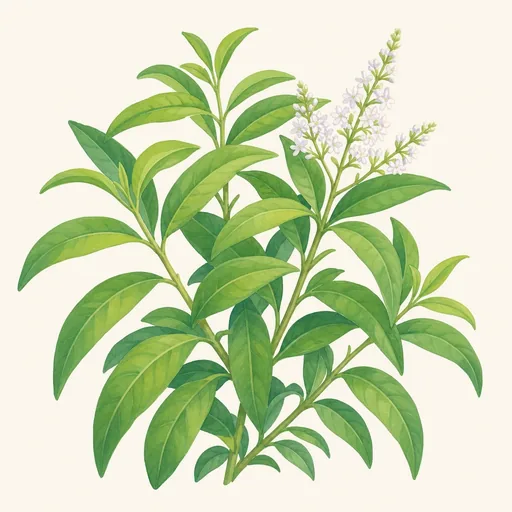
Lemon Verbena
Aloysia citrodora · Verbenaceae
- Plant out2–4 weeks after the last frostApr 24 – May 14
- Space60–90 cm (2–3 ft) apart
- Harvest30–60 days after plantingMay 24 – Aug 3
Description
Lemon verbena is a woody, deciduous herb grown for its intensely lemon-scented leaves. It originated in South America and is now cultivated in gardens and herb farms in many warm or mild regions. Its narrow, pointed, slightly rough leaves usually grow in groups of three along slender stems. Brushing the foliage releases a fresh citrus fragrance. Small, pale lavender or white flowers appear in loose clusters during summer or autumn, although plants grown in cooler climates may flower sparingly.
Gardeners harvest the leaves for herbal tea, desserts, syrups, and potpourri. The flavor is lemony without the sharp acidity of lemon juice. Leaves are most fragrant when picked before flowering and can be used fresh or dried. Prune stems regularly to encourage bushy growth, but avoid removing too much new growth late in the season where winters are cold.
Give lemon verbena full sun and well-drained soil. Water when the soil begins to dry, especially in containers, while avoiding prolonged waterlogging. Established plants tolerate brief dry spells, but regular moisture produces better leaf growth. In frost-free climates, a plant can develop into a large shrub; elsewhere, it is often kept smaller in a pot and moved to a sheltered place for winter. It may drop its leaves and appear lifeless during dormancy, then sprout again as temperatures rise.
Lemon verbena is sensitive to hard frost. In cold areas, protect its roots from freezing and reduce watering while the plant is dormant. New plants are commonly made from softwood cuttings taken during active growth. Watch for spider mites and whiteflies, particularly on plants kept indoors. Because the leaves are the main harvest, avoid spraying them with products not approved for edible herbs. A container with drainage holes makes it easier to provide suitable soil and move the plant as seasons change.
Growing Conditions
1.2–2.4 m (4–8 ft) tall, 0.9–1.8 m (3–6 ft) wide
- Smallest
- Largest
Full sun, 6+ hours
Tolerates part sun
Moderate
Keep evenly moist, not soggy.
Ideal 18–30 °C (64–86 °F)
Survives down to −7 °C (19 °F).
pH 6–7.5 · acidic to neutral
Where it Grows
Planting
When to Plant
Plant lemon verbena outdoors in spring, after the last frost, once the soil has warmed and nighttime temperatures stay reliably above about 50°F (10°C). It is a frost-tender shrub: even a light frost can damage new growth, and prolonged freezing weather can kill the plant. If you bought one early, keep it indoors in bright light or in a protected greenhouse until conditions improve. Before planting, gradually introduce it to outdoor sun and wind over about a week. In a climate with mild, largely frost-free winters, you can also plant in early autumn, leaving time for roots to establish before cooler weather. Avoid transplanting during a heatwave, when a new plant is more likely to dry out. Where winters freeze, consider growing lemon verbena in a container instead of the ground; you can move the pot to a bright, frost-free place before cold weather arrives.
How to Plant
Choose a sheltered spot with full sun—ideally at least six hours of direct light—and soil that drains freely. Lemon verbena grows best with warmth and good air circulation, but it dislikes roots sitting in wet ground. If drainage is poor, plant in a raised bed or a container rather than a low, soggy spot. Space plants about 2–3 feet (60–90 cm) apart to allow room for their bushy growth.
Water the nursery plant before removing it from its pot. Dig a hole about twice as wide as the root ball but no deeper. Gently loosen any roots circling the outside, set the plant at the same depth it grew in the pot, and backfill with the excavated soil. Firm lightly and water thoroughly to settle the soil around the roots. Add a thin layer of mulch to slow drying, keeping it away from the stem.
For container growing, use a pot at least 12 inches (30 cm) wide with drainage holes and a free-draining potting mix. Check moisture regularly while the plant establishes; water when the surface soil begins to dry, rather than keeping it constantly wet. Avoid burying the stem or adding fertilizer directly to the planting hole.
Growth Timeline
- Growing in the garden 30–60 days
- Harvest 12–20 weeks
Planting Calendar
- Plant outdoors: 2–4 weeks after the last frost
- Plant out: Apr 24 – May 14
- Harvest: May 24 – Aug 3
Care
Care Calendar
- Repot · Mar 13 – Apr 30
Repot container plants in fresh, free-draining mix as spring growth begins. - Prune · Apr 10 – May 14
Cut back dead stems once new spring shoots appear. - Pinch out · Apr 24 – Jul 9
Pinch shoot tips to encourage bushy, leafy growth. - Feed · Apr 24 – Aug 6
Feed container plants lightly every few weeks while they are growing. - Protect · Oct 11 – Oct 31
Move pots to a frost-free place before freezing weather and water sparingly.
Watering
Water lemon verbena deeply, then let the top 1–2 inches (2.5–5 cm) of soil dry before watering again. Check the soil rather than following a fixed schedule: plants in containers and hot, windy sites dry out faster than plants in the ground. Water at the base until the root zone is moist; for a pot, continue until excess water drains from the bottom, then empty the saucer. Good drainage matters because constantly wet soil can damage the roots. Newly planted lemon verbena needs more frequent checks while it establishes. An established plant can tolerate brief dry spells, but prolonged drought may cause wilting and leaf drop. Reduce watering as growth slows in autumn. If you keep a potted plant indoors over winter, water sparingly, especially if it has dropped its leaves, but do not let the root ball become completely dry.
Pruning
In spring, once new growth shows where the live wood begins, remove dead or frost-damaged stems. Cut back long, bare stems to just above healthy buds or leaves to encourage a bushier plant. Lemon verbena can grow tall and open if left alone, so pinch the tips of young shoots during active growth when you want more branching. Regular leaf harvests also help keep it compact. Avoid severe pruning in autumn in areas with cold winters; tender new growth may be damaged by frost. Use clean, sharp pruners and avoid cutting so much at once that little healthy foliage remains. If a plant has become leggy, reshape it over the growing season rather than stripping it bare. Potted plants can be trimmed lightly to fit their space before being brought indoors, with major corrective pruning left until growth resumes.
Weeding
Keep the soil immediately around lemon verbena free of weeds, particularly while a young plant is establishing. Weeds compete for water and nutrients and can make it harder to see the soil surface when checking whether the plant needs water. Pull them by hand when the soil is slightly moist, taking care not to disturb lemon verbena’s roots. If you use a hoe, work shallowly and leave a little space around the stem. Remove weeds before they flower and set seed so the job does not grow over the season. A layer of mulch can suppress new seedlings, but pull established weeds before spreading it. Container-grown plants usually need little weeding; remove any volunteer seedlings as soon as they appear. Avoid herbicide spray near the plant, especially where you intend to use its leaves for tea or cooking.
Mulching
Spread a 2–3-inch (5–8-cm) layer of organic mulch over the soil around an in-ground lemon verbena plant. Compost, shredded leaves or fine bark can help retain moisture, moderate soil temperatures and limit weeds. Keep the mulch a few inches away from the stems so the base stays dry and easy to inspect. Replenish the layer as it breaks down, without piling new mulch on top of old material indefinitely. In cold climates, mulch can help protect roots from temperature swings, but it will not reliably protect the stems of this frost-tender plant through a hard winter. If your winters are too cold for lemon verbena outdoors, grow it in a container that you can move to a protected place. For potted plants, a thin mulch layer is optional; leave room to check soil moisture and water without soaking the stem.
Fertilizing
Lemon verbena generally needs modest feeding rather than heavy doses of fertilizer. In spring, top-dress garden soil with a little finished compost, keeping it clear of the stems. If growth is poor despite adequate light, warmth and water, use a balanced fertilizer according to its label. Container plants lose nutrients through regular watering and may benefit from a diluted liquid fertilizer every four to six weeks during active growth. Do not assume pale or dropping leaves always signal a nutrient shortage: cold, low light, drought and soggy soil can cause problems too. Excess nitrogen can produce soft, sprawling growth, so avoid repeated strong feedings. Stop feeding toward the end of summer in climates with a cold winter to avoid encouraging tender late growth. If you plan to harvest leaves, use only fertilizer products appropriate for edible plants and follow all label directions.
Pest Management
Check new shoots and the undersides of leaves regularly, especially on plants kept indoors or in hot, dry conditions. Aphids, whiteflies and spider mites can occur on lemon verbena. Aphids cluster on tender growth; whiteflies flutter up when foliage is disturbed; spider mites may leave fine webbing and pale stippling on leaves. For a small infestation, remove badly affected shoots or wash pests off with a gentle stream of water, supporting delicate branches as you work. Isolate an infested indoor plant so pests do not spread. If pests persist, an insecticidal soap labeled for use on edible plants may help; thoroughly cover the affected leaf surfaces and follow the label’s directions for repeat applications and harvest intervals. Test a small area first, and avoid spraying in strong sun or extreme heat. Good airflow and regular inspection help you catch problems before they become severe.
Harvesting
Pick lemon verbena leaves once the plant is growing strongly and has enough foliage to spare. For the most fragrant leaves, harvest in the morning after dew has dried, ideally before flowering. Snip individual leaves or cut leafy shoot tips just above a pair of leaves; cutting tips encourages branching. Take small harvests through the growing season, leaving plenty of foliage for continued growth, and avoid stripping a young or stressed plant. You can make a larger harvest before the first frost if the plant will soon lose its leaves. Use fresh leaves for tea and cooking, or dry them promptly in a well-ventilated place out of direct sunlight. When fully dry and crisp, store them whole in an airtight container away from heat and light; crush them just before use to preserve their aroma. Rinse harvested leaves before using them.
Growing in Containers
Grows well in a pot of at least 15 litres (4.0 US gallons), with drainage holes. Can be grown indoors as a houseplant.
Propagation
From cuttings
- Take a 4- to 6-inch cutting from a healthy, nonflowering stem in late spring or summer.
- Remove the leaves from the lower half of the stem.
- Insert the stem into moist, free-draining propagation mix.
- Keep it warm and in bright, indirect light.
- Pot it up once roots have formed.
Common Problems
- Yellowing leaves
- Sticky residue on leaves
- Black sooty coating
- Curled or cupped leaves
Aphids are small, soft-bodied insects that feed by piercing plants and drawing out sap. The group includes many…
- Pale speckles or stippling
- Yellowing leaves
- Brown or crispy leaf edges
- Fine webbing
Spider mites are tiny, plant-feeding arachnids in the family Tetranychidae, not insects. Several species attack garden…
- Yellowing leaves
- Sticky residue on leaves
- Black sooty coating
- Curled or cupped leaves
Whiteflies are a family of tiny, sap-feeding insects that infest vegetables, ornamentals, and greenhouse plants…
- White powdery coating
- Yellowing leaves
- Curled or cupped leaves
- Distorted new growth
Powdery mildew is a group of fungal diseases, not a single species. Different fungi infect different hosts, including…
- Brown or crispy leaf edges
- Wilting
- Bleached or scorched patches
- Leaves dropping
Frost damage is an injury caused when plant tissues become cold enough for ice to form or for cells to lose water to…
- Aphids, whiteflies, and spider mites: Check tender growth and leaf undersides, especially when plants are kept indoors.
- Root rot: Poor drainage or persistently wet soil can damage the roots. Let the soil surface dry between waterings.
- Powdery mildew: White, powdery growth is more likely where air circulation is poor.
- Cold damage: Lemon verbena is frost-tender. In cool climates, protect it over winter; some leaf drop during dormancy is normal.
Varieties
- Standard lemon verbena (Aloysia citrodora): The green-leaved, strongly lemon-scented form most commonly sold for herbs and tea.
- ‘Aurea’: A golden-leaved form grown chiefly for its ornamental foliage; less commonly available.
- ‘Variegata’: A variegated-leaved form grown chiefly for its appearance; less commonly available.
Health Benefits
Lemon verbena leaves are commonly brewed as a caffeine-free herbal tea. Traditionally, people drink it after meals for indigestion, bloating, or a general sense of digestive comfort. Its bright lemon scent also makes the tea a popular relaxing evening drink. These are traditional wellness uses, not proven treatments for digestive disorders or insomnia.
Lemon verbena contains aromatic compounds and plant polyphenols with antioxidant activity in laboratory studies. Small human studies have examined concentrated extracts for outcomes such as sleep quality or exercise-related muscle soreness, but the evidence is limited. Results from an extract should not be assumed to apply to an ordinary cup of tea, and lemon verbena should not replace medical care.
For most adults, an occasional cup made from culinary quantities of leaves is a reasonable way to enjoy the herb. Safety information is more limited for concentrated supplements, pregnancy, and breastfeeding, so seek medical advice before using it medicinally in those circumstances. Stop using it if it causes irritation or another unwanted reaction. Do not swallow lemon verbena essential oil: it is far more concentrated than the leaves used in food or tea.
Fun Facts
- Lemon verbena is native to South America, despite its long association with European herb gardens.
- Crushing a leaf releases a notably strong lemon fragrance.
- Its leaves retain much of their scent when dried, making them useful in teas and potpourri.
- It can drop its leaves and appear lifeless during a cool winter, then sprout again in spring.
- Its small, pale flowers are much less conspicuous than its fragrant foliage.
Notice an error or have a question about Lemon Verbena? Contact us