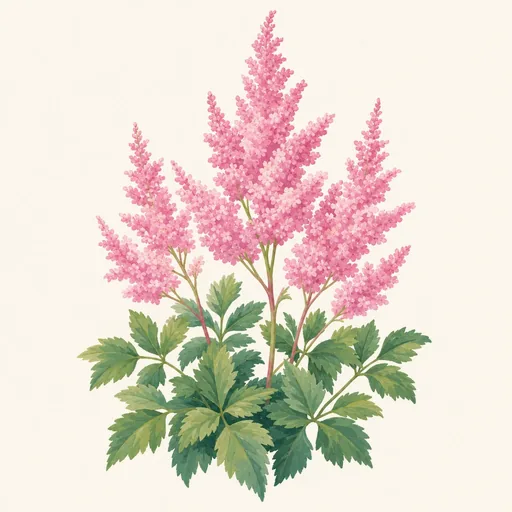
Astilbe
Astilbe · Saxifragaceae
- Plant outFrom 4 weeks before to 2 weeks after the last frostMar 13 – Apr 30
- Plant in autumn4–6 weeks before the first autumn frostSep 13 – Oct 3
- Space40–60 cm (16–24 in) apart
Description
Astilbe is a genus of herbaceous perennials prized for feathery flower plumes that rise above mounds of divided, often glossy leaves. Depending on the species or cultivar, the plumes may be white, cream, pink, red, or purple. They bloom mainly from late spring through summer, and many remain attractive as they dry. Plants typically grow about 30–120 cm tall, including their flower stalks. Their fine texture makes them useful in shaded borders, woodland gardens, and beside ponds.
Astilbes grow best in partial shade and soil that is rich in organic matter and consistently moist but not waterlogged. Some tolerate more sun where summers are cool and the soil stays damp; strong sun combined with dry soil can scorch the foliage. Mulch helps conserve moisture, and watering during dry spells is especially important while plants become established. In suitable conditions, astilbes are generally low-maintenance and can form substantial clumps over time.
Plant in spring or autumn, spacing plants according to their mature width. Divide crowded clumps every few years, preferably in spring, to renew growth or make new plants. Remove spent flower stalks if a tidier appearance is wanted, or leave them standing for winter interest. The foliage dies back in cold seasons and regrows from the crown. Avoid burying the crown deeply when planting or dividing.
Many garden astilbes are hybrids rather than a single wild species, so their size, bloom time, and flower color vary considerably. The genus is native chiefly to parts of Asia, with species also native to North America, and it is cultivated widely in temperate gardens. Although its flowers attract pollinators, astilbe is grown primarily for its ornamental display. It is a particularly useful choice where a sunny, dry border would be unsuitable, provided the planting site can supply enough moisture.
Growing Conditions
0.3–1.2 m (1–4 ft) tall, 40–75 cm (16–30 in) wide
- Smallest
- Largest
Part shade, 2+ hours
Tolerates part sun, full shade
High
Keep the soil consistently moist.
Ideal 10–24 °C (50–75 °F)
Survives down to −40 °C (−40 °F).
pH 5.5–7 · acidic to neutral
Where it Grows
Planting
When to Plant
Plant astilbe in spring or early autumn, when temperatures are mild and the soil is easy to work. Spring is a reliable choice in cold regions: plant after the ground thaws and before hot weather arrives, so roots can establish while the soil stays cool and moist. In warmer regions, early autumn is often preferable because the plant can settle in without summer heat. Allow about four to six weeks before the ground freezes for autumn planting.
You can plant nursery-grown astilbe while it is actively growing, but avoid periods of intense heat or drought. Plant dormant bare roots in early spring, following any timing instructions supplied with them. The soil should be moist but not waterlogged; if it sticks in heavy clumps or a planting hole fills with water, wait for better conditions. If you are dividing an established clump, do it in spring as new growth begins or in early autumn.
How to Plant
Choose a spot with partial shade and soil that holds moisture without staying waterlogged. Morning sun with afternoon shade works well; in cool climates, astilbe can take more sun if its roots never dry out. Mix compost or well-rotted organic matter into the planting area to improve moisture retention and drainage. Water the plant before removing it from its pot.
Dig a hole about twice as wide as the root ball and no deeper than its height. Loosen any tightly circling roots, set the plant at the same depth it grew in its container, then backfill and firm the soil gently. For a dormant bare root, spread the roots downward and outward, with the crown and emerging buds facing up, and cover the crown with about 1 inch (2.5 cm) of soil. Space plants according to their mature width, commonly 18–24 inches (45–60 cm) apart, so air can move between clumps.
Water thoroughly after planting and keep the soil consistently moist while roots establish. Add a 2–3-inch (5–7.5 cm) layer of organic mulch to slow evaporation, leaving a small gap around the stems. Check moisture regularly, especially during the first summer: astilbe wilts and develops brown leaf edges when allowed to dry out.
Planting Calendar
- Plant outdoors: from 4 weeks before to 2 weeks after the last frost
- Autumn planting: 4–6 weeks before the first autumn frost
- Plant out: Mar 13 – Apr 30
- Autumn planting: Sep 13 – Oct 3
Care
Care Calendar
- Prune · Feb 27 – Apr 9
Cut last year's dry stems back before new shoots emerge. - Feed · Mar 27 – May 7
Top-dress with compost as spring growth begins. - Divide · Mar 27 – Apr 30
Every three to four years, divide crowded clumps as growth begins. - Mulch · Apr 10 – May 14
Apply mulch to keep soil moist, leaving the crowns uncovered.
Watering
Keep the soil consistently moist, especially from spring growth through flowering. Astilbe has a shallow root system and can wilt or develop brown, crisp leaf edges if it dries out. Water deeply when the top inch of soil begins to feel dry, rather than giving frequent light sprinkles. Newly planted astilbes need particular attention while their roots establish; plants in containers may need water more often than those in the ground. Direct water onto the soil, ideally in the morning, to limit leaf wetness. During hot spells, check plants more frequently, even in partial shade. A layer of mulch helps slow evaporation, but it cannot replace watering. Aim for evenly damp, well-drained soil: persistently waterlogged ground can damage the roots and crown. Reduce watering after the foliage dies back, while preventing prolonged drought where winters are dry.
Pruning
Astilbe does not need regular shaping. After flowering, cut spent flower stalks back to the foliage if you prefer a tidy appearance, or leave them standing for their attractive dried seed heads and winter interest. Removing faded flowers will not generally produce a second flush of bloom. Trim off broken, diseased, or badly browned leaves as needed, using clean pruners and avoiding damage to new shoots. Once the foliage dies back in autumn, you can cut it down near the base; alternatively, leave it until late winter and clear it away before fresh growth begins. Do not remove healthy green leaves immediately after flowering, as they continue to feed the plant. If a clump becomes crowded or flowers less well, divide it in early spring or autumn rather than repeatedly cutting it back. Replant divisions promptly and keep them moist while they establish.
Weeding
Keep the area around astilbe free of weeds, especially while plants are young. Weeds compete for the moisture and nutrients astilbe relies on and can crowd its emerging spring shoots. Pull weeds by hand when the soil is moist, before they flower and set seed. Work gently and avoid deep hoeing: astilbe’s roots and crown sit close to the soil surface and are easily damaged. Remove persistent weeds, including their roots, from the planting area before setting out new plants. Once astilbe forms a dense clump, it will shade some weeds, but check the edges and gaps between plants regularly. Replenish a thin layer of organic mulch after weeding to suppress new seedlings and conserve moisture. Keep mulch off the crown so emerging shoots remain clear. Avoid herbicide spray near astilbe foliage, and remove any weeds growing through the clump by hand.
Mulching
Spread a 2–3-inch layer of organic mulch, such as shredded leaves, composted bark, or leaf mold, over the soil around astilbe. Mulch helps keep its shallow roots cool and the soil evenly moist, particularly during summer heat. Apply it in spring after the soil has warmed and weeds have been removed, then top it up as it breaks down. Leave a small gap around the crown and emerging shoots rather than piling mulch against them; buried crowns can suffer in persistently wet conditions. In cold regions, mulch also helps moderate winter temperature swings. Check the soil beneath the mulch rather than assuming it is moist, and water when needed. If the crown rises above the soil as an older clump expands, add a little compost or soil around exposed roots without smothering the growing points. Remove mulch that becomes matted over new shoots.
Fertilizing
Astilbe grows best in moisture-retentive soil enriched with organic matter. In spring, spread a layer of finished compost around the clump, keeping it off emerging shoots, and water it in. If the soil is poor or growth is weak, use a balanced, slow-release fertilizer according to the package directions as new growth begins. Avoid heavy feeding, particularly with high-nitrogen products, which can encourage leaves at the expense of flowers. Healthy plants in fertile garden soil may need no additional fertilizer beyond occasional compost. Water the soil before applying fertilizer if it is dry, and keep granules away from the crown and foliage. Do not continue feeding late into the growing season, when plants should be preparing for dormancy. If leaves yellow or flowering declines, check moisture, drainage, light, and whether the clump needs dividing before assuming a nutrient deficiency.
Pest Management
Astilbe is generally trouble-free, but check leaves and flower stalks periodically. Aphids may cluster on tender growth, while spider mites can cause fine speckling and webbing, especially when plants are hot and dry. A firm spray of water can dislodge light infestations; for persistent pests, use an insecticidal soap labeled for the pest and follow its directions. Avoid spraying open flowers when pollinators are visiting. Slugs and snails may chew young shoots; remove hiding places and hand-pick them if damage becomes significant. Brown leaf edges often indicate dry soil or heat rather than an insect problem. Leaf spots and powdery mildew are more likely where foliage stays damp and air circulation is poor. Remove affected debris, water the soil instead of the leaves, and avoid crowding. Good drainage helps prevent root and crown rot.
Harvesting
Astilbe is grown mainly as an ornamental, but its flower plumes can be cut for fresh or dried arrangements. For fresh flowers, choose stems when most of the tiny flowers on a plume have opened but the plume still looks bright. Cut in the cool of the morning with clean pruners, and place stems promptly in water. Remove any leaves that would sit below the waterline, then keep the arrangement in a cool spot out of direct sun. For dried arrangements, leave plumes on the plant until they have developed their color and begun to feel papery, or cut them and hang them upside down in a dry, airy place. Cutting flowers does not usually stimulate reblooming. You can also leave plumes standing for winter interest. If collecting seed, allow the seed heads to dry on the plant before gathering them, but expect seedlings to differ from named cultivars.
Growing in Containers
Grows well in a pot of at least 15 litres (4.0 US gallons), with drainage holes. Best kept outdoors.
Propagation
By division
- Divide established clumps in early spring or fall.
- Lift the clump and shake off loose soil.
- Cut it into sections, keeping healthy roots and several buds on each.
- Replant the sections at their original depth.
- Water thoroughly and keep the soil moist while they establish.
Companion Plants
Good neighbors
- Hostas: They thrive alongside astilbe in moist, shaded garden beds.
- Ferns: Many garden ferns share astilbe’s preference for shade and consistently moist soil.
- Bleeding hearts: They grow well in the same moist, partly shaded conditions and flower before many astilbes.
Common Problems
- Brown or crispy leaf edges
- Bleached or scorched patches
- Yellowing leaves
- Wilting
Leaf scorch is a description of leaf damage, not a single disease with a scientific name. It develops when leaves lose…
- White powdery coating
- Yellowing leaves
- Curled or cupped leaves
- Distorted new growth
Powdery mildew is a group of fungal diseases, not a single species. Different fungi infect different hosts, including…
- Spots on leaves
- Yellowing leaves
- Leaves dropping
Fungal leaf spot is a general name for diseases caused by many different fungi, not a single species. These fungi…
- Pale speckles or stippling
- Yellowing leaves
- Brown or crispy leaf edges
- Fine webbing
Spider mites are tiny, plant-feeding arachnids in the family Tetranychidae, not insects. Several species attack garden…
- Leaf scorch and wilting: Hot sun or dry soil can cause brown leaf edges and drooping, especially during summer.
- Root rot: Poorly drained, waterlogged soil can damage the roots.
- Powdery mildew: A white coating may develop on leaves, particularly where air circulation is poor.
- Foliar nematodes: These can cause brown, angular patches between leaf veins.
- Slugs and snails: They may chew tender new growth.
Varieties
Its dark red plumes appear in early to midsummer.
- deep red flowers
- bronze young foliage
Its loose, white plumes rise above green foliage.
- white flowers
- arching plumes
Its airy white plumes bloom early in the astilbe season.
- white flowers
- early blooming
Its dense plumes suit the front of a shaded border.
- purple-pink flowers
- compact
This spreading cultivar makes a low edging or ground cover.
- low-growing
- lilac-pink flowers
- late blooming
Its delicate plumes suit small, moist, shaded spaces.
- compact
- pale pink flowers
- arching plumes
More about varieties
- ‘Fanal’ (Astilbe × arendsii): Deep red flower plumes above dark foliage.
- ‘Deutschland’ (A. japonica): Compact plants with white plumes.
- ‘Bridal Veil’ (A. × arendsii): Arching, creamy-white flower plumes.
- ‘Pumila’ (A. chinensis): A low-growing cultivar with lilac-pink flowers.
- ‘Sprite’ (A. simplicifolia): Delicate, nodding pale-pink plumes.
Fun Facts
- Astilbe is often called false spirea, though it is not a true spirea.
- Each feathery plume is made up of many tiny flowers.
- Its spent flower heads can remain attractive well into winter.
- Astilbe flowers can be used fresh or dried in arrangements.
- Depending on the cultivar, its leaves may emerge green, bronze, or reddish.
Notice an error or have a question about Astilbe? Contact us