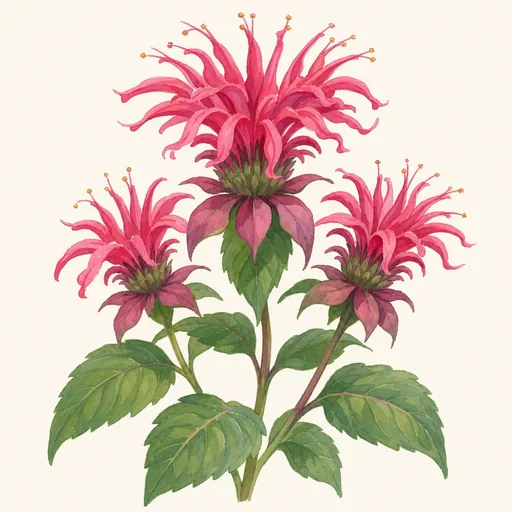
Bee Balm
Monarda didyma · Lamiaceae
- Start indoors8–10 weeks before the last frostJan 30 – Feb 19
- Sow outdoorsFrom the last frost until 2 weeks afterApr 10 – Apr 30
- Plant outFrom the last frost until 2 weeks afterApr 10 – Apr 30
- Plant in autumn6–8 weeks before the first autumn frostAug 30 – Sep 19
- Space45–60 cm (18–24 in) apart
- Bloom75–120 days after plantingJun 24 – Sep 18
Description
Bee balm is a clump-forming perennial in the mint family, best known for its vivid, shaggy-looking flowers and its appeal to pollinators. The name can refer to several Monarda species; Monarda didyma, also called scarlet bee balm or Oswego tea, is a familiar garden variety. Its flower heads consist of narrow, tubular blooms arranged in a dense whorl above colorful bracts. They are usually bright red, although cultivated varieties may flower in pink, purple, or white. Blooming typically occurs from midsummer into early fall.
The plant has upright, square stems and opposite, pointed leaves with toothed edges. When crushed, the leaves have a strong, pleasantly herbal scent. Plants commonly reach about 60–120 cm (2–4 ft) tall, depending on the variety and growing conditions. Bee balm spreads through underground stems, gradually forming a patch; dividing crowded clumps helps maintain vigor and keeps its spread in check.
Native to eastern North America, Monarda didyma grows well in fertile soil that stays evenly moist but drains adequately. It flowers most heavily in full sun, though it tolerates partial shade. Good air circulation is useful because powdery mildew, which leaves a pale coating on the foliage, is a frequent problem, especially when plants are crowded or stressed by drought. Watering the soil rather than the leaves can help keep foliage dry.
The tubular flowers attract hummingbirds, bees, and butterflies. Gardeners often plant bee balm in pollinator beds, cottage gardens, and alongside other moisture-loving perennials. Its aromatic leaves have also been used to make herbal tea. After flowering, the stems can be cut back for a tidier appearance, or some seed heads can be left standing. In cold climates, the plant dies back above ground and regrows from its roots in spring.
Growing Conditions
0.6–1.2 m (2–4 ft) tall, 45–90 cm (1–3 ft) wide
- Smallest
- Largest
Full sun, 4+ hours
Tolerates part sun, part shade
Moderate
Keep evenly moist, not soggy.
Ideal 15–27 °C (59–81 °F)
Survives down to −40 °C (−40 °F).
pH 6–7 · acidic to neutral
Where it Grows
Planting
When to Plant
Plant bee balm outdoors in spring, after the danger of hard frost has passed and the soil is workable. This gives new plants a full growing season to establish roots before winter. Early fall is another good time for nursery plants or divisions where winters are not severe; aim to plant at least six weeks before the ground freezes. In colder regions, spring is the safer choice.
If starting from seed indoors, sow about eight to ten weeks before your expected last spring frost, then move seedlings outside after frost danger has passed. Seeds can also be sown outdoors in spring once the soil can be worked, though germination may be uneven. Watch the weather as well as the calendar: postpone planting if the ground is waterlogged, and water new plants during dry spells. Bee balm is a perennial, so a well-established planting can return and spread in subsequent years.
How to Plant
Choose a spot with full sun for the most flowers, or light afternoon shade in hot climates. Bee balm grows best in soil that drains well but does not dry out completely. Loosen the soil and mix in compost if it is poor or compacted. Avoid low spots where water stands after rain.
For a nursery plant, dig a hole as deep as its root ball and about twice as wide. Ease the plant out of its pot, gently loosen any circling roots, and set it at the same depth it was growing in the container. Backfill, firm the soil lightly, and water thoroughly. Plant divisions at their original soil level, with healthy roots and shoots on each piece. Space plants about 18 to 24 inches apart, or follow the label for larger varieties: good airflow helps limit powdery mildew.
If sowing seed, press it onto moist soil and cover it only very lightly. Keep the surface consistently moist until seedlings emerge, then thin them to allow room to grow. After planting, add a thin layer of mulch to retain moisture, leaving a little space around the stems. Water regularly while roots establish; once established, water during extended dry periods rather than keeping the soil soggy.
Growth Timeline
- Germination 10–21 days
- Seedlings indoors 5–10 weeks
- Growing in the garden 75–120 days
- In bloom 4–8 weeks
Planting Calendar
- Start seeds indoors: 8–10 weeks before the last frost
- Sow outdoors: from the last frost until 2 weeks after
- Plant outdoors: from the last frost until 2 weeks after
- Autumn planting: 6–8 weeks before the first autumn frost
- Germination: 10–21 days
- Start indoors: Jan 30 – Feb 19
- Sow outdoors: Apr 10 – Apr 30
- Plant out: Apr 10 – Apr 30
- Autumn planting: Aug 30 – Sep 19
- Bloom: Jun 24 – Sep 18
Care
Care Calendar
- Divide · Mar 27 – May 14
Every two to three years, divide crowded clumps and replant vigorous outer sections. - Prune · Apr 10 – May 7
Cut back dead stems as new shoots emerge. - Thin · Apr 17 – May 21
Remove crowded shoots to improve airflow and limit mildew. - Mulch · Apr 17 – May 14
Apply a thin layer of mulch to conserve moisture, leaving the crown clear. - Pinch out · May 1 – May 28
Pinch young stem tips for bushier growth, before flower buds form. - Deadhead · Jun 5 – Aug 6
Remove faded flower heads to encourage more blooms.
Watering
Keep bee balm’s soil evenly moist while new plants establish, then water during dry spells. Aim for roughly 1 inch (2.5 cm) of water per week from rain and irrigation combined, adjusting for heat, soil type, and drainage. Water deeply at the base rather than giving frequent light sprinkles; this encourages roots to grow deeper. Let the soil surface begin to dry between waterings, but do not allow the root zone to stay dry for long during active growth and flowering. Established plants tolerate brief dryness, though prolonged drought can cause wilting and reduced bloom. Avoid persistently soggy soil, especially in winter, because crowns and roots may rot. Morning watering gives any splashed leaves time to dry. A soaker hose or drip line is useful: dry foliage and good air circulation help limit the powdery mildew to which bee balm is prone.
Pruning
Pinch or trim young stems in late spring if you want a bushier, shorter plant, but expect flowering to start a little later. Remove spent flower heads to keep the planting tidy and sometimes encourage additional blooms. After the main flush, cutting stems back by about one-third can stimulate fresh growth; results depend on the variety and length of the growing season. Remove damaged or mildew-covered growth as it appears, and clean pruning tools between plants when disease is present. Thin crowded stems to improve airflow rather than shearing the entire clump into a dense mound. In late fall or early spring, cut back dead stems near the base. If the stems are healthy, leaving some standing through winter provides habitat for insects and seed heads for birds. Divide overcrowded clumps every few years to restore vigor and reduce crowding.
Weeding
Keep the area around young bee balm plants free of weeds so their roots have access to water and nutrients. Hand-pull weeds when the soil is slightly moist, taking care not to disturb bee balm’s shallow, spreading rhizomes. A narrow hand tool can help remove taproots, but avoid deep cultivation around established clumps. Weed regularly in spring, before annual weeds flower and set seed; short, frequent sessions are easier than clearing a heavily overgrown bed. Mulch can suppress new seedlings, though it will not eliminate established perennial weeds. Identify shoots before pulling: bee balm often spreads beyond its original planting spot, and its new stems may be mistaken for weeds. Remove unwanted bee balm shoots at the edge of the clump if you need to contain it. Avoid spraying broad-spectrum herbicides near the plant, particularly while it is blooming and attracting pollinators.
Mulching
Spread 2–3 inches (5–7.5 cm) of shredded leaves, composted bark, or another loose organic mulch around bee balm. Mulch helps retain moisture, moderates soil temperature, and limits weed seedlings. Keep it a few inches away from the stems and crown rather than piling it against the plant; trapped moisture can encourage rot. Apply mulch after the soil warms in spring, or refresh a thin layer when needed. If you garden in a cold climate, mulch can help protect newly planted roots from repeated freezing and thawing, provided the soil drains well. Avoid making the layer so thick that water cannot reach the soil or new shoots struggle to emerge. Because bee balm spreads by rhizomes, check the bed each spring and pull mulch back from new growth. Mulch supports even moisture but does not replace watering during prolonged dry weather.
Fertilizing
Bee balm generally needs little fertilizer in reasonably fertile garden soil. In spring, top-dress with a thin layer of finished compost, keeping it off the crown, then water it in. If growth is weak and a soil test indicates a nutrient shortage, use a balanced fertilizer at the label rate. Do not fertilize routinely just to produce more blooms: excess nitrogen can cause tall, floppy stems and lush, crowded foliage that is more susceptible to powdery mildew. Avoid feeding late in the season, when it may encourage tender new growth before frost. If plants grow well but flower poorly, first check whether they receive enough sun and whether the clump needs dividing. Poor drainage or drought may also be more important than nutrition. Where bee balm is grown in a container, nutrients wash out faster; use a modest feeding schedule suited to the potting mix and fertilizer label.
Pest Management
Check leaves and stems regularly, especially during hot, dry weather. Aphids and spider mites may occasionally appear; a firm spray of water can dislodge aphids, while consistent watering can help reduce drought stress that favors mites. If an infestation persists, use a product labeled for the pest and follow its directions, avoiding sprays on open flowers or when pollinators are active. Powdery mildew is often a bigger problem than insects. It appears as a white coating on leaves and is encouraged by crowding and poor airflow. Space plants appropriately, thin dense clumps, water at the soil surface, and remove badly affected foliage. Divide overcrowded plants and consider mildew-resistant cultivars if the disease recurs each year. Bee balm still often flowers despite some mildew, so treatment may not be necessary. Discard heavily diseased debris rather than leaving it in the bed.
Harvesting
Harvest bee balm leaves and flowers from healthy plants that have not been treated with pesticides unsuitable for edible crops. For tea or culinary use, gather tender leaves before or during flowering, when their fragrance is strong. Pick newly opened flower heads or individual petals while they are fresh. Harvest on a dry morning after the dew has evaporated. Use clean scissors and take only a portion of the stems and blooms from each plant so it can keep growing and pollinators still have flowers. Rinse only if needed, then use promptly or dry the harvest in a warm, shaded, well-ventilated place. Store fully dried material in an airtight container away from heat and light. If you want seeds for birds or self-sowing, leave some flower heads in place until they dry. Confirm the identity of the plant before using any harvest as food.
Growing in Containers
Grows well in a pot of at least 15 litres (4.0 US gallons), with drainage holes. Best kept outdoors.
Propagation
By division
- Divide established clumps in spring or early fall.
- Lift the clump and separate healthy rooted sections.
- Discard dead or woody centers.
- Replant the sections at their original depth and water them well.
From cuttings
- Take nonflowering stem tips in late spring or early summer.
- Remove the lower leaves.
- Insert the stems into moist, free-draining rooting mix.
- Keep them humid and out of direct sun until roots form.
- Pot up the rooted cuttings.
From seed
- Sow seeds in trays in spring or outdoors in fall.
- Press them onto moist seed-starting mix and cover them only lightly.
- Keep the mix moist until seedlings emerge.
- Transplant seedlings after the danger of frost has passed.
Companion Plants
Good neighbors
- Purple coneflower: Both grow well in sunny borders and provide nectar for pollinators.
- Black-eyed Susan: Its sunny-site requirements and summer flowering make it a common partner for bee balm in pollinator gardens.
- Joe-Pye weed: Both suit sunny, moisture-retentive planting areas and attract pollinators.
Common Problems
- White powdery coating
- Yellowing leaves
- Curled or cupped leaves
- Distorted new growth
Powdery mildew is a group of fungal diseases, not a single species. Different fungi infect different hosts, including…
- Spots on leaves
- Yellowing leaves
- Leaves dropping
Fungal leaf spot is a general name for diseases caused by many different fungi, not a single species. These fungi…
- Yellowing leaves
- Sticky residue on leaves
- Black sooty coating
- Curled or cupped leaves
Aphids are small, soft-bodied insects that feed by piercing plants and drawing out sap. The group includes many…
- Pale speckles or stippling
- Yellowing leaves
- Brown or crispy leaf edges
- Fine webbing
Spider mites are tiny, plant-feeding arachnids in the family Tetranychidae, not insects. Several species attack garden…
- Powdery mildew: A white coating on leaves, especially when plants are crowded or airflow is poor. Give plants space and water at soil level.
- Leaf spots and rust: Fungal diseases that can discolor leaves. Remove affected foliage and clear fallen plant debris.
- Root rot: More likely in soggy, poorly drained soil.
- Aphids and spider mites: Sap-feeding pests that can damage leaves, particularly on stressed plants.
Varieties
A vigorous selection with large red blooms that may need room to spread.
- scarlet flowers
- tall
- mildew resistant
Its bright red flowers attract hummingbirds and suit the back of a border.
- scarlet flowers
- tall
- mildew resistant
This selection produces clear pink blooms on upright stems.
- pink flowers
- mildew resistant
Its deep reddish-purple flowers stand above aromatic foliage.
- wine-red flowers
- vigorous
- mildew resistant
Its short stature makes it suitable for the front of a border.
- lavender-pink flowers
- compact
This compact selection works well in small borders and large containers.
- purple flowers
- compact
- mildew resistant
More about varieties
- Scarlet bee balm (Monarda didyma): A species with vivid red flowers that attract hummingbirds.
- Wild bergamot (Monarda fistulosa): A North American species with lavender-pink flowers.
- ‘Jacob Cline’: A tall, red-flowered cultivar known for relatively good powdery mildew resistance.
- ‘Marshall’s Delight’: A pink-flowered cultivar with good powdery mildew resistance.
- ‘Petite Delight’: A compact cultivar with lavender-pink blooms, suited to smaller spaces.
Health Benefits
Bee balm leaves and flowers have a long history of use in herbal tea. Some Indigenous North American communities have used Monarda species in preparations for colds, sore throats, and digestive discomfort. Today, people commonly drink the tea for its pleasant, aromatic flavor and as a soothing warm beverage when they feel unwell. Like other unsweetened herbal teas, it can also contribute to daily fluid intake.
Bee balm contains aromatic plant compounds; some Monarda species contain thymol and carvacrol, which have shown antimicrobial activity in laboratory studies. That does not mean bee balm tea has been proven to prevent or treat infections in people. Research on its health effects in humans is limited, so traditional uses should not be treated as established medical benefits.
If you want to try it as tea, use correctly identified, pesticide-free leaves or flowers and start with a modest amount. Stop using it if it causes a reaction. Concentrated essential oil is much stronger than tea: it can irritate skin and should not be swallowed. If you are pregnant, breastfeeding, taking medication, or managing a health condition, ask a healthcare professional before using bee balm medicinally. Seek medical care for persistent or worsening symptoms.
Fun Facts
- Bee balm is in the mint family and has the square stems typical of many mints.
- Its flowers attract bees, butterflies, and hummingbirds.
- Scarlet bee balm is also called Oswego tea, reflecting its history as a tea plant.
- Wild bergamot gets its name from its citrus-like scent, but it is not the bergamot orange used to flavor Earl Grey tea.
- The colorful parts beneath the flower heads are bracts—modified leaves that add to the display.
Notice an error or have a question about Bee Balm? Contact us