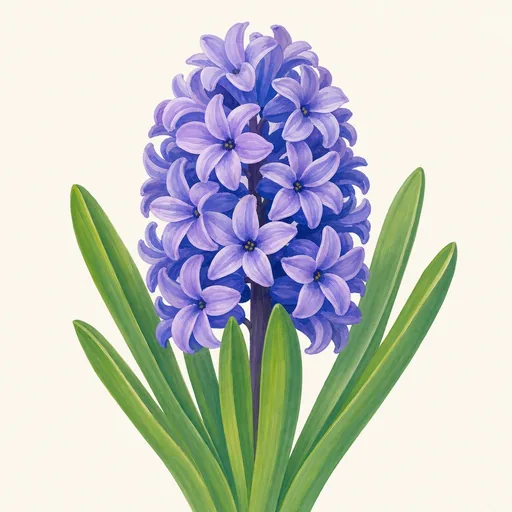
Hyacinth
Hyacinthus orientalis · Asparagaceae
- Plant in autumn2–6 weeks before the first autumn frostSep 13 – Oct 17
- Space10–15 cm (4–6 in) apart
- Bloom120–210 days after planting
Description
Hyacinths are perennial flowering plants belonging to the Asparagaceae family, with the genus Hyacinthus. Native to the eastern Mediterranean, these bulbous plants are cherished for their fragrant and colorful blooms, typically appearing in early spring. The most common species cultivated is Hyacinthus orientalis.
Hyacinths grow from bulbs that can be planted in well-drained soil, ideally in a sunny or partially shaded location. Before planting, the bulbs are usually given a cold treatment to mimic winter conditions, which stimulates robust flowering. They bloom in dense clusters of tubular flowers around a central stem, and their colors range from deep blues and purples to pinks, whites, and yellows.
The scent of Hyacinths is highly aromatic, making them popular for gardens and indoor arrangements. However, the flower's strong fragrance can be a double-edged sword; while many enjoy it, some people may find it overpowering.
Hyacinths also attract pollinators like bees, adding ecological value to gardens. They make excellent cut flowers, lasting up to a week in water. After flowering, it’s essential to let the foliage die back naturally, as this process provides nutrients back to the bulb for next year's growth.
However, caution is warranted, as Hyacinth bulbs are toxic if ingested, and their sap can cause skin irritation in some individuals. Overall, Hyacinths are a delightful addition to spring gardens, celebrated for their vibrant colors and enchanting fragrance.
Growing Conditions
15–30 cm (6–12 in) tall, 10–15 cm (4–6 in) wide
- Smallest
- Largest
Full sun, 4+ hours
Tolerates part sun, part shade
Moderate
Keep evenly moist, not soggy.
Ideal 10–18 °C (50–64 °F)
Survives down to −34 °C (−29 °F).
pH 6–7 · neutral
Photos
Photo credits
Where it Grows
Planting
When to Plant
Hyacinths are beautiful spring-blooming bulbs that are cherished for their fragrant flowers and vibrant colors. To ensure a successful blooming season, it’s crucial to plant hyacinths at the right time.
Best Planting Time
The ideal time to plant hyacinth bulbs is in the fall, typically between September and November, before the ground freezes. This timing allows the bulbs to establish their roots during the cooler months, leading to robust growth and vibrant blooms in the spring. In regions with milder climates, you can still plant in late November, as long as the ground is not frozen, but aim to do so before winter sets in.
Climate Considerations
-
Cold Climates: If you reside in an area with cold winters, aim for a mid-September to October planting window. The soil temperature should ideally be around 60°F (15°C) to promote healthy root growth.
-
Mild Climates: In warmer regions, such as the southern United States, hyacinths can be treated as annuals or biennials. You can plant them in late fall, but it’s often best to refrigerate the bulbs for about six weeks before planting to mimic colder winter temperatures.
Pre-Planting Preparation
Before planting, ensure your chosen site has well-draining soil and receives full sun to partial shade. Preparing the soil by loosening it and mixing in compost can promote better drainage and enhance soil nutrients. Aim to plant the bulbs about 6-8 inches deep and 4-6 inches apart to give them adequate room to grow.
Post-Planting Care
After planting, water the bulbs lightly to settle the soil around them. Once spring arrives and the bulbs start to emerge, ensure they receive regular watering to support their growth, especially during dry spells. Applying a balanced fertilizer when the shoots begin to appear can also enhance blooming.
Conclusion
Successful hyacinth planting hinges on the right timing and preparation. By planting in the fall, you set the stage for a colorful and aromatic display come spring. Enjoy the process, and soon you will be rewarded with the delightful sight and scent of these charming flowers.
How to Plant
Planting hyacinths is a rewarding experience that brings vibrant color and delightful fragrance to your garden or home. The ideal time to plant hyacinth bulbs is in the fall, around six weeks before the ground freezes. Follow these simple steps for successful planting:
-
Choose the Right Location: Hyacinths thrive best in well-draining soil and full sun to partial shade. Ideally, they should receive at least six hours of sunlight daily.
-
Prepare the Soil: Loosen the soil to a depth of about 12 inches. Mix in some compost or bulb fertilizer to boost nutrient levels.
-
Plant the Bulbs: Plant the hyacinth bulbs with the pointed end facing upward. Space bulbs about 4 to 6 inches apart. For depth, place them 4 to 6 inches below the soil surface, ensuring they have enough room to grow.
-
Watering: Gently water the planted bulbs to settle the soil around them. While hyacinths require moist soil, avoid overwatering, as this can lead to bulb rot.
-
Mulching: Adding a layer of mulch can help retain moisture and regulate soil temperature during colder months.
By following these guidelines, you'll encourage healthy growth and a stunning display of flowers in spring.
Growth Timeline
- Growing in the garden 120–210 days
- In bloom 2–3 weeks
Planting Calendar
- Autumn planting: 2–6 weeks before the first autumn frost
- Autumn planting: Sep 13 – Oct 17
Care
Care Calendar
- Feed · Feb 13 – Apr 2
Apply bulb fertilizer around emerging shoots, keeping it off the leaves. - Deadhead · Mar 27 – May 14
Remove spent flower spikes but leave the foliage until it yellows naturally. - Mulch · Oct 25 – Nov 28
In cold climates, apply a light mulch after the soil cools to reduce frost heaving.
Watering
Watering Hyacinth, a popular spring bulb known for its fragrant blooms, requires a balanced approach to ensure healthy growth. Initially, after planting in the fall, it’s crucial to water them thoroughly to settle the soil. Once established, Hyacinths prefer consistent but moderate moisture.
Water the plants whenever the top inch of soil feels dry; typically, this means watering once a week during their active growth period in early spring. Ensure good drainage to prevent rot, as Hyacinths are susceptible to overwatering. During their dormant phase in summer, reduce watering significantly; the bulbs need to dry out to prepare for the next growing season. A good strategy is to water in the morning to allow excess moisture to evaporate during the day. Mulching can help retain moisture while preventing over-saturation. This careful attention will promote robust flowering and healthy foliage.
Pruning
Pruning hyacinths primarily focuses on deadheading and managing foliage after flowering to promote next season's growth. Once blooms fade, it’s essential to remove the spent flowers by cutting the flower stalk down to the base, which helps prevent the plant from wasting energy on seed production.
After flowering, allow the green leaves to remain intact for several weeks until they yellow and wilt naturally. The foliage contributes to bulb strength by photosynthesizing and storing energy for the next growing season. Avoid cutting back the leaves prematurely; they are crucial for bulb recovery.
In the fall, you can thin out crowded bulbs if necessary, digging them up carefully and replanting those that are small or need more space. This practice supports healthy growth and flowering in subsequent years, ensuring a vibrant display in your garden.
Weeding
Weeding around hyacinths (Hyacinthus spp.) requires careful handling to protect these delicate bulbs while maintaining a tidy garden. The best strategy begins in early spring when bulbs emerge but before they bloom. First, water the area lightly to soften the soil, making it easier to pull weeds without disturbing the hyacinths.
Use a hand weeder or a small trowel to remove weeds gently, ensuring you grasp them at the base to avoid breaking roots. Be cautious of the hyacinth bulbs and leaves, as they are sensitive and can be harmed if too much soil is disturbed. Mulching is an effective preventive measure; apply a layer of organic mulch around the plants to suppress future weed growth and retain moisture. Regular monitoring post-bloom is also essential, as hyacinths go dormant, making it easier to distinguish between weeds and dying foliage.
Mulching
Mulching Hyacinth plants can effectively enhance their growth and health. The best strategy begins with choosing the right mulch material, such as organic options like wood chips, shredded bark, or straw, which decompose gradually and enrich the soil.
Before applying the mulch, ensure the soil is well-drained and free of weeds. After planting the Hyacinth bulbs in the fall, or once you notice new growth in spring, spread a layer of mulch about 2 to 3 inches thick around the base of the plants. This layer helps retain moisture, regulate soil temperature, and suppress weeds.
Be cautious not to pile mulch directly against the bulb to prevent rot. In colder regions, mulching also provides a protective layer against frost. Replenish the mulch as it breaks down, usually once a year, to maintain its benefits for the Hyacinth throughout the growing season.
Fertilizing
Fertilizing hyacinths (Hyacinthus spp.) is essential for promoting healthy growth and vibrant blooms. The best strategy begins with choosing the right fertilizer: opt for a balanced, slow-release formula or one specifically formulated for flowering bulbs, ideally with a nutrient ratio such as 5-10-10 or 10-10-10.
Begin fertilization at the onset of spring as the plants break dormancy and new growth emerges. Apply the fertilizer according to package directions, typically around 1 to 2 inches from the base of the plant to avoid root burn. Water the area after application to help nutrients penetrate the soil.
A second application can occur after flowering to support bulb development for the following year. It's crucial to avoid over-fertilization, which can lead to lush foliage at the expense of blooms. Additionally, adding organic matter, like compost, enhances soil fertility and structure, benefiting hyacinths in the long term.
Growing in Containers
Grows well in a pot of at least 2 litres (0.5 US gallons), with drainage holes. Best kept outdoors.
Propagation
From offsets
- Wait until the leaves have yellowed and died back.
- Lift the bulb carefully and brush off loose soil.
- Detach any small bulbs that separate easily from the parent bulb.
- Replant the offsets in well-drained soil at the appropriate depth for their size.
- Let them grow for a few seasons before expecting flowers.
Companion Plants
Good neighbors
- Daffodils: Their spring blooms overlap with hyacinths and make a complementary bulb display.
- Tulips: They are commonly planted with hyacinths for a layered spring display.
- Grape hyacinths: Their small flower spikes complement hyacinths and bloom at about the same time.
- Pansies: They provide low-growing color around emerging hyacinths in spring.
Common Problems
- Fuzzy gray mold
- Spots on leaves
- Wilting
- Soft or rotting stems
Gray mold, also called Botrytis blight, is a fungal disease caused most commonly by Botrytis cinerea. It affects many…
- Yellowing leaves
- Wilting
- Stunted growth
- Leaves dropping
Root rot is a general name for the decay of plant roots, not a single disease with one scientific name. It can result…
- Yellowing leaves
- Sticky residue on leaves
- Black sooty coating
- Curled or cupped leaves
Aphids are small, soft-bodied insects that feed by piercing plants and drawing out sap. The group includes many…
- Holes in leaves
- Slime trails
- Stems chewed or cut through
Slugs and snails are soft-bodied mollusks that feed on many garden plants. Snails carry a visible shell; most slugs…
Varieties
A classic cultivar with soft blue flowers.
- pale blue
- fragrant
Its dark blue flowers have contrasting pale edges.
- deep blue
- fragrant
Produces dense spikes of bright pink flowers.
- pink
- fragrant
A widely grown white-flowered cultivar.
- white
- fragrant
Its richly colored flowers are often described as reddish pink.
- deep pink
- fragrant
Produces dark purple flower spikes.
- purple
- fragrant
Its creamy yellow flowers offer a softer color than most hyacinths.
- pale yellow
- fragrant
Produces warm apricot-orange flowers.
- apricot
- fragrant
More about varieties
Hyacinths, scientifically known as Hyacinthus orientalis, are beloved spring-flowering bulbs known for their vibrant colors and sweet fragrance. These perennial bulbs are particularly popular in gardens and landscapes, and they also serve well in container arrangements. Here is a breakdown of some of the common varieties of the Hyacinth plant based on their flower colors and forms:
1. Dutch Hyacinths
- 'Analytical': Characterized by its striking deep blue flowers, this variety brings a classic touch to any garden.
- 'Carnegie': This pure white variety is prized for its elegant appearance and strong fragrance.
- 'Pink Pearl': A beautiful pink variety, known for its soft color and pleasing scent, adding a touch of charm to floral displays.
- 'Purple Sensation': Known for its rich purple blooms, making a bold statement in any setting.
- 'Red Magic': This variety features deep red flowers that contrast beautifully with lighter blooms.
2. Oriental Hyacinths
- 'Erasmus': A slightly taller variety with sturdy stems, this type produces light blue flowers that have an unusual star shape.
- 'Nicky': This variety showcases large, vivid, and fragrant blossoms in a gorgeous shade of violet-blue.
3. Fragrant Hyacinths
- 'Jan Bos': Renowned for its intense, sweet scent and vibrant red flowers, making it a favorite for fragrance gardens.
- 'The Prince': A striking variety with deep purple flowers that are both vibrant and aromatic.
4. Miniature Hyacinths
- 'Gipsy Queen': A charming smaller variety that produces clusters of lovely flowers in a stunning coral pink hue.
- 'Spring Pearl': This variety bears soft pink flowers and is perfect for smaller gardens or container arrangements.
5. Hyacinth Variants
- 'Woodstock': With its rich violet to purple blooms, Woodstock offers a unique color variation, perfect for mixed flower beds.
- 'City of Haarlem': This variety blooms with large clusters of pale yellow flowers, providing a softer pastel option.
Planting and Care When planting hyacinths, choose a well-drained location with full sun to partial shade. These bulbs thrive in well-amended soil enriched with organic matter. After planting, regular watering is crucial, especially during dry spells, but avoid waterlogging which can cause bulb rot. In colder regions, a mulch layer can protect them from severe frost.
Conclusion Hyacinths bring vibrant color and delicious fragrance to any garden. With a range of varieties to choose from, gardeners can cultivate a beautiful and aromatic display each spring. Whether you choose the classic Dutch varieties or experiment with the more unusual types, these bulbs are a delightful addition to your flowering landscape.
Health Benefits
Hyacinths (Hyacinthus spp.) are not only cherished for their vibrant blooms and delightful fragrance but also have notable health and wellness applications. While they are not commonly recognized in traditional medicine, their aromatic qualities contribute significantly to mental and emotional well-being.
-
Aromatherapy: The essential oils extracted from hyacinth flowers are used in aromatherapy. Their sweet, floral scent is believed to alleviate stress and promote relaxation, making them an excellent choice for creating a calming atmosphere in homes or wellness spaces.
-
Mood Enhancement: The smell of hyacinths has been associated with uplifting mood and improving mental clarity. Inhaling their fragrance can encourage feelings of happiness and contentment, which can be particularly beneficial during stressful times.
-
Allergies: While some individuals may have allergic reactions to hyacinth pollen, the plant can also serve as a natural air purifier indoors, potentially improving air quality and reducing allergens in the environment.
Though not directly utilized for medicinal purposes, hyacinths enrich spaces with beauty and scent, fostering environments conducive to relaxation and emotional well-being, which are vital components of health.
Fun Facts
-
Origin and History: Hyacinths are native to the Eastern Mediterranean region, particularly in countries like Turkey and Lebanon. They have been cultivated since ancient times and symbolize rebirth in many cultures.
-
Variety of Colors: These charming flowers come in a wide range of colors, including blue, purple, pink, white, and yellow. Each color can carry different meanings; for instance, blue hyacinths represent sincerity, while pink symbolizes playfulness.
-
Fragrant Blooms: Hyacinths are well-known for their strong and sweet fragrance, making them popular in gardens and as cut flowers. Their scent is often associated with spring and renewal.
-
Toxicity: While beautiful, parts of the hyacinth plant, particularly the bulbs, are toxic if ingested. Gardeners should handle them with care and keep them away from pets and small children.
-
Forcing Hyacinths: One of the most delightful activities for gardeners is to force hyacinths to bloom indoors during the winter months. By chilling their bulbs and then placing them in a pot with soil, you can enjoy their vibrant flowers and scent long before spring arrives.
Notice an error or have a question about Hyacinth? Contact us