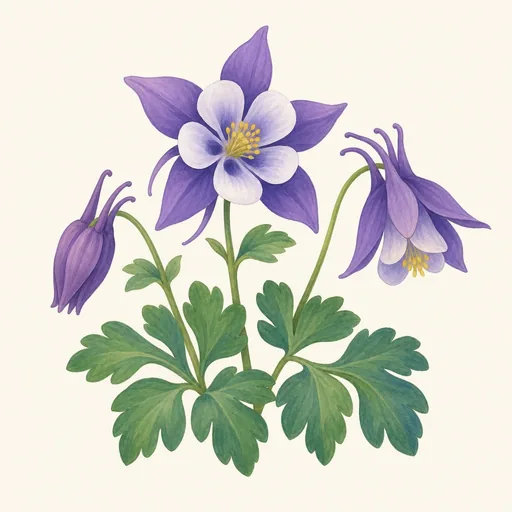
Columbine
Aquilegia · Ranunculaceae
- Start indoors8–10 weeks before the last frostJan 30 – Feb 19
- Sow outdoors2–4 weeks before the last frostMar 13 – Apr 2
- Plant outFrom 1 week before to 2 weeks after the last frostApr 3 – Apr 30
- Plant in autumn6–8 weeks before the first autumn frostAug 30 – Sep 19
- Space25–40 cm (10–16 in) apart
Description
Columbines are flowering perennials in the genus Aquilegia, known for their nodding, bell-shaped blooms and distinctive backward-pointing spurs. The five spurs extend behind the petals and often hold nectar, attracting pollinators with long tongues or beaks. Flowers may be blue, purple, pink, red, yellow, white, or combinations of these colors. Their delicate appearance contrasts with their hardy nature: many species return each spring after dying back in winter. The leaves form low clumps and are divided into rounded, softly lobed leaflets, often with a blue-green tint.
Columbines grow naturally across much of the Northern Hemisphere, particularly in woodland edges, meadows, and mountain habitats. Species vary in size, but many garden plants reach about 30–90 cm (1–3 ft) tall when flowering. They usually bloom in spring or early summer. Different species and cultivars have different spur lengths and flower forms; some have double blooms. Hummingbirds visit many North American species, while bees and moths pollinate others. Once flowering ends, upright seedpods develop and release small, dark seeds. Plants can self-seed readily, and seedlings may differ in color from their parents because columbines cross-pollinate easily.
In gardens, columbines do well in well-drained soil with regular moisture, especially during establishment. Partial shade suits many kinds, although they can tolerate more sun in cooler climates if the soil does not dry out. Removing spent flowers can limit self-seeding, while leaving seedpods provides new plants. Individual plants are sometimes short-lived, so allowing a few seedlings to grow helps maintain a display. Their airy flowers pair well with ferns and other spring-blooming perennials. Columbines are best admired rather than eaten: parts of the plant contain compounds that can be harmful if ingested.
Growing Conditions
30–90 cm (1–3 ft) tall, 25–45 cm (10–18 in) wide
- Smallest
- Largest
Part shade, 2+ hours
Tolerates full sun, part sun
Moderate
Keep evenly moist, not soggy.
Ideal 10–24 °C (50–75 °F)
Survives down to −40 °C (−40 °F).
pH 6–7.5 · neutral
Where it Grows
Planting
When to Plant
Plant columbine when the weather is cool and the soil is workable. Set out nursery plants in spring, after the danger of hard frost has passed, or in early autumn, leaving several weeks for roots to establish before the ground freezes. Avoid planting during hot, dry summer weather. For seeds, autumn sowing outdoors is often easiest: winter cold helps break dormancy, and seedlings emerge as temperatures rise in spring. You can also sow outdoors in early spring. If starting seeds indoors, sow about 8–10 weeks before your last expected spring frost; check the seed packet, as some varieties germinate more reliably after several weeks of moist chilling in the refrigerator. Move indoor-grown seedlings outside after gradually acclimating them to outdoor conditions. Timing also depends on your climate: in hotter areas, favor autumn planting and a spot with afternoon shade. Seed-grown columbines may not flower until their second year.
How to Plant
Choose a spot with well-drained soil and partial shade, especially where summers are hot. In cooler climates, columbine can take more sun if the soil stays reasonably moist. Loosen the soil and mix in compost if it is poor, but avoid sites that stay waterlogged. Space plants about 12–18 inches (30–45 cm) apart so air can circulate around the foliage.
For a nursery plant, dig a hole about as deep as its root ball and somewhat wider. Remove the plant gently, disturbing its roots as little as possible, and set it at the same depth it grew in its pot. Backfill, firm the soil lightly, and water thoroughly. A thin layer of mulch helps retain moisture; keep it away from the crown.
To sow seeds outdoors, scatter them over prepared soil and press them into the surface, covering them only very lightly, if at all. Keep the soil gently moist until seedlings establish, then thin crowded plants. If starting seeds indoors, use individual or deep cells when possible and transplant while seedlings are young: columbine develops roots that dislike disturbance. Water new plants regularly during their first growing season, allowing excess water to drain away.
Planting Calendar
- Start seeds indoors: 8–10 weeks before the last frost
- Sow outdoors: 2–4 weeks before the last frost
- Plant outdoors: from 1 week before to 2 weeks after the last frost
- Autumn planting: 6–8 weeks before the first autumn frost
- Germination: 21–30 days
- Start indoors: Jan 30 – Feb 19
- Sow outdoors: Mar 13 – Apr 2
- Plant out: Apr 3 – Apr 30
- Autumn planting: Aug 30 – Sep 19
Care
Care Calendar
- Mulch · Mar 27 – Apr 30
Apply a light layer of mulch, keeping it clear of the crowns. - Thin · Apr 24 – Jun 25
Thin crowded volunteer seedlings, leaving a few to replace older plants. - Deadhead · May 1 – Jun 25
Remove spent flowers to limit self-sowing and encourage more blooms.
Watering
Water newly planted columbines regularly through their first growing season, keeping the soil lightly moist but not soggy. Once established, they usually need supplemental water only during extended dry spells. Aim to moisten the root zone rather than sprinkling the leaves; a slow, deep watering is more useful than frequent shallow watering. Check the soil before watering, especially in shade or cool weather, when it dries more slowly. Columbines prefer well-drained soil and can suffer crown or root rot if they sit in waterlogged ground. Container-grown plants dry out faster than those in beds, so check their soil more often and water when the upper inch feels dry. Reduce watering as growth slows in autumn, but do not let recently planted columbines dry out completely.
Pruning
Remove spent flowers if you want a tidier plant or want to limit self-seeding. Cut each faded flower stalk back toward the basal leaves, taking care not to damage new growth. If you want seeds, leave some flower heads in place until their pods mature. After flowering, columbine foliage may become ragged or marked by leaf miners. You can cut badly affected leaves back to the base; healthy new leaves may emerge, particularly if the plant has adequate moisture. Avoid stripping a healthy plant simply because it has finished blooming: its leaves still support the roots. Remove dead or collapsed foliage in late autumn or early spring. Use clean, sharp pruners, and discard heavily diseased leaves rather than leaving them beside the plant.
Weeding
Keep the area around young columbines free of weeds so they do not have to compete for light, water, and nutrients while establishing. Pull weeds when the soil is slightly damp, working carefully around the plant’s crown and roots. Avoid deep hoeing close to columbines, which can damage their roots or disturb emerging seedlings. A light mulch can suppress many weed seeds, but check the bed regularly for perennial weeds that grow through it. Columbines often self-seed, so learn to recognize their small, divided seedling leaves before clearing the bed. You can leave seedlings where they have room to grow or move them while they are still small. Remove unwanted seedlings promptly if you do not want columbines spreading; seedlings of named cultivars may differ from their parent plant.
Mulching
Spread about 2 inches (5 cm) of shredded leaves, fine bark, or compost around columbines in spring. Mulch helps conserve moisture, moderates soil temperature, and reduces weed growth, which is especially useful while plants establish. Leave a clear gap around each crown rather than piling mulch against the stems: trapped moisture there can encourage rot. Keep the layer loose and replenish it as it breaks down instead of continually adding more on top. In regions with repeated winter freezing and thawing, a light layer of leaves after the ground begins to freeze can help limit frost heaving around newly planted columbines. Pull any matted winter cover away from the crowns in spring. Mulch does not compensate for poor drainage; if the site stays wet, improve the planting site rather than applying a thicker layer.
Fertilizing
Columbines generally need little fertilizer in reasonably fertile garden soil. In spring, a thin dressing of finished compost around the plant is usually enough to support new growth. Keep compost off the crown and water it in if conditions are dry. If plants are growing in notably poor soil, apply a modest amount of balanced, slow-release fertilizer in spring, following the product label. Avoid heavy feeding, particularly with high-nitrogen fertilizer: it can promote lush leaves at the expense of flowers. Do not assume that every short-lived or weak-flowering columbine needs more food. Check first for excessive shade, soggy soil, overcrowding, or natural aging; many columbines live only a few years and persist by self-seeding. Container plants may need occasional light feeding because nutrients wash out of potting mix.
Pest Management
Inspect leaves periodically for winding pale trails made by leaf miners and for caterpillar-like columbine sawfly larvae, which can quickly strip foliage. Leaf-miner damage is often mainly cosmetic; remove badly marked leaves if desired. Handpick sawfly larvae when you find them, checking leaf undersides as well as the tops. A firm spray of water can dislodge small aphid colonies. Slugs and snails may damage tender young growth; remove hiding places near the plants and handpick them if needed. Give plants adequate spacing and water at soil level to help limit fungal problems such as powdery mildew. Remove severely affected foliage and dispose of it away from the bed. Columbine flowers attract pollinators, so avoid spraying open blooms. If a pesticide is necessary, identify the pest first and follow the label exactly.
Harvesting
For cut flowers, harvest columbine stems when the first blooms on a stalk have opened. Cut in the cool of the morning with clean snips, place stems promptly in water, and remove any leaves that would sit below the waterline in the vase. To collect seed, leave selected flowers on the plant until their upright pods turn brown and begin to open. Clip the pods into a paper bag on a dry day, then let them dry thoroughly before shaking out the small seeds. Store dry seed in a labeled paper envelope in a cool, dry place, or sow it fresh; many columbines germinate best after a period of cold. Seedlings may not match their parent, especially where varieties grow together. Do not harvest columbine for food: its seeds and other parts should not be eaten.
Growing in Containers
Grows well in a pot of at least 10 litres (2.6 US gallons), with drainage holes. Best kept outdoors.
Propagation
From seed
- Sow seeds outdoors in autumn so winter cold breaks dormancy.
- Press seeds into moist soil and cover them only lightly.
- Keep the seedbed moist as seedlings emerge in spring.
- Thin seedlings or transplant them while they are small.
By division
- Divide established clumps in early spring as growth begins.
- Dig deeply to preserve as much of the root system as possible.
- Separate sections, keeping roots and growing buds on each.
- Replant promptly at the original depth and water well.
Companion Plants
Good neighbors
- Hostas: Hostas share columbine’s preference for part shade and provide foliage after its spring flowers fade.
- Ferns: Ferns suit the same lightly shaded woodland beds and complement columbine’s airy flowers.
- Bleeding hearts: Bleeding hearts and columbines are commonly grown together for their overlapping spring blooms and similar part-shade needs.
Common Problems
- Winding tunnels in leaves
- Spots on leaves
- Leaves dropping
Leaf miners are the larvae of several kinds of flies, moths, beetles, and sawflies, rather than a single species with…
- Holes in leaves
- Leaves dropping
- Stunted growth
- Insects visible on the plant
Sawfly larvae are the immature stages of sawflies, a group of insects related to wasps and bees. Most garden species…
- Yellowing leaves
- Sticky residue on leaves
- Black sooty coating
- Curled or cupped leaves
Aphids are small, soft-bodied insects that feed by piercing plants and drawing out sap. The group includes many…
- White powdery coating
- Yellowing leaves
- Curled or cupped leaves
- Distorted new growth
Powdery mildew is a group of fungal diseases, not a single species. Different fungi infect different hosts, including…
- Spots on leaves
- Yellowing leaves
- Leaves dropping
Fungal leaf spot is a general name for diseases caused by many different fungi, not a single species. These fungi…
- Leaf miners: Larvae leave pale, winding trails inside leaves. Damage is usually cosmetic.
- Powdery mildew: A white coating develops on foliage, especially where air circulation is poor.
- Aphids and sawfly larvae: Aphids cluster on tender growth; sawfly larvae can strip leaves.
- Crown or root rot: Soggy, poorly drained soil can cause plants to wilt and die.
- Short lifespan: Many columbines are short-lived perennials, though they often self-seed.
Varieties
Its small, many-petaled flowers have a distinctive pompon shape.
- double flowers
- spurless
- pink and white
Deep purple flowers give this variety an almost black appearance.
- double flowers
- spurless
- dark purple
This seed mix produces large flowers in a range of single and two-tone colors.
- long spurs
- mixed colors
- tall
Its upward-facing flowers have blue outer petals and white centers.
- blue and white
- long spurs
- compact
Upright, two-tone flowers show well above the foliage.
- double flowers
- red and white
- compact
The mix produces large, upward-facing flowers on relatively compact plants.
- mixed colors
- long spurs
- compact
More about varieties
- Eastern red columbine (Aquilegia canadensis): Red-and-yellow, nodding flowers; native to eastern North America.
- European columbine (A. vulgaris): A widely grown species with many flower colors and forms.
- Rocky Mountain columbine (A. caerulea): Often blue-and-white, with long, backward-pointing spurs.
- Golden columbine (A. chrysantha): Yellow flowers with particularly long spurs.
- McKana Giants hybrids: Tall garden columbines with large flowers in mixed colors.
Fun Facts
- The backward-pointing flower spurs hold nectar for pollinators.
- The name Aquilegia is associated with the Latin word for eagle, a reference to the clawlike spurs.
- “Columbine” comes from a Latin word for dove; the clustered petals were thought to resemble doves.
- Rocky Mountain columbine is Colorado’s state flower.
- Different columbines cross-pollinate readily, so self-sown seedlings may look unlike their parent plants.
Notice an error or have a question about Columbine? Contact us