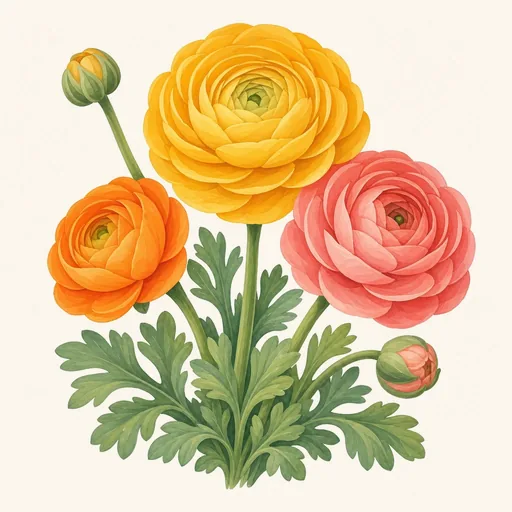
Ranunculus
Ranunculus asiaticus · Ranunculaceae
- Plant in autumn4–6 weeks before the first autumn frostSep 13 – Oct 3
- Space10–15 cm (4–6 in) apart
- Bloom75–120 days after planting
Description
Florist’s ranunculus is a tuberous perennial prized for its densely layered, rose-like flowers. It is often grown as an annual, particularly where summers are hot or winters are too cold for its roots to survive outdoors. The blooms appear in shades of white, yellow, orange, pink, red, and purple; some varieties have contrasting edges. Long, slender stems make the flowers popular for cutting, while the green leaves are deeply divided and somewhat fern-like. Plants typically reach about 20–45 cm (8–18 in) tall.
Ranunculus grows best in full sun and fertile, well-drained soil. Its main flowering season is spring, although the timing depends on when the tuberous roots are planted and on local temperatures. In mild climates, gardeners generally plant the claw-shaped roots in autumn for late-winter or spring flowers. In colder areas, they can be started under cover or planted outdoors in spring after the danger of hard frost has passed. Plant the roots with their pointed ‘claws’ facing downward, and water regularly while they are actively growing. Avoid soggy soil, which can cause the roots to rot.
The plant favors cool growing weather and may stop flowering as temperatures rise. Once its foliage yellows and dies back, watering can be reduced; the dormant roots can be left in suitably dry, mild soil or lifted and stored where winters are severe or summers are very wet. Removing spent flowers can help keep a plant tidy and encourage further blooms.
Ranunculus is native to parts of the eastern Mediterranean and western Asia and is widely cultivated elsewhere. Like other buttercups, it contains compounds that can irritate skin and are harmful if eaten. Keep it away from pets and livestock that might browse on it, and wash your hands after handling damaged plant material.
Growing Conditions
30–60 cm (12–24 in) tall, 15–25 cm (6–10 in) wide
- Smallest
- Largest
Full sun, 6+ hours
Tolerates part sun
Moderate
Keep evenly moist, not soggy.
Ideal 10–20 °C (50–68 °F)
Survives down to −12 °C (10 °F).
pH 6–7 · acidic to neutral
Where it Grows
Planting
When to Plant
For the showy garden ranunculus (Ranunculus asiaticus) sold as claw-shaped corms, choose a planting time that gives the plants a long, cool growing season. In mild-winter areas where the ground rarely freezes hard, plant in autumn, once summer heat has passed. The corms establish through winter and usually flower in spring. In colder areas, plant outdoors in spring when the soil is workable and the risk of a hard freeze has passed. For an earlier start, plant corms in pots indoors about four to six weeks before your last expected frost, then move the plants outside after hard frosts are over. Ranunculus grows and flowers best in cool weather; prolonged heat can shorten its flowering period. If your soil remains cold and soggy in spring, wait until it drains well or use containers. Timing varies for other plants in the large Ranunculus genus, so check the species name if you are not planting garden ranunculus.
How to Plant
Choose a spot with at least six hours of sun and fertile, well-drained soil. In hot, sunny climates, a little afternoon shade can help flowers last longer. Mix compost into poor soil, but avoid planting corms where water collects: they rot easily in soggy ground. Containers are a good option if your garden soil drains poorly; use a pot with drainage holes and a free-draining potting mix.
Before planting, soak the dry, claw-shaped corms in room-temperature water for about three to four hours. They should plump up slightly; do not leave them submerged overnight. Plant each corm with its claws pointing down, about 2 inches (5 cm) deep and 4–6 inches (10–15 cm) from its neighbors. Give large varieties a little more room. Cover with soil and water gently to settle it around the corms.
Keep the soil lightly moist while roots and shoots develop, watering only when the surface begins to dry. Once plants are growing, water deeply when needed, but never leave the soil waterlogged. If starting corms indoors, use individual pots or a roomy tray, keep them in a cool, bright place, and acclimate the young plants gradually to outdoor conditions before transplanting.
Growth Timeline
- Growing in the garden 75–120 days
- In bloom 4–8 weeks
Planting Calendar
- Autumn planting: 4–6 weeks before the first autumn frost
- Autumn planting: Sep 13 – Oct 3
Care
Care Calendar
- Protect · Feb 13 – Apr 23
Cover emerging plants when hard freezes are forecast. - Feed · Feb 27 – May 14
Apply a balanced fertilizer lightly as growth begins, following the label. - Deadhead · Apr 10 – Jun 25
Remove spent flowers to keep the plant blooming. - Lift and store · Jun 5 – Aug 6
In cold-winter areas, lift corms after the foliage yellows and store them dry and frost-free.
Watering
For the tuberous ranunculus commonly grown for flowers, water lightly after planting, then keep the soil evenly moist once shoots emerge. Let the top inch (2–3 cm) of soil begin to dry between waterings; consistently soggy soil can rot the tuberous roots. Water at the soil surface rather than over the foliage, and make sure containers drain freely. During active growth and flowering, check pots often because they dry faster than garden beds, especially in wind or warm weather. Reduce watering as flowering ends and the leaves turn yellow. Once the foliage has died back and the plant is dormant, keep the planting area relatively dry. If rain routinely leaves the soil waterlogged, improve drainage or grow ranunculus in a raised bed or container rather than trying to compensate by watering less.
Pruning
Remove spent flowers by cutting their stems close to the base. Deadheading keeps the plant tidy and may encourage it to put energy into remaining buds rather than seed production. Cut away broken stems and leaves showing obvious disease, and discard diseased material rather than composting it. Use clean, sharp snips, especially when moving between plants with spotted or rotting foliage. Avoid cutting healthy leaves simply because flowering has finished: the foliage continues to feed the tuberous roots for the next growing season. Wait until leaves have naturally yellowed and dried before removing them. Ranunculus does not need shaping or hard pruning. Crowded flowering stems can be thinned if airflow is poor, but removing too much leafy growth weakens the plant. If you are growing flowers for cutting, harvest individual stems instead of shearing the whole clump.
Weeding
Keep the area around ranunculus free of weeds, particularly while its shoots are emerging. Weeds compete for water, nutrients, and light, and dense growth can hold moisture around the foliage, increasing disease risk. Pull small weeds by hand when the soil is slightly damp, holding the surrounding soil steady so you do not disturb the shallow roots or lift the tuberous roots. Avoid deep hoeing close to the plants; it can damage underground growth before shoots are visible. If you cultivate between rows, work only near the surface and leave a clear margin around each clump. Remove weeds before they set seed, including those along bed edges that may spread into the planting. In containers, inspect for volunteer seedlings and remove them promptly. After the ranunculus foliage dies back, mark where the plants are so later weeding does not accidentally damage dormant roots.
Mulching
A thin layer of clean, loose mulch can suppress weeds and help keep soil moisture more even during active growth. Apply roughly 1–2 inches (2–5 cm) of fine bark, shredded leaves, or similar material around established shoots, leaving a small gap at each plant’s base. Do not bury new shoots or pile mulch against stems: trapped moisture encourages rot. In beds that stay wet, use a thinner layer or skip mulch until drainage improves. Mulch is most useful where the soil dries quickly or weeds are persistent; containers may need little or none. In regions where ranunculus is left outdoors over winter, mulch can moderate soil temperature, but it does not make waterlogged ground safe for dormant tuberous roots. Pull excess mulch back as growth starts so shoots can emerge and the soil surface can dry between waterings.
Fertilizing
Before planting, mix a modest amount of finished compost into well-drained soil. Once shoots are growing, a balanced fertilizer or one formulated for flowering plants can support bloom production, especially in containers or nutrient-poor soil. Follow the product label rather than adding extra for more flowers. For a liquid feed, applying at the labeled rate every three to four weeks during active growth is generally sufficient; a slow-release fertilizer can be used instead according to its directions. Avoid high-nitrogen feeding, which may favor leaves over flowers, and do not place concentrated fertilizer directly against the tuberous roots. Water the soil before applying liquid fertilizer if it is dry. Stop feeding when flowering ends and foliage begins to yellow: the plant is entering dormancy and will not benefit from continued fertilizer. If the soil is already fertile and growth is healthy, additional feeding may be unnecessary.
Pest Management
Inspect new growth and flower buds regularly. Aphids and thrips may cluster on buds or distort flowers; a firm water spray can dislodge aphids, while badly infested blooms can be removed. Slugs and snails may chew young shoots, so clear nearby hiding places and hand-pick them at dusk if practical. In dry conditions, watch for spider mites and fine webbing. If pests persist, choose a product labeled for the pest and plant, follow its directions, and avoid spraying open flowers visited by pollinators. Good spacing, watering at soil level, and prompt removal of damaged material help limit fungal problems such as gray mold and powdery mildew. Rotting stems or tuberous roots often indicate overly wet soil; remove affected plants and correct drainage. Check plants frequently so you can address a small problem before it spreads.
Harvesting
For cut flowers, harvest ranunculus when buds show their full color and feel slightly soft when gently squeezed, but before the blooms are fully open. Cut in the cool of the morning using clean, sharp snips, choosing long stems and leaving as much healthy foliage on the plant as possible. Place stems promptly in clean water, strip off leaves that would sit below the waterline, and keep the arrangement out of direct sun and heat. Refresh the water and recut stems as needed. If you also want to lift the tuberous roots for storage, wait until foliage has yellowed and died back. Dig carefully, brush off loose soil, let them dry in an airy, shaded place, and store them dry in a cool, frost-free location until the appropriate planting season. Handle the plant with gloves if its sap irritates your skin.
Growing in Containers
Grows well in a pot of at least 3 litres (0.8 US gallons), with drainage holes. Best kept outdoors.
Propagation
From tubers
- Soak the dry, claw-shaped tuberous roots in water for 3–4 hours.
- Plant them about 2 inches deep with the claws pointing down.
- Water lightly and keep the soil well drained.
- Lift and store the dormant roots where winters are too cold for them to survive outdoors.
From seed
- Sow seeds shallowly in seed-starting mix.
- Keep the mix moist and the seedlings in a cool, bright place.
- Move seedlings into individual pots once they are large enough to handle.
- Transplant them outdoors when conditions are suitable.
Companion Plants
Good neighbors
- Anemones: They are commonly grown alongside florist’s ranunculus because both favor cool growing weather and well-drained soil.
Common Problems
- Yellowing leaves
- Sticky residue on leaves
- Black sooty coating
- Curled or cupped leaves
Aphids are small, soft-bodied insects that feed by piercing plants and drawing out sap. The group includes many…
- White powdery coating
- Yellowing leaves
- Curled or cupped leaves
- Distorted new growth
Powdery mildew is a group of fungal diseases, not a single species. Different fungi infect different hosts, including…
- Fuzzy gray mold
- Spots on leaves
- Wilting
- Soft or rotting stems
Gray mold, also called Botrytis blight, is a fungal disease caused most commonly by Botrytis cinerea. It affects many…
- Yellowing leaves
- Wilting
- Stunted growth
- Leaves dropping
Root rot is a general name for the decay of plant roots, not a single disease with one scientific name. It can result…
- Holes in leaves
- Slime trails
- Stems chewed or cut through
Slugs and snails are soft-bodied mollusks that feed on many garden plants. Snails carry a visible shell; most slugs…
- Tuber rot: Claw-like tuberous roots can rot in waterlogged soil, especially before shoots emerge.
- Powdery mildew and gray mold: More likely when plants are crowded or foliage stays damp.
- Aphids and thrips: These sap-feeding insects can damage buds and flowers.
- Slugs and snails: They may eat young shoots and leaves.
- Poor flowering: Too little sun, excessive heat, or unusually warm growing conditions can reduce blooms.
Varieties
A widely sold series with large, fully double blooms in many colors.
- large flowers
- long stems
Its short stems make it well suited to pots and the front of borders.
- compact
- container-friendly
This series is grown for its densely petaled flowers on stems suitable for cutting.
- double flowers
- long stems
It tolerates somewhat warmer growing conditions than many other cut-flower ranunculus series.
- double flowers
- heat tolerant
More about varieties
- ‘Tecolote’ series: Persian ranunculus (Ranunculus asiaticus) grown for large, many-petaled flowers in a wide range of colors.
- ‘Amandine’ series: Persian ranunculus valued by cut-flower growers for sturdy stems and layered blooms.
- ‘La Belle’ series: A compact Persian ranunculus series suited to beds and containers.
- ‘Elegance’ series: Persian ranunculus bred for full, rose-like flowers and strong stems.
Fun Facts
- Ranunculus is a genus of hundreds of species; the familiar florist’s ranunculus is usually R. asiaticus.
- The name Ranunculus comes from the Latin for “little frog,” reflecting the damp places where some species grow.
- The “claws” planted to grow Persian ranunculus are tuberous roots, not bulbs.
- Many buttercups belong to this genus. Fresh buttercups can irritate skin and are toxic if eaten.
- Florist’s ranunculus flowers can have so many overlapping petals that they resemble small roses.
Notice an error or have a question about Ranunculus? Contact us