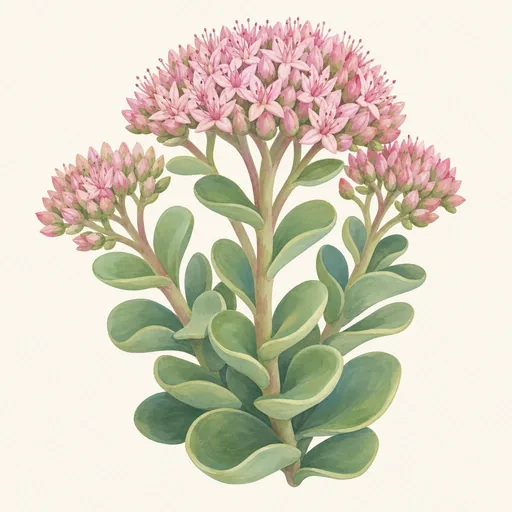
Sedum
Sedum · Crassulaceae
- Plant outFrom the last frost until 4 weeks afterApr 10 – May 14
- Plant in autumn6–8 weeks before the first autumn frostAug 30 – Sep 19
- Space25–45 cm (10–18 in) apart
Description
Sedum is a genus of succulent flowering plants often called stonecrops. Its many species vary from tiny, mat-forming plants to upright clumps, but most have fleshy leaves that store water. The leaves may be green, blue-gray, or reddish and can take on stronger colors in bright sun or cool weather. Low-growing species spread across rock crevices and gravelly ground; gardeners often use them along paths, in containers, or between stones.
Sedum flowers are usually small and star-shaped, with five petals, and appear in clusters above the foliage. Depending on the species, they may be yellow, white, pink, or red. Flowering time varies: some species bloom in spring, while others flower in summer or autumn. The clusters can attract bees, butterflies, and other pollinating insects. After flowering, the plants produce small seed-bearing fruits.
Most commonly grown sedums prefer plenty of sun and soil that drains quickly. Their water-storing leaves help them withstand dry spells once established, but persistently wet soil can cause their roots and stems to rot. They generally need less watering than many other garden flowers. Growing needs and tolerance of winter cold differ among species, so a plant suited to an outdoor rock garden in one climate may need protection in another.
Many sedums are easy to propagate from stem cuttings, and established clumps can often be divided. Their compact growth and modest soil requirements make some species useful on green roofs, although a roof planting still needs suitable drainage and a species matched to the local climate. Plants formerly sold as tall sedums, including the familiar autumn-flowering stonecrops, are often classified in the related genus Hylotelephium. Checking the species name is helpful when choosing a plant for a particular site.
Growing Conditions
5–60 cm (2–24 in) tall, 25–60 cm (10–24 in) wide
- Smallest
- Largest
Full sun, 6+ hours
Tolerates part sun
Low
Let the soil dry out between waterings.
Ideal 15–27 °C (59–81 °F)
Survives down to −40 °C (−40 °F).
pH 6–7.5 · neutral to alkaline
Where it Grows
Planting
When to Plant
Plant hardy garden sedums in spring, after the ground has thawed and is workable, or in early autumn while the soil is still warm. These cooler periods give roots time to establish without the stress of summer heat. In cold climates, favor spring so new plants are well rooted before winter; in hot climates, autumn can be easier because temperatures are milder. Wait until the soil has dried enough that it does not clump heavily or stay waterlogged. Container-grown hardy sedums can also be planted during the growing season if you can water them while they establish, but avoid heat waves and prolonged drought. Many plants sold as sedum are tender succulents rather than cold-hardy garden perennials. Plant those outdoors only after the last frost, and bring them inside before freezing weather unless the variety is known to be hardy in your area.
How to Plant
Choose a spot with plenty of sun and soil that drains quickly. Most sedums grow best with at least six hours of direct sun; excessive shade can make upright varieties floppy and reduce flowering. Drainage matters more than rich soil: if the ground stays wet, use a raised bed or a container with drainage holes rather than planting into soggy clay. Avoid heavy applications of compost or fertilizer, which can encourage weak, lush growth.
Dig a hole about twice as wide as the root ball but no deeper. Remove the plant from its pot, gently loosen tightly circling roots, and set it so the top of the root ball is level with the surrounding soil. Backfill, firm the soil lightly, and water once to settle it. Leave enough space for the variety’s mature spread; low ground-cover sedums may need roughly 6–12 inches between plants, while larger upright types often need 12–24 inches. Check the label for the particular variety.
Water when the soil begins to dry during the first few weeks. Once established, most sedums tolerate drought and need little supplemental water. Keep mulch thin and away from the stems to avoid trapping moisture around the crown.
Planting Calendar
- Plant outdoors: from the last frost until 4 weeks after
- Autumn planting: 6–8 weeks before the first autumn frost
- Plant out: Apr 10 – May 14
- Autumn planting: Aug 30 – Sep 19
Care
Care Calendar
- Prune · Mar 13 – Apr 30
Cut old stems to the ground before new growth gets tall. - Divide · Mar 27 – May 14
Divide crowded clumps every few years and replant in well-drained soil. - Pinch out · May 8 – Jun 11
Pinch back tall varieties once for sturdier, more compact stems.
Watering
Water newly planted sedum when the soil is dry a few inches below the surface, watering thoroughly so moisture reaches the roots. Once established, most garden sedums need little supplemental water except during prolonged dry spells. Let the soil dry between waterings: consistently damp soil can cause stems and roots to rot. In containers, check more often because potting mix dries faster, but always use a pot with drainage holes and empty any saucer after watering. Water at the base of the plant rather than routinely wetting the foliage. Sedum’s water-storing leaves make slight dryness safer than overwatering. Adjust for the site and season: plants in hot, exposed pots may need water much more often than those growing in the ground, while dormant plants need very little.
Pruning
Prune according to the sedum’s growth habit. For upright types, remove dead or damaged stems in early spring, cutting them near the base before new shoots grow tall. You can leave dry flower heads standing through winter for structure and then remove them in spring. If upright stems tend to flop, shorten young shoots by about one-third in late spring or early summer; this encourages branching but may delay flowering. For low-growing, spreading sedums, trim straggly growth or stems encroaching on paths after flowering. Remove broken or rotting material promptly, using clean pruners. Avoid heavy pruning late in the season, when fresh growth may be vulnerable to frost. Healthy stem pieces from suitable varieties can be saved for propagation.
Weeding
Keep weeds from establishing while sedum fills in, especially around small transplants and between spreading stems. Pull weeds when the soil is slightly moist so their roots come out with less disturbance. Work by hand close to the plant: shallow sedum roots and trailing stems can be damaged by a hoe. Remove weeds before they set seed, and check the edges of a sedum patch where grasses and other vigorous plants may creep in. A light layer of suitable mulch can suppress new seedlings, but it will not replace occasional hand weeding. Avoid spraying herbicide near sedum, since drift can injure its foliage. Once a ground-cover planting is dense, it may shade out many small weeds, though persistent perennial weeds still need removal.
Mulching
Mulch lightly, if needed, to limit weeds and keep soil from splashing onto leaves. Sedum generally prefers free-draining conditions, so a thin layer of gravel or coarse grit is often more suitable than a thick layer of moisture-holding organic mulch. Keep any mulch back from stems and crowns; material piled against them can trap moisture and encourage rot. In a well-drained rock garden or a densely planted sedum ground cover, additional mulch may be unnecessary. Where you use bark or compost around neighboring plants, leave a clear space around the sedum. Check the planting after heavy rain: if mulch has washed over low-growing stems, pull it back. Mulch should help manage the site without leaving the plant’s base persistently damp.
Fertilizing
Most sedums grow well without regular fertilizer, particularly in ordinary garden soil. Too much nitrogen can produce soft, weak growth and cause upright varieties to flop. If a plant grows poorly despite adequate light and drainage, work a small amount of compost into the surrounding soil in spring, or apply a balanced fertilizer sparingly according to its label. Do not pile compost against the crown. Container-grown sedum may exhaust its potting mix sooner than plants in the ground; refresh the mix when repotting, or feed lightly during active growth if needed. Avoid feeding late in the season, when tender new growth may not harden before cold weather. Before fertilizing a struggling plant, check for excess water, poor drainage, or shade—fertilizer will not correct those problems.
Pest Management
Inspect sedum occasionally, especially new shoots and the undersides of leaves. Aphids or mealybugs can sometimes gather on tender growth; remove a small infestation with a firm spray of water or a cotton swab, and use an insecticidal soap labeled for the pest if needed. Follow the label and avoid spraying open flowers visited by pollinators. Slugs and snails may chew low foliage, particularly in damp, shaded spots. Hand-pick them where practical and clear away debris that provides shelter. Good spacing, airflow, and well-drained soil help keep plants healthy. Soft, collapsing stems often indicate excess moisture or rot rather than an insect problem; remove affected material and correct the watering or drainage. Identify the cause before treating, since sedum usually needs little pest control.
Growing in Containers
Grows well in a pot of at least 5 litres (1.3 US gallons), with drainage holes. Can be grown indoors as a houseplant.
Propagation
From cuttings
- Cut a healthy, nonflowering stem during the growing season.
- Remove the lower leaves.
- Let the cut end dry for a day or two.
- Insert the stem into free-draining potting mix.
- Keep it lightly moist until roots form.
By division
- Lift an established clump in spring.
- Separate it into sections with roots and shoots.
- Discard any dead or rotting material.
- Replant the sections in well-drained soil.
- Water them in lightly.
From seed
- Sow seeds on the surface of a moist, free-draining seed mix.
- Press them down gently without burying them deeply.
- Keep the tray in bright light and lightly moist.
- Pot up seedlings once they are large enough to handle.
Companion Plants
Good neighbors
- Purple coneflower: Both thrive in sunny, well-drained beds and provide flowers for pollinators.
- Little bluestem: This drought-tolerant grass shares sedum’s preference for sun and well-drained soil and adds contrasting texture.
- Russian sage: Both grow well in sunny, relatively dry conditions and are often paired in low-water borders.
Common Problems
- Yellowing leaves
- Sticky residue on leaves
- Black sooty coating
- Curled or cupped leaves
Aphids are small, soft-bodied insects that feed by piercing plants and drawing out sap. The group includes many…
- Yellowing leaves
- Sticky residue on leaves
- Black sooty coating
- Curled or cupped leaves
Mealybugs are small, sap-feeding insects in the family Pseudococcidae. They occur on many houseplants, ornamentals…
- White powdery coating
- Yellowing leaves
- Curled or cupped leaves
- Distorted new growth
Powdery mildew is a group of fungal diseases, not a single species. Different fungi infect different hosts, including…
- Yellowing leaves
- Wilting
- Stunted growth
- Leaves dropping
Root rot is a general name for the decay of plant roots, not a single disease with one scientific name. It can result…
- Root rot: Overwatering or poorly drained soil can make roots and stems soft and cause the plant to collapse.
- Leggy growth: Too little light can produce stretched, sparse stems.
- Few flowers: Insufficient sun can reduce flowering in species grown for their blooms.
- Pests: Mealybugs, aphids, and scale insects may infest stems or leaves.
- Winter damage: Some species struggle in cold, wet soil, even when they tolerate freezing temperatures.
Varieties
Its flower heads deepen from pink to rusty red as the season progresses.
- late flowering
- pink flowers
- drought tolerant
It resembles Autumn Joy but generally holds its flower heads on sturdier stems.
- late flowering
- sturdy stems
- red flowers
Dark stems and gray-green leaves provide contrast beneath its flower clusters.
- purple stems
- pink flowers
- tall
It bears broad, bright pink flower heads in late summer.
- bright pink flowers
- upright
Its deep purple foliage contrasts with rosy-pink flowers.
- dark foliage
- pink flowers
- compact
This low-growing variety is valued chiefly for its bright, needlelike foliage.
- groundcover
- golden foliage
- yellow flowers
It spreads into a low mat whose leaves turn redder in cool weather.
- groundcover
- red foliage
- pink flowers
More about varieties
- Sedum album (white stonecrop): A low-growing groundcover with small leaves and clusters of white flowers.
- Sedum acre (goldmoss stonecrop): A fast-spreading mat-former with tiny leaves and bright yellow flowers; it can spread aggressively.
- Sedum rupestre ‘Angelina’: Grown for its needlelike, golden foliage, which often takes on orange tones in cool weather.
- Sedum morganianum (burro’s tail): A trailing succulent popular in hanging pots; its leaves detach easily when handled.
- Sedum rubrotinctum (jelly bean plant): Has plump, bean-shaped leaves that can develop red tips in bright light.
Fun Facts
- Many sedums store water in their fleshy leaves, helping them survive dry spells.
- Some sedums are used on green roofs because they tolerate shallow soil and drought.
- Their flowers provide nectar for bees and other pollinators.
- Many species can be propagated from stem cuttings; some also grow from detached leaves.
- The name Sedum is often linked to the Latin sedere, meaning “to sit,” a reference to the way some species grow close to rocks and soil.
Notice an error or have a question about Sedum? Contact us