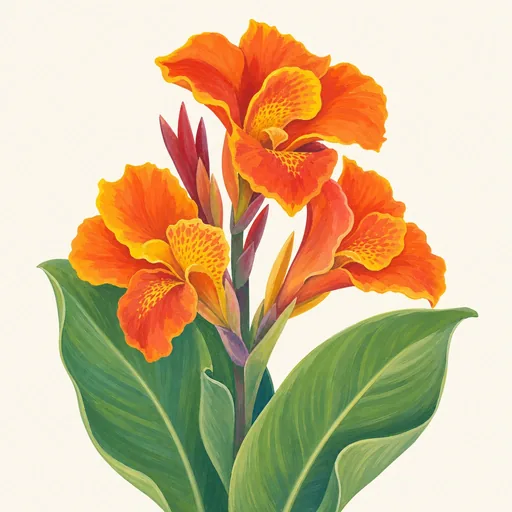
Canna
Canna · Cannaceae
- Plant out1–3 weeks after the last frostApr 17 – May 7
- Space45–60 cm (18–24 in) apart
- Bloom60–100 days after plantingJun 16 – Sep 5
Description
Canna is a genus of flowering plants grown for its bold foliage and bright, tropical-looking blooms. Often called canna lilies, cannas are not true lilies. They grow from thick underground rhizomes and form upright clumps, usually reaching 0.6–2 metres tall, although some varieties grow taller. Their broad, paddle-shaped leaves may be green, bronze, purple or striped, making the plants ornamental even when they are not flowering.
Flowers appear on sturdy stalks, often from summer into autumn in temperate gardens and for longer periods in warm climates. Red, orange, yellow, pink and multicoloured forms are available. What look like large petals are mostly modified stamens; the true petals are smaller. Some cannas set rounded seed capsules containing hard, dark seeds. Garden plants are often hybrids or named cultivars rather than a single wild species.
Cannas grow best in full sun and fertile, moist but well-drained soil. They need regular water while actively growing and generally flower more freely with warmth and good light. They suit borders, large containers and the edges of ponds, provided their roots are not left in stagnant soil. Removing spent flower stalks keeps plants tidy, while dividing crowded rhizomes helps maintain vigorous growth. In frosty regions, the foliage dies back and the rhizomes may need to be lifted and stored dry and frost-free over winter; in mild climates, plants can remain in the ground.
The genus is native to the Americas and is now cultivated widely around the world. Some species have also become naturalized outside their native range. Cannas attract pollinators, including bees and hummingbirds where these occur. Their rapid growth and large leaves give gardens a lush appearance, but they need space and may spread into neighbouring planting areas.
Growing Conditions
0.6–2.4 m (2–8 ft) tall, 45–90 cm (1–3 ft) wide
- Smallest
- Largest
Full sun, 6+ hours
Tolerates part sun
High
Keep the soil consistently moist.
Ideal 18–30 °C (64–86 °F)
Survives down to −12 °C (10 °F).
pH 6–7 · acidic to neutral
Where it Grows
Planting
When to Plant
Plant canna rhizomes outdoors in spring, after the last frost, when the soil has warmed to at least 60°F (16°C). Cannas grow best in warmth, so waiting until nights generally stay above 50°F (10°C) helps them get established. Planting into cold, wet soil can cause the rhizomes to rot rather than sprout. If your growing season is short, start rhizomes in pots indoors about four to six weeks before your expected last frost. Move the plants outside after frost danger has passed, gradually exposing them to outdoor sun and temperatures over several days. Nursery-grown cannas can be planted at the same time. In areas with frost-free winters, cannas can often remain in the ground year-round; where the soil freezes, plant them each spring or lift and store the rhizomes in autumn. A soil thermometer is more useful than a calendar date, because spring warmth varies from year to year.
How to Plant
Choose a spot with at least six hours of direct sun daily. Cannas flower best in full sun and appreciate fertile soil that holds moisture without staying waterlogged. Loosen the soil and mix in compost before planting. Set each rhizome horizontally in a hole, with any visible growing buds facing upward, and cover it with about 2 to 3 inches (5 to 8 cm) of soil. If you cannot identify the buds, laying the rhizome flat is fine. Space compact varieties about 12 to 18 inches (30 to 45 cm) apart and larger varieties about 18 to 36 inches (45 to 90 cm) apart, according to their mature size. Water thoroughly after planting, then keep the soil lightly moist while shoots emerge; avoid soaking cold soil. Once plants are growing strongly, water regularly, especially during hot, dry weather. A layer of mulch helps conserve moisture. For containers, use a pot with drainage holes, good-quality potting mix, and enough room for the variety to grow; a pot at least 12 to 18 inches (30 to 45 cm) wide suits many cannas. Feed during active growth with a balanced fertilizer, following its label directions.
Growth Timeline
- Growing in the garden 60–100 days
- In bloom 10–16 weeks
Planting Calendar
- Plant outdoors: 1–3 weeks after the last frost
- Plant out: Apr 17 – May 7
- Bloom: Jun 16 – Sep 5
Care
Care Calendar
- Divide · Mar 20 – Apr 23
Divide crowded rhizomes before planting, keeping at least one growing bud on each piece. - Mulch · Apr 10 – May 14
Spread mulch around emerging shoots to help retain soil moisture. - Feed · Apr 24 – Aug 6
Feed regularly during active growth, following the fertilizer label. - Deadhead · May 22 – Sep 3
Remove spent flowers and cut down flower stalks once they finish blooming. - Lift and store · Oct 25 – Nov 14
Where the ground freezes, lift rhizomes after frost blackens the foliage and store them frost-free.
Watering
Water cannas deeply after planting, then keep the soil evenly moist while shoots establish. During active growth, aim for roughly 1–2 inches (2.5–5 cm) of water per week from rain and irrigation, adjusting for heat, soil type, and plant size. Water when the upper inch of soil begins to dry rather than following a rigid schedule. Container-grown cannas dry out faster and may need watering daily in hot weather; make sure excess water can drain. Direct water toward the soil to keep leaves drier, especially where fungal diseases occur. Cannas enjoy moisture, but rhizomes left in cold, soggy soil can rot. Reduce watering as growth slows in autumn. If storing lifted rhizomes over winter, do not water them as though they were growing plants.
Pruning
Remove yellow, torn, or diseased leaves as they appear, using clean tools and avoiding damage to new shoots. After a flower cluster fades, you can clip off the spent blooms for a tidier appearance. Check for unopened buds lower on the same stalk before cutting: some cannas produce another flush of flowers there. Once a stalk has finished flowering, cut it near the base to make room for fresh growth. Deadheading is optional, but removing developing seedpods can direct the plant’s energy toward flowers and rhizomes. After frost blackens the foliage, cut stems back to a few inches above the ground if you plan to lift the rhizomes. In mild climates, wait until foliage has died back before clearing it away. Disinfect tools after cutting plants that may be diseased.
Weeding
Keep the area around young cannas free of weeds so their new shoots do not have to compete for water, nutrients, and light. Pull weeds while they are small, ideally after rain or watering when the soil is easier to work. Weed carefully by hand close to the stems: canna shoots can break, and shallow hoeing may injure roots or rhizomes. Remove perennial weeds, including their roots, before planting if possible; they are harder to extract once a clump is established. As cannas grow, their broad leaves shade the ground and may reduce weed growth, but inspect the edges of the planting regularly. Clear weeds before they flower or set seed. A layer of organic mulch helps suppress new seedlings, though any weeds that emerge through it should still be removed.
Mulching
Spread 2–3 inches (5–8 cm) of shredded leaves, compost, or another organic mulch around cannas after the soil has warmed and shoots are visible. Mulch helps retain moisture, limits weed germination, and moderates soil temperature. Leave a small gap around emerging shoots and stems rather than piling mulch against them, which can encourage rot. Replenish the layer as it breaks down, but avoid burying young growth. In regions with mild winters, mulch can provide some protection to rhizomes left in the ground; it cannot reliably protect them where the soil freezes hard. In colder climates, lift and store rhizomes rather than relying on a thicker mulch layer. If the planting site stays wet in winter, avoid heavy mulching that keeps the soil damp around dormant rhizomes.
Fertilizing
Cannas grow and flower best in fertile soil. Before planting, mix well-rotted compost into the bed if the soil is poor, but avoid placing concentrated fertilizer directly against the rhizomes. When new shoots appear, apply a balanced garden fertilizer according to its label, or use a slow-release product at planting as directed. For vigorous plants in containers or lean soil, a diluted liquid fertilizer every four to six weeks during active growth can help maintain flowering. Water after applying granular fertilizer, and keep it off the leaves and stems. Avoid excessive nitrogen: it can produce lush foliage with fewer flowers. Stop feeding toward the end of the growing season as growth slows. If plants look healthy and flower well, more fertilizer is unnecessary; moisture or sunlight, rather than nutrients, may be the limiting factor.
Pest Management
Inspect leaves and new shoots regularly. Canna leafrollers fold leaves around themselves and chew holes; remove heavily infested leaves or treat young caterpillars with a product containing Bacillus thuringiensis (Bt) labeled for caterpillars. Aphids and spider mites may build up in hot, dry conditions; a firm spray of water can dislodge them, while insecticidal soap can help if applied according to its label. Hand-pick slugs, snails, or Japanese beetles where practical. Brown or orange spotting may signal canna rust: remove affected foliage, improve air circulation, and water at soil level. Mottled or streaked foliage with distorted growth can indicate a virus. There is no cure; remove affected plants, do not divide them for replanting, and clean tools between plants. Use pesticides only when the pest has been identified and the product is labeled for it.
Harvesting
For ornamental cannas, harvesting usually means lifting rhizomes for winter storage or division, rather than gathering an edible crop. Where winters freeze the soil, wait until the first light frost has damaged the foliage, then cut stems back to a few inches and carefully dig around the clump. Lift it without slicing through the rhizomes, shake off loose soil, and let it dry briefly in a sheltered place. Store sound rhizomes in a frost-free, cool location, roughly 40–50°F (4–10°C), packed in slightly moist peat, coir, or a similar material. Check them periodically for rot or excessive shriveling. Divide clumps before replanting, making sure each section has a healthy growing bud. In mild climates where rhizomes can remain outdoors, lift them only when you want to divide or move the plants. Flower stalks can also be cut for arrangements.
Growing in Containers
Grows well in a pot of at least 20 litres (5.3 US gallons), with drainage holes. Best kept outdoors.
Propagation
By division
- Lift the rhizome clump in spring.
- Cut it into sections, leaving at least one healthy bud on each.
- Discard any soft or rotten sections.
- Plant the divisions with buds facing upward after frost danger has passed.
- Water well.
From seed
- Nick or lightly file the hard seed coat.
- Soak the seeds in warm water overnight.
- Sow in moist seed-starting mix and keep warm.
- Keep the mix moist until seedlings emerge.
- Plant outdoors after frost danger has passed.
Companion Plants
Good neighbors
- Elephant ears: They are commonly paired with cannas in tropical-style beds and share a preference for warm conditions, rich soil, and steady moisture.
- Banana plants: Their large leaves complement canna flowers, and both grow well in warm, sheltered sites with fertile, moist soil.
Common Problems
- Holes in leaves
- Insects visible on the plant
- Stems chewed or cut through
- Wilting
Caterpillars are the larval stage of butterflies and moths, not a single species. Many feed on garden plants, although…
- Orange or rust-colored spots
- Spots on leaves
- Yellowing leaves
- Leaves dropping
Rust is a group of plant diseases caused by fungi in the order Pucciniales, not a single species. Different rust fungi…
- Yellowing leaves
- Sticky residue on leaves
- Black sooty coating
- Curled or cupped leaves
Aphids are small, soft-bodied insects that feed by piercing plants and drawing out sap. The group includes many…
- Pale speckles or stippling
- Yellowing leaves
- Brown or crispy leaf edges
- Fine webbing
Spider mites are tiny, plant-feeding arachnids in the family Tetranychidae, not insects. Several species attack garden…
- Yellowing leaves
- Curled or cupped leaves
- Distorted new growth
- Stunted growth
Mosaic virus is a common name for diseases caused by several different plant viruses, not one species with a single…
- Canna leafrollers: Caterpillars bind leaves with silk and chew holes in the rolled foliage.
- Aphids and spider mites: These sap-feeders can cause distorted growth or speckled, yellowing leaves.
- Canna rust: Orange-brown spots develop on leaves, especially in humid conditions.
- Virus diseases: Mottled or streaked leaves and stunted growth may indicate a virus. There is no cure; remove affected plants.
- Rhizome rot: Poor drainage or overly wet winter storage can cause the rhizomes to decay.
Varieties
Its boldly striped leaves provide color even before its flowers open.
- striped foliage
- orange flowers
Also sold as Bengal Tiger, it has green leaves striped with yellow.
- variegated foliage
- orange flowers
Its dark leaves make a strong contrast with its bright flowers.
- burgundy foliage
- red flowers
This classic cultivar produces large red blooms above green leaves.
- red flowers
- green foliage
Its red-and-yellow flowers and irregularly colored leaves can vary from stem to stem.
- bicolor flowers
- variegated foliage
This compact, seed-grown selection suits containers and smaller beds.
- compact
- red flowers
- early blooming
More about varieties
- ‘Tropicanna’ (‘Phasion’): Grown for striped foliage in bronze, pink, orange and green, as well as orange flowers.
- ‘Pretoria’ (‘Bengal Tiger’): Has green-and-yellow striped leaves and orange flowers.
- ‘Australia’: Features dark burgundy foliage and vivid red flowers.
- ‘Lucifer’: A compact cultivar with red flowers edged in yellow.
- ‘The President’: A classic red-flowered cultivar with green leaves.
Health Benefits
Canna is grown chiefly as an ornamental, but some types—particularly edible canna, often identified as Canna indica—have a long history as food crops. Their rhizomes are processed to extract starch, sometimes called achira starch. It supplies carbohydrate energy and is used to thicken foods or make products such as noodles and baked goods. Tender young shoots are also eaten in some places after cooking. These are food uses, not evidence that canna treats a medical condition.
Various traditional practices have used parts of canna for ailments such as fever or inflammation. However, clinical evidence for these medicinal uses is limited, and there is no established therapeutic dose. Canna should not replace medical care or prescribed treatment.
Do not assume that a nursery-bought ornamental canna is suitable for eating: its exact identity and any pesticide treatments may be unknown. If you want to grow canna for food, obtain a correctly identified edible type from a reliable source and follow established preparation methods. Anyone with a medical condition or dietary restrictions should seek appropriate professional advice rather than relying on canna as a remedy.
Fun Facts
- Despite the nickname “canna lily,” cannas are not true lilies; they belong to the family Cannaceae.
- Their showy flower parts are largely modified stamens called staminodes.
- Cannas grow from thick underground rhizomes, which can be divided to make new plants.
- Their hard, round seeds are sometimes used as beads.
- Cannas are related to bananas and ginger through the plant order Zingiberales.
Notice an error or have a question about Canna? Contact us