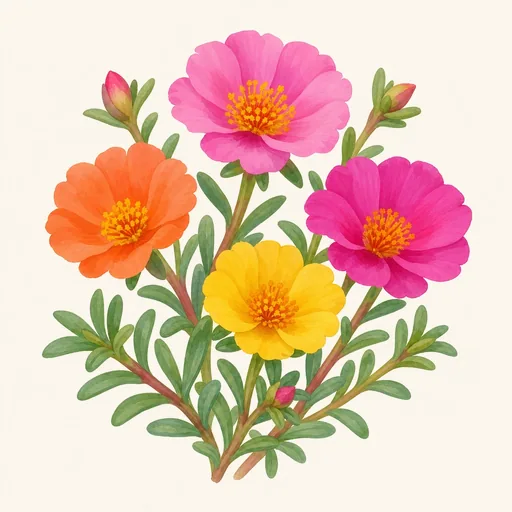
Portulaca
Portulaca grandiflora · Portulacaceae
- Start indoors6–8 weeks before the last frostFeb 13 – Mar 5
- Sow outdoors1–3 weeks after the last frostApr 17 – May 7
- Plant out1–3 weeks after the last frostApr 17 – May 7
- Space15–30 cm (6–12 in) apart
- Bloom60–90 days after plantingJun 16 – Aug 26
Description
Portulaca grandiflora, commonly called moss rose or flowering purslane, is a low-growing succulent grown for its bright, papery flowers. Native to southern South America, it is widely planted in gardens and containers around the world. Its trailing stems spread across the soil, usually reaching about 10–20 cm tall. Narrow, fleshy leaves store water, helping the plant tolerate heat and short dry spells.
Flowers appear through summer and often continue until frost. They may be pink, red, orange, yellow, white, or purple, sometimes with contrasting centers. Depending on the variety, blooms are single or double and roughly 2–5 cm across. Individual flowers are short-lived, but established plants produce new ones regularly. Many varieties open their flowers most fully in direct sunshine and close them at night or during dull weather.
Moss rose grows best in full sun and sharply draining soil. Sandy ground, rock gardens, edging, hanging baskets, and shallow containers suit its spreading habit. It can thrive in relatively poor soil, but persistently wet conditions may cause the stems and roots to rot. Water young plants while they establish; afterward, let the soil dry between waterings. Excess fertilizer can encourage leafy growth at the expense of flowers.
Gardeners usually grow it as an annual where winters are cold. Sow its small seeds after frost, once the soil has warmed, or start them indoors and transplant carefully. It can also be propagated from stem cuttings. Removing spent flowers is optional, although it may keep containers tidy. Plants sometimes self-seed where conditions are favorable. Unlike common purslane (Portulaca oleracea), moss rose is primarily grown as an ornamental rather than as a vegetable. Its compact size and drought tolerance make it especially useful in sunny spaces where more moisture-loving flowers struggle.
Growing Conditions
10–20 cm (4–8 in) tall, 20–30 cm (8–12 in) wide
- Smallest
- Largest
Full sun, 6+ hours
Low
Let the soil dry out between waterings.
Ideal 20–32 °C (68–90 °F)
Survives down to 0 °C (32 °F).
acidic to neutral to alkaline
Where it Grows
Planting
When to Plant
For ornamental portulaca, often called moss rose, use your last expected spring frost as the main guide. Sow seeds outdoors or set out nursery plants only after frost danger has passed and the soil has warmed to at least 65°F (18°C). Warm weather helps this heat-loving plant germinate and grow; seeds may struggle in cold, wet ground. If you want earlier flowers, start seeds indoors about six to eight weeks before the last expected frost. Move seedlings outside after gradually acclimating them to outdoor conditions and once nights are reliably mild, ideally above 50°F (10°C).
In frost-free climates, plant when the weather is warm and the rainy season is not leaving the soil constantly soggy. Portulaca can also be sown later in spring or early summer where the growing season is long enough for it to establish and flower. Check the forecast rather than relying on a calendar date: a late cold spell can damage tender seedlings.
How to Plant
Choose a spot with at least six hours of direct sun each day; more sun generally means better flowering. Portulaca does best in sharply draining soil and is well suited to sandy beds, rock gardens and containers with drainage holes. If your soil stays wet, use a raised bed or pot rather than trying to grow it in heavy, waterlogged ground.
The seeds are tiny. Scatter them thinly over moistened soil, press them gently into the surface, and cover them only very lightly, if at all. Mist carefully so they do not wash away. Keep the surface lightly moist until seedlings emerge, then thin or transplant them according to the variety’s mature spread, commonly about 6–12 inches (15–30 cm) apart. For plants started indoors, handle the small roots gently and set each seedling at the same depth it grew in its pot. You can also plant nursery-grown portulaca at that depth.
Water newly planted portulaca enough to help it establish, then allow the soil to dry between waterings. Avoid persistently damp soil, which can cause rot. Skip heavy fertilizer: rich soil can encourage leafy growth at the expense of flowers.
Growth Timeline
- Germination 10–14 days
- Seedlings indoors 5–9 weeks
- Growing in the garden 60–90 days
- In bloom 12–20 weeks
Planting Calendar
- Start seeds indoors: 6–8 weeks before the last frost
- Sow outdoors: 1–3 weeks after the last frost
- Plant outdoors: 1–3 weeks after the last frost
- Germination: 10–14 days
- Start indoors: Feb 13 – Mar 5
- Sow outdoors: Apr 17 – May 7
- Plant out: Apr 17 – May 7
- Bloom: Jun 16 – Aug 26
Care
Care Calendar
- Thin · May 1 – May 28
Thin direct-sown seedlings to about 6–8 inches apart. - Prune · Jun 19 – Aug 6
Trim leggy stems lightly in midsummer to encourage fresh growth.
Watering
Portulaca grows best in well-drained soil and tolerates dry conditions once established. Water newly planted seedlings or transplants when the upper inch of soil feels dry, giving them enough moisture to establish roots without leaving the soil soggy. Established plants in garden beds usually need water only during extended dry spells. Container-grown plants dry out faster, so check them regularly and water thoroughly when the potting mix has dried; let excess water drain away. Water at the soil level when possible, and avoid repeatedly wetting the foliage in humid weather. Yellowing leaves, soft stems, or a persistently damp root zone can indicate overwatering or poor drainage. Wilting that continues into the cooler evening may indicate the plant needs water, but flowers that close at night or in cloudy weather are normal for many ornamental portulacas and are not, by themselves, a sign of thirst.
Pruning
Portulaca generally needs little pruning. If an ornamental plant becomes leggy, pinch or trim back its stem tips to encourage branching and a fuller shape; avoid removing most of the growth at once. Snip off damaged or rotting stems promptly, especially where crowded growth stays damp. You can remove spent flowers to keep a planting tidy, although many ornamental varieties continue flowering without regular deadheading. If you want to collect seed, leave some flowers in place so their seed capsules can mature. For edible purslane, cutting tender stem tips serves as a light pruning and encourages new shoots. Use clean scissors, particularly when removing diseased material, and discard affected stems rather than leaving them around the plant. Prune when the foliage is dry to reduce the chance of spreading disease. Growth slows in cool weather, so substantial trimming is most useful while plants are actively growing.
Weeding
Keep weeds down while portulaca seedlings or new transplants are becoming established. Their shallow, spreading growth can be crowded or shaded by taller weeds, reducing flowering and making it harder to spot developing problems. Pull weeds by hand when the soil is slightly moist, taking care not to tug out nearby portulaca roots. If you use a hoe, work only at the surface to avoid damaging the plant's shallow root system. Once portulaca forms a low mat, it may suppress some weed seedlings, but inspect the edges of the planting and remove weeds before they set seed. Because portulaca itself can self-seed, decide which volunteer plants you want to keep and pull the rest while they are small. In vegetable beds, edible purslane may be treated as a crop or as a weed; remove unwanted plants before their many small seeds mature.
Mulching
Mulch is optional for portulaca, which prefers warm soil and good drainage. In a garden bed, a thin layer of fine gravel or small stones can help keep foliage off wet soil and limit weed growth without holding much moisture against the stems. Leave a little space around each plant's crown. Avoid thick layers of moisture-retentive organic mulch, particularly in humid climates or heavy soil, because persistently damp conditions encourage stem and root rot. If you already use organic mulch in a mixed planting, keep it shallow around the portulaca and check that water can drain freely. A light mulch may help newly planted areas retain enough moisture to establish, but watering should still be guided by how quickly the soil dries. In containers, well-draining potting mix and drainage holes matter more than mulch. Remove any mulch that becomes matted against soft or decaying stems.
Fertilizing
Portulaca usually flowers well in lean to moderately fertile soil, so heavy feeding is unnecessary. Before planting, improve very poor garden soil with a modest amount of compost if needed, while preserving good drainage. If established plants are growing and blooming well, skip fertilizer. Excess nitrogen can promote soft, leafy growth at the expense of flowers. Container-grown portulaca may need occasional feeding because nutrients wash out of potting mix; during active growth, apply a balanced liquid fertilizer at a diluted strength, following the product label, and reassess before feeding again. Do not fertilize a plant that is struggling in wet soil: correct the drainage or watering problem first. Fertilizer is also unlikely to solve poor flowering caused by shade. Give ornamental portulaca plenty of direct sun, then feed only if growth remains weak and the plant shows no signs of waterlogged roots or pest damage.
Pest Management
Portulaca is generally trouble-free in a sunny, well-drained site, but check new growth and the undersides of leaves for aphids or mealybugs. Small infestations can often be wiped off or dislodged with a gentle stream of water; avoid soaking the soil repeatedly while doing so. If needed, use an insecticidal soap labeled for the plant and pest, following its directions and testing a small area first. Slugs and snails may nibble tender seedlings, especially in damp spots; hand-pick them and reduce nearby hiding places. Soft, dark stems or collapsing plants more often point to rot than to an insect. Remove affected material and improve drainage and air circulation rather than adding more water. Inspect plants regularly so problems are caught early. If you intend to eat purslane, use only pest-control products explicitly labeled for edible crops and observe their harvest instructions.
Harvesting
For edible purslane (Portulaca oleracea), harvest clean, tender leaves and stem tips while the plant is actively growing. Snip above a leaf joint and leave enough stems and foliage for regrowth. Younger shoots are generally more tender than older, tougher stems. Wash the harvest before use, and do not eat plants from roadsides or places that may have been sprayed with pesticides or exposed to other contaminants. Confirm the plant's identification before eating it: ornamental portulacas are grown for their flowers and should not be assumed to be edible. Purslane contains oxalates, which people advised to limit dietary oxalates may need to avoid. For ornamental portulaca, the usual harvest is seed rather than food. Let a few flowers form capsules, then collect the tiny seeds when the capsules turn dry and begin to open. Catch them in a paper bag and store them dry for sowing.
Growing in Containers
Grows well in a pot of at least 2 litres (0.5 US gallons), with drainage holes. Best kept outdoors.
Propagation
From seed
- Sow seeds after the last frost, or start them indoors several weeks earlier.
- Press seeds onto a moist, well-draining seed mix; do not bury them deeply.
- Keep the mix lightly moist and warm until germination.
- Transplant seedlings outdoors after frost danger has passed.
From cuttings
- Cut a healthy, nonflowering stem several inches long.
- Remove leaves from the lower part of the stem.
- Let the cut end dry for about a day.
- Insert the stem into a gritty, well-draining potting mix.
- Keep the mix lightly moist until roots form.
Common Problems
- Yellowing leaves
- Sticky residue on leaves
- Black sooty coating
- Curled or cupped leaves
Aphids are small, soft-bodied insects that feed by piercing plants and drawing out sap. The group includes many…
- Seedlings collapse at soil level
- Soft or rotting stems
- Brown, mushy roots
- Wilting
Damping off is a disease of seeds and young seedlings, not a single organism with one scientific name. It can be…
- Yellowing leaves
- Wilting
- Stunted growth
- Leaves dropping
Overwatering occurs when soil stays wet long enough to limit the oxygen available to plant roots. Roots need oxygen to…
- Yellowing leaves
- Wilting
- Stunted growth
- Leaves dropping
Root rot is a general name for the decay of plant roots, not a single disease with one scientific name. It can result…
- Brown or crispy leaf edges
- Wilting
- Bleached or scorched patches
- Leaves dropping
Frost damage is an injury caused when plant tissues become cold enough for ice to form or for cells to lose water to…
- Root or stem rot: Soggy soil and poor drainage can cause soft, collapsing growth.
- Sparse flowers: Too much shade reduces blooming in ornamental portulaca.
- Aphids or mealybugs: These insects may gather on tender shoots; inspect plants and remove small infestations with a firm spray of water.
- Cold damage: Portulaca is frost-tender and is usually grown as an annual where winters freeze.
- Unwanted seedlings: Some types self-seed readily.
Varieties
Its flowers open relatively early in the day.
- early blooming
- mixed colors
This low-growing mix produces bright, rose-like blooms.
- compact
- double flowers
It suits containers and sunny bed edges.
- compact
- mixed colors
Its broad, succulent foliage and vivid flowers work well in containers.
- spreading
- heat tolerant
More about varieties
- Moss rose (Portulaca grandiflora): A popular ornamental with narrow leaves and bright, often double flowers.
- Common purslane (Portulaca oleracea): An edible species with broader leaves; it can also behave as a garden weed.
- Golden purslane (P. oleracea ‘Golden’): A cultivated edible form grown for its larger, yellow-green leaves.
- Wingpod purslane (Portulaca umbraticola): An ornamental species grown for colorful flowers and a spreading habit.
Health Benefits
The best-known food and wellness uses of portulaca belong to common purslane (Portulaca oleracea), not to every ornamental plant sold as portulaca. Its tender leaves and stems are eaten raw in salads or cooked in soups and stir-fries. They have a mildly tart taste and a slightly slippery texture when cooked.
Purslane is valued as a vegetable because it supplies fiber, vitamin C and other nutrients. It also contains alpha-linolenic acid (ALA), a plant-based omega-3 fatty acid. Including it in a varied diet can contribute to general nutrition, but it is not a proven treatment for any disease. Its omega-3 content does not make it a substitute for medical care or for other sources of omega-3s.
Traditional food and herbal practices have used purslane for various complaints, but evidence for specific medicinal benefits in people remains limited. Purslane contains oxalates, so people advised to restrict high-oxalate foods, including some people prone to calcium oxalate kidney stones, should ask a healthcare professional before eating it regularly. Harvest only plants confidently identified as edible purslane, and avoid plants exposed to pesticides, contaminated soil or roadside pollution.
Fun Facts
- Moss rose flowers often close at night and may stay closed on cloudy days.
- Common purslane can keep growing through hot, dry weather that stresses many leafy vegetables.
- Purslane seed capsules split open like tiny lids when mature.
- Despite its name, moss rose is not a true rose; it belongs to the purslane family, Portulacaceae.
Notice an error or have a question about Portulaca? Contact us