Cleome
Cleome hassleriana · Cleomaceae
- Start indoors4–6 weeks before the last frostFeb 27 – Mar 19
- Sow outdoorsFrom the last frost until 2 weeks afterApr 10 – Apr 30
- Plant outFrom the last frost until 2 weeks afterApr 10 – Apr 30
- Space30–45 cm (12–18 in) apart
- Bloom60–90 days after plantingJun 9 – Aug 19
Description
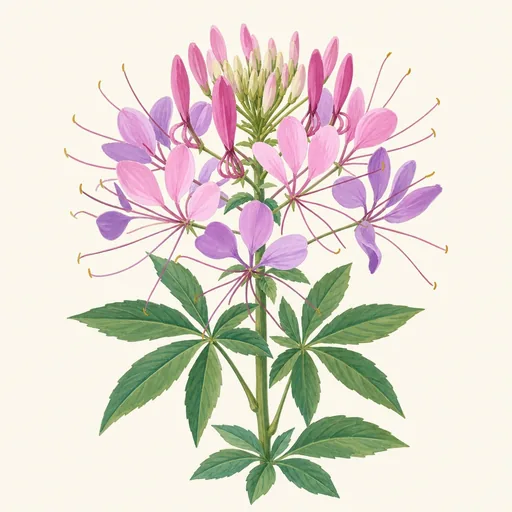
Cleome, commonly called spider flower, is a fast-growing flowering plant usually grown as an annual. It forms an upright, branching clump about 60–150 cm (2–5 ft) tall. Its leaves are divided into several narrow leaflets, giving them a hand-like shape. The stems can feel slightly sticky, and some plants have small prickles. The foliage has a distinctive musky scent, especially when brushed.
From summer into autumn, cleome produces airy clusters of flowers at the tops of its stems. The blooms may be pink, purple, lavender, or white. Long, projecting stamens give each flower its spider-like appearance, while fresh flowers continue to open above older ones as the clusters lengthen. Bees, butterflies, and hummingbirds visit the flowers. After flowering, slender seed pods develop; mature pods can release seeds that sprout the following year.
Cleome grows best in full sun and well-drained soil. It appreciates regular water while becoming established but tolerates short dry spells once mature. In rich soil or partial shade, plants may grow tall and need support. Sow seeds after the risk of frost has passed, or start them indoors for earlier flowers. Give plants room for air to circulate, since a mature cleome can be broad as well as tall. Removing spent flowers may reduce self-seeding, though it is not necessary to keep plants blooming.
Gardeners often place cleome toward the back of a border, where its height and loose flower clusters add colour without forming a solid screen. It also suits informal and pollinator-friendly plantings. Cleome is sensitive to frost, so it is generally grown for a single season in colder climates, even where fallen seeds produce new plants the next year.
Growing Conditions
0.9–1.5 m (3–5 ft) tall, 45–90 cm (1–3 ft) wide
- Smallest
- Largest
Full sun, 6+ hours
Tolerates part sun
Moderate
Keep evenly moist, not soggy.
Ideal 18–30 °C (64–86 °F)
Survives down to 0 °C (32 °F).
pH 6–7.5 · acidic to neutral to alkaline
Where it Grows
Planting
When to Plant
Plant cleome, often called spider flower, outdoors after the last spring frost, when nights are reliably above freezing and the soil has begun to warm. Check your local average last-frost date, but use the weather forecast rather than the calendar alone: a late cold snap can damage young plants. For direct sowing, wait until the soil is about 65°F (18°C) or warmer. If you want an earlier start, sow seeds indoors about four to six weeks before the expected last frost, then move the seedlings outside only after frost danger has passed. Harden them off first by gradually increasing their time outdoors over seven to ten days. Garden-center transplants can be planted on the same frost-free schedule. In warm, frost-free climates, cleome may be planted when conditions are mild enough for seedlings to establish. It usually flowers from summer into fall, so a slightly later spring sowing can still provide a long display.
How to Plant
Choose a spot in full sun with well-drained soil. Cleome tolerates ordinary garden soil, but it struggles where water stands around its roots. Loosen the top few inches of soil and remove weeds. Compost can improve poor soil; avoid heavy applications of fertilizer, which can encourage leafy growth at the expense of flowers.
For direct sowing, scatter seeds thinly or place them where you want plants to grow. Press them into the soil and cover only very lightly, about 1/8 inch (3 mm) deep. Water gently so the seeds stay in place, and keep the surface evenly moist until seedlings emerge. Germination can be uneven, so give them time. Once the seedlings have several true leaves, thin them to roughly 12 to 24 inches (30 to 60 cm) apart, allowing more room for taller varieties.
If starting indoors, sow in individual pots to limit root disturbance. Plant seedlings or purchased transplants at the same depth they grew in their pots, handling the root balls gently. Water thoroughly after planting, then water as needed while roots establish. Keep weeds down with a light mulch, leaving space around the stems. Tall varieties may benefit from support in windy sites.
Growth Timeline
- Germination 7–21 days
- Seedlings indoors 1–6 weeks
- Growing in the garden 60–90 days
- In bloom 10–16 weeks
Planting Calendar
- Start seeds indoors: 4–6 weeks before the last frost
- Sow outdoors: from the last frost until 2 weeks after
- Plant outdoors: from the last frost until 2 weeks after
- Germination: 7–21 days
- Start indoors: Feb 27 – Mar 19
- Sow outdoors: Apr 10 – Apr 30
- Plant out: Apr 10 – Apr 30
- Bloom: Jun 9 – Aug 19
Care
Care Calendar
- Thin · Apr 24 – May 21
Thin seedlings to the spacing on the seed packet so mature plants have room to grow. - Stake · May 8 – Jun 11
Stake tall varieties if they lean in an exposed or windy spot. - Deadhead · Aug 2 – Oct 24
Remove developing seedpods from seed-producing varieties to limit self-sowing.
Watering
Water newly planted cleome regularly until its roots are established, keeping the soil lightly moist but never soggy. Once established, garden-grown plants tolerate short dry spells, but flowering is best with consistent moisture. During dry weather, provide roughly 1 inch (2.5 cm) of water per week, including rainfall, and water deeply rather than giving frequent light sprinkles. Check the soil first: if the top inch feels dry, it is usually time to water. Plants in containers dry out faster and may need more frequent attention, especially in hot or windy weather. Direct water onto the soil rather than the leaves, ideally in the morning, to reduce disease risk. Make sure containers drain freely, and do not leave them standing in water. Yellowing leaves and persistently wet soil can signal overwatering; wilting in dry soil calls for a thorough soak.
Pruning
Cleome generally needs little pruning. If you want a bushier plant, pinch the growing tip from young plants when they are about 6–8 inches (15–20 cm) tall. This encourages side shoots, though it may delay the first flowers slightly. As flowering continues, remove spent flower clusters if you want a tidier display and fewer volunteer seedlings. Deadheading is optional: cleome often keeps flowering without it, and seed pods can add interest. To save seed or let plants self-sow, leave some flower clusters in place late in the season. Tall plants in exposed sites may lean; staking is usually more helpful than cutting them back hard. Use clean pruners, and consider gloves when handling varieties with prickly stems. At season’s end, remove dead plants if you do not want their seeds scattered through the bed.
Weeding
Keep the area around young cleome free of weeds while the plants become established. Weeds compete with seedlings for light, water, and nutrients, and dense growth can reduce airflow around the lower leaves. Pull weeds by hand when the soil is slightly moist, or hoe shallowly so you do not damage cleome roots. Pay particular attention early in the season, before the plants grow tall enough to shade some competing seedlings. If you sow cleome outdoors, learn to recognize its young plants before weeding: the species can self-seed, and volunteers may appear near last year’s plants. Thin unwanted cleome seedlings along with other weeds, leaving enough space for the remaining plants to mature. Check the bed periodically after rain, when new weeds are easiest to remove. Mulch can reduce later weeding, but keep it clear of any seedlings you want to grow.
Mulching
Spread a 2–3 inch (5–8 cm) layer of organic mulch, such as shredded leaves or fine bark, around established cleome. Mulch helps conserve soil moisture, moderates soil temperature, and suppresses weeds, reducing competition while plants are small. Leave a little open space around each stem so moisture does not collect against it. Apply mulch after direct-sown seedlings have emerged and been thinned; a thick layer laid down too early can prevent their germination. In cool regions, waiting until the soil has warmed in spring can also help seedlings get off to a good start. If you want cleome to self-sow, leave some bare soil beneath or near the plants in autumn, since a heavy mulch layer may stop fallen seeds from establishing. Renew mulch as needed during the growing season, but avoid burying small plants or piling material against their stems.
Fertilizing
Cleome is not a heavy feeder and usually grows well without repeated fertilizing in reasonably fertile, well-drained garden soil. Before planting, mixing in a modest amount of finished compost is often enough. If growth is weak in poor soil, apply a light dose of balanced fertilizer according to the package directions; avoid feeding simply because the plant is tall or flowering. Too much nitrogen can promote leafy growth at the expense of flowers and may leave stems softer and more prone to leaning. Container-grown cleome has a limited supply of nutrients and may benefit from occasional feeding with a diluted balanced liquid fertilizer during active growth. Water before applying fertilizer to dry soil, and avoid getting concentrated fertilizer on stems or leaves. If plants look healthy and flower freely, there is no need to add more. Good light and appropriate watering matter more than a rich feeding schedule.
Pest Management
Inspect cleome regularly, especially the undersides of leaves and tender new growth. Aphids may gather on shoots, while spider mites can cause fine stippling and webbing during hot, dry weather. A strong spray of water can dislodge small aphid colonies; for persistent infestations, use insecticidal soap labeled for the pest and follow its directions, covering leaf undersides. Encourage beneficial insects by avoiding broad-spectrum insecticides, particularly while flowers are attracting pollinators. Remove badly infested leaves if necessary. Check young plants for slug or snail damage and use hand-picking or a suitable bait where these pests are a problem. Space plants to allow airflow, water at soil level, and avoid persistently wet soil to limit fungal problems and root rot. Identify a pest before treating it: a few insects seldom justify spraying an otherwise vigorous plant.
Harvesting
For cut flowers, harvest cleome stems in the cool of the morning when several flowers on a cluster are open and more buds remain. Use clean snips and place the stems promptly in water. Remove any leaves that would sit below the waterline, and wear gloves if the stems are prickly. Change the vase water regularly to help the flowers last. To collect seed, leave selected flower clusters on the plant until their slender pods turn brown and begin to dry. Pick the pods before they split and release their seeds, then finish drying them in a paper bag. Once fully dry, separate the seeds and store them in a labeled paper envelope in a cool, dry place until sowing. Cleome self-seeds readily, so remove unwanted pods before they mature. Collecting seed from a named cultivar may produce plants that differ from the parent.
Growing in Containers
Grows well in a pot of at least 20 litres (5.3 US gallons), with drainage holes. Best kept outdoors.
Propagation
From seed
- Collect seeds when the pods turn brown, or buy seeds.
- Sow outdoors after the last frost in a sunny, well-drained spot.
- Cover seeds lightly with soil and keep the soil moist until they sprout.
- Thin seedlings to about 12–18 inches apart.
Common Problems
- Yellowing leaves
- Sticky residue on leaves
- Black sooty coating
- Curled or cupped leaves
Aphids are small, soft-bodied insects that feed by piercing plants and drawing out sap. The group includes many…
- Pale speckles or stippling
- Yellowing leaves
- Brown or crispy leaf edges
- Fine webbing
Spider mites are tiny, plant-feeding arachnids in the family Tetranychidae, not insects. Several species attack garden…
- White powdery coating
- Yellowing leaves
- Curled or cupped leaves
- Distorted new growth
Powdery mildew is a group of fungal diseases, not a single species. Different fungi infect different hosts, including…
- Yellowing leaves
- Sticky residue on leaves
- Black sooty coating
- Curled or cupped leaves
Whiteflies are a family of tiny, sap-feeding insects that infest vegetables, ornamentals, and greenhouse plants…
- Aphids, whiteflies, and spider mites may feed on leaves, especially during hot, dry weather.
- Powdery mildew can develop when foliage stays crowded or air circulation is poor.
- Roots may rot in persistently wet, poorly drained soil.
- Tall stems can flop in exposed sites, and plants may self-seed more freely than wanted.
Varieties
A bushy selection that does not set seed, so it needs no deadheading to prevent self-sowing.
- pink-purple flowers
- thornless
- sterile
A white-flowered selection that does not produce troublesome seedlings.
- white flowers
- thornless
- sterile
This shorter seed-grown selection suits smaller beds and containers.
- pink flowers
- compact
A traditional tall selection with violet-purple blooms that may self-sow.
- violet flowers
- tall
A traditional tall selection with rose-pink blooms that may self-sow.
- rose-pink flowers
- tall
A traditional tall selection with white blooms that may self-sow.
- white flowers
- tall
More about varieties
- ‘Violet Queen’ — a tall garden cleome with violet-pink flowers.
- ‘Rose Queen’ — a tall selection with rosy-pink blooms.
- ‘Helen Campbell’ — a white-flowered selection.
- Sparkler series — more compact plants, often sold as mixed flower colors.
- Señorita Rosalita® — a compact, thornless hybrid with lavender-pink flowers and little seed production.
Health Benefits
The cleome most often grown as a garden flower is valued for its appearance, not for an established medical use. However, one member of the group, Cleome gynandra (also called African spider plant or Gynandropsis gynandra), is a traditional leafy vegetable in parts of Africa and Asia. Its leaves are commonly cooked before eating and can contribute fiber and nutrients such as vitamin A precursors, vitamin C, calcium, and iron to the diet. Nutrient levels vary with growing conditions and preparation; cooking can reduce some vitamins.
Cleome gynandra also has a history of use in traditional remedies. Those uses should not be taken as evidence that it treats a particular illness: research on its compounds does not establish safe, effective medical doses for people. For everyday wellness, its clearest role is as one of a variety of edible greens in a balanced diet.
Do not assume that ornamental cleomes sold for flower beds are interchangeable with C. gynandra or safe to eat. Identify any plant to species, and avoid eating plants treated with ornamental pesticides. If you are considering cleome for a medical purpose, speak with a qualified healthcare professional rather than substituting it for prescribed care.
Fun Facts
- The name “spider flower” refers to the long, projecting stamens and slender seedpods that give the blooms a spidery look.
- Cleome flowers attract pollinators, including bees, butterflies, and hummingbirds.
- A flower spike keeps producing blooms near its tip as older flowers below form seedpods.
- Garden cleomes often self-seed, so new plants may appear the following year.
- The familiar ornamental spider flower, once called Cleome hassleriana, is also classified as Tarenaya hassleriana.
Notice an error or have a question about Cleome? Contact us