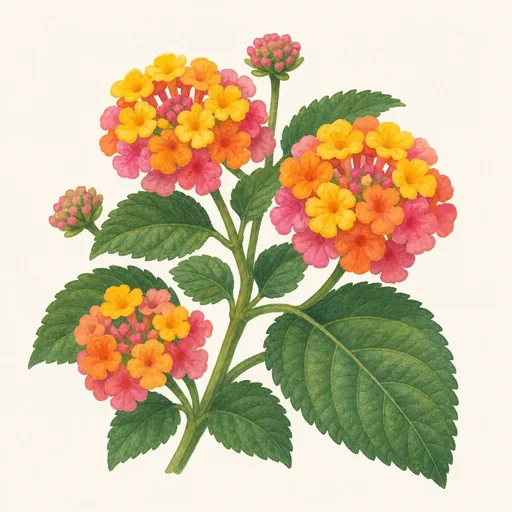
Lantana
Lantana camara · Verbenaceae
- Plant out1–3 weeks after the last frostApr 17 – May 7
- Space45–90 cm (1–3 ft) apart
- Bloom0–60 days after plantingApr 17 – Jul 27
Description
Lantana camara is a sprawling, often thorny perennial shrub grown for its dense clusters of small, tubular flowers. A flower head may display yellow, orange, pink, red, purple, or white, and its colors often change as the blossoms age, making a single cluster look multicolored. Its rough, oval leaves have toothed edges and release a strong scent when crushed. The plant typically reaches 1–2 m (3–6 ft) tall, although its stems may scramble through surrounding vegetation. Small green berries follow the flowers and ripen to dark purple or black. The berries, particularly when unripe, and other plant parts should not be eaten.
Native to tropical America, lantana now grows in warm regions worldwide. It thrives in full sun, tolerates heat and drought once established, and flowers most heavily in well-drained soil. In frost-free climates it can bloom nearly year-round; elsewhere it is commonly grown as a summer annual or protected from winter cold. Gardeners use it in borders and containers, where its nectar attracts butterflies, bees, and other insects. Birds eat the ripe fruit and disperse the seeds.
Its vigor requires care. Lantana camara spreads by seed and can root where stems touch the ground, forming dense thickets that displace native vegetation. It is invasive in many regions, including parts of Australia, Africa, and Asia, so check local restrictions before planting. Wear gloves when pruning if its foliage irritates your skin, and keep it away from grazing animals: it is toxic to livestock. Where planting is permitted, regular trimming and removal of fruiting flower heads can help limit its spread. Sterile cultivars may offer a lower-risk choice, but their suitability depends on local conditions.
Growing Conditions
0.3–1.8 m (1–6 ft) tall, 0.5–1.8 m (1–6 ft) wide
- Smallest
- Largest
Full sun, 6+ hours
Tolerates part sun
Low
Let the soil dry out between waterings.
Ideal 18–32 °C (64–90 °F)
Survives down to −7 °C (19 °F).
acidic to neutral to alkaline
Where it Grows
Planting
When to Plant
Plant lantana outdoors after the last spring frost, once the soil has warmed and nighttime temperatures stay above about 50°F (10°C). It grows fastest in warm weather; planting into cold, wet ground can slow growth or damage the roots. In areas with frosty winters, treat lantana as a summer annual or grow it in a container that you can bring indoors before frost. In frost-free climates, spring is a reliable planting time, although early autumn can also work where winters remain mild; give new plants time to establish before cooler or wetter weather arrives. If you start plants indoors, wait until outdoor conditions are warm before setting them out, and gradually expose them to direct sun over several days. A good practical cue is to plant at the same time as other heat-loving bedding plants, rather than at the first hint of spring warmth. Check local guidance before planting: some lantanas are invasive or restricted in certain regions.
How to Plant
Choose a site with at least six hours of direct sun and soil that drains well. Lantana tolerates relatively poor soil but struggles where water collects, so avoid low, soggy spots. Check the mature spread of your particular cultivar and space plants accordingly; many need roughly 18–36 inches (45–90 cm) between them. In regions where lantana can become invasive, consult local guidance and choose an approved, noninvasive cultivar or another plant instead.
Water the nursery plant before planting. Dig a hole about twice as wide as its root ball but no deeper. Gently remove the pot, loosen roots that circle the outside, and set the plant so the top of the root ball is level with the surrounding soil. Backfill with the original soil, firm it lightly, and water thoroughly. Add a thin layer of mulch to conserve moisture, keeping it away from the stems.
For containers, use a pot with drainage holes and a free-draining potting mix. Water newly planted lantana when the upper soil begins to dry; once established in the ground, it usually needs much less water. Avoid heavy fertilizer, which can encourage leaves at the expense of flowers. Wear gloves if the foliage irritates your skin, and keep the plant and its berries away from children and pets.
Growth Timeline
- Growing in the garden 0–60 days
- In bloom 16–24 weeks
Planting Calendar
- Plant outdoors: 1–3 weeks after the last frost
- Plant out: Apr 17 – May 7
- Bloom: Apr 17 – Jul 27
Care
Care Calendar
- Prune · Apr 10 – May 7
Cut back frost-damaged perennial plants once new growth appears. - Feed · May 1 – Aug 6
Feed container plants lightly during active growth; excess fertilizer reduces flowering. - Deadhead · May 8 – Sep 3
Remove spent flower clusters before berries form, especially where lantana can spread. - Protect · Oct 11 – Oct 31
Move potted plants indoors before frost if you want to keep them over winter.
Watering
Water newly planted lantana deeply, then check the soil regularly while roots establish. Water when the top inch or two feels dry rather than following a fixed schedule. Once established in the ground, lantana tolerates dry spells, but a deep watering during prolonged drought helps maintain flowering. Plants in containers dry out faster and may need water every few days in hot weather; check the potting mix before watering. Apply water at the base until it reaches the root zone, and let excess water drain freely from pots. Avoid keeping the soil constantly wet: poor drainage can cause root rot. If leaves wilt in afternoon heat, check the soil before watering, as they may recover when temperatures fall. Reduce watering during cool weather or when growth slows. A layer of mulch can help keep soil moisture more even without leaving the roots soggy.
Pruning
Trim lantana lightly during the growing season to maintain its shape and encourage branching. If stems become long and sparse, cut them back by about one-third, making cuts just above leaves or side shoots. In warm climates, established plants can usually take a harder pruning in late winter or early spring, after the risk of frost has passed. Where lantana is grown as a summer annual, remove dead or damaged growth as needed instead. Deadheading is not necessary for many cultivars to keep flowering, but removing spent flower clusters can improve appearance and reduce berry production. This matters especially where lantana may spread into natural areas. Wear gloves: the foliage can irritate skin, and the plant is toxic if eaten. Clean pruning tools, and dispose of berry-bearing cuttings responsibly rather than leaving them where seeds may spread.
Weeding
Keep a weed-free area around young lantana while it establishes. Weeds compete with its roots for water and nutrients, particularly during hot, dry weather. Pull weeds by hand when the soil is slightly moist, removing as much of each root as practical without disturbing the lantana’s shallow feeder roots. A hand hoe can help between plants, but work lightly near the crown and stems. Check the area regularly after rain, when weed seedlings are easiest to remove. Once lantana fills out, its foliage may shade some weeds, though gaps around the plant can still need attention. Mulch can suppress new seedlings, but remove existing weeds before spreading it. Where lantana is invasive, watch for lantana seedlings as well as other weeds; remove them promptly, especially outside the intended planting area. Wear gloves when handling lantana foliage or berries.
Mulching
Spread a 2- to 3-inch layer of organic mulch, such as shredded bark or wood chips, over the soil around lantana. Mulch helps slow evaporation, moderate soil temperature, and suppress weed seedlings. Leave a few inches clear around the stems so moisture does not collect against the crown. Do not pile mulch over low branches or bury the base of the plant. In beds with heavy or poorly drained soil, use a thinner layer and check that water can still drain well; mulch cannot correct persistently soggy conditions. Refresh the layer as it breaks down, rather than adding new mulch until it becomes too deep. Weed the area before mulching, and continue to remove weeds that grow through it. If lantana produces berries in your area, inspect mulched ground for seedlings and remove them before they establish or spread.
Fertilizing
Lantana generally flowers well without heavy feeding. In garden soil, a light application of a balanced, slow-release fertilizer in spring is usually enough if growth is weak or the soil is poor. Follow the product label and keep fertilizer off the stems and leaves. Excess nitrogen encourages leafy growth at the expense of flowers, so avoid frequent applications of lawn fertilizer nearby. Container plants lose nutrients through watering and may benefit from a dilute, balanced liquid fertilizer during active growth; follow the label and adjust feeding if the plant is growing vigorously. Water the soil before applying liquid fertilizer to a very dry pot. Do not fertilize a plant that is stressed by waterlogged soil: fix drainage first. Reduce or stop feeding as growth slows in cool weather. If a healthy lantana is blooming well, additional fertilizer is unlikely to help.
Pest Management
Check lantana regularly, especially the undersides of leaves and new shoots. Whiteflies, aphids, spider mites, and lantana lace bugs can cause yellowing, speckling, or distorted growth. Identify the pest before treating; a strong spray of water can dislodge many small insects, while removing badly infested shoots may help with a localized outbreak. If needed, use an insecticidal soap labeled for the pest and follow its directions, coating leaf undersides while avoiding hot sun. Test a small section first for leaf damage. Treat carefully around open flowers because lantana attracts bees and butterflies; avoid spraying when they are foraging. Spider mites often become troublesome in hot, dry conditions, while constantly wet soil favors root problems. Give plants good airflow and well-drained soil, and avoid overhead watering late in the day. Remove fallen, diseased material and clean tools after pruning affected plants.
Growing in Containers
Grows well in a pot of at least 10 litres (2.6 US gallons), with drainage holes. Best kept outdoors.
Propagation
From cuttings
- Take a 4–6-inch nonflowering stem cutting in spring or summer.
- Remove the leaves from the lower half.
- Insert the stem into moist, well-drained potting mix.
- Keep it warm in bright, indirect light and maintain light moisture.
- Transplant after roots develop.
From seed
- Collect ripe berries and remove the pulp.
- Soak the cleaned seeds overnight.
- Sow shallowly in moist seed-starting mix.
- Keep the mix warm and lightly moist until seedlings emerge.
- Transplant seedlings after they develop several true leaves.
Companion Plants
Good neighbors
- Salvia: Both are commonly planted in sunny pollinator borders and grow well in well-drained soil.
- Pentas: Both are commonly grown together in sunny butterfly gardens for their nectar-rich flowers.
Common Problems
- Yellowing leaves
- Sticky residue on leaves
- Black sooty coating
- Curled or cupped leaves
Whiteflies are a family of tiny, sap-feeding insects that infest vegetables, ornamentals, and greenhouse plants…
- Pale speckles or stippling
- Yellowing leaves
- Brown or crispy leaf edges
- Fine webbing
Spider mites are tiny, plant-feeding arachnids in the family Tetranychidae, not insects. Several species attack garden…
- White powdery coating
- Yellowing leaves
- Curled or cupped leaves
- Distorted new growth
Powdery mildew is a group of fungal diseases, not a single species. Different fungi infect different hosts, including…
- Yellowing leaves
- Wilting
- Stunted growth
- Leaves dropping
Root rot is a general name for the decay of plant roots, not a single disease with one scientific name. It can result…
- Brown or crispy leaf edges
- Wilting
- Bleached or scorched patches
- Leaves dropping
Frost damage is an injury caused when plant tissues become cold enough for ice to form or for cells to lose water to…
- Whiteflies, lace bugs, aphids, and spider mites can damage leaves, especially in hot, dry conditions.
- Powdery mildew may appear where air circulation is poor.
- Soggy soil can cause root rot; established plants prefer well-drained soil.
- Too much shade or nitrogen-rich fertilizer can reduce flowering.
- Frost can damage stems, although some varieties regrow from their roots.
- In warm regions, lantana can spread aggressively and become invasive.
Varieties
This large cultivar is more cold-hardy than many lantanas but still needs protection in colder regions.
- orange and pink flowers
- vigorous
- relatively cold hardy
Its low, spreading habit suits containers and sunny borders.
- golden flowers
- spreading
- heat tolerant
This upright cultivar provides vivid warm-colored blooms through summer.
- red and orange flowers
- upright
- heat tolerant
Its bushy growth makes it suitable for pots and small beds.
- red and orange flowers
- compact
- container friendly
This compact selection has multicolored flower clusters suited to containers.
- pink and yellow flowers
- compact
- container friendly
Its bright flower clusters bloom well in sunny, hot conditions.
- yellow and orange flowers
- vigorous
- heat tolerant
More about varieties
- ‘New Gold’ — Low-growing, with abundant golden-yellow flowers; often used as a ground cover.
- ‘Miss Huff’ — Large, vigorous plant with yellow, orange, and pink flowers; notably cold-tolerant for a lantana.
- ‘Dallas Red’ — Upright variety with clusters of red, orange, and yellow flowers.
- ‘Samantha’ — Yellow flowers and cream-edged, variegated leaves.
- Trailing lantana (Lantana montevidensis) — Spreading species with lavender-purple flowers, suited to containers and slopes.
Health Benefits
Lantana is best known as an ornamental plant, not a proven herbal remedy. In various traditional medicine practices, preparations made from Lantana camara leaves have been used for complaints such as fever, coughs, and skin problems. Laboratory studies have found antimicrobial, antioxidant, and anti-inflammatory activity in some lantana extracts. Those findings do not establish that lantana is safe or effective for treating people, and the strength and composition of preparations can vary considerably.
Its clearest everyday wellness use is indirect: flowering lantana attracts butterflies and other pollinators, making it a popular choice for people who enjoy watching wildlife in the garden. Gardening and time spent outdoors can support relaxation, but that benefit is not specific to lantana.
Do not eat lantana or use homemade lantana remedies. Lantana camara contains toxic compounds; leaves and unripe berries are particular concerns, and livestock poisonings are well documented. The plant can also be hazardous to pets and children, and handling it may irritate sensitive skin. If someone has swallowed any part of the plant, contact a poison control service or healthcare professional rather than trying a home treatment. For medicinal use, there are safer, better-studied options.
Fun Facts
- A lantana flower cluster contains many tiny individual flowers.
- In many varieties, flowers change color as they age, so one cluster can show several colors at once.
- Lantana flowers are popular with butterflies; they can also attract hummingbirds where those birds occur.
- Crushed leaves have a strong scent that some gardeners find unpleasant.
- Lantana camara is native to the tropical Americas but has become invasive in parts of Africa, Asia, and Australia.
Notice an error or have a question about Lantana? Contact us