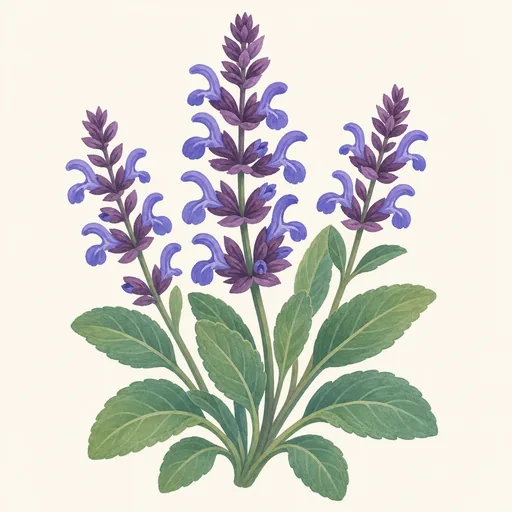
Salvia
Salvia · Lamiaceae
- Start indoors6–10 weeks before the last frostJan 30 – Mar 5
- Plant out1–2 weeks after the last frostApr 17 – Apr 30
- Space30–45 cm (12–18 in) apart
- Bloom45–90 days after plantingJun 1 – Aug 19
Description
Salvia is a large genus of flowering plants in the mint family, Lamiaceae. Its members include the culinary herb common sage, as well as many ornamental plants grown for their colorful flowers. Depending on the species, a salvia may be a low herbaceous plant, a woody shrub, or something in between. Most have paired leaves and upright stems, with flowers arranged along spikes or branching flower stalks. The blossoms are often tubular and two-lipped. They may be blue, purple, red, pink, white, or yellow.
Salvias grow in a wide range of habitats, from sunny, dry hillsides to woodland edges and meadows. Many have fragrant foliage, though leaf shape, scent, and texture vary considerably. Their flowers attract bees, butterflies, and, in the Americas, hummingbirds. Some species flower for months if spent blooms are removed, making them useful in borders and containers.
Garden care depends on the species rather than the genus alone. Many ornamental salvias perform best in full sun and well-drained soil. Drought-tolerant kinds generally dislike waterlogged ground, while others need more regular moisture. Established plants may benefit from pruning to encourage fresh growth and a tidier shape. Hardiness also varies: some survive freezing winters, whereas others are treated as annuals or brought under cover in colder regions.
Common sage, Salvia officinalis, is grown for its edible, strongly scented leaves. Other species are chosen mainly for display, so a plant labeled simply “salvia” should not be assumed to be culinary sage. When choosing one, check its mature size, cold tolerance, and water needs. Salvia can be propagated by seed, division, or stem cuttings, depending on the species. Its variety gives gardeners options for herb beds, pollinator plantings, and mixed flower borders.
Growing Conditions
30–90 cm (1–3 ft) tall, 30–60 cm (12–24 in) wide
- Smallest
- Largest
Full sun, 6+ hours
Tolerates part sun
Moderate
Keep evenly moist, not soggy.
Ideal 18–27 °C (64–81 °F)
neutral
Where it Grows
Planting
When to Plant
The right planting time depends on which salvia you have and how cold your winters are. Plant tender salvias and bedding types outdoors in spring, after the last expected frost, when nights are reliably mild and the soil has warmed. If you are starting them from seed, check the packet: many can be started indoors about 6–8 weeks before the last frost, then moved outside after gradually acclimating to outdoor conditions.
Hardy perennial salvias can usually be planted in spring once the ground is workable. In areas with mild winters, early fall is another good time: cooler weather helps roots establish before the next summer. Leave several weeks before the ground freezes, and avoid fall planting where cold, wet soil commonly kills young plants. Whatever the season, wait if the planting area is waterlogged. Check the plant label for its hardiness and growing requirements, since the genus includes species with different tolerances.
How to Plant
Choose a spot with plenty of sun and soil that drains well. Most garden salvias flower best with at least six hours of direct sunlight, although some species tolerate partial shade. If water lingers after rain, improve drainage or plant in a raised bed; salvias generally dislike sitting in wet soil. Clear weeds and loosen compacted ground before planting. If your soil is heavy, mix some compost into a broad area, but do not create a small pocket of rich soil surrounded by dense clay.
Water a potted salvia before removing it from its container. Dig a hole about as deep as the root ball and roughly twice as wide. Ease the plant out, gently loosen roots circling the pot, and set it at the same depth it grew in the container. Backfill with the original soil, firm lightly, and water thoroughly to settle the roots. Space plants according to their mature size on the label; many compact varieties need roughly 12–18 inches between plants, while larger ones need considerably more room. Add a light layer of mulch, keeping it away from the stems. Water regularly while the roots establish, then adjust to the species and weather; established salvias often need less water than newly planted ones.
Growth Timeline
- Germination 10–21 days
- Seedlings indoors 4–10 weeks
- Growing in the garden 45–90 days
- In bloom 8–20 weeks
Planting Calendar
- Start seeds indoors: 6–10 weeks before the last frost
- Plant outdoors: 1–2 weeks after the last frost
- Germination: 10–21 days
- Start indoors: Jan 30 – Mar 5
- Plant out: Apr 17 – Apr 30
- Bloom: Jun 1 – Aug 19
Care
Care Calendar
- Prune · Mar 13 – Apr 30
Cut back dead stems on perennial salvias as new growth appears. - Deadhead · May 8 – Sep 3
Remove spent flower spikes to encourage more blooms. - Mulch · Oct 25 – Nov 21
Mulch hardy perennials for winter, leaving their crowns uncovered.
Watering
Water newly planted salvias deeply when the top inch or two of soil feels dry, giving roots time to establish without keeping the ground constantly wet. Once established, many garden salvias tolerate short dry spells and need supplemental water mainly during prolonged drought. Needs vary: species from dry regions generally prefer less water than moisture-loving salvias, and container plants dry out faster than plants in the ground. Apply water to the soil rather than the leaves, preferably in the morning, and let excess water drain freely. Check soil moisture before watering instead of following a rigid schedule; cool or rainy weather calls for less frequent watering. Wilting in hot afternoon sun can be temporary, but wilting when soil is wet may indicate poor drainage or root problems. Avoid leaving pots standing in water.
Pruning
Remove spent flower spikes if you want a tidier plant and, for many varieties, another flush of blooms. Pinching young, actively growing stems can encourage branching, although it may delay the first flowers. Trim leggy herbaceous salvias during the growing season, leaving healthy leaves and growth points below the cut. In cold climates, leave the stems of hardy perennials standing over winter if they help protect the crown, then remove dead growth when new shoots appear in spring. Woody salvias, including culinary sage, benefit from light shaping after flowering or in spring; avoid cutting far into old, leafless wood, which may not resprout. Use clean, sharp tools, and remove damaged or diseased stems promptly. Pruning response varies by species, so favor modest cuts if you are unsure which salvia you have.
Weeding
Keep the area around young salvias free of weeds while their roots establish. Weeds compete for light, water, and nutrients, and dense growth around the stems can reduce airflow. Pull weeds when the soil is slightly moist, taking out their roots where practical, or cut persistent weeds at ground level repeatedly. Work carefully near established plants: shallow hoeing or vigorous digging can damage salvia roots and crowns. Remove weeds before they flower and set seed, and clear any that grow up through the plant. A suitable layer of mulch can slow new weeds, but it will not eliminate them; inspect the bed regularly and pull seedlings while they are small. Avoid using broadleaf weedkillers close to salvias, which are themselves broadleaf plants and may be injured by spray drift.
Mulching
Apply a thin layer of mulch around established plants to suppress weeds and moderate soil temperature. Keep mulch a few inches away from the stems and crown so the base stays airy and does not remain damp. For salvias that prefer lean, well-drained conditions, a mineral mulch such as gravel may be a better fit than a thick layer of moisture-retentive organic material. Compost or shredded leaves can suit other garden salvias if the underlying soil still drains well. Mulch is not a substitute for correcting waterlogged soil. In cold regions, a light winter mulch may help protect the roots of a marginally hardy variety, but avoid packing wet material over its crown. Refresh mulch as needed, rather than piling new layers on top of an already deep covering.
Fertilizing
Most salvias flower well without heavy feeding, especially in reasonably fertile garden soil. Too much fertilizer, particularly nitrogen, can produce soft, leafy growth at the expense of flowers and may cause stems to flop. If growth is weak and the soil is poor, work a modest amount of compost into the surrounding soil or use a balanced fertilizer according to its label. Keep fertilizer off the stems, and water it in when the product directions call for it. Container-grown salvias may need more regular feeding because watering washes nutrients from potting mix; a dilute, balanced fertilizer during active growth is a reasonable starting point. Stop or reduce feeding as growth slows. If an established plant looks unhealthy, check drainage, watering, light, and pests before assuming it lacks nutrients.
Pest Management
Inspect new growth and the undersides of leaves regularly. Aphids, whiteflies, and spider mites can affect salvias; a strong spray of water may dislodge small infestations. If needed, use an insecticidal soap labeled for the pest and plant, following directions and avoiding applications to open flowers where pollinators are visiting. Slugs and snails may damage tender shoots, particularly in damp conditions; hand-pick them or use a labeled bait if damage persists. Good spacing and watering at soil level help limit fungal problems such as powdery mildew. Remove badly affected growth and fallen debris. Root rot is more likely in poorly drained, persistently wet soil, so improve drainage and adjust watering rather than treating symptoms alone. Identify the problem before applying a pesticide; some leaf damage is minor and needs no intervention.
Harvesting
Harvest leaves for cooking only from a positively identified edible salvia, such as common sage (Salvia officinalis); do not assume ornamental salvias are suitable to eat. Snip healthy leaves or tender stem tips in the morning after dew has dried. For strong flavor, harvest before flowering when practical, although leaves can be picked through the growing season. Take small amounts from several stems and leave enough foliage for the plant to keep growing. Avoid a heavy harvest late in the season where winters are cold. Rinse leaves if needed, pat them dry, and use them fresh or dry them in a warm, airy place out of direct sun. If you grow salvia mainly for its flowers, leave some blooms for pollinators and, if desired, allow selected flower spikes to mature before collecting seed.
Growing in Containers
Grows well in a pot of at least 10 litres (2.6 US gallons), with drainage holes. Best kept outdoors.
Propagation
From seed
- Sow seeds in seed-starting mix in spring.
- Cover lightly or follow the packet’s light requirements.
- Keep the mix moist but not waterlogged.
- Transplant seedlings after frost danger passes.
From cuttings
- Take nonflowering stem cuttings in late spring or summer.
- Remove the lower leaves.
- Insert the cuttings into moist, free-draining propagation mix.
- Keep them in bright, indirect light until rooted.
- Pot up rooted cuttings.
By division
- Choose a clump-forming perennial salvia in spring.
- Lift the clump and separate it into rooted sections.
- Replant the sections at their original depth.
- Water them in.
Companion Plants
Good neighbors
- Lavender: Both are commonly planted in sunny, well-drained borders and attract pollinators.
- Coneflower: Its summer blooms pair well with salvia and attract pollinators to the same sunny border.
- Black-eyed Susan: Its yellow flowers are commonly paired with salvia’s flower spikes in sunny borders.
Common Problems
- Yellowing leaves
- Sticky residue on leaves
- Black sooty coating
- Curled or cupped leaves
Aphids are small, soft-bodied insects that feed by piercing plants and drawing out sap. The group includes many…
- Pale speckles or stippling
- Yellowing leaves
- Brown or crispy leaf edges
- Fine webbing
Spider mites are tiny, plant-feeding arachnids in the family Tetranychidae, not insects. Several species attack garden…
- White powdery coating
- Yellowing leaves
- Curled or cupped leaves
- Distorted new growth
Powdery mildew is a group of fungal diseases, not a single species. Different fungi infect different hosts, including…
- Yellowing leaves
- Wilting
- Stunted growth
- Leaves dropping
Root rot is a general name for the decay of plant roots, not a single disease with one scientific name. It can result…
- Powdery mildew: A white coating on leaves, especially where air circulation is poor.
- Root rot: Yellowing and wilting in persistently wet soil; most salvias need good drainage.
- Aphids, whiteflies, and spider mites: Sap-feeding pests that can distort or discolor foliage.
- Weak, floppy growth: Often caused by too much shade or fertilizer.
- Winter dieback: Tender species may not survive frost, while hardy kinds can suffer in cold, waterlogged soil.
Varieties
Shear back spent spikes after the first flush for more flowers.
- violet-blue flowers
- compact
- repeat blooming
Its dark stems make the violet flower spikes especially striking.
- purple stems
- upright
- pollinator friendly
Flower color can shift toward solid red or white with the weather.
- red-and-white flowers
- long blooming
- pollinator friendly
Give it room to grow and protect it from freezing winters.
- blue flowers
- dark calyces
- tall
Often grown as an annual, it provides blue flower spikes through summer.
- blue flowers
- upright
- long blooming
This vigorous bedding salvia flowers over a long season.
- deep-blue flowers
- long blooming
- pollinator friendly
It flowers for months but needs winter protection in cold climates.
- purple flowers
- dark calyces
- tall
This compact selection gives containers and beds a bright red display.
- red flowers
- compact
- bedding plant
More about varieties
- Common sage (Salvia officinalis): Aromatic, gray-green leaves used in cooking.
- Woodland sage (S. nemorosa): A hardy perennial with upright purple, pink, or white flower spikes.
- Autumn sage (S. greggii): A shrubby, long-blooming species popular with hummingbirds.
- Mealycup sage (S. farinacea): Grown for slender blue or violet flower spikes.
- Scarlet sage (S. splendens): Commonly grown as a bedding plant for its vivid red flowers.
- Mexican bush sage (S. leucantha): Noted for velvety purple-and-white flowers late in the season.
Health Benefits
Health uses vary by species; research on one salvia should not be assumed to apply to the others. Common sage (Salvia officinalis) is a familiar culinary herb. Its leaves contain aromatic compounds and antioxidants, but eating sage has not been shown to prevent or treat disease. Sage tea and sage-based products are traditionally used for sore throats, mouth discomfort, and menopausal hot flashes. Small studies suggest possible benefits for some uses, but the evidence is not strong enough to rely on sage as a treatment.
Danshen (S. miltiorrhiza) has a long history in traditional Chinese medicine, particularly for cardiovascular conditions. Clinical evidence remains insufficient to establish it as a safe, effective substitute for standard care. Clary sage (S. sclarea) is used in aromatherapy for relaxation, though evidence for specific health effects is limited.
Normal culinary amounts of common sage are generally considered safe for most adults. Concentrated extracts and essential oils are different: some contain thujone, which can be toxic at high doses. Sage supplements may interact with medicines, and danshen can increase bleeding risk when combined with anticoagulants. If you are pregnant, breastfeeding, have a seizure disorder, or take regular medication, ask a healthcare professional before using salvia medicinally.
Fun Facts
- Chia seeds come from a salvia species, Salvia hispanica.
- Rosemary is now classified as Salvia rosmarinus.
- Many salvias have a flower mechanism that deposits pollen on visiting bees.
- Pineapple sage (S. elegans) has leaves that smell like pineapple when rubbed.
- The genus includes hundreds of species, from small herbaceous plants to large shrubs.
Notice an error or have a question about Salvia? Contact us