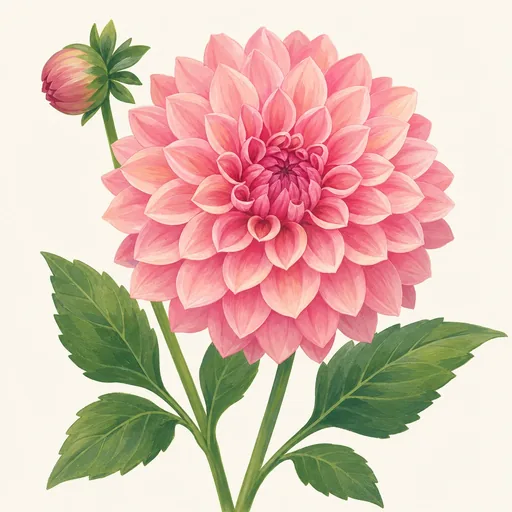
Dahlia
Dahlia · Asteraceae
- Plant out1–3 weeks after the last frostApr 17 – May 7
- Space30–90 cm (1–3 ft) apart
- Bloom60–90 days after plantingJun 16 – Aug 26
Description
Dahlias are flowering plants grown for their abundant, often vividly colored blooms. They belong to the daisy family, Asteraceae, and the genus includes species native mainly to Mexico and Central America. Most garden dahlias are cultivated hybrids. Their flower heads range from small, open, daisy-like forms to large, densely petaled blooms, in nearly every color except true blue. Some have rounded pompon shapes; others have narrow, pointed petals. Depending on the variety, plants may be compact enough for containers or grow taller than a person.
Dahlias grow from fleshy tuberous roots and produce leafy stems that flower from summer into autumn. Their leaves are usually toothed and arranged opposite one another along the stem. What looks like a single flower is actually a head of many small flowers, or florets. Open-centered varieties can offer pollen and nectar to bees and other insects, while densely doubled blooms may be less accessible.
For best flowering, plant dahlias in full sun and fertile, well-drained soil after the danger of frost has passed. Water regularly during active growth, but avoid leaving the roots in soggy ground. Taller varieties often need stakes, especially in windy places or when their large blooms become heavy after rain. Removing faded flower heads encourages more blooms. Dahlias are not reliably winter-hardy where the ground freezes: gardeners in colder climates often lift the tubers after frost, store them in a cool, frost-free place, and replant them in spring. Plants can be propagated by dividing tubers, provided each division has a growing eye, or by taking cuttings. Dahlias are widely grown in borders, cutting gardens, and pots, and their long flowering season makes them popular for fresh bouquets.
Growing Conditions
0.3–1.8 m (1–6 ft) tall, 30–90 cm (1–3 ft) wide
- Smallest
- Largest
Full sun, 6+ hours
Tolerates part sun
Moderate
Keep evenly moist, not soggy.
Ideal 18–27 °C (64–81 °F)
Survives down to −12 °C (10 °F).
pH 6–7 · acidic to neutral
Where it Grows
Planting
When to Plant
Plant dahlia tubers outdoors in spring, after the last frost, when the soil has warmed to at least 60°F (16°C). Warm soil matters as much as the calendar: tubers can rot in cold, wet ground, and new shoots are damaged by frost. Depending on your climate, the right time may fall anywhere from early spring to early summer. If a late frost is forecast after shoots appear, cover them overnight or protect container-grown plants indoors.
For earlier flowers in a short growing season, start tubers in pots indoors about four to six weeks before your expected last frost. Keep them in a bright, frost-free place, then gradually acclimate the growing plants to outdoor conditions before planting them out once frost danger has passed. In climates without winter frost, wait until spring weather and soil are warming rather than planting into persistently cool, soggy soil.
How to Plant
Choose a spot with at least six to eight hours of direct sun and well-drained soil. Loosen the soil and mix in compost if it is poor, but avoid fresh manure or heavy applications of nitrogen-rich fertilizer, which can encourage leaves at the expense of flowers. In clay soil that stays wet, use a raised bed or a large container with drainage holes.
Dig a hole about 4–6 inches (10–15 cm) deep. Lay the tuber horizontally with its growing eye or sprout facing upward; the eye is usually near the old stem. Cover it so the crown sits roughly 2–3 inches (5–8 cm) below the soil surface. If you cannot identify the eye, place the old stem end toward the top. Set a sturdy stake beside tall varieties at planting time, before roots develop. Space compact varieties about 12–18 inches (30–45 cm) apart and large varieties about 2–3 feet (60–90 cm) apart, allowing air to circulate.
If the soil is already moist, do not water heavily at planting. Wait until shoots emerge before watering regularly, unless the soil becomes very dry. Once plants are growing, water deeply when needed, letting the surface dry slightly between waterings. Keep the area weed-free and protect tender shoots from slugs.
Growth Timeline
- Growing in the garden 60–90 days
- In bloom 8–16 weeks
Planting Calendar
- Plant outdoors: 1–3 weeks after the last frost
- Plant out: Apr 17 – May 7
- Bloom: Jun 16 – Aug 26
Care
Care Calendar
- Stake · Apr 10 – May 7
Place supports at planting so they do not damage growing tubers. - Pinch out · May 1 – Jun 4
Pinch out the main shoot when plants are about 12–18 inches tall to encourage branching. - Feed · May 8 – Aug 6
Feed established plants monthly with a low-nitrogen fertilizer, stopping in late summer. - Deadhead · Jul 19 – Oct 31
Remove spent flowers regularly to keep new buds coming. - Lift and store · Oct 25 – Nov 14
In cold climates, lift tubers after frost blackens the foliage and store them frost-free.
Watering
Dahlias need steady moisture once they are actively growing, but their tubers can rot in soggy soil. After planting, water lightly if the soil is dry; avoid repeated heavy watering until shoots emerge. Once plants are established, water deeply when the upper inch or two of soil feels dry. In many gardens this means about once or twice a week, more often during hot, dry weather or for containers. Apply water at the base of the plant with a hose or drip irrigation rather than wetting the leaves, which can encourage disease. Water early in the day so any splashed foliage can dry. Check the soil before following a fixed schedule: sandy soil dries quickly, while heavy soil holds water longer. Good drainage is essential, especially during cool weather. If leaves wilt in midday heat, check soil moisture before watering; they may recover as temperatures fall.
Pruning
Pinch out the growing tip when a young dahlia is about 12–18 inches tall and has several pairs of leaves. This encourages side branches and usually produces a bushier plant with more flowers. Use clean fingers or snips, cutting just above a pair of leaves. Throughout the flowering season, remove spent blooms by following each flower stem down to a leaf junction or side shoot; leaving short, bare stubs can make it harder to spot new buds. For fewer but larger flowers, remove the smaller side buds beside a developing central bud. This is optional and is mainly useful for show flowers or large cut blooms. Remove damaged or diseased leaves promptly and discard them rather than composting visibly infected material. Tall varieties also benefit from staking and tying as they grow; support is safer than cutting back heavy stems after wind damage.
Weeding
Keep the area around dahlias free of weeds, particularly while shoots are young. Weeds compete for water, nutrients, and light, and dense growth around the base can reduce airflow. Pull weeds after rain or watering, when roots release more easily, and remove them before they flower and set seed. Work gently near established plants: dahlia feeder roots are shallow, and hoeing deeply can injure roots or developing tubers. Hand-pulling or very shallow cultivation is usually the safest approach. Check the planting area regularly rather than waiting for weeds to become large enough to tangle with stems and supports. A layer of organic mulch can suppress new weed seedlings, but it will not eliminate them; pull any that grow through it while they are small. Avoid using herbicides close to dahlias, since drifting spray can damage their foliage.
Mulching
Once dahlia shoots have emerged and the soil has warmed, spread 2–3 inches of organic mulch, such as shredded leaves or fine bark, over the surrounding soil. Mulch slows evaporation, limits weed germination, and helps keep soil moisture more even during hot weather. Leave a few inches of clear space around each stem so the base stays dry and air can circulate. Do not bury new shoots or pile mulch directly against stems, which may encourage rot. In cool, wet climates, use a thinner layer or wait until the soil is warmer; thick mulch can keep spring soil damp and cool. Check beneath mulch occasionally for slugs or snails, especially around small plants. Replenish the layer as it breaks down, without building it up excessively. Remove or pull back mulch when digging tubers so you can see where the crown and stems are.
Fertilizing
Dahlias flower best in reasonably fertile, well-drained soil. Before planting, mix in finished compost if the soil needs organic matter, and use a soil test to guide any additional fertilizer. Too much nitrogen encourages tall, leafy growth at the expense of blooms and can produce weaker stems. If fertilizer is needed, choose a product with modest nitrogen and follow its label rate rather than applying extra for faster growth. Begin feeding after shoots are established, not directly onto newly planted tubers. Depending on the product and soil, repeat light applications during active growth, often about every three to four weeks, and stop by late summer as growth slows. Water after applying granular fertilizer, and keep it away from stems and leaves. Container-grown dahlias may need more frequent, diluted feeding because nutrients wash out with regular watering; follow the container fertilizer’s directions.
Pest Management
Inspect dahlias regularly, including the undersides of leaves and developing buds. Slugs and snails can damage young shoots; hand-pick them at dusk, reduce damp hiding places, or use a labeled bait if needed. Aphids cluster on tender growth and can often be dislodged with a firm spray of water. Spider mites thrive in hot, dry conditions and may cause fine stippling or webbing; check early so infestations do not build. Earwigs, thrips, and beetles may chew or mark blooms. Remove pests by hand when practical, and use insecticidal soap only when appropriate for the identified pest, following the label and testing a small area first. Avoid spraying open flowers or treating when pollinators are active. Good spacing and watering at soil level also reduce disease pressure. Remove badly affected foliage and clean up fallen plant debris.
Harvesting
For cut flowers, choose blooms that are nearly or fully open; dahlia buds generally do not open well after cutting. Harvest in the cool of morning or evening with clean, sharp snips. Cut a long stem just above a leaf junction, then place it promptly in a clean bucket of water. Remove leaves that would sit below the waterline, and transfer stems to a clean vase. Change the water regularly to help flowers last. Cutting often and deadheading blooms left on the plant encourage continued flowering. To harvest tubers for storage where winters freeze, wait until frost has blackened the foliage. Cut stems back, carefully lift the clumps without piercing the tubers, and let them dry briefly before storing them in a cool, frost-free place. Check stored tubers periodically for rot or excessive shriveling.
Growing in Containers
Grows well in a pot of at least 15 litres (4.0 US gallons), with drainage holes. Best kept outdoors.
Propagation
By division
- Lift dormant tuber clumps after the first frost, or divide stored clumps in spring.
- Locate the buds, or eyes, near the base of the old stem.
- Cut the clump so each division has an eye, a piece of crown, and at least one tuber.
- Let cut surfaces dry, then plant after frost danger has passed.
From cuttings
- Start stored tubers indoors in late winter or early spring.
- Cut a young shoot from the crown when it is about 3–4 inches long.
- Remove the lower leaves and insert the shoot into moist rooting mix.
- Keep it warm and humid until it roots, then plant outdoors after frost danger has passed.
From seed
- Sow seeds indoors about 6–8 weeks before the last expected frost.
- Cover lightly and keep the seed-starting mix moist.
- Give seedlings bright light and pot them on as they grow.
- Harden off and transplant after frost danger has passed.
Common Problems
- Yellowing leaves
- Sticky residue on leaves
- Black sooty coating
- Curled or cupped leaves
Aphids are small, soft-bodied insects that feed by piercing plants and drawing out sap. The group includes many…
- Holes in leaves
- Insects visible on the plant
Earwigs are insects in the order Dermaptera. Several species visit gardens; the European earwig (Forficula…
- White powdery coating
- Yellowing leaves
- Curled or cupped leaves
- Distorted new growth
Powdery mildew is a group of fungal diseases, not a single species. Different fungi infect different hosts, including…
- Holes in leaves
- Slime trails
- Stems chewed or cut through
Slugs and snails are soft-bodied mollusks that feed on many garden plants. Snails carry a visible shell; most slugs…
- Pale speckles or stippling
- Yellowing leaves
- Brown or crispy leaf edges
- Fine webbing
Spider mites are tiny, plant-feeding arachnids in the family Tetranychidae, not insects. Several species attack garden…
- Slugs and snails chew young shoots and leaves.
- Aphids and spider mites feed on foliage, sometimes causing distortion or stippling.
- Powdery mildew leaves a white coating on foliage, especially late in the season.
- Botrytis can cause flowers and stems to rot in damp conditions.
- Poor drainage can rot tubers; frost damages above-ground growth.
Varieties
Its oversized, softly colored flowers are popular for cutting.
- large blooms
- cream to blush
Bright red flowers stand out against bronze-purple leaves.
- red flowers
- dark foliage
This tall variety produces richly colored flowers suited to cutting.
- purple flowers
- large blooms
Its enormous, clear-yellow flowers benefit from sturdy support.
- yellow flowers
- large blooms
Deep wine-red flowers make a striking contrast with lighter varieties.
- dark burgundy
- cut flower
Its short stature suits containers and the front of a border.
- compact
- orange-coral flowers
More about varieties
- ‘Café au Lait’ — large, creamy flowers often flushed with blush pink.
- ‘Bishop of Llandaff’ — bright red flowers set against dark bronze foliage.
- ‘Thomas Edison’ — deep purple, fully double flowers.
- ‘Kelvin Floodlight’ — enormous, clear-yellow blooms.
- ‘Arabian Night’ — dark, velvety red flowers.
Health Benefits
Dahlias are grown chiefly as ornamentals, not as medicinal plants. Their tubers are edible and have been used as food, particularly in Mexico. They contain inulin, a carbohydrate that acts as a prebiotic fiber: it passes through the small intestine largely undigested and can feed certain gut bacteria. Research on inulin as an ingredient suggests possible benefits for digestive regularity, but those findings should not be taken as proof that eating dahlia tubers treats a health condition. The amount of inulin in a serving can vary, and dahlia tubers are not a standardized supplement.
For some people, inulin causes gas or bloating, especially when eaten in large amounts. Anyone trying edible dahlia tubers should start with a small serving and use plants grown for food rather than tubers treated with ornamental-garden pesticides. People with an allergy to plants in the daisy family should also be cautious.
As cut flowers, dahlias can contribute to the enjoyment of a garden or indoor space. That is a wellness use rather than an established medical benefit. Dahlias should not replace prescribed treatment or be relied on to manage diabetes or other conditions.
Fun Facts
- Dahlias are native to Mexico and Central America.
- The dahlia is Mexico’s national flower.
- The genus is named for Swedish botanist Anders Dahl.
- Each apparent flower is a flower head made up of many smaller florets.
- Breeders have produced thousands of cultivars, but no naturally true-blue dahlia.
Notice an error or have a question about Dahlia? Contact us