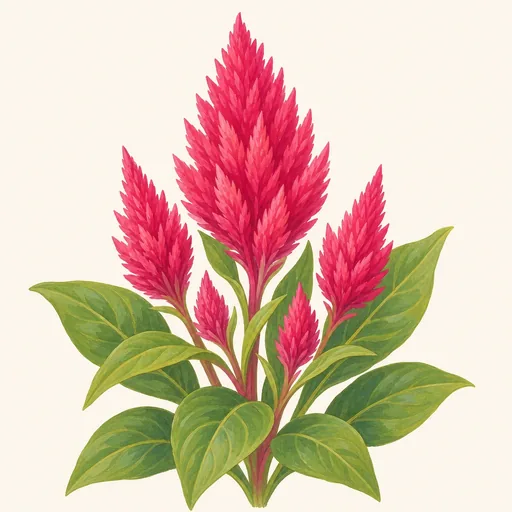
Celosia
Celosia argentea · Amaranthaceae
- Start indoors6–8 weeks before the last frostFeb 13 – Mar 5
- Sow outdoors2–4 weeks after the last frostApr 24 – May 14
- Plant out1–3 weeks after the last frostApr 17 – May 7
- Space20–30 cm (8–12 in) apart
- Bloom45–75 days after plantingJun 1 – Aug 11
Description
Celosia argentea is a warm-season flowering plant in the amaranth family (Amaranthaceae). Gardeners often call it celosia, cockscomb, or plumed celosia, although Celosia is also the name of a genus containing other species. Garden varieties produce vivid flower heads in red, magenta, pink, orange, yellow, or cream. Some have upright, feathery plumes; others form densely folded, velvety crests resembling a rooster’s comb. Tiny individual flowers are packed tightly together, creating a display that can remain striking for weeks. Leaves are usually lance-shaped and may be green, bronze, or purple. Plants range from compact bedding varieties to taller types grown for cutting.
Celosia is a tender perennial commonly grown as an annual. It thrives in full sun, warm temperatures, and fertile, well-drained soil. Sow seeds indoors before the last frost or directly outside after the soil has warmed. Set out young plants only when frost danger has passed. Water regularly while they establish; afterward, keep the soil moderately moist without leaving the roots waterlogged. Mulch can help retain moisture, while spacing plants for airflow reduces the risk of fungal disease. Excess nitrogen may encourage leaves at the expense of flowers.
Remove fading flower heads for a tidier appearance, or leave some to mature and shed seed. The blooms attract bees and other pollinators. They can be cut for fresh arrangements or dried; harvest flowers for drying before their colors fade. In many places, young leaves and tender shoots are cooked as greens. Eat them only when the plant is positively identified and has been grown without pesticides unsuitable for food crops. Celosia does not tolerate frost, and prolonged cold or soggy conditions can stunt growth or cause rot. In warm climates, it may reseed.
Growing Conditions
20–90 cm (1–3 ft) tall, 20–45 cm (8–18 in) wide
- Smallest
- Largest
Full sun, 6+ hours
Tolerates part sun
Moderate
Keep evenly moist, not soggy.
Ideal 18–29 °C (64–84 °F)
Survives down to 0 °C (32 °F).
pH 6–7.5 · neutral
Where it Grows
Planting
When to Plant
Plant celosia when warm weather is established. It is a frost-tender annual in most gardens, so wait until all danger of frost has passed before putting seedlings outdoors. For best growth, the soil should feel warm—ideally at least 60–65°F (16–18°C)—and nights should generally stay above 50°F (10°C). If you want an earlier start, sow seeds indoors about 6–8 weeks before your area’s average last frost date. You can also sow directly into the garden after the last frost, once the soil has warmed; seeds sown into cold, wet ground may rot or germinate poorly. Use your local frost dates as a guide rather than a fixed calendar month, since planting time varies by climate and year. In frost-free areas, plant during a reliably warm period. Celosia grows and flowers through summer and into fall, but frost will damage or kill it.
How to Plant
Choose a spot with full sun—at least six hours of direct light daily—and well-drained soil. Work in a modest amount of compost if the soil is poor, but avoid heavy applications of high-nitrogen fertilizer, which can favor leaves over flowers.
To start seeds indoors, sow them in moist seed-starting mix and press them onto the surface or cover them only very lightly, following the seed packet’s directions. Keep the mix warm, around 70–80°F (21–27°C), and evenly moist, not soggy. Give seedlings bright light as soon as they emerge. Before transplanting, gradually acclimate them to outdoor sun and wind over 7–10 days. Celosia dislikes root disturbance, so handle the root ball gently and plant each seedling at the same depth it grew in its container.
For direct sowing, prepare a fine seedbed, sow shallowly, and keep the surface moist until seedlings are established. Thin or space plants according to the variety: roughly 8–12 inches (20–30 cm) apart for compact types and 12–18 inches (30–45 cm) for larger ones. Water newly planted celosia thoroughly, then water when the upper soil begins to dry. Do not leave the roots in waterlogged soil.
Growth Timeline
- Germination 7–14 days
- Seedlings indoors 5–10 weeks
- Growing in the garden 45–75 days
- In bloom 12–20 weeks
Planting Calendar
- Start seeds indoors: 6–8 weeks before the last frost
- Sow outdoors: 2–4 weeks after the last frost
- Plant outdoors: 1–3 weeks after the last frost
- Germination: 7–14 days
- Start indoors: Feb 13 – Mar 5
- Sow outdoors: Apr 24 – May 14
- Plant out: Apr 17 – May 7
- Bloom: Jun 1 – Aug 11
Care
Care Calendar
- Protect · Apr 10 – May 7
Cover young plants if an unexpected cold night is forecast. - Pinch out · May 1 – May 28
Pinch the tips of young plume types to encourage branching; skip this for large single cockscombs. - Deadhead · Jun 5 – Sep 3
Remove faded flower heads to keep plants tidy and encourage more blooms.
Watering
Keep celosia evenly moist while seedlings establish, then water when the top 1 inch (2–3 cm) of soil feels dry. Water deeply at the base rather than giving frequent light sprinkles, and let excess water drain away. Established plants tolerate brief dry spells, but prolonged drought can reduce flowering and cause wilting. Plants in containers dry out faster than those in garden beds; check them daily during hot, windy weather. Water in the morning when possible so splashed foliage can dry before night. Avoid keeping the soil constantly wet: poorly drained soil can lead to root and stem rot. If a plant wilts despite damp soil, check the roots and drainage rather than automatically adding more water. Adjust your schedule to rainfall, temperature, and soil type instead of watering on a fixed calendar.
Pruning
Remove faded flower heads if you want a tidy plant and a longer display of blooms. Snip each spent head back to a healthy leaf or side shoot with clean scissors. For bushier growth, you can pinch the growing tip of a young plant once it is well established; this encourages side branches, though it delays the first flowers. Skip pinching if you want one large central bloom, particularly on a cockscomb variety. You can also cut fresh flowers for arrangements throughout the season, which often encourages remaining shoots to develop. Remove broken, diseased, or badly damaged stems promptly, and clean tools after cutting diseased growth. Celosia is usually grown as a warm-season annual, so it does not need structural pruning. After frost kills the plant, remove it from the bed; discard diseased material rather than composting it.
Weeding
Keep the area around young celosia free of weeds, especially while seedlings are small. Weeds compete for water, nutrients, and light and can crowd the plants enough to reduce airflow. Pull weeds by hand when the soil is slightly moist, taking care not to disturb celosia’s roots. If you use a hoe, work shallowly and leave a little space around each stem. Check beds regularly: removing small weeds is easier than pulling established plants with large root systems. Before planting, clear perennial weeds and their roots from the bed. A light layer of mulch can reduce new weed growth, but it will not eliminate the need to inspect the bed. In containers, remove any volunteer plants that appear so they do not compete with the celosia. Avoid letting nearby weeds set seed.
Mulching
Once celosia seedlings are established and the soil has warmed, spread a 1–2 inch (2–5 cm) layer of organic mulch around them. Shredded leaves, fine bark, or clean straw can help conserve moisture, suppress weeds, and reduce soil splashing onto lower leaves. Leave a small gap around every stem: mulch piled against the stem can trap moisture and encourage rot. Keep the layer relatively thin, especially in heavy or poorly drained soil, because celosia dislikes persistently wet roots. In hot weather, check beneath the mulch before watering; the surface may look dry while the soil below remains moist. Replenish mulch if it breaks down or becomes patchy, but do not bury small plants. Mulch is optional in containers, where good drainage and careful watering matter more than maintaining a thick surface layer.
Fertilizing
Plant celosia in reasonably fertile, well-drained soil. Before planting, mix a modest amount of finished compost into poor garden soil rather than relying on heavy feeding later. If growth is weak or leaves are pale, apply a balanced fertilizer according to the label, or use a diluted liquid fertilizer occasionally for container plants. Avoid overfertilizing, especially with high-nitrogen products: they can produce lush leaves and fewer flowers. Water the soil before applying fertilizer to dry plants, and keep concentrated fertilizer off stems and leaves. Celosia growing well and flowering freely may need no additional fertilizer in a prepared garden bed. Container plants may need more frequent feeding because nutrients wash out during watering, but follow the product label rather than increasing the dose. If growth remains poor, also check sunlight, drainage, and watering; fertilizer cannot correct those problems.
Pest Management
Inspect celosia regularly, including the undersides of leaves and new growth. Aphids, spider mites, and thrips can occur; signs include distorted shoots, stippled leaves, or damaged flowers. Dislodge aphids with a firm stream of water, or use insecticidal soap labeled for the pest, thoroughly wetting affected surfaces and following the label. Spider mites are more troublesome in hot, dry conditions, so check plants closely during heat waves. Slugs and snails may damage young plants; hand-pick them or use a suitable bait as directed. Give plants room for airflow, water at the base, and avoid soggy soil to reduce disease problems such as root rot and leaf spots. Remove badly affected material and dispose of it. Identify the cause before treating: wilt caused by waterlogged roots will not improve with an insecticide.
Harvesting
For fresh arrangements, cut celosia stems when the flower heads are well developed and brightly colored, before they begin to fade or shed seed. Harvest in the cool of the morning, use clean shears, and place stems promptly in water. Remove leaves that would sit below the waterline in a vase. For dried flowers, choose undamaged blooms and hang small bunches upside down in a warm, dark, well-ventilated place until thoroughly dry; keep them out of direct sun to help preserve their color. If you are growing an edible type for its leaves, pick young, tender leaves and shoots without stripping the plant, and wash them before use. Eat only plants grown for food and not treated with products unsuitable for edible crops. To save seed, allow a few flower heads to dry on the plant, then collect and store the dry seed.
Growing in Containers
Grows well in a pot of at least 5 litres (1.3 US gallons), with drainage holes. Can be grown indoors as a houseplant.
Propagation
From seed
- Start seeds indoors 6–8 weeks before the last frost, or sow outdoors after frost danger has passed.
- Press seeds into moist seed-starting mix and cover them lightly.
- Keep the mix warm and evenly moist until seedlings emerge.
- Harden off indoor-grown seedlings, then transplant them into a sunny spot.
From cuttings
- Take a 4–6-inch tip cutting from a healthy, nonflowering stem.
- Remove the leaves from the lower half of the stem.
- Insert the cutting into moist, well-draining potting mix.
- Keep it warm in bright, indirect light until roots form.
- Transplant it after new growth appears.
Common Problems
- Yellowing leaves
- Sticky residue on leaves
- Black sooty coating
- Curled or cupped leaves
Aphids are small, soft-bodied insects that feed by piercing plants and drawing out sap. The group includes many…
- Pale speckles or stippling
- Yellowing leaves
- Brown or crispy leaf edges
- Fine webbing
Spider mites are tiny, plant-feeding arachnids in the family Tetranychidae, not insects. Several species attack garden…
- Seedlings collapse at soil level
- Soft or rotting stems
- Brown, mushy roots
- Wilting
Damping off is a disease of seeds and young seedlings, not a single organism with one scientific name. It can be…
- Yellowing leaves
- Wilting
- Stunted growth
- Leaves dropping
Root rot is a general name for the decay of plant roots, not a single disease with one scientific name. It can result…
- Spots on leaves
- Yellowing leaves
- Leaves dropping
Fungal leaf spot is a general name for diseases caused by many different fungi, not a single species. These fungi…
- Root rot and damping-off: Waterlogged soil can kill seedlings or cause established plants to wilt. Use well-draining soil and avoid overwatering.
- Powdery mildew and leaf spot: Fungal diseases can develop when foliage stays wet or plants are crowded. Improve airflow and water at soil level.
- Aphids and spider mites: These pests feed on leaves and tender growth, especially during dry weather. Check leaf undersides regularly.
- Poor flowering: Too much shade or nitrogen-rich fertilizer can encourage leaves at the expense of blooms.
Varieties
Its feathery red flowers and dark foliage make a bold bedding display.
- red plumes
- bronze foliage
- heat tolerant
This compact variety produces numerous bright red plumes.
- compact
- red plumes
- branching
Its scarlet flower plumes stand out against dark bronze leaves.
- red plumes
- bronze foliage
- compact
This short-growing mix suits pots and the front of borders.
- dwarf
- mixed colors
- container suitable
Its large, ruffled flower heads are popular for cutting and drying.
- crested blooms
- mixed colors
- cut flower
Slender pink flower spikes give this type a lighter look than plumed celosias.
- pink spikes
- airy habit
- cut flower
More about varieties
- Cockscomb celosia (Celosia argentea Cristata Group): Dense, ruffled flower heads resemble a rooster’s comb.
- Plumed celosia (C. argentea Plumosa Group): Upright, feathery flower plumes in bright colors.
- Wheat celosia (C. argentea Spicata Group): Slender, spike-like blooms with a softer, less formal look.
- ‘Dragon’s Breath’: A cultivar valued for deep red foliage and red, feathery flowers.
Health Benefits
Some celosias, especially Celosia argentea, are grown as leafy vegetables. Their young leaves and tender shoots are eaten cooked in parts of Africa and Asia, where they contribute fiber, vitamins, and minerals to the diet. Nutrient levels vary with the growing conditions and how the leaves are prepared. As with other leafy greens, celosia can be part of a varied diet, but it is not a substitute for medical treatment.
Celosia also has a history of traditional medicinal use. In traditional Chinese medicine, the seeds of C. argentea, known as qing xiang zi, have been used in preparations for eye complaints. Leaves and other parts of the plant have also been used in folk remedies in various regions. These uses do not establish that celosia treats any condition: research includes laboratory and animal studies, but reliable clinical evidence in people is limited. Do not use ornamental plants medicinally, particularly if they may have been treated with pesticides or other chemicals. Anyone considering a celosia preparation for a health concern should speak with a qualified healthcare professional, especially if pregnant, nursing, taking medication, or managing an eye condition.
Fun Facts
- The name Celosia comes from a Greek word meaning “burning,” a reference to its flame-like blooms.
- Cockscomb flower heads can look like coral, velvet, or a rooster’s comb.
- Young leaves of some celosias are eaten as greens; C. argentea is sometimes called Lagos spinach.
- The flowers can be dried for arrangements and often retain much of their color.
- Celosia thrives in summer heat and may self-seed where conditions suit it.
Notice an error or have a question about Celosia? Contact us