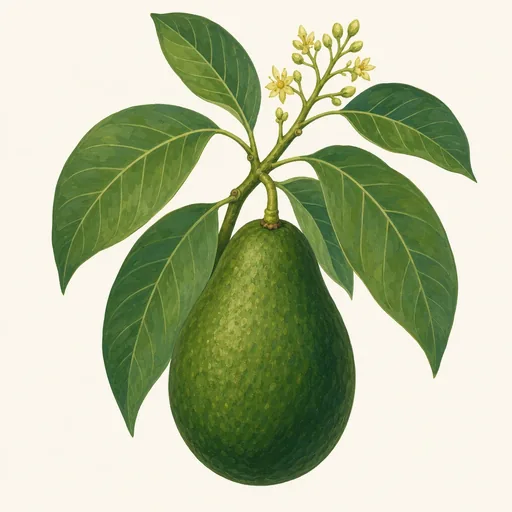
Avocado
Persea americana · Lauraceae
- Plant out1–4 weeks after the last frostApr 17 – May 14
- Space6–9 m (20–30 ft) apart
- HarvestAfter 3–5 years
Description
Avocado is the fruit of an evergreen tree native to Mexico and Central America. The fruit is a berry with one large seed, creamy flesh, and a skin that may be smooth or pebbly, green or nearly black. Its shape ranges from round to pear-shaped. Size, flavor, and texture vary by cultivar; ‘Hass’ is widely grown and develops dark, bumpy skin as it ripens.
Unlike most fruits, avocado gets much of its food energy from fat, primarily monounsaturated fat. Its mild flavor makes it useful in savory dishes such as guacamole, salads, and sandwiches, as well as smoothies and desserts. Cut flesh browns when exposed to air, so it is best used promptly; lemon or lime juice can slow the discoloration.
Avocados reach maturity on the tree but usually soften after harvest. A ripe fruit gives slightly to gentle pressure. Firm fruit can be left at room temperature to ripen, while ripe fruit can be refrigerated briefly to slow further softening. The skin and seed are normally discarded.
The tree grows best in warm, frost-free conditions with well-drained soil. Its shallow roots are sensitive to waterlogging, so regular watering should not leave the ground saturated. Avocado flowers open in distinct female and male phases. Cultivars are often described as type A or type B according to the timing of these phases, and planting compatible cultivars nearby can improve fruit set in some conditions. Trees grown from seeds do not reliably produce fruit identical to the parent cultivar and may take many years to bear. Named cultivars are generally propagated by grafting, which preserves their fruit characteristics. Commercial orchards also manage irrigation, wind exposure, and harvest timing carefully because these factors can affect yield and fruit quality.
Growing Conditions
6–12 m (20–39 ft) tall, 5–9 m (16–30 ft) wide
- Smallest
- Largest
Full sun, 6+ hours
Tolerates part sun
Moderate
Keep evenly moist, not soggy.
Ideal 18–29 °C (64–84 °F)
Survives down to −6 °C (21 °F).
pH 5.5–7 · acidic to neutral
Where it Grows
Planting
When to Plant
Plant an avocado tree outdoors in spring, after the last risk of frost has passed and the soil has warmed to about 60°F (16°C). This gives its roots a growing season to establish before cooler weather. Avocados are frost-sensitive, especially when young, so outdoor planting is best suited to a climate where the chosen variety can survive winter. In a marginal climate, wait until nights are reliably mild and be prepared to protect the tree during cold spells. Avoid planting during a heat wave, drought, or prolonged wet weather. A nursery tree is ready to plant when it is healthy and has a well-developed root ball; do not leave it in a pot so long that its roots become tightly crowded. If you plan to keep an avocado in a container indoors, you can pot it at any time of year, though spring is convenient as growth resumes.
How to Plant
Choose a sunny site with well-draining soil, room for the mature tree, and some protection from strong wind. Avocado roots are sensitive to waterlogged ground; if water stands after rain, choose another spot or plant on a broad, raised mound. Water the nursery tree before removing its pot. Dig a hole about twice as wide as the root ball but no deeper. Gently remove the container without pulling on the trunk, and disturb the roots as little as possible. Set the tree so the top of the root ball sits level with, or slightly above, the surrounding soil. Keep any graft union above ground. Backfill with the soil you removed, firm it lightly, and water thoroughly to settle it around the roots. Do not add fertilizer to the planting hole. Spread a 2–4-inch (5–10 cm) layer of coarse organic mulch over the root area, leaving a gap around the trunk. Water regularly while the tree establishes, letting the upper soil begin to dry between waterings; avoid keeping it constantly soggy. A seed-grown avocado can be planted similarly once established, but it may not produce fruit like its parent, so a grafted nursery tree is the more reliable choice for fruit.
Growth Timeline
- Establishing 3 years
- First harvest possible years 3–5
Planting Calendar
- Plant outdoors: 1–4 weeks after the last frost
- Plant out: Apr 17 – May 14
Care
Care Calendar
- Prune · Apr 10 – May 28
Prune lightly after frost danger passes, avoiding sudden exposure of limbs to strong sun. - Mulch · Apr 10 – May 14
Spread coarse mulch over the root zone, keeping it away from the trunk. - Feed · Apr 24 – Aug 6
Apply an avocado or citrus fertilizer in small, divided doses, especially to young trees. - Protect · Oct 11 – Dec 26
Cover young trees with frost cloth when freezing temperatures threaten.
Watering
Water deeply enough to moisten the root zone, then let the upper few inches of soil begin to dry before watering again. Avocados have shallow, oxygen-hungry roots: frequent light sprinkling encourages surface roots, while persistently soggy soil can cause root rot. Newly planted trees need more frequent attention than established ones, especially during their first warm season. Check soil moisture beneath the mulch rather than following a rigid schedule; rainfall, heat, soil texture, and tree size all matter. Apply water across the area under the canopy, not just beside the trunk. In hot, dry weather, a mature tree may need substantial water to prevent leaf drop and fruit stress; reduce irrigation during cool or rainy periods. Use well-drained soil and avoid letting water pool around the trunk. Where irrigation water is salty, monitor for brown leaf tips and seek local guidance on water quality.
Pruning
Prune avocado trees lightly and purposefully. Remove dead, broken, diseased, or crossing branches, and trim growth that blocks paths or makes fruit difficult to reach. Young trees can be shaped with small cuts to encourage a sturdy, accessible canopy; established trees generally need less routine pruning. Make cuts just outside the branch collar, and clean tools after cutting diseased wood. Avoid stripping a large part of the canopy at once: suddenly exposed branches and trunk can sunburn, especially in hot climates. If major height reduction is necessary, spread the work over more than one season and protect newly exposed bark as locally recommended. Prune after the coldest weather has passed, while avoiding extreme heat and periods when frost may damage tender new growth. Remove shoots arising below the graft union, since they belong to the rootstock rather than the desired fruiting variety.
Weeding
Keep grasses and weeds from competing with young avocado trees for water and nutrients, particularly within the area beneath the canopy. Avocado feeder roots grow close to the soil surface, so pull small weeds by hand or cut them at ground level instead of hoeing deeply or tilling. A broad mulch layer helps suppress new weeds and makes maintenance easier. Check regularly for vigorous grasses, vines, and volunteer shrubs that can grow through the mulch; remove them before they become established. Keep the immediate area around the trunk clear so the bark stays dry and visible. If using a herbicide, follow its label for use around fruit trees and shield avocado leaves, green bark, and exposed roots from spray drift. Do not apply herbicide to freshly damaged bark. Once the tree is established and shading the ground, weed pressure may decline, but competing plants still warrant attention during dry spells.
Mulching
Spread a roughly 2–4-inch (5–10-cm) layer of coarse organic mulch, such as arborist wood chips or shredded leaves, over the soil beneath and slightly beyond the canopy. Leave several inches of bare space around the trunk and keep the graft union uncovered. Mulch conserves moisture, moderates soil temperature, suppresses weeds, and gradually adds organic matter—useful benefits for avocado’s shallow feeder roots. Extend the mulched area as the tree grows, rather than piling material deeper in one spot. Replenish the layer when it decomposes, but do not mix it into the surface soil or cultivate around the tree. Avoid fine, waterlogged piles that stay pressed against the bark; they can encourage decay and make problems harder to notice. Mulch cannot correct poor drainage: if the planting site remains saturated after rain, address drainage and watering before adding more material.
Fertilizing
Feed avocados modestly, with particular attention to nitrogen, rather than applying a large dose at once. For a newly planted tree, wait until it is established and producing new growth, then use small, divided applications of a fertilizer labeled for avocados or citrus, following its rate instructions. Larger fruiting trees generally benefit from applications spread through the growing season; avoid pushing tender growth late in the season where frost is possible. Water after applying fertilizer, and keep it away from the trunk. Nutrient needs vary with soil, irrigation water, tree age, and crop load, so a soil test—and, for established orchards, leaf analysis—can guide adjustments. Zinc deficiency may occur in some soils, while iron can become unavailable in alkaline soil. Diagnose symptoms before adding micronutrients. Avoid unnecessary phosphorus and excessive fertilizer: surplus salts can injure avocado roots and cause brown leaf tips.
Pest Management
Inspect leaves, stems, and fruit regularly so problems can be identified before treatment. Depending on the region, avocados may attract mites, thrips, scales, lace bugs, or borers; some cause mostly cosmetic damage, while others warrant action. Preserve beneficial insects by avoiding routine broad-spectrum sprays. If pests are increasing, identify them and use locally recommended controls, following the label and avoiding applications that could harm pollinators during bloom. Good watering and mulch practices also help prevent a major disease threat, Phytophthora root rot: plant in well-drained soil, avoid overwatering, and do not move infested soil or water to healthy trees. Buy healthy nursery stock and clean tools when working with diseased material. Wilting, sparse foliage, and branch dieback can have several causes, so inspect roots and growing conditions rather than assuming insects are responsible. Ask a local extension service to identify persistent or unfamiliar damage.
Harvesting
Harvest when fruit is mature, not when it feels soft: avocados usually remain firm on the tree and soften after picking. The harvest season and mature size depend on the cultivar and climate, and skin color alone is unreliable. If maturity is uncertain, pick one representative fruit and leave it at room temperature. A mature avocado should soften normally over several days and develop good flavor; one picked too early may shrivel or remain rubbery. Use clean hand pruners or a picking tool to cut the stem, leaving a short stub, rather than tugging and damaging the fruit or branch. Handle fruit gently to limit bruising, and avoid dropping it. Once fruit reaches maturity, many varieties can remain on the tree for a time, allowing harvest as needed, although quality may eventually decline. Ripen picked fruit at room temperature, then refrigerate it when ripe to slow further softening.
Growing in Containers
Grows well in a pot of at least 75 litres (20 US gallons), with drainage holes. Can be grown indoors as a houseplant.
Propagation
From seed
- Remove the pit from a ripe avocado and rinse it.
- Set the broad end in moist potting mix, leaving the top exposed.
- Keep the mix warm and lightly moist until the seed sprouts.
- Move the seedling into a larger pot as it grows; expect fruit to differ from the parent variety.
By grafting
- Grow a healthy avocado seedling to use as rootstock.
- Take a scion from a healthy, fruiting variety.
- Join the scion and rootstock with their cambium layers touching.
- Wrap and seal the graft, then keep the plant sheltered until the union heals.
- Remove shoots that grow from below the graft.
Companion Plants
Good neighbors
- Avocado (a variety with the opposite flowering type): Planting A- and B-type varieties near each other can improve cross-pollination and fruit set where their flowering periods overlap.
Common Problems
- Yellowing leaves
- Wilting
- Stunted growth
- Leaves dropping
Root rot is a general name for the decay of plant roots, not a single disease with one scientific name. It can result…
- Spots on leaves
- Brown or crispy leaf edges
- Bleached or scorched patches
- Leaves dropping
Anthracnose is a name for several fungal diseases, not a single species. Depending on the plant, the cause may be a…
- Yellowing leaves
- Sticky residue on leaves
- Black sooty coating
- Stunted growth
Scale insects are small, sap-feeding insects that settle on garden and houseplants. Adults often look like bumps on…
- Brown or crispy leaf edges
- Bleached or scorched patches
- Yellowing leaves
- Wilting
Leaf scorch is a description of leaf damage, not a single disease with a scientific name. It develops when leaves lose…
- Brown or crispy leaf edges
- Wilting
- Bleached or scorched patches
- Leaves dropping
Frost damage is an injury caused when plant tissues become cold enough for ice to form or for cells to lose water to…
- Root rot: Poorly drained or waterlogged soil encourages Phytophthora root rot, causing sparse foliage and dieback.
- Brown leaf tips: Often associated with salt buildup, excess fertilizer, or inconsistent watering.
- Sunburn: Sudden exposure to intense sun can damage bark and fruit, especially after heavy pruning.
- Pests: Thrips and mites can scar fruit or damage leaves.
- Fruit diseases: Anthracnose can cause dark spots that become more noticeable as fruit ripens.
Varieties
The most widely grown variety produces dark, pebbly-skinned fruit.
- creamy flesh
- long harvest window
Its smooth-skinned fruit remains green when ripe.
- green skin
- relatively cold-tolerant
This variety bears smooth-skinned fruit with a mild flavor.
- relatively cold-tolerant
- early
It bears green, thin-skinned fruit and is often planted as a pollinizer.
- relatively cold-tolerant
- early
Its large, round fruit has a thick green skin.
- round fruit
- summer harvest
It bears elongated fruit with a high proportion of flesh.
- small seed
- productive
Its relatively small tree size makes it a choice for large containers.
- dwarf
- container-suitable
This Hass-like variety ripens later and has a relatively upright habit.
- upright growth
- late harvest
More about varieties
- Hass: A widely grown variety with rich, creamy flesh and skin that darkens as it ripens.
- Fuerte: Pear-shaped fruit with smooth green skin; an important commercial variety before Hass became dominant.
- Bacon: Green-skinned fruit with a relatively mild flavor; the tree has some tolerance of cool conditions.
- Reed: Large, round fruit with thick green skin and creamy flesh.
- Pinkerton: Elongated fruit with a relatively small seed and high flesh-to-seed ratio.
Health Benefits
Avocados are commonly eaten as a source of unsaturated fat, particularly monounsaturated fat. Using avocado in place of foods high in saturated fat, such as butter, can be one way to support a heart-healthy eating pattern. Avocados also provide fiber, which supports normal digestion and can help make a meal more filling.
The fruit contains potassium, folate, and vitamins E and K, along with smaller amounts of other nutrients. Its fat can help the body absorb fat-soluble compounds from foods eaten alongside it, including some carotenoids in vegetables. This makes avocado a useful addition to a salad, though it is not a substitute for eating a variety of fruits and vegetables.
Avocado is often used in guacamole, sandwiches, and smoothies, or mashed as a spread. Avocado oil is also used in cooking and in some skin and hair products, but claims that applying it treats skin conditions are not well established.
Avocados are calorie-dense, so portion size may matter for people managing their energy intake. Anyone with a known avocado allergy should avoid it; some people with latex allergy also react to avocado. People who must restrict potassium because of kidney disease should ask their healthcare professional how much fits their diet.
Fun Facts
- Botanically, an avocado is a berry with one large seed.
- Avocados usually mature on the tree but soften and ripen after they are picked.
- Avocado flowers open in female and male phases at different times; varieties are grouped into type A and type B flowering patterns.
- A tree grown from a pit may produce fruit unlike that of its parent, so named varieties are usually propagated by grafting.
- “Alligator pear” is an old nickname inspired by the fruit’s shape and, in some varieties, its pebbly skin.
Notice an error or have a question about Avocado? Contact us