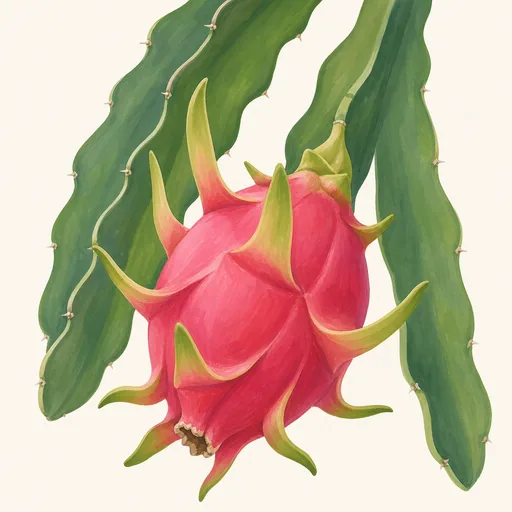
Dragon Fruit
Selenicereus undatus · Cactaceae
- Plant out2–4 weeks after the last frostApr 24 – May 14
- Space1.8–3 m (6–10 ft) apart
- HarvestAfter 1–3 years
Description
Dragon fruit is the fruit of a climbing, night-blooming cactus with long, three-angled green stems that root where they touch supports. The most familiar cultivated kind, Selenicereus undatus, produces oval to oblong fruits with bright pink or red skin and prominent green-tipped scales. Inside, the mildly sweet, juicy flesh is usually white and dotted with many tiny, edible black seeds. Other cultivated dragon fruits may have red or magenta flesh, or yellow skin, and differ in sweetness and flavor. The taste is often compared with a delicate blend of kiwi and pear, although ripeness and variety make a noticeable difference.
The cactus thrives in warm, frost-free climates and is grown in the ground or large containers, usually trained on sturdy posts or trellises. Its aerial roots cling to supports, while arching stems eventually form a canopy. Large, fragrant white flowers typically open at night and last only until morning. Pollination by animals, and sometimes hand pollination, allows fruit to develop; some varieties need pollen from another compatible plant. Fruits generally ripen several weeks after flowering and are harvested when their skin is fully colored and slightly yielding. Unlike many other fruits, they do not become substantially sweeter after picking.
To eat dragon fruit, slice it in half and scoop out the flesh or peel away the leathery skin, which is not ordinarily eaten. The flesh can be served fresh, chilled, in fruit salads, or blended into smoothies. Dragon fruit contains water, dietary fiber, and modest amounts of vitamin C; the seeds supply small amounts of fat. The plant needs well-drained soil and regular, moderate watering, but prolonged waterlogging can rot its roots. Strong sun encourages growth, though young plants may benefit from shade in very hot places.
Growing Conditions
1.5–3 m (5–10 ft) tall, 0.9–1.8 m (3–6 ft) wide
- Smallest
- Largest
Full sun, 6+ hours
Tolerates part sun
Moderate
Keep evenly moist, not soggy.
Ideal 18–30 °C (64–86 °F)
Survives down to −1 °C (30 °F).
pH 5.5–7 · acidic to neutral
Where it Grows
Planting
When to Plant
Plant dragon fruit outdoors in spring, after the last frost, once the soil has warmed and nighttime temperatures are consistently above 50°F (10°C). Warmer nights, around 60°F (15°C) or higher, give new plants a better start. Dragon fruit is a tropical cactus: frost can kill it, and prolonged cold slows growth. In a frost-free climate, you can plant during a warm part of the year; avoid periods when newly planted cuttings would sit in cold, waterlogged soil. If your area has cool winters, grow it in a large container that you can move under cover before cold weather arrives. A container-grown plant can be started indoors at any time if it has warmth and plenty of light, then moved outside after temperatures are suitable. Acclimate it gradually to outdoor sun over several days to prevent scorching.
How to Plant
Choose a warm, sheltered spot with well-draining soil and at least six hours of sun; in very hot climates, some afternoon shade can prevent sunburn. Install a sturdy post or trellis before planting. Dragon fruit climbs and becomes heavy, so a post about 5–6 feet (1.5–1.8 m) tall with a broad support at the top works well. Space plants about 6–10 feet (2–3 m) apart if growing more than one.
For a cutting, use a healthy stem section about 8–16 inches (20–40 cm) long. Let the cut end dry and form a callus in shade for several days, then plant it upright with the lower 2–4 inches (5–10 cm) buried. For a rooted nursery plant, set the root ball at its original soil level. Use a freely draining mix; in heavy soil, plant in a raised bed or large container with drainage holes. Firm the soil gently, tie the stem loosely to its support, and water lightly. Thereafter, water when the upper soil has dried rather than keeping it constantly wet. Do not bury the stem deeply: excess moisture around its base can cause rot.
Growth Timeline
- Establishing 1 year
- First harvest possible years 1–3
Planting Calendar
- Plant outdoors: 2–4 weeks after the last frost
- Plant out: Apr 24 – May 14
Care
Care Calendar
- Prune · Apr 10 – May 14
Remove damaged stems and thin crowded growth to keep the plant manageable. - Stake · Apr 10 – Jun 11
Tie new stems to a sturdy post and let mature stems drape from the top. - Feed · Apr 24 – Aug 6
Apply a light dose of balanced fertilizer during active growth. - Protect · Oct 11 – Nov 14
Move containers indoors or cover outdoor plants before freezing temperatures.
Watering
Dragon fruit is a climbing cactus, but it needs regular water while growing, flowering, and filling fruit. Water deeply, then let the upper 2–3 inches (5–8 cm) of soil dry before watering again. In hot weather, a plant in a container may need water more often than one in the ground; check the soil rather than following a fixed schedule. Use a pot and planting site that drain freely, and never leave roots standing in water. Keep moisture reasonably consistent as fruit develops: a long dry spell followed by heavy watering can contribute to split fruit. Reduce watering during cool weather or when growth slows, but do not let young plants become severely dry. Water the soil at the base rather than routinely wetting the stems. Soft, yellowing stems or persistently damp soil may signal overwatering; shriveled stems and very dry soil suggest the plant needs a drink.
Pruning
Prune dragon fruit to keep its weight manageable and allow light and air into the canopy. Train a young plant to one strong main stem, tying it loosely to a sturdy post as it grows. Remove unwanted side shoots until the stem reaches the top of the support, then let several branches develop and hang over it. On established plants, cut away dead, damaged, diseased, or crowded stems, particularly after harvest or during a slower growth period. Keep enough mature, hanging growth to flower; removing too much at once can reduce the next crop. Shorten branches that reach the ground, obstruct paths, or overload the trellis. Use clean, sharp pruners and disinfect them after cutting diseased tissue. Handle stems carefully: some varieties have sharp spines, and heavy sections can fall when cut. Let healthy cuttings dry before rooting them if you want new plants.
Weeding
Keep the area around dragon fruit free of weeds, especially while the plant is young. Weeds compete for water and nutrients and can hide the base of the stem, making problems harder to spot. Dragon fruit roots are relatively shallow, so hand-pull small weeds when the soil is slightly moist or cut them off at the surface. Avoid deep hoeing, digging, or vigorous cultivation close to the plant, which can damage roots. Check regularly during warm, wet weather, when weeds can establish quickly, and remove them before they set seed. A layer of mulch helps prevent new seedlings, but leave a clear space around the stem. If the plant grows in a container, pull weeds from the pot before their roots become entangled with the dragon fruit’s. Keep grass and aggressive ground covers back from the planting area rather than letting them grow right up to the support post.
Mulching
Apply about 2–3 inches (5–8 cm) of coarse organic mulch, such as wood chips or shredded bark, over the root area. Mulch helps retain moisture, limits weeds, and moderates soil temperature, particularly where the ground dries quickly. Spread it beyond the immediate base of the plant as space allows, but keep it several inches away from the main stem. Mulch piled against the stem can hold moisture there and encourage rot. Check beneath the layer occasionally: soil should not remain soggy, and mulch should not conceal weeds, pests, or signs of stem damage. Top up the layer as it breaks down, rather than repeatedly piling on more. In a container, use a thinner layer if needed so you can still check soil moisture easily. Mulch does not replace good drainage; dragon fruit roots still need air, even when the surface looks dry.
Fertilizing
Feed dragon fruit modestly during active growth, using compost or a balanced fertilizer according to its label. Established plants may be fed in several light applications from spring through the growing season; container plants often benefit from smaller, more frequent doses because watering washes nutrients out. Water the soil before applying fertilizer if it is very dry, and spread fertilizer over the root area rather than against the main stem. Avoid heavy nitrogen feeding, which can produce abundant soft growth without improving flowering or fruiting. If growth or yields are poor, consider light, water, pollination, and soil conditions before adding more fertilizer. A soil test can help identify a nutrient shortage or unsuitable pH. Stop or reduce feeding when growth slows in cool weather. Newly planted cuttings need time to establish roots; begin with light feeding only after they are growing well.
Pest Management
Inspect stems, flowers, and fruit regularly. Mealybugs, scale insects, and aphids may gather on tender growth; remove small infestations by hand or with a firm spray of water. Insecticidal soap can help with persistent infestations if it is labeled for the use, but test a small area first and avoid spraying in strong sun. Ants may protect sap-feeding pests, so address both when necessary. Slugs and snails can damage young growth, while birds or other animals may peck ripening fruit; harvest promptly or protect fruit with suitable bags or netting. Provide airflow, remove diseased tissue, and avoid waterlogged soil to reduce stem diseases and root rot. Disinfect tools after working on infected plants. For suspected fruit flies or a spreading disease, identify the problem before treating it and follow local guidance. Check any pesticide label for crop suitability and harvest intervals.
Harvesting
Harvest dragon fruit when it has developed its characteristic full color and the small leaflike bracts on its skin begin to look less fresh. Red-skinned varieties typically turn evenly pink or red; yellow varieties become yellow. The time from flowering to harvest varies with the variety and weather, so use appearance rather than a calendar date alone. A ripe fruit usually yields slightly to gentle pressure, but it should not be mushy or cracked. Clip it from the stem with clean shears, leaving a short piece of stalk, instead of pulling and damaging the branch. Wear gloves if the variety has spines, particularly on yellow fruit. Handle the harvest gently to avoid bruising. Dragon fruit does not become much sweeter after picking, so do not harvest green fruit expecting it to ripen fully indoors. Eat ripe fruit soon, or refrigerate it for several days.
Growing in Containers
Grows well in a pot of at least 40 litres (11 US gallons), with drainage holes. Can be grown indoors as a houseplant.
Propagation
From cuttings
- Cut a healthy segment from a mature plant.
- Let the cut end dry and callus for several days.
- Plant the base in a free-draining cactus mix.
- Keep it warm and in bright, indirect light until it roots.
- Train new growth onto a sturdy support.
From seed
- Collect seeds from a ripe fruit and rinse off the pulp.
- Sow the seeds shallowly in moist, free-draining seed mix.
- Keep them warm and evenly moist until they germinate.
- Transplant sturdy seedlings into individual pots.
Companion Plants
Good neighbors
- Dragon fruit (a different cultivar): Growing a compatible cultivar nearby can improve pollination and fruit set, especially for self-incompatible varieties.
Common Problems
- Spots on leaves
- Brown or crispy leaf edges
- Bleached or scorched patches
- Leaves dropping
Anthracnose is a name for several fungal diseases, not a single species. Depending on the plant, the cause may be a…
- Yellowing leaves
- Sticky residue on leaves
- Black sooty coating
- Curled or cupped leaves
Mealybugs are small, sap-feeding insects in the family Pseudococcidae. They occur on many houseplants, ornamentals…
- Yellowing leaves
- Wilting
- Stunted growth
- Leaves dropping
Root rot is a general name for the decay of plant roots, not a single disease with one scientific name. It can result…
- Bleached or scorched patches
- Brown or crispy leaf edges
Sunscald is noninfectious injury caused when direct sunlight heats plant tissue beyond what it can tolerate. It often…
- Flowers or buds dropping
- Distorted new growth
Poor pollination occurs when too little viable pollen reaches a flower’s receptive stigma, or when pollen fails to…
- Stem and root rot: Poor drainage or overwatering can cause soft, discolored stems and decaying roots.
- Sunburn: Intense sun, especially after moving a plant outdoors, can leave pale or brown patches on its stems.
- Pests: Mealybugs, scale insects, and ants tending these pests may appear on stems and fruit.
- Fungal diseases: Stem canker and anthracnose can cause spots or lesions, particularly in humid conditions.
- Poor fruit set: Some varieties need pollen from another compatible plant or benefit from hand pollination. Flowers that are not pollinated may drop without forming fruit.
- Cold damage: Frost can injure or kill this tropical cactus.
Varieties
A widely grown variety with pink skin and white flesh that can set fruit with its own pollen.
- self-fertile
- vigorous
Produces sweet, dark-pink fruit and is a useful choice where only one plant fits.
- self-fertile
- magenta flesh
Bears small, notably sweet fruits with deep-red flesh.
- self-fertile
- small fruit
Produces small yellow fruits with white flesh; handle the spiny fruit carefully.
- self-fertile
- sweet
- spiny fruit
More about varieties
- White-fleshed dragon fruit (Selenicereus undatus): The widely sold type, with pink-red skin and white flesh dotted with black seeds.
- Red-fleshed dragon fruit (Selenicereus costaricensis): Has red skin and deep red flesh; its pigment can stain hands and clothing.
- Yellow dragon fruit (Selenicereus megalanthus): Has yellow skin and white flesh and is often especially sweet.
Health Benefits
Dragon fruit is eaten as a refreshing fruit rather than used as a treatment for a particular condition. Its flesh contains water and dietary fiber, which can contribute to hydration and regular bowel movements as part of a balanced diet. The small edible seeds also provide some fat, including unsaturated fatty acids, although a serving supplies only a modest amount.
Dragon fruit provides vitamin C and other plant compounds. Red-fleshed types contain betalain pigments, which have antioxidant activity in laboratory tests. These findings do not establish that eating dragon fruit prevents disease. Its fiber and other carbohydrates may support beneficial gut bacteria, but research on specific effects in people is still limited.
The fruit is commonly eaten fresh, added to smoothies, or served with yogurt. Like other whole fruits, it can be a useful alternative to sugary desserts. Nutrient content and sweetness vary by type and ripeness, so it is best considered one option among a variety of fruits and vegetables. It is not a substitute for medical care. Anyone with a known fruit allergy should try it cautiously; allergic reactions, though uncommon, are possible. Red-fleshed dragon fruit may temporarily color urine or stool pink or red.
Fun Facts
- Dragon fruit grows on a climbing cactus, not a tree.
- Its large flowers usually open at night and may last only one night.
- Growers often train the cactus up a post and let its branches hang over a support.
- The black specks throughout the flesh are edible seeds.
- Another common name for the fruit is pitaya.
Notice an error or have a question about Dragon Fruit? Contact us