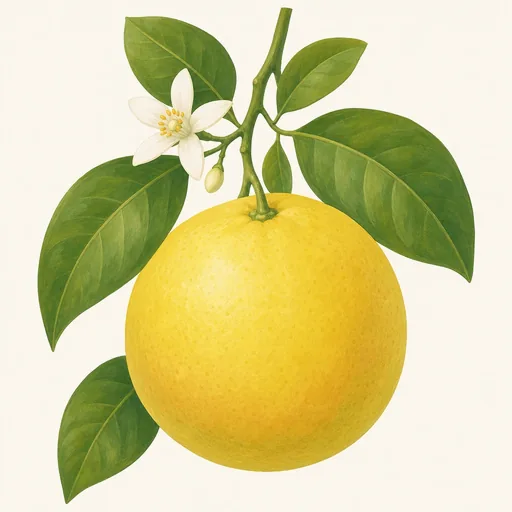
Grapefruit
Citrus × paradisi · Rutaceae
- Plant out1–3 weeks after the last frostApr 17 – May 7
- Space4.5–7.5 m (15–25 ft) apart
- HarvestAfter 3–5 years
Description
Grapefruit is the large, round fruit of an evergreen citrus tree. It originated in the Caribbean, probably in Barbados, as a natural hybrid of sweet orange and pomelo. The tree typically reaches 5–10 metres in height and has glossy green leaves and fragrant white flowers. Its fruit usually measures about 10–15 centimetres across, with a smooth, fairly thick rind that is yellow when ripe and sometimes tinged with pink.
Inside, the fruit is divided into juicy segments. Depending on the variety, the flesh may be pale yellow, pink or red. Grapefruit tastes sweet and tart, often with a distinctive bitterness. It is eaten fresh, added to salads, or pressed for juice; the peel can be used for marmalade or zest. Red and pink varieties get their colour from pigments including lycopene, while white varieties lack the same degree of red pigmentation.
Grapefruit trees grow best in warm, sunny climates with well-drained soil. They are cultivated in subtropical and tropical regions, where prolonged freezes are uncommon. Young trees need regular watering while they become established, and mature trees benefit from water during dry spells, especially while fruit is developing. Commercial trees are usually grafted onto selected citrus rootstocks rather than grown from seed. Ripening takes several months, and the main harvest season varies with the local climate.
A grapefruit can be ripe even if parts of its rind remain green. Fruit picked from the tree does not become sweeter in storage, so growers generally harvest it when mature. Grapefruit and its juice can interfere with the body's handling of certain medicines, including some statins. Anyone taking medication should check its guidance or ask a pharmacist before eating grapefruit regularly.
Growing Conditions
4.5–9 m (15–30 ft) tall, 4.5–7.5 m (15–25 ft) wide
- Smallest
- Largest
Full sun, 6+ hours
Tolerates part sun
Moderate
Keep evenly moist, not soggy.
Ideal 20–32 °C (68–90 °F)
Survives down to −6 °C (21 °F).
pH 6–7 · acidic to neutral
Where it Grows
Planting
When to Plant
Plant grapefruit outdoors in spring, after the last frost, once the soil has warmed and nights are consistently mild. This gives the tree a growing season to establish roots before winter. In reliably frost-free areas, early fall is another good choice: the weather is cooler, but the soil is still warm enough for root growth. Avoid planting during a heat wave, in waterlogged ground, or just before cold weather. Grapefruit is a heat-loving citrus tree best suited to frost-free or nearly frost-free climates, generally USDA zones 9–11; young trees are especially vulnerable to freezing temperatures. If winter freezes are common where you live, choose a dwarf tree for a large container so you can move it into a bright, protected place when cold threatens. A container tree can be planted at other times if you can keep it watered and protect it from temperature extremes.
How to Plant
Choose a sunny, sheltered spot with at least eight hours of direct light and well-drained soil. Allow roughly 15–25 feet of space for a full-size tree, depending on the variety, or follow the nursery’s spacing advice for a dwarf tree. If water stands after rain, use a raised planting mound or grow the tree in a container rather than setting it in soggy soil. Start with a healthy, grafted nursery tree suited to your climate. Water its root ball before planting, then slide it from the pot and gently loosen any circling roots. Dig a hole two to three times as wide as the root ball, but no deeper. Set the tree so the top of the root ball is level with or slightly above the surrounding soil, and keep the graft union clearly above ground. Backfill with the soil you removed; do not put fertilizer in the hole. Water thoroughly to settle the soil. Add 2–3 inches of mulch over the root area, leaving a gap around the trunk. Water regularly while the tree establishes, letting the upper soil dry slightly between soakings. Protect a young tree when frost is forecast.
Growth Timeline
- Establishing 3 years
- First harvest possible years 3–5
Planting Calendar
- Plant outdoors: 1–3 weeks after the last frost
- Plant out: Apr 17 – May 7
Care
Care Calendar
- Prune · Mar 27 – May 14
Remove dead or crossing branches after the risk of a hard freeze has passed. - Feed · Apr 10 – Aug 6
Apply citrus fertilizer in divided doses, following the label for the tree’s size. - Mulch · Apr 10 – May 14
Spread mulch over the root zone, keeping it away from the trunk. - Protect · Oct 11 – Jan 23
Cover young trees during freezing nights and uncover them when temperatures rise.
Watering
Water grapefruit deeply enough to moisten the root zone, then let the upper few inches of soil begin to dry before watering again. Newly planted trees need more frequent attention while their roots establish; check the soil several times a week rather than following a fixed schedule. Established trees usually need less frequent, deeper irrigation, especially when rainfall is scarce or fruit is developing. Apply water over the area beneath and just beyond the canopy, where many feeder roots grow, instead of soaking only the trunk. Sandy soils dry quickly and may need shorter, more frequent watering; heavy soils hold moisture longer. Reduce irrigation during cool, rainy periods, but do not let the root zone remain dry for long during hot weather. Good drainage is essential: persistently wet soil can damage roots. A slow-drip hose or drip irrigation helps water soak in without running off. Keep water off the trunk where possible.
Pruning
Prune grapefruit lightly, mainly to remove dead, damaged, diseased, or crossing branches and to keep paths clear. The canopy helps protect branches and fruit from sunburn, so avoid heavy thinning or topping. In frost-prone areas, do most routine pruning after the danger of frost has passed; wait until freeze damage is clearly visible before cutting affected wood back to healthy tissue. Remove shoots arising below the graft union promptly, since they belong to the rootstock and will not produce the intended grapefruit. If dense growth limits access or airflow, selectively remove a few branches rather than shearing the whole tree. Use clean, sharp tools, make cuts just outside the branch collar, and avoid leaving stubs. Clean tools between trees when disease is a concern. Large pruning cuts can expose previously shaded bark to intense sun; avoid opening the canopy abruptly, particularly in hot climates.
Weeding
Keep grass and weeds from competing with a young grapefruit tree for water and nutrients. Maintain a weed-free area around the trunk and, as practical, extend it toward the canopy edge as the tree grows. Pull small weeds by hand or cut them at the surface while the soil is moist. Grapefruit has shallow feeder roots, so avoid deep hoeing or cultivation that could injure them. A layer of organic mulch can suppress many new weeds, though you will still need to remove plants that grow through it. Check regularly for climbing vines, which can shade young branches and make inspections difficult. If using an herbicide, follow its label for use near citrus and shield the trunk, leaves, and exposed roots from spray. Do not rely on repeated string-trimmer work close to the tree: cuts to the bark can seriously damage or girdle it.
Mulching
Spread about 2–4 inches of coarse organic mulch, such as wood chips, over the soil beneath the grapefruit canopy. Extend it farther as the tree grows, especially across areas kept free of grass. Mulch slows evaporation, moderates soil temperature, and reduces weed growth; as it breaks down, it also contributes organic matter. Leave a clear gap of at least 6 inches around the trunk so damp material does not rest against the bark. Do not pile mulch against the trunk in a mound. Apply it over moist soil, and check beneath it when deciding whether to water: the surface of the mulch may look dry while the soil remains damp. Refresh the layer when it thins, rather than continually adding more on top. Where drainage is poor, correct the drainage problem instead of using mulch to hide persistently wet soil. Keep mulch clear of any visible graft union.
Fertilizing
Feed grapefruit according to its age, growth, and local soil conditions. A fertilizer labeled for citrus provides nitrogen and often the micronutrients citrus needs; follow its label for the tree’s size and your region. Young trees generally benefit from smaller applications spread through the growing season rather than one large dose. Established trees can be fed during active growth, beginning in late winter or spring, with later applications timed to local recommendations. In frost-prone places, avoid late-season nitrogen that may encourage tender new growth. Spread fertilizer over the root area beneath and beyond the canopy, not in a pile against the trunk, and water it in as directed. Excess fertilizer can burn roots, promote excessive leafy growth, and pollute waterways. If leaves remain yellow despite appropriate feeding, ask a local extension service about soil testing: high soil pH, poor drainage, or root problems can cause symptoms that more fertilizer will not fix.
Pest Management
Inspect leaves, shoots, and fruit regularly so problems are caught early. Aphids, scale insects, mites, and citrus leafminers may occur; many minor infestations need no treatment, especially on established trees. Encourage beneficial insects by avoiding unnecessary broad-spectrum sprays. For troublesome scale or mites, horticultural oil may help when applied according to its label, with thorough coverage; avoid spraying during extreme heat or when the label warns of plant injury. Leafminer damage is usually more significant on young trees than on mature ones. Remove badly affected fallen fruit and keep the area clean, but avoid stripping healthy foliage. Watch for regional threats such as Asian citrus psyllid and citrus greening disease, also called huanglongbing. Symptoms can include blotchy, uneven leaf yellowing and small, misshapen, bitter fruit. Report suspected regulated pests or diseases to your local agricultural authority. Follow local citrus-movement rules and use only treatments labeled for grapefruit.
Harvesting
Grapefruit can take many months to mature, and the harvest season depends on the variety and climate. Do not judge ripeness by peel color alone: fruit may be edible while some green remains, and fully colored fruit is not necessarily sweet enough. Sample one or two fruits when they reach a typical size for the variety, then wait and taste again if they are too tart. Grapefruit generally does not become sweeter after picking, although ripe fruit can often remain on the tree for a time. Harvest when the flavor suits you, before prolonged cold threatens the fruit. Clip the stem close to the fruit with clean shears, or gently twist the fruit free without tearing its skin or damaging the branch. Handle fruit carefully to limit bruising. Discard damaged or spoiled fruit, and store sound fruit in a cool place or refrigerate it for longer keeping.
Growing in Containers
Grows well in a pot of at least 60 litres (16 US gallons), with drainage holes. Can be grown indoors as a houseplant.
Propagation
From seed
- Remove seeds from a ripe grapefruit and rinse them.
- Sow fresh seeds about 1 cm deep in moist seed-starting mix.
- Keep the mix warm and evenly moist until seedlings emerge.
- Move seedlings into bright light and transplant them as they grow.
By grafting
- Grow or obtain a healthy, compatible citrus rootstock.
- Take a bud from a healthy grapefruit tree during active growth.
- Insert the bud beneath a flap of rootstock bark and wrap the union.
- Remove the wrap after the bud takes, then cut the rootstock above it.
- Remove any shoots that grow from below the graft.
From cuttings
- Take a short, healthy stem cutting from new growth that has begun to firm up.
- Remove the lower leaves and dip the cut end in rooting hormone.
- Insert it into a moist, free-draining rooting mix.
- Keep it warm and humid in bright, indirect light.
- Pot it up once roots have developed.
Companion Plants
Good neighbors
- Sweet alyssum: Its flowers attract hoverflies and other beneficial insects that help control citrus pests when planted near, but not against, the trunk.
Common Problems
- Yellowing leaves
- Sticky residue on leaves
- Black sooty coating
- Curled or cupped leaves
Aphids are small, soft-bodied insects that feed by piercing plants and drawing out sap. The group includes many…
- Winding tunnels in leaves
- Spots on leaves
- Leaves dropping
Leaf miners are the larvae of several kinds of flies, moths, beetles, and sawflies, rather than a single species with…
- Yellowing leaves
- Sticky residue on leaves
- Black sooty coating
- Stunted growth
Scale insects are small, sap-feeding insects that settle on garden and houseplants. Adults often look like bumps on…
- Yellowing leaves
- Wilting
- Stunted growth
- Leaves dropping
Root rot is a general name for the decay of plant roots, not a single disease with one scientific name. It can result…
- Brown or crispy leaf edges
- Wilting
- Bleached or scorched patches
- Leaves dropping
Frost damage is an injury caused when plant tissues become cold enough for ice to form or for cells to lose water to…
- Citrus greening (HLB): Yellow, blotchy leaves and small, misshapen, bitter fruit; spread by Asian citrus psyllids.
- Citrus canker: Raised lesions on leaves, twigs, and fruit, sometimes followed by leaf or fruit drop.
- Citrus leafminers: Tunnels and curled new leaves, especially on young trees.
- Scale insects and aphids: Sap-feeding pests that may cause sticky honeydew and sooty mold.
- Root rot: Often associated with poorly drained soil or overwatering; may cause yellowing and decline.
- Cold damage: Frost can injure leaves, branches, and fruit.
Varieties
A familiar red-fleshed grapefruit grown in warm citrus regions.
- red flesh
- few seeds
A popular Texas variety with strongly colored flesh.
- deep red flesh
- few seeds
Its richly colored fruit develops best with ample heat.
- deep red flesh
- few seeds
This variety produces red-fleshed fruit with few seeds.
- red flesh
- few seeds
A widely grown white grapefruit with little to no seed.
- white flesh
- nearly seedless
An older variety valued for its juicy fruit but containing many seeds.
- white flesh
- seedy
More about varieties
- Marsh Seedless: A widely grown, pale-fleshed grapefruit with few or no seeds.
- Ruby Red: A pink-to-red-fleshed variety prized for its color and relatively sweet flavor.
- Rio Red: A deep-red Texas variety with a sweet-tart taste.
- Star Ruby: Known for intensely red flesh and a relatively low seed count.
- Duncan: A traditional white-fleshed variety with a rich flavor but many seeds.
Health Benefits
Grapefruit is commonly eaten fresh or used as juice as a source of vitamin C, which supports normal immune function and helps the body make collagen. It also provides water and some potassium. Whole grapefruit supplies fiber, which supports digestive health and can help a meal feel more filling; juice contains much less fiber. Pink and red varieties contain carotenoids, including lycopene, that contribute to their color and act as dietary antioxidants. Grapefruit can be part of a varied diet, but claims that it burns fat or produces substantial weight loss are not well supported.
An important caution is that grapefruit and its juice can change how the body processes certain medicines, sometimes increasing drug levels and the risk of side effects. Affected medicines include some statins, blood-pressure drugs, and other prescriptions, but the effect depends on the specific drug. The interaction can last beyond the time it takes to eat the fruit, so simply spacing grapefruit and a dose a few hours apart may not prevent it. Check the medicine label and ask a pharmacist or clinician before consuming grapefruit if you take prescription medication. Its acidity may also bother people who experience reflux or who are sensitive to acidic foods.
Fun Facts
- Grapefruit is a natural hybrid of pomelo and sweet orange.
- It was first described in the Caribbean in the 18th century.
- Its name refers to the way its fruit can grow in clusters resembling bunches of grapes.
- Red and pink flesh gets much of its color from the pigment lycopene.
- Unlike many fruits, grapefruit does not become sweeter after it is picked.
Notice an error or have a question about Grapefruit? Contact us