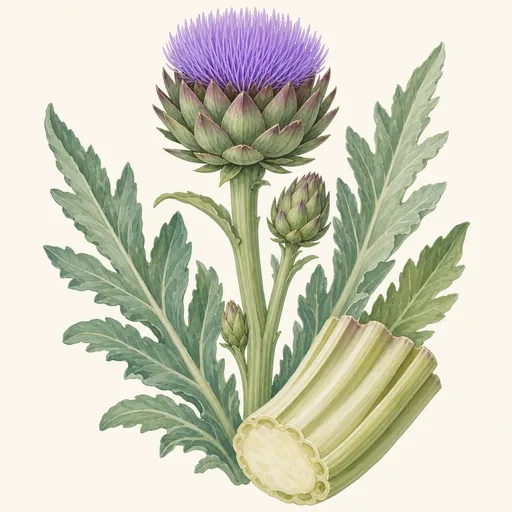
Cardoon
Cynara cardunculus · Asteraceae
- Start indoors6–8 weeks before the last frostFeb 13 – Mar 5
- Sow outdoorsFrom the last frost until 2 weeks afterApr 10 – Apr 30
- Plant out1–3 weeks after the last frostApr 17 – May 7
- Space0.9–1.2 m (3–4 ft) apart
- Harvest120–150 days after plantingAug 15 – Oct 25
Description
Cardoon is a large, thistle-like vegetable grown chiefly for its thick leaf stalks and midribs. It belongs to the same species as the globe artichoke, but the two are cultivated for different parts: cardoon for its stalks and globe artichoke for its immature flower heads. Cardoon forms a broad clump of deeply lobed, silvery gray-green leaves that may be spiny, depending on the cultivar. Mature plants can reach about 1.5 to 2 meters tall when flowering.
In summer, upright stems bear large, purple, artichoke-like flower heads that attract bees and other pollinators. The plant is native to the Mediterranean region and grows best in full sun and well-drained soil. Established plants tolerate dry conditions, although regular water and fertile soil help produce larger, more tender stalks. Cardoon is a perennial, but gardeners often grow it as an annual for its edible crop. Given room, it makes a striking ornamental as well as a vegetable.
The stalks have a pleasantly bitter, artichoke-like flavor. Growers often blanch them by wrapping or tying the leaves together to exclude light for several weeks before harvest; this reduces bitterness. In the kitchen, the stalks are usually trimmed to remove leaves, spines, and tough strings, then cooked until tender. They feature in soups, stews, gratins, and fried dishes, particularly in Italian and Spanish cooking. Cardoon needs space: its wide leaves can shade neighboring crops. Where it escapes cultivation, it may spread by seed and become weedy, so removing spent flower heads can help prevent unwanted seedlings. Gardeners seeking a milder harvest can choose a less-spiny variety and pick stalks while they are still young. Even then, most recipes call for cooking rather than eating them raw.
Growing Conditions
1.2–2.4 m (4–8 ft) tall, 0.9–1.5 m (3–5 ft) wide
- Smallest
- Largest
Full sun, 6+ hours
Tolerates part sun
Moderate
Keep evenly moist, not soggy.
Ideal 15–25 °C (59–77 °F)
Survives down to −18 °C (0 °F).
pH 6–7.5 · neutral
Where it Grows
Planting
When to Plant
Plant cardoon according to your last spring frost and the length of your growing season. In areas with frosty winters, start seeds indoors 8–10 weeks before the last expected frost. Move seedlings outside after frost danger has passed, the soil has warmed to about 60°F (16°C), and the plants have been hardened off. Where the growing season is long, you can instead sow seeds directly outdoors after the last frost, once the soil is warm. Cardoon grows into a large plant and needs a long season to produce substantial edible stalks, so indoor starting is usually the better choice in cooler regions. In mild-winter climates with little or no frost, you can also sow in autumn for growth through the cooler months. Young plants are more vulnerable to cold than established ones; wait rather than setting tender seedlings into chilly, wet ground. If growing cardoon as a perennial, allow time for roots to establish before winter.
How to Plant
Choose a site with full sun, room for a large plant, and deep, well-drained soil. Work compost into the planting area before sowing or transplanting; cardoon grows best in fertile soil that holds some moisture without becoming waterlogged. Sow seeds about ½ inch (1 cm) deep. For an indoor start, use individual pots so the seedlings’ roots can develop with minimal disturbance. Keep the seed-starting mix lightly moist and warm, around 65–75°F (18–24°C), until germination.
Before transplanting, gradually expose indoor-grown seedlings to outdoor conditions over 7–10 days. Set them at the same depth they grew in their pots, spacing plants 3–4 feet (90–120 cm) apart; leave at least 4 feet (1.2 m) between rows if planting several. For direct sowing, place a few seeds at each intended position and thin to the strongest seedling. Water well after planting, then water regularly while plants establish. A layer of mulch helps retain moisture, but keep it clear of the crown. Avoid crowding cardoon: its broad, arching leaves need space, and good airflow helps foliage dry after rain.
Growth Timeline
- Germination 10–21 days
- Seedlings indoors 4–9 weeks
- Growing in the garden 120–150 days
- Harvest 3–6 weeks
Planting Calendar
- Start seeds indoors: 6–8 weeks before the last frost
- Sow outdoors: from the last frost until 2 weeks after
- Plant outdoors: 1–3 weeks after the last frost
- Germination: 10–21 days
- Start indoors: Feb 13 – Mar 5
- Sow outdoors: Apr 10 – Apr 30
- Plant out: Apr 17 – May 7
- Harvest: Aug 15 – Oct 25
Care
Care Calendar
- Thin · Feb 20 – Mar 12
Thin indoor seedlings to one strong plant per pot. - Feed · Apr 24 – Jun 25
Feed established plants with a balanced fertilizer to support leafy growth. - Protect · Sep 6 – Oct 3
Wrap the stalks to exclude light for three to four weeks before harvest. - Mulch · Oct 25 – Nov 28
In areas where cardoon can overwinter, mulch the crown after frost.
Watering
Water cardoon deeply after planting and keep the soil evenly moist while its roots establish. Once established, water when the top few inches of soil dry, rather than giving frequent shallow sprinkles. During hot, dry weather, a thorough watering about once a week is a useful starting point; sandy soils and container-grown plants may need water more often. Aim water at the soil instead of wetting the leaves, and water early in the day. Cardoon tolerates some drought, but prolonged dryness can slow growth and produce smaller, tougher leaf stalks. Good drainage matters just as much as moisture: roots and crowns can rot in persistently soggy soil. Reduce watering when growth slows in cool weather, while checking newly planted cardoons regularly. A layer of mulch helps keep soil moisture steadier between waterings.
Pruning
Remove dead, damaged, or diseased leaves at their bases as needed, using clean pruners and gloves: many cardoon varieties have sharp spines. Avoid stripping off healthy leaves during active growth, since the plant needs them to develop sturdy edible stalks and replenish its roots. If you grow cardoon mainly for its stalks, cut off developing flower stems so the plant directs its energy toward leafy growth. If you value the purple flowers for pollinators, leave some stems to bloom, then cut the spent heads before they release seed where self-sowing is unwanted. At harvest, you can remove outer stalks individually or cut the leafy growth back near the base, taking care not to damage the crown of a perennial plant. In climates where plants survive winter, clear away collapsed foliage to improve airflow around the crown.
Weeding
Keep the area around young cardoons free of weeds while their broad leaves are still developing. Weeds compete for water and nutrients at this stage and can shelter slugs and snails. Pull small weeds by hand or use a hoe shallowly, taking care not to injure cardoon roots or the crown. Weed after rain or watering, when roots usually release more easily, and remove perennial weeds with as much of their root system as possible. Once cardoon is established, its large leaves shade much of the nearby soil, so routine weeding becomes easier. Still check around the base and along bed edges, especially before weeds set seed. Leave enough space to reach the plant safely: mature cardoon can be wide and spiny. Mulch bare soil after weeding to slow new germination, but keep the mulch clear of the crown.
Mulching
Spread a 2–3-inch (5–8 cm) layer of straw, shredded leaves, or other organic mulch around cardoon after planting, leaving a small gap around the crown and leaf bases. Mulch conserves moisture, suppresses weeds, and helps keep soil temperatures steadier during hot weather. Top it up as it breaks down, but do not bury the crown or pile wet material against the stalks; trapped moisture can encourage rot. In cold regions where cardoon is grown as a perennial, a loose layer of straw can help insulate the crown over winter if the soil drains well. Add it after the ground cools, and pull it back as growth resumes in spring. Winter mulch cannot guarantee survival in severe cold or waterlogged soil. When growing cardoon as an annual, ordinary growing-season mulch is usually sufficient.
Fertilizing
Cardoon grows best in fertile, well-drained soil. Before planting, mix in finished compost or well-rotted manure to improve the soil and support the vigorous leaf growth needed for a good stalk harvest. If the soil is poor, a balanced garden fertilizer applied according to its label in spring or early summer can help; water it in and keep granules off the leaves. Established perennial plants may benefit from a fresh layer of compost as growth begins each spring. Avoid repeatedly applying high-nitrogen fertilizer: it may produce abundant soft foliage without improving stalk quality, and excess nutrients can wash away. In rich garden soil, compost alone may be enough. Watch the plant rather than feeding on a fixed schedule; slow growth can also result from drought, cold, crowding, or poor drainage. Stop feeding as growth slows late in the season.
Pest Management
Inspect the undersides of cardoon leaves and the tender growing tips regularly. Aphids can gather on new growth; a firm spray of water often dislodges small colonies. Slugs and snails may chew young plants, so remove nearby hiding places and hand-pick them in the evening if necessary. Caterpillars and leaf miners can also damage foliage; remove affected leaves or visible caterpillars when infestations are limited. Encourage beneficial insects by avoiding routine broad-spectrum sprays. If damage becomes serious, choose a product labeled for the pest and for use on edible crops, and follow its directions, including any harvest interval. Good spacing and removal of decaying leaves improve airflow and make problems easier to spot. Check plants before blanching their stalks, because pests sheltered inside a wrap are harder to find. Gloves make inspections around spiny varieties safer.
Harvesting
Harvest cardoon for its thick leaf stalks, usually in late summer or autumn once they are substantial but before they become old and woody. To make stalks paler and less bitter, gather the leaves loosely and wrap the stalks with opaque paper or other light-blocking material for about two to four weeks before cutting. Keep the wrap dry enough to avoid rot, and leave the leafy tops exposed. Wearing gloves, cut the stalks near their bases or harvest the whole leafy head, depending on whether you want the plant to regrow. Avoid damaging the crown if keeping it as a perennial. Harvest before a hard freeze damages the stalks. Remove spines, leaves, and tough outer strings before cooking the fleshy stalks; cardoon is generally eaten cooked rather than raw. Freshly cut pieces can discolor, so place them in water with a little lemon juice until preparation.
Growing in Containers
Grows well in a pot of at least 50 litres (13 US gallons), with drainage holes. Best kept outdoors.
Propagation
From seed
- Sow seeds indoors 6–8 weeks before the last expected frost.
- Cover lightly with seed-starting mix and keep moist.
- Move seedlings into bright light after germination.
- Harden off and transplant outdoors after frost danger has passed.
By division
- In spring, uncover the base of an established plant.
- Separate a young shoot with some roots attached.
- Replant it at its original depth.
- Water it well while it establishes.
Common Problems
- Yellowing leaves
- Sticky residue on leaves
- Black sooty coating
- Curled or cupped leaves
Aphids are small, soft-bodied insects that feed by piercing plants and drawing out sap. The group includes many…
- Holes in leaves
- Slime trails
- Stems chewed or cut through
Slugs and snails are soft-bodied mollusks that feed on many garden plants. Snails carry a visible shell; most slugs…
- White powdery coating
- Yellowing leaves
- Curled or cupped leaves
- Distorted new growth
Powdery mildew is a group of fungal diseases, not a single species. Different fungi infect different hosts, including…
- Brown or crispy leaf edges
- Wilting
- Bleached or scorched patches
- Leaves dropping
Frost damage is an injury caused when plant tissues become cold enough for ice to form or for cells to lose water to…
- Aphids: Cluster on tender growth and may distort leaves.
- Slugs and snails: Chew young leaves, especially while plants are establishing.
- Powdery mildew and leaf spots: More likely when foliage stays damp or air circulation is poor.
- Crown and root rot: Can develop in persistently waterlogged soil.
- Cold damage: Hard frost can injure leaves and unprotected crowns.
Varieties
Its relatively smooth stalks are easier to handle and prepare.
- nearly spineless
- edible stalks
This traditional variety is grown for its curved stalks, which are blanched before eating.
- italian heirloom
- curved stalks
Its broad, pale stalks are grown for cooking.
- pale stalks
- edible stalks
This vigorous variety needs plenty of room to develop its large stalks.
- vigorous
- large stalks
More about varieties
- ‘Gobbo del Monferrato’: An Italian type traditionally bent and covered with soil to produce tender, blanched stalks.
- ‘Gobbo di Nizza’: A traditional Italian cardoon grown for its pale, tender leaf stalks.
- ‘Gigante di Romagna’: A large-growing Italian selection with substantial stalks.
- ‘Porto Spineless’: A relatively spineless selection that is easier to handle and harvest.
Health Benefits
Cardoon is chiefly valued as a vegetable, not as a proven treatment for illness. Its leaf stalks are usually blanched, then cooked and eaten. They provide dietary fiber and minerals, including potassium, while being relatively low in calories. As with other vegetables, including cardoon in a varied diet can help increase fiber intake. Cooking makes the stalks less tough and bitter, although boiling can also reduce some water-soluble nutrients.
Cardoon leaves have a long history of use in bitter herbal preparations for digestion. The plant contains phenolic compounds, including cynarin and chlorogenic acid, that have attracted research interest for their antioxidant activity. However, results from laboratory studies do not establish that eating cardoon prevents disease. Claims about liver support, cholesterol reduction, or other medical effects often draw on research into artichoke leaf extract. Globe artichoke is a close relative, but those findings should not automatically be applied to cardoon stalks or homemade cardoon remedies.
People with allergies to plants in the daisy family should be cautious. Anyone considering a concentrated cardoon supplement, particularly someone with a gallbladder or bile-duct condition, should ask a healthcare professional first. For most cooks, its best-supported wellness use is simply as one more vegetable in a varied diet.
Fun Facts
- Cardoon and globe artichoke are cultivated forms of the same species, Cynara cardunculus.
- Unlike globe artichokes, cardoons are grown mainly for their thick leaf stalks rather than their flower buds.
- Growers often wrap or cover the stalks before harvest to blanch them and soften their bitter flavor.
- Enzymes from cardoon flowers are used to set milk in some traditional Iberian cheeses.
- If left to flower, cardoon produces large, purple, thistle-like blooms visited by pollinators.
Notice an error or have a question about Cardoon? Contact us