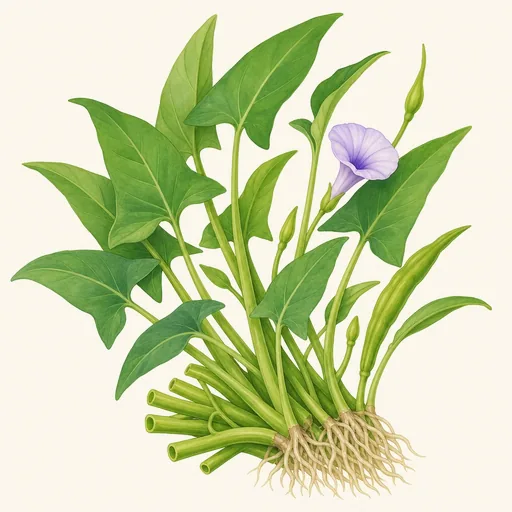
Water Spinach
Ipomoea aquatica · Convolvulaceae
- Start indoors2–4 weeks before the last frostMar 13 – Apr 2
- Sow outdoors2–4 weeks after the last frostApr 24 – May 14
- Plant out2–4 weeks after the last frostApr 24 – May 14
- Space15–30 cm (6–12 in) apart
- Harvest25–40 days after plantingMay 19 – Jul 14
Description
Water spinach is a fast-growing, leafy vegetable grown for its tender shoots and leaves. Despite its common name, it is not closely related to true spinach. Its long, hollow stems often float or trail across wet ground, rooting wherever their nodes touch moist soil. The leaves are usually arrow-shaped or lance-shaped and range from light to deep green. When allowed to flower, the plant produces funnel-shaped blooms, typically white or pale pink with a darker center.
It thrives in warm, humid conditions and grows in ponds, ditches, flooded fields, and consistently moist garden beds. Gardeners can start it from seed or stem cuttings. Regular watering is essential for plants grown on land; stems grown in shallow water need clean, reliably supplied water. Frost damages the plant, so it is usually grown as a warm-season crop outside the tropics. Frequent harvesting of young tips encourages branching and provides a continuing supply of tender growth.
The leaves and stems are widely cooked in stir-fries, soups, and other dishes across Asia. They have a mild flavor, while the hollow stems retain a pleasing crunch when briefly cooked. Shoots are generally harvested before they become tough or fibrous. Wash them thoroughly, and avoid collecting plants from drainage channels or polluted waterways: water spinach can take up contaminants from its surroundings.
In some places, water spinach can spread rapidly through waterways and interfere with other vegetation. Check local rules before planting it, especially near natural wetlands, and keep cultivated plants from escaping into streams or ponds. For a home garden, a contained bed or container makes harvesting easier and helps limit its spread.
Growing Conditions
20–40 cm (8–16 in) tall, 1–2 m (3–7 ft) wide
- Smallest
- Largest
Full sun, 4+ hours
Tolerates part sun
High
Keep the soil consistently moist.
Ideal 25–35 °C (77–95 °F)
Survives down to 4 °C (39 °F).
pH 5.5–7.5 · acidic to neutral
Where it Grows
Planting
When to Plant
Plant water spinach when reliably warm weather has arrived. It is a tropical plant that grows quickly in heat but is damaged by frost. In temperate climates, sow seeds or set out cuttings after the last frost, once the soil has warmed to at least 20°C (68°F) and nights generally stay above 15°C (59°F). If spring is slow to warm, wait: seeds may germinate poorly in cold soil, and young plants can stall. In frost-free climates, plant during the warm growing season, when you can keep the soil consistently wet. You can make further plantings every few weeks during summer for a steady supply of tender shoots. Stop planting far enough ahead of autumn frost for the crop to establish and produce a harvest. Before planting, check local rules: water spinach is restricted or prohibited in some places because it can spread aggressively in waterways.
How to Plant
Choose a sunny spot with fertile soil that you can keep consistently wet, or use a large container that holds moisture. A container makes the plant easier to manage and helps prevent it from escaping. Water spinach can grow in saturated soil; it does not need to be planted in a pond or deep water. Keep it out of streams, drainage channels, and other natural waterways.
Sow seeds about 1 cm (½ inch) deep in moist soil. Space them roughly 10–15 cm (4–6 inches) apart, thinning crowded seedlings as they grow. Alternatively, plant healthy stem cuttings about 15–20 cm (6–8 inches) long. Remove leaves from the lower nodes, insert those nodes into wet soil, and keep the cuttings moist while they root. Leave room for the stems to spread, or trim them regularly for harvest.
Water thoroughly after planting and do not let the soil dry out. If growing in a container, use clean water and refresh any standing water as needed. Do not grow edible shoots in water contaminated by runoff or wastewater. Follow any local restrictions on cultivating water spinach, and dispose of unwanted stems where they cannot take root.
Growth Timeline
- Germination 5–14 days
- Seedlings indoors 2–7 weeks
- Growing in the garden 25–40 days
- Harvest 8–16 weeks
Planting Calendar
- Start seeds indoors: 2–4 weeks before the last frost
- Sow outdoors: 2–4 weeks after the last frost
- Plant outdoors: 2–4 weeks after the last frost
- Germination: 5–14 days
- Start indoors: Mar 13 – Apr 2
- Sow outdoors: Apr 24 – May 14
- Plant out: Apr 24 – May 14
- Harvest: May 19 – Jul 14
Care
Care Calendar
- Mulch · Apr 17 – May 7
Mulch around established plants to keep the soil moist. - Feed · May 8 – Jul 23
Apply a light nitrogen-rich feed after repeated harvests. - Pinch out · May 8 – Aug 6
Pinch or cut growing tips regularly to encourage branching and tender new shoots.
Watering
Water spinach grows fastest when its roots stay consistently wet. In a soil bed or container, water whenever the surface begins to dry, thoroughly soaking the root zone; hot weather may require daily watering. A container can stand in a shallow tray of water, but refresh the water regularly and prevent it from becoming stagnant. In a pond or flooded bed, maintain a shallow, stable water level rather than letting plants dry out between waterings. Use clean water, especially because the tender shoots are eaten. Avoid runoff from roads, livestock areas, or treated lawns. Water the base of soil-grown plants when practical to limit splashing onto leaves. Seedlings need gentle watering until established, while mature plants tolerate wetter conditions. Water spinach can spread readily from stem fragments, so keep it in a contained bed or vessel and never drain water carrying plant pieces into natural waterways.
Pruning
Pinch or cut growing tips to encourage branching and produce more tender shoots. Once plants are established, use clean scissors to remove long, leafy stems while leaving several healthy nodes and leaves on each plant for regrowth. Take smaller, regular cuts rather than stripping every stem at once; a plant with too little foliage recovers slowly. Remove yellow, damaged, or diseased leaves promptly, and discard diseased material away from the growing area. If vines become tangled, thin crowded stems to improve light and airflow, particularly in a soil bed. Cut back any growth approaching a container edge or drainage outlet. Gather all trimmings: even short pieces of water spinach stem may root in wet soil or water. Where cultivation is regulated or prohibited, follow local rules rather than composting or moving cuttings. Frequent harvesting often provides all the pruning a healthy crop needs.
Weeding
Keep weeds from competing with young water spinach for light, nutrients, and space. Before planting a soil bed, remove established weeds and their roots. After sowing or transplanting, pull new weeds while they are small, taking care not to disturb the shallow roots or break water spinach stems. Hand weeding is usually the safest approach in a saturated bed; deep hoeing can damage the crop and bring buried weed seeds to the surface. Check bed edges and paths as well as the planting area, since grasses and creeping weeds can grow into a moist bed. In a container or flooded setup, remove floating weeds and algae mats that shade young plants. Once water spinach forms a dense canopy, weeding usually becomes less frequent, but continue checking for vigorous invaders. Bag removed plants if they have seeds, and keep any water spinach fragments out of drains and waterways.
Mulching
For water spinach grown in moist soil, apply a thin layer of clean straw, chopped leaves, or other untreated organic mulch around established plants. About 2–5 cm (1–2 inches) is enough to slow evaporation, reduce weed germination, and keep soil from splashing onto edible leaves. Leave a small gap around stems, especially on young plants, so mulch does not trap debris against them. Add more only as it breaks down; a thick, soggy layer can make it difficult to see pests and may interfere with new shoots. Mulch is generally unnecessary for plants grown in standing water or a permanently flooded bed, where it can float away or foul the water. Use material free of herbicide residues and weed seeds. Check that mulch does not block container drainage or carry rooted stem pieces beyond the growing area. Remove any water spinach cuttings mixed into discarded mulch.
Fertilizing
Water spinach is a fast-growing leafy crop and benefits from fertile soil, but excess fertilizer encourages runoff into water. Before planting, mix finished compost into a soil bed or use a nutrient-rich potting mix in containers. If growth slows or leaves become pale after several harvests, apply a modest amount of balanced fertilizer according to its label, or top-dress lightly with finished compost. Nitrogen supports leafy growth, but heavy applications can cause overly lush, weak shoots and should be avoided. Keep fertilizer off the leaves, water it into soil, and do not add it directly to a pond or natural waterway. In a flooded container, use only a product suitable for the growing method and avoid frequent water changes that release nutrients outdoors. Do not use fresh manure on a crop harvested for its raw or lightly cooked leaves. Healthy green growth usually needs no extra feeding.
Pest Management
Inspect leaves and growing tips regularly, particularly after warm, humid weather. Aphids may cluster on tender shoots; caterpillars and leaf miners damage leaves, while snails and slugs can feed on plants in wet beds. Remove badly affected leaves, hand-pick larger pests, and rinse small aphid colonies off with clean water. Keep plants uncrowded and remove decaying foliage so problems are easier to spot. Protect young soil-grown plants from slugs with appropriate barriers or traps, checking them often. If damage persists, choose a product specifically labeled for the pest, edible leafy crops, and the growing conditions; follow all label directions and preharvest intervals. Do not apply ordinary garden pesticides to water connected to ponds or waterways. Discard stems showing extensive rot rather than trying to treat them. Using clean water and harvesting healthy growth regularly also helps maintain a vigorous crop. Check local restrictions before growing or moving water spinach.
Harvesting
Begin harvesting once the plants have enough leafy growth to recover, often about four to six weeks after sowing in warm conditions. With clean scissors, cut tender stem tips roughly 15–30 cm (6–12 inches) long, leaving several nodes and healthy leaves on the rooted portion. Harvesting only some shoots from each plant encourages branching and allows repeated cuts, often every one to two weeks during active growth. Choose crisp, healthy leaves and stems; remove any yellow, damaged, or pest-infested parts. Harvest before stems become tough or plants flower for the most tender greens. Rinse the crop in clean water and refrigerate it promptly, since the shoots wilt quickly. Cook water spinach thoroughly if there is any concern about water quality, and never harvest from polluted waterways. Collect every loose stem piece after cutting: discarded water spinach can root easily. Follow local regulations on cultivation, transport, and disposal.
Growing in Containers
Grows well in a pot of at least 15 litres (4.0 US gallons), with drainage holes. Best kept outdoors.
Propagation
From seed
- Soak seeds overnight in warm water.
- Sow about 1 cm deep in warm, moist soil.
- Keep the soil consistently moist until seedlings emerge.
- Thin seedlings to give the vines room to grow.
From cuttings
- Cut a healthy stem into 15–20 cm sections, each with several nodes.
- Remove leaves from the lower nodes.
- Place the lower nodes in water or consistently moist soil.
- Keep the cuttings warm until roots form.
- Plant rooted cuttings in moist soil.
Common Problems
- Yellowing leaves
- Sticky residue on leaves
- Black sooty coating
- Curled or cupped leaves
Aphids are small, soft-bodied insects that feed by piercing plants and drawing out sap. The group includes many…
- Holes in leaves
- Insects visible on the plant
- Stems chewed or cut through
- Wilting
Caterpillars are the larval stage of butterflies and moths, not a single species. Many feed on garden plants, although…
- Spots on leaves
- Yellowing leaves
- Leaves dropping
Fungal leaf spot is a general name for diseases caused by many different fungi, not a single species. These fungi…
- Brown or crispy leaf edges
- Wilting
- Bleached or scorched patches
- Leaves dropping
Frost damage is an injury caused when plant tissues become cold enough for ice to form or for cells to lose water to…
- Aphids, caterpillars, and leaf miners: These feed on leaves or leave visible trails; inspect plants regularly and remove badly affected foliage.
- Snails and slugs: They chew holes in tender leaves, especially in damp growing areas.
- Leaf spots and root rot: Persistent wet foliage or poorly oxygenated, stagnant water can encourage disease. Remove affected leaves and keep growing water clean.
- Contaminated water: Because water spinach grows readily in wet places, plants grown in polluted water may accumulate harmful contaminants. Use clean water, especially for a food crop.
- Unwanted spread: Water spinach grows vigorously and can be invasive. Check local rules before planting it outdoors, and keep it out of natural waterways.
Varieties
Its slender leaves distinguish it from broader-leaved water spinach types.
- narrow leaves
- tender shoots
This commonly sold type has pale, thick stems and grows well in consistently wet soil.
- pale stems
- vigorous
This commonly sold type produces green stems and leaves for repeated cutting.
- green stems
- vigorous
More about varieties
- Green-stem water spinach: A commonly grown form with green stems, often cultivated in moist soil as well as shallow water.
- White-stem water spinach: A pale-stemmed form commonly grown in water or very wet conditions.
- Narrow-leaved forms: Often called bamboo-leaf water spinach; their slimmer leaves are popular for stir-frying.
- Broad-leaved forms: Selected for their larger, wider leaves. Leaf shape and stem color can vary independently, so these are growing descriptions rather than strictly separate botanical varieties.
Health Benefits
Water spinach is widely eaten as a leafy vegetable and can be a nutritious part of a varied diet. Its leaves provide beta-carotene, which the body converts to vitamin A, as well as vitamin C, folate, and dietary fiber. They also contain minerals including potassium, calcium, and iron, though the amounts absorbed depend on the rest of the meal and how the greens are prepared. Like other vegetables, water spinach can help people eat a wider range of plant foods without adding many calories.
Water spinach is sometimes described in traditional food and herbal practices as beneficial for general wellness. Those traditions should not be taken as evidence that it treats diabetes, anemia, or other medical conditions. Its iron is non-heme iron, which is less readily absorbed than iron from meat; eating the greens with a source of vitamin C can help absorption.
Grow or buy water spinach from a source that uses clean water, since aquatic vegetables can pick up contaminants. Wash it well and cook it thoroughly rather than eating it raw, particularly where foodborne parasites are a concern. If you take warfarin, keep your intake of vitamin K-rich leafy greens consistent and follow your clinician’s advice.
Fun Facts
- Water spinach is a morning-glory relative, not a close relative of true spinach.
- Its hollow stems help it float and spread across shallow water.
- It can also grow in consistently moist soil; it does not need a pond.
- It is known by names including kangkong, ong choy, and pak boong.
- In warm conditions, plants can regrow quickly after their tender shoots are harvested.
Notice an error or have a question about Water Spinach? Contact us