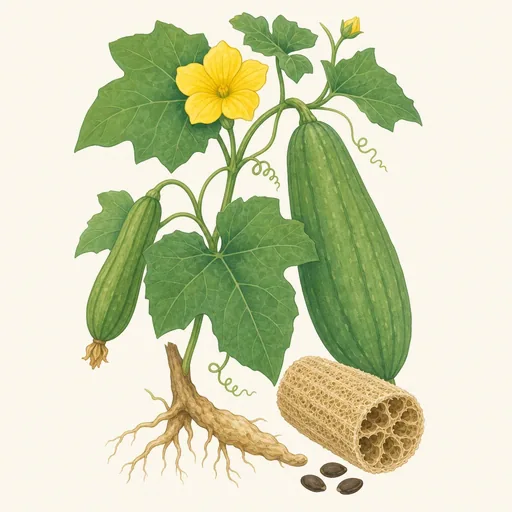
Luffa
Luffa aegyptiaca · Cucurbitaceae
- Start indoors2–4 weeks before the last frostMar 13 – Apr 2
- Sow outdoors2–4 weeks after the last frostApr 24 – May 14
- Plant out2–4 weeks after the last frostApr 24 – May 14
- Space0.9–1.5 m (3–5 ft) apart
- Harvest90–120 days after plantingJul 23 – Oct 2
Description
Luffa is a fast-growing, warm-season vine in the cucumber family, grown for its tender fruits and for the fibrous interiors of mature fruits. The smooth-fruited species, Luffa aegyptiaca, is also called sponge gourd or smooth luffa. Its close relative, Luffa acutangula, has ridged fruits and is likewise cultivated as a vegetable. Both climb readily, using curling tendrils to grip a trellis, fence, or other support.
The vine has broad, lobed leaves and yellow flowers. Pollinated flowers develop into elongated green fruits that can grow quite large. For cooking, growers harvest them while they are young, firm, and tender, before the seeds harden and the flesh becomes stringy. Young luffa has a mild flavor and absorbs seasonings well. It is commonly peeled and cooked in stir-fries, soups, stews, or curries. As the fruit ripens, a network of tough fibers forms inside. Once fully mature and dried, the skin and seeds can be removed, leaving the familiar natural scrubbing sponge. Mature fruits are no longer suitable as a tender vegetable.
Luffa needs full sun, fertile soil that drains well, consistent moisture, and a long period of warm weather. It is sensitive to frost. A sturdy trellis keeps fruits straighter and cleaner while improving airflow and making harvest easier. Bees and other insects pollinate the flowers; poor pollination can result in misshapen fruit. Pick vegetable-stage fruits frequently, since they can become fibrous quickly in hot weather. If saving fruit for sponges, leave it on the vine until the skin begins to dry and the fruit feels light, then finish drying it in a ventilated place. Luffa is widely cultivated in tropical and subtropical regions, especially across South and Southeast Asia.
Growing Conditions
3–9 m (10–30 ft) tall, 1.5–3 m (5–10 ft) wide
- Smallest
- Largest
Full sun, 6+ hours
Moderate
Keep evenly moist, not soggy.
Ideal 21–32 °C (70–90 °F)
Survives down to 5 °C (41 °F).
pH 6–7.5 · neutral
Where it Grows
Planting
When to Plant
Plant luffa after the danger of frost has passed and the soil has warmed to at least 70°F (21°C). Warm nights matter too: wait until temperatures are consistently above about 55°F (13°C), since cold soil and chilly weather slow growth or kill young plants. In a climate with a long, warm growing season, sow seeds directly outdoors at that point. If your frost-free season is shorter, start seeds indoors about 3–4 weeks before the last expected frost, then transplant once conditions are warm. Avoid starting much earlier: luffa grows quickly and dislikes having its roots crowded or disturbed. Allow plenty of time before autumn frost, especially if you want fully mature gourds for sponges rather than young fruits for eating. Luffa often needs roughly 150–200 warm days to produce mature sponge gourds, so gardeners in cool regions may need an early start and the warmest, sunniest planting site available.
How to Plant
Choose a spot with full sun, well-drained soil, and room for vigorous vines. Install a strong trellis or fence before planting; supporting the vines saves space and helps the gourds grow straight. Mix compost into the soil, but avoid heavy applications of high-nitrogen fertilizer, which can encourage leaves at the expense of fruit. Sow seeds about 1 inch (2.5 cm) deep in moist soil. Space plants about 3–4 feet (90–120 cm) apart along the support. You can sow two seeds at each position and thin to the stronger seedling after they emerge.
For an indoor start, sow one seed per individual pot in seed-starting mix and keep it warm, around 75–85°F (24–29°C), until it germinates. Give seedlings strong light. Harden them off gradually over 7–10 days before moving them outside, and transplant carefully without breaking up the root ball. Set them at the same depth they grew in their pots and water them in well. Keep the soil evenly moist while plants establish, then water deeply when the upper soil begins to dry. Guide young vines onto the trellis as they grow. If growing without support, allow substantially more ground space and keep developing fruit off wet soil when possible.
Growth Timeline
- Germination 7–14 days
- Seedlings indoors 2–7 weeks
- Growing in the garden 90–120 days
- Harvest 6–12 weeks
Planting Calendar
- Start seeds indoors: 2–4 weeks before the last frost
- Sow outdoors: 2–4 weeks after the last frost
- Plant outdoors: 2–4 weeks after the last frost
- Germination: 7–14 days
- Start indoors: Mar 13 – Apr 2
- Sow outdoors: Apr 24 – May 14
- Plant out: Apr 24 – May 14
- Harvest: Jul 23 – Oct 2
Care
Care Calendar
- Stake · Apr 10 – May 7
Install a sturdy trellis and guide young vines onto it. - Thin · Apr 17 – May 14
Thin seedlings to one vigorous plant per planting spot. - Mulch · Apr 24 – May 21
Mulch after the soil has warmed to retain moisture. - Feed · May 8 – Jul 9
Feed lightly with a balanced fertilizer, avoiding excess nitrogen.
Watering
Keep the soil evenly moist while luffa vines establish and while fruits are developing. Aim for about 1–2 inches (2.5–5 cm) of water per week from rain and irrigation, adjusting for heat, soil type, and drainage. Water deeply at the base of the plant rather than sprinkling the leaves; a drip line or soaker hose works well. Check the soil before watering: if the top inch or two is dry, it is usually time to water. Sandy soil may need smaller, more frequent applications, while heavy soil needs time to drain. Avoid both prolonged drought, which can slow growth and cause young fruits to drop, and soggy soil, which can damage roots. Water in the morning so any splashed foliage dries promptly. As mature fruits dry on the vine for sponge harvest, reduce irrigation if conditions permit, but do not let younger fruits wilt.
Pruning
Give luffa a sturdy trellis first; supporting its long vines and heavy fruits is usually more useful than extensive pruning. Guide new growth onto the support and tie stems loosely with soft material where necessary. Remove dead, broken, or diseased leaves and stems, cleaning tools after cutting diseased growth. If vines become too dense, thin a few crowded side shoots to improve airflow and make fruit easier to find. Avoid stripping healthy foliage: the plant needs its leaves to feed developing fruits and shade them from intense sun. Luffa produces separate male and female flowers, so do not remove flowers indiscriminately. In a short growing season, you can pinch off late new shoots or tiny fruits that have no realistic chance of maturing, directing growth toward established fruits instead. Prune during dry weather, and make modest cuts rather than cutting back the whole vine at once.
Weeding
Keep the planting area free of weeds, especially while luffa seedlings are small. Weeds compete for water, nutrients, and light, and tall growth around the base can restrict airflow and make pest checks difficult. Pull weeds by hand or hoe very shallowly after rain or irrigation, when roots release more easily. Luffa has spreading roots near the soil surface, so avoid deep cultivation close to the stems. Remove weeds before they flower and set seed; take persistent perennial weeds out with as much of their root system as practical. Once the vines cover the trellis and the ground is mulched, weeding usually becomes less frequent, but continue checking beneath foliage and along paths. Keep weeds from tangling with the trellis, where removing them later may damage luffa stems. Do not leave weeds bearing pests or disease beside the plants; dispose of them away from the growing area.
Mulching
After the soil has warmed and young luffa plants are growing strongly, spread 2–3 inches (5–8 cm) of clean straw, shredded leaves, or another organic mulch over the surrounding soil. Leave a small gap around each stem to discourage rot and give yourself room to inspect the plant base. Mulch helps retain steady moisture, suppresses weeds, and reduces soil splashing onto leaves during rain or watering. It also keeps fruits cleaner if any rest near the ground, though growing them on a trellis is preferable. In a cool climate, wait until the soil is warm before applying a thick layer; mulch placed too early can slow warming. Renew thin areas as the material settles, without piling it against stems. If pests such as slugs shelter beneath the mulch, pull it back temporarily and check the area regularly. At season’s end, remove diseased plant debris rather than incorporating it into the mulch.
Fertilizing
Plant luffa in fertile, well-drained soil enriched with finished compost. A soil test is the best guide to additional fertilizer and soil pH adjustments. If a test is unavailable, mix compost into the bed before planting and use a balanced garden fertilizer according to its label rather than applying a heavy dose. Once vines are growing vigorously and flowering, avoid excess nitrogen: it can encourage abundant leaves at the expense of fruit. In poor soil, a modest side-dressing when vines begin to run or set fruit may help; keep fertilizer off stems and leaves, water it in, and follow the product’s rates. Plants in containers need more frequent feeding because nutrients wash out, but they also need excellent drainage. Pale growth can have causes besides nutrient deficiency, including waterlogged soil or pests, so inspect the plant before adding fertilizer. Do not fertilize heavily late in the season when fruits need time to mature.
Pest Management
Inspect leaves, stems, flowers, and young fruits at least weekly. Depending on your region, luffa may attract aphids, cucumber beetles, squash bugs, mites, or fruit-damaging insects. Hand-pick larger pests and egg clusters when practical, and use a firm spray of water to dislodge small aphid colonies. Keep weeds and spent vines cleared away, rotate cucurbit crops where space allows, and provide good airflow to limit disease. Powdery mildew appears as white growth on leaves; remove badly affected foliage without stripping the vine, and water at soil level rather than wetting leaves. If treatment is needed, choose a product labeled for cucurbits and the specific problem, and follow its instructions. Protect pollinators: luffa depends on visits to its male and female flowers for fruit set, so avoid spraying open blooms. Remove badly rotting fruits promptly and dispose of diseased debris at season’s end.
Harvesting
Harvest luffa according to how you intend to use it. For eating, pick fruits while young and tender, before the skin toughens and large seeds develop; size varies with the species and variety, so test tenderness rather than relying on length alone. Cut the stem with pruners instead of pulling on the vine. For sponges, leave fruits on the plant until they are fully mature, feel lightweight, and the skin yellows or browns and begins to dry; seeds may rattle inside. Cut them before a hard frost. Peel the skin, shake out the seeds, rinse away remaining pulp, and dry the fibrous sponge thoroughly in a well-ventilated place before storage. If wet weather threatens a nearly mature crop, fruits can finish drying off the vine, although immature green fruits may not form a useful sponge. Wear gloves when peeling if the skin irritates your hands, and discard any sponge that remains moldy.
Growing in Containers
Grows well in a pot of at least 40 litres (11 US gallons), with drainage holes. Best kept outdoors.
Propagation
From seed
- Soak seeds in warm water overnight to help soften their hard coats.
- Sow seeds about 2 cm deep in individual pots 3–4 weeks before the last expected frost, or sow outdoors once the soil is warm.
- Keep the soil warm and evenly moist until the seeds germinate.
- Harden off indoor-grown seedlings gradually.
- Plant them outdoors after frost danger has passed, and provide a sturdy trellis.
Companion Plants
Good neighbors
- Nasturtiums: Their flowers attract pollinators to the luffa patch.
- Marigolds: Their flowers attract pollinators and other beneficial insects near luffa vines.
Common Problems
- Yellowing leaves
- Sticky residue on leaves
- Black sooty coating
- Curled or cupped leaves
Aphids are small, soft-bodied insects that feed by piercing plants and drawing out sap. The group includes many…
- Holes in leaves
- Wilting
- Stunted growth
- Insects visible on the plant
Cucumber beetles are small leaf beetles that feed on cucumbers, melons, squash, pumpkins, and other cucurbits. In…
- Yellowing leaves
- Spots on leaves
- Fuzzy gray mold
- Wilting
Downy mildew is a group of plant diseases caused by several species of oomycetes, or water molds, rather than one…
- White powdery coating
- Yellowing leaves
- Curled or cupped leaves
- Distorted new growth
Powdery mildew is a group of fungal diseases, not a single species. Different fungi infect different hosts, including…
- Powdery or downy mildew: Leaf diseases favored by poor airflow or persistently damp conditions.
- Cucumber beetles, aphids, and squash bugs: These pests damage leaves and can weaken vines.
- Poor fruit set or misshapen fruit: Often linked to inadequate pollination or heat and water stress.
- Fruit rot: Fruit resting on wet soil is more likely to decay; a sturdy trellis helps keep it off the ground.
- Fruits that fail to mature: Luffa needs a long, warm growing season to develop its fibrous interior.
Varieties
- Smooth luffa (Luffa aegyptiaca, also called L. cylindrica): Grown for its smooth, cylindrical fruit; the mature dried interior is commonly used as a bath or cleaning sponge.
- Angled luffa (Luffa acutangula): Has prominent lengthwise ridges and is often harvested young as a vegetable, especially in Asian cooking.
Health Benefits
Luffa has two well-known wellness uses: young fruit is eaten as a vegetable, and the fibrous interior of mature fruit is used for washing. Tender, immature luffa can be cooked in soups, stir-fries, and curries. Like many vegetables, it contributes water and some dietary fiber, vitamins, and minerals to a varied diet, although nutrient levels differ by species, growing conditions, and preparation. Eating luffa is not known to treat or prevent a specific disease.
A dried luffa sponge provides physical exfoliation: its fibers can help remove loose surface skin and spread soap. Use gentle pressure, since vigorous scrubbing can irritate skin. Avoid using it on broken or inflamed skin, and be especially cautious on sensitive areas such as the face. Rinse the sponge thoroughly, let it dry completely between uses, and replace it if it smells musty or shows mold; a persistently damp sponge can harbor microbes. Luffa fibers are also used as a plant-based alternative to synthetic scrubbers for household cleaning.
Claims that luffa “detoxifies” the body or cures medical conditions are not supported by good clinical evidence. Some other Luffa species appear in traditional remedies, but they should not be assumed safe or effective for self-treatment.
Fun Facts
- A luffa sponge comes from a gourd, not from the sea.
- The sponge is the dried network of fibers inside a fully mature fruit.
- Luffa is in the cucumber and squash family, Cucurbitaceae.
- The same vine can provide young edible fruit and, if fruit is left to mature, cleaning sponges.
- Luffa vines produce separate male and female flowers, typically pollinated by insects.
Notice an error or have a question about Luffa? Contact us