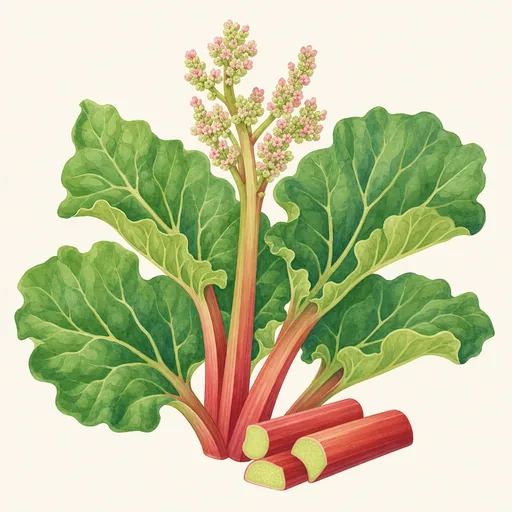
Rhubarb
Rheum rhabarbarum · Polygonaceae
- Plant outFrom 4 weeks before the last frost until the last frostMar 13 – Apr 16
- Space0.9–1.2 m (3–4 ft) apart
- HarvestAfter 2 years
Description
Rhubarb is a long-lived, cool-season perennial grown for its thick, tart leaf stalks, called petioles. It forms a substantial crown at soil level and sends up large, crinkled leaves on upright stalks. The stalks may be crimson, pink, speckled, or green; color depends largely on the variety and does not reliably indicate sweetness. Established clumps can spread more than a meter across, and mature plants may produce tall stems of small, cream-colored flowers.
Although usually sold and cooked like fruit, rhubarb is botanically a vegetable. Its edible stalks are sharply acidic and are commonly stewed with sugar or used in pies, crumbles, jams, and sauces. The leaf blades must not be eaten: they contain high levels of oxalic acid and other potentially harmful compounds. Trim them off and discard them rather than offering them to people or pets.
Rhubarb grows best where winters are cold enough to provide a period of dormancy and summers are not excessively hot. Plant dormant crowns in fertile, well-drained soil enriched with compost, in full sun or light afternoon shade. Provide steady moisture without waterlogging. Mulch helps conserve moisture, but keep heavy mulch away from emerging shoots. Divide crowded crowns in early spring or autumn to maintain vigor; plants grown from seed may not retain a named variety's characteristics.
Allow new plants to establish before taking a full harvest, usually until their third growing season. Harvest firm stalks in spring and early summer by gently pulling and twisting them free at the base, leaving enough foliage to feed the crown. Stop harvesting when stalks become thin or growth slows, and remove flower stalks if they appear. In warm climates, rhubarb may struggle to persist and is sometimes grown as a short-lived crop instead.
Growing Conditions
60–90 cm (2–3 ft) tall, 0.9–1.2 m (3–4 ft) wide
- Smallest
- Largest
Full sun, 4+ hours
Tolerates part sun
Moderate
Keep evenly moist, not soggy.
Ideal 10–24 °C (50–75 °F)
Survives down to −40 °C (−40 °F).
pH 6–7 · acidic to neutral
Where it Grows
Planting
When to Plant
Plant rhubarb crowns or divisions in early spring, as soon as the soil is workable and before new growth gets far underway. This is usually the most reliable time in places with cold winters: cool weather lets roots establish before summer heat. You can also plant in autumn after the plant goes dormant, provided the ground will not freeze for at least six weeks. In areas with mild winters, autumn planting can give crowns a longer cool period to settle in. Avoid planting into frozen, waterlogged soil or during hot, dry weather.
If you are buying a potted rhubarb plant, plant it during cool weather and keep it watered while it establishes. Rhubarb grows best where winters provide a period of cold dormancy; it may struggle in consistently warm climates. If starting from seed, sow indoors about eight to ten weeks before the last expected frost. Seed-grown plants can vary, so crowns are a more predictable choice.
How to Plant
Choose a permanent spot with full sun, well-drained soil and room for the plant’s large leaves. In hot areas, a little afternoon shade can help. Rhubarb is a long-lived, heavy-feeding perennial, so work plenty of finished compost or well-rotted manure into the top 12 inches (30 cm) of soil before planting. Avoid spots where water stands after rain; soggy ground can rot the crown.
Use a healthy crown or division with at least one visible bud. Dig a hole wide enough to spread the roots without bending them sharply. Set the crown so its buds sit about 1–2 inches (2.5–5 cm) below the soil surface, with the roots pointing downward. Backfill, gently firm the soil and water thoroughly. Leave about 3–4 feet (90–120 cm) between plants so mature clumps have space and air circulation.
Add a layer of organic mulch to conserve moisture and discourage weeds, but keep it away from the emerging buds. Water during dry spells, especially in the first growing season, without keeping the soil soggy. Do not harvest stalks in the first year: leaving the leaves to grow helps the new plant build a strong root system.
Growth Timeline
- Establishing 2 years
Planting Calendar
- Plant outdoors: from 4 weeks before the last frost until the last frost
- Plant out: Mar 13 – Apr 16
Care
Care Calendar
- Feed · Mar 13 – Apr 16
Apply compost or a balanced fertilizer as growth begins. - Divide · Mar 13 – Apr 16
Divide crowded crowns every four to five years while dormant. - Mulch · Mar 27 – Apr 30
Mulch around the plant to retain moisture, leaving the crown uncovered. - Prune · Apr 24 – Jul 23
Cut off flower stalks near the base whenever they appear.
Watering
Keep rhubarb soil evenly moist during spring growth, especially while new plants establish and stalks are developing. Once established, aim for about 1 inch (2.5 cm) of water per week from rain or irrigation, adjusting for heat, soil type, and drainage. Water deeply at the base of the plant rather than giving frequent light sprinkles; this encourages deeper roots and keeps foliage drier. Check the soil a few inches down before watering again. Rhubarb needs moisture but does poorly in waterlogged ground, where its crown can rot. A layer of mulch helps reduce evaporation. Continue watering during dry spells after harvest so the leaves can replenish the crown’s reserves for next year. Reduce irrigation as the plant naturally dies back in autumn. If a plant wilts despite wet soil, check drainage and the crown rather than adding more water.
Pruning
Rhubarb needs little pruning. Remove flower stalks as soon as they appear, cutting them close to their base. Flowering diverts some of the plant’s energy from leaf and stalk production; it can be more common in older or stressed plants. Remove leaves that are dead or badly diseased, and clear away collapsed foliage after it dies back in autumn. Leave healthy leaves in place through the growing season, including after harvest, so they can feed the crown for next year. Do not trim a plant to make it look tidy while it is actively growing. Edible stalks are normally harvested by pulling and twisting them from the crown, not by pruning the whole plant. Use clean tools when removing diseased growth, and dispose of that material rather than leaving it beside the crown.
Weeding
Keep the area around rhubarb free of weeds, particularly while plants are young. Weeds compete for the moisture and nutrients that support the plant’s large leaves and long-lived crown. Pull them by hand when the soil is slightly moist, taking care not to disturb rhubarb’s roots. If using a hoe, work only at the surface and keep it away from the crown; deep cultivation can damage roots and emerging shoots. Remove perennial weeds thoroughly before planting a new bed, because they are harder to dig out once rhubarb is established. Check under the broad leaves regularly: they shade some weeds but can also hide others until they are large. A mulch layer helps suppress new seedlings, but continue to remove weeds that grow through it. Keep the crown visible rather than piling soil or pulled weeds over it.
Mulching
Spread a layer of organic mulch, such as compost, shredded leaves, or straw, around rhubarb after the soil has warmed in spring. A depth of roughly 2–3 inches (5–8 cm) helps conserve moisture, limit weeds, and moderate soil temperature. Leave a gap around the crown and emerging buds; mulch piled against them holds moisture where rot can develop. Top up the layer as it breaks down, especially if summer weather is dry. In cold regions, mulch can also help protect the root area over winter. Apply winter mulch after the ground begins to freeze, then pull it back from the crown before shoots emerge in spring. Avoid using fresh manure as mulch against the plant. Mulch is not a substitute for drainage: if the site stays soggy, improve the planting location rather than covering it with more material.
Fertilizing
Rhubarb benefits from fertile soil because it produces a large amount of foliage each year. In early spring, spread well-rotted compost or aged manure over the soil around an established plant, keeping it off the crown. If growth is weak and the soil is poor, apply a garden fertilizer according to its label or the results of a soil test, then water it in. Avoid guessing at large doses: excessive nitrogen can produce lush growth without correcting other soil problems. Compost worked into the planting site before a new crown is set provides a good start. Do not dig fertilizer deeply around established plants, where it may injure roots. If you use manure, make sure it is well aged rather than fresh. Feed early enough to support spring growth, and avoid pushing tender new growth with heavy fertilizer applications late in the season.
Pest Management
Inspect rhubarb regularly, including the undersides of leaves, stalk bases, and crown. Slugs and snails may chew young growth; hand-pick them, reduce damp hiding places, or use a bait labeled for edible gardens if needed. Aphids can often be dislodged with a firm spray of water. Rhubarb curculio, a snout beetle, may puncture stalks; remove nearby dock weeds, which can serve as hosts, and discard badly damaged stalks. Leaf spots and crown rot are more likely to cause trouble where plants are crowded or remain wet. Remove affected foliage, water at the soil level, and maintain good drainage. A soft, rotting crown is a serious problem: remove the affected plant rather than repeatedly watering or feeding it. Identify a pest or disease before using a pesticide, and follow the product label for edible crops.
Harvesting
Let newly planted rhubarb establish without harvesting stalks in its first year. In the second year, take only a light harvest; established plants can usually be harvested more fully from the third year onward. Pick firm stalks when they reach a useful size, typically in spring to early summer. Grasp a stalk near its base, then pull and twist gently so it separates from the crown. Avoid taking so many that the plant is left with few leaves; keep at least one-third to one-half of its stalks growing. Stop harvesting by midsummer so the foliage can rebuild reserves for next year. Trim off the leaf blades before using the stalks. Do not eat rhubarb leaves: they contain high levels of oxalic acid and other harmful compounds. If frost has badly damaged the stalks, discard the damaged growth rather than eating it.
Growing in Containers
Grows well in a pot of at least 40 litres (11 US gallons), with drainage holes. Best kept outdoors.
Propagation
By division
- Divide a healthy, established crown in early spring or autumn.
- Lift the crown and cut it into sections, each with at least one healthy bud and attached roots.
- Replant the sections with their buds just above soil level.
- Space the plants generously and water them in.
From seed
- Sow seeds indoors in spring in moist seed-starting mix.
- Keep the mix moist until seedlings emerge.
- Harden off the seedlings before planting them outdoors after frost danger has passed.
- Space the plants generously and allow them to establish before harvesting.
- Expect seedlings to vary from the parent cultivar.
Companion Plants
Good neighbors
- Beans: Rhubarb is traditionally grown near beans because its foliage is said to discourage black bean aphids, although this benefit is not well established by research.
Common Problems
- Wilting
- Yellowing leaves
- Stunted growth
- Leaves dropping
Crown rot is a general name for decay at a plant’s crown: the junction where stems meet roots, usually at or just…
- Spots on leaves
- Yellowing leaves
- Leaves dropping
Fungal leaf spot is a general name for diseases caused by many different fungi, not a single species. These fungi…
- Yellowing leaves
- Sticky residue on leaves
- Black sooty coating
- Curled or cupped leaves
Aphids are small, soft-bodied insects that feed by piercing plants and drawing out sap. The group includes many…
- Holes in leaves
- Slime trails
- Stems chewed or cut through
Slugs and snails are soft-bodied mollusks that feed on many garden plants. Snails carry a visible shell; most slugs…
- Crown rot: Crowns can decay in waterlogged soil; plant in well-drained ground and avoid burying the crown too deeply.
- Leaf spots: Fungal diseases can cause brown patches on leaves. Remove badly affected foliage and clear away dead leaves at the end of the season.
- Slugs and snails: They may chew young leaves and stalks, especially in damp weather.
- Thin stalks or weak growth: Often linked to overcrowding, poor nutrition, drought, or harvesting too heavily. Divide crowded crowns and allow plants time to recover.
- Flowering: Established plants may send up flower stalks, particularly under stress. Remove them if you want the plant to put more energy into leaf stalks.
Varieties
A widely grown variety with large stalks that are mostly green with red bases.
- heirloom
- vigorous
Produces slender, deep-red stalks that retain their color when cooked.
- red stalks
- tender
Produces robust plants with richly colored stalks.
- red stalks
- vigorous
A productive variety with red stalks that are often green inside.
- vigorous
- tender
Produces deep-red stalks and is less prone to flowering than many varieties.
- red stalks
- low bolting
An early variety traditionally grown for an extended picking season.
- long season
- early
A popular early variety with pinkish-red stalks.
- early
- pink stalks
Produces long, red stalks on vigorous plants.
- productive
- red stalks
More about varieties
- ‘Victoria’: An old, widely grown variety with large, productive green-to-red stalks.
- ‘Canada Red’: Valued for its richly red stalks, which often retain their color when cooked.
- ‘Crimson Red’: Produces bright red stalks and is popular in home gardens.
- ‘Valentine’: Known for deep red stalks and good color in cooked dishes.
- ‘Timperley Early’: An early-cropping variety often used for forcing.
Health Benefits
Rhubarb stalks can contribute fiber to the diet and provide vitamin K, which helps the body make proteins needed for normal blood clotting and bone health. They also contain smaller amounts of other nutrients. Rhubarb is often cooked into pies, jams, and sauces, however, so the sugar added to a recipe may matter more nutritionally than the rhubarb itself. Cooking the stalks with less sugar is an option if you prefer a tart flavor.
Rhubarb has a long history of medicinal use, but an important distinction is that traditional laxative preparations generally use the roots of medicinal rhubarb species, not the stalks of garden rhubarb. These roots contain compounds that stimulate the bowel. Such products can cause cramps or diarrhea, and prolonged use may lead to electrolyte problems. Do not treat a garden rhubarb plant as a source of homemade laxative medicine.
Eat only the leaf stalks. Rhubarb leaves contain substances, including high levels of oxalates, that can be poisonous if eaten. The stalks also contain oxalates; people who have been advised to limit oxalate because of kidney stones should ask a healthcare professional whether rhubarb fits their diet. Rhubarb is a food, not a proven treatment for disease.
Fun Facts
- The edible “stalk” is a leaf stalk, or petiole, rather than a stem.
- Rhubarb is a perennial: a well-sited crown can produce harvests for many years.
- Forcing rhubarb in darkness produces tender, often vividly pink stalks and pale yellow leaves.
- Stalk color varies by variety and is not a reliable measure of sweetness.
- Rhubarb was cultivated for medicinal roots long before its stalks became a familiar dessert ingredient.
Notice an error or have a question about Rhubarb? Contact us