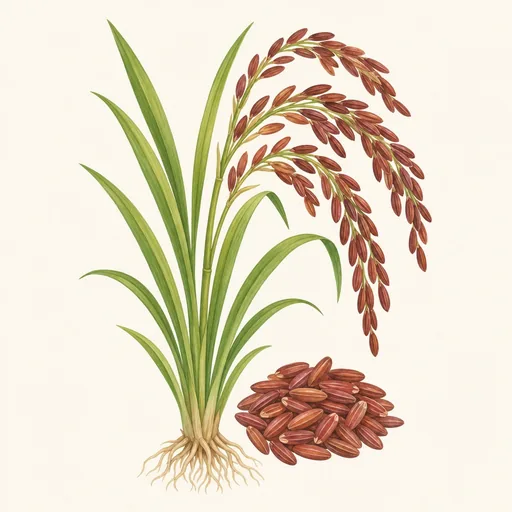
Red Rice
Oryza sativa · Poaceae
- Start indoors4–6 weeks before the last frostFeb 27 – Mar 19
- Sow outdoors2–4 weeks after the last frostApr 24 – May 14
- Plant out2–4 weeks after the last frostApr 24 – May 14
- Space15–25 cm (6–10 in) apart
- Harvest100–150 days after plantingAug 2 – Oct 25
Description
Red rice is a variety of rice characterized by its reddish-brown husk and bran layer. This ancient grain is part of the Oryza sativa family, which includes commonly cultivated white and brown rice. The striking color of red rice is attributed to the presence of anthocyanins, natural pigments known for their antioxidant properties.
Grown primarily in Southeast Asia and certain regions of the Americas, red rice thrives in warm, humid climates. It is typically a semi-wild or traditional variety that can be grown in both flooded and dry conditions, making it adaptable to various agricultural practices. The plant typically reaches heights of 3 to 4 feet and has slender, upright stalks adorned with long, narrow leaves.
Red rice is often considered a whole grain due to its unrefined state, retaining the bran and germ layers, which provide significant health benefits, including dietary fiber, vitamins, and minerals. It has a nutty flavor and chewy texture, making it a popular choice for salads, pilafs, and side dishes.
In terms of cultivation, red rice can be planted in paddies, similar to other rice varieties. Its growth cycle typically spans about 100 to 150 days from seed to harvest. Pest resistance is a notable advantage, as red rice can survive in less-than-ideal soil conditions.
In culinary terms, red rice is celebrated for its nutritional value, adding color and taste to a wide variety of dishes. As interest in health-conscious dieting and whole foods continues to grow, red rice is gaining popularity among both home cooks and professional chefs.
Growing Conditions
0.8–1.5 m (3–5 ft) tall, 20–40 cm (8–16 in) wide
- Smallest
- Largest
Full sun, 6+ hours
High
Keep the soil consistently moist.
Ideal 20–35 °C (68–95 °F)
Survives down to 0 °C (32 °F).
pH 5.5–7 · acidic to neutral
Photos
Photo credits
Where it Grows
Planting
When to Plant
Red rice, a variety of rice known for its distinctive color and nutritional benefits, is typically planted in warm, moist conditions. Understanding the right timing for planting is crucial for a successful harvest. Here’s an overview of when and how to plant red rice.
Ideal Growing Conditions
-
Climate Requirements: Red rice thrives in warm climates. The ideal temperature for germination and growth is between 70°F (21°C) and 100°F (38°C). It is sensitive to frost, so planting should occur after the last frost date in your area.
-
Soil Temperature: Before planting, ensure the soil temperature has consistently reached at least 70°F (21°C). You can check soil temperatures using a thermometer or by feeling the soil with your hand.
-
Water Availability: Red rice is often grown in flooded conditions or in fields that can retain moisture. Ensure that you have a suitable water source for irrigation, especially during dry spells.
Planting Schedule
-
Timing: In most temperate regions, red rice is usually planted from late spring to early summer. This timing allows the crops to mature during the warmest part of the year. The specific planting date will vary based on your local climate; consult regional gardening calendars or local agricultural extensions for specific guidance.
-
Seed Preparation: Before planting, soak the seeds in water for 24 hours to enhance germination rates. This process also helps in reducing planting time, as soaked seeds tend to sprout more quickly.
Indicators for Planting
-
Soil Readiness: The soil should be ideally tilled and free of weeds. Conduct a simple test by grabbing a handful of soil; if it is crumbly, it is ready for planting. If it clumps together, it might be too wet.
-
Weather Patterns: Monitor long-term weather forecasts to ensure a consistent pattern of warm temperatures and appropriate moisture levels ahead of sowing. Avoid planting during periods of expected heavy rain or storms.
-
Moisture Levels: If planting directly in flooded fields, check to ensure the water level is appropriate. Water should be shallow enough to cover the seedlings lightly after planting but deep enough to promote healthy growth.
Conclusion
Successfully planting red rice relies on careful attention to timing and environmental conditions. By ensuring that the soil is warmed, moisture levels are adequate, and frost is no longer a threat, you will create the perfect conditions for your red rice to thrive. Always consider local climate variations and prepare for unique challenges that your specific growing region may present. Happy gardening!
How to Plant
Red rice, known for its nutty flavor and nutritional benefits, requires specific conditions for optimal growth. To successfully plant red rice, follow these essential steps:
-
Select the Right Variety: Choose a variety suited to your climate. Popular types include Bhutanese Red Rice and Thai Red Cargo, each thriving in warm, humid conditions.
-
Prepare the Soil: Red rice prefers well-draining, fertile soils rich in organic matter. Conduct a soil test to determine pH, ideally between 5.5 and 6.5, and amend your soil with compost to enhance fertility.
-
Sow Seeds: Time your planting during the warm season, ideally when soil temperatures reach 70°F (21°C). Plant seeds in shallow rows about 1 inch apart, at a depth of approximately 1 to 2 inches. If starting indoors, transplant seedlings once they are 4-5 inches tall to ensure a strong start.
-
Watering: After sowing, keep the soil consistently moist. Red rice benefits from standing water during its early growth phase (up to 6 inches deep); however, ensure good drainage as it matures.
-
Weeding and Maintenance: Regularly weed around the plants but avoid disturbing the roots. Fertilize during the growing season if necessary, using natural options like compost or manure.
By following these guidelines, you can enjoy a flourishing crop of red rice, rich in flavor and health benefits.
Growth Timeline
- Germination 5–10 days
- Seedlings indoors 5–9 weeks
- Growing in the garden 100–150 days
- Harvest 1–2 weeks
Planting Calendar
- Start seeds indoors: 4–6 weeks before the last frost
- Sow outdoors: 2–4 weeks after the last frost
- Plant outdoors: 2–4 weeks after the last frost
- Germination: 5–10 days
- Start indoors: Feb 27 – Mar 19
- Sow outdoors: Apr 24 – May 14
- Plant out: Apr 24 – May 14
- Harvest: Aug 2 – Oct 25
Care
Care Calendar
- Thin · Apr 24 – May 14
Thin direct-sown seedlings to give each plant room to grow. - Mulch · Apr 24 – May 21
Mulch upland-grown rice after the soil warms to help retain moisture. - Feed · May 8 – May 28
Apply a modest nitrogen-rich feed while plants are actively growing.
Watering
Red Rice, a variety of Oryza sativa, thrives in wet conditions, typically found in flooded fields. For effective watering, ensure the soil remains consistently moist but not waterlogged. The best strategy involves maintaining a water depth of around 5–10 centimeters during the vegetative stage, gradually reducing it during the ripening phase to prevent water stress. Use a rice paddy or a similar setup to create a shallow water layer, allowing for even saturation of the root zone. Monitor soil moisture regularly and adjust water levels based on rainfall and temperature conditions. Avoid letting the soil dry out completely, as this can stress the plants and reduce yields. Implementing proper drainage is also essential to prevent anaerobic conditions that could harm plant health. Fertilization practices should complement the watering routine to ensure optimal growth and grain development.
Pruning
Pruning Red Rice (Oryza sativa) involves timing and technique to ensure healthy growth and optimal yields. The best strategy is to wait until the plant is in the early stages of growth, usually before the tillering phase, which is when new shoots begin to emerge. Begin by removing any weak or diseased stems at the base to promote airflow and reduce disease risk. Ensure your pruning tools are sharp and sterilized to prevent infection.
Focus on thinning out dense clusters of stems to enhance light penetration and air circulation, which will help each remaining stem receive adequate nutrients and moisture. Avoid excessive pruning since Red Rice thrives on a dense canopy. Finally, always prune during dry weather to minimize stress on the plant and promote recovery. This careful management encourages a robust plant structure, resulting in a better yield during harvest.
Weeding
Weeding a Red Rice plant requires a strategic approach to ensure both effective removal of unwanted plants and protection of the rice crop. Start by maintaining proper field management practices, including ensuring optimal planting density and healthy soil to discourage weed growth. Regularly monitor the field for emerging weeds, particularly during the early growth stages of Red Rice when it is more susceptible.
Hand-pulling weeds can be effective in smaller areas, but if you’re dealing with larger fields, consider using a hoe or mechanical weeding tools. Timing is crucial; target weeds before they seed by applying manual or mechanical methods at their early growth stages. Pre-emergent herbicides may also be useful, but select those compatible with Red Rice cultivation. Always follow local agricultural guidelines and practices, as some weeds can be beneficial or have specific interactions with your crop. Frequent monitoring and integrated management will ultimately yield the best results in weeding Red Rice.
Mulching
Mulching is a vital practice for cultivating Red Rice, as it helps retain moisture, suppress weeds, and enhance soil quality. The best strategy involves applying a layer of organic mulch, such as straw or grass clippings, around the base of the plants. Start by ensuring the soil is adequately moist before laying down the mulch, ideally after the rice seedlings have established. Aim for a 2 to 4-inch layer of mulch, taking care not to smother the plants; leave some space around the stems to prevent rot. Mulch should be replenished periodically, especially after heavy rainfall, to maintain its effectiveness. This approach supports the rice plant’s growth by moderating soil temperature and improving nutrient availability as the mulch decomposes, thus fostering a healthier environment for one of the world’s staple crops.
Fertilizing
Red Rice (Oryza sativa) flourishes best with a balanced fertilization strategy that considers its nutrient needs throughout the growing season. Begin by conducting a soil test to determine nutrient levels and pH. In general, Red Rice benefits from a nitrogen-rich fertilizer during the early growth stages to promote robust leaf development. Applying a nitrogen source, such as urea or ammonium nitrate, is advisable when the plants are around 30 days old. As the plants enter the tillering stage, a balanced fertilizer that includes phosphorus and potassium can support root development and grain formation. Maintaining proper moisture levels is essential, as waterlogged conditions can hinder nutrient uptake. Fertilization can be done through broadcasting before planting or as side-dressing during growth. Overall, observe the plants for signs of nutrient deficiency, and adjust your fertilization schedule accordingly for optimal growth and yield.
Growing in Containers
Grows well in a pot of at least 20 litres (5.3 US gallons), with drainage holes. Best kept outdoors.
Propagation
From seed
- Obtain viable, unhulled red rice seed.
- Soak the seed in water for 24 hours.
- Sow it shallowly in warm, consistently moist soil.
- Keep the seedlings warm and the soil wet as they establish.
Companion Plants
Good neighbors
- Mosquito fern: In flooded rice beds, mosquito fern (Azolla) can suppress weeds and add nitrogen as it decomposes.
Common Problems
- Holes in leaves
- Stems chewed or cut through
- Flowers or buds dropping
Birds are a class of animals, not a single pest species. In gardens, their effects depend on the species, season, and…
- Wilting
- Stunted growth
- Leaves dropping
- Stems chewed or cut through
Borers are the larvae of various moths, beetles, flies, and other insects that feed inside plant tissue. “Borers” is a…
- Spots on leaves
- Yellowing leaves
- Leaves dropping
Fungal leaf spot is a general name for diseases caused by many different fungi, not a single species. These fungi…
Nutrition
Nutritional Composition (per 100g)
| Nutrient | Amount per 100g | % Daily Value |
|---|---|---|
| Calories | 359 | 18% |
| Protein | 7.94 g | 16% |
| Total Fat | 2.28 g | 3% |
| Saturated Fat | 0.49 g | 2% |
| Carbohydrates | 76.24 g | 25% |
| Dietary Fiber | 3.0 g | 12% |
| Sugars | 0.85 g | 1% |
| Iron | 0.83 mg | 5% |
| Magnesium | 90 mg | 23% |
| Phosphorus | 150 mg | 15% |
| Potassium | 268 mg | 8% |
| Zinc | 1.09 mg | 7% |
| Thiamine (B1) | 0.12 mg | 10% |
| Riboflavin (B2) | 0.07 mg | 5% |
| Niacin (B3) | 2.6 mg | 16% |
| Vitamin B6 | 0.14 mg | 8% |
| Folate (B9) | 18 mcg | 5% |
| Vitamin E | 0.24 mg | 2% |
Varieties
Red rice, primarily known for its distinctive color and nutritional benefits, comprises several common varieties. These varieties can differ in texture, taste, and growing conditions, making them suitable for various culinary applications and agricultural practices.
One common variety is the Thai Red Rice, which is grown in the Northeast of Thailand. It is known for its nutty flavor and chewy texture, often used in salads and health-focused dishes. Another popular type is Bhutanese Red Rice, predominantly cultivated in Bhutan. This variety features a slightly fragrant aroma and a mildly sweet taste, making it a delightful addition to various meals.
In the United States, particularly in the southern states, you may encounter a variety known as "Red Cargo" rice. This unpolished and minimally processed rice retains the bran layer, offering a rich nutritional profile, with a somewhat chewy texture and a nutty flavor.
Another notable variety is the Indian Red Rice, which has several local cultivars, often characterized by their deep red color and traditional uses in regional dishes. One example is ‘Kamol’ red rice, which is a staple in several Indian cuisines and prized for its health benefits.
These varieties of red rice not only provide versatility in cooking but also pack substantial health advantages, including high fiber content and beneficial antioxidants. As red rice gains popularity in health-conscious markets, its cultivation continues to expand globally, introducing more varieties suited for different climates and culinary preferences.
Health Benefits
Red rice, known for its distinctive color and nuttier flavor compared to white rice, is gaining popularity not just for its culinary uses but also for its numerous health benefits. One of its most notable applications is its rich nutritional profile. Red rice is packed with antioxidants, particularly anthocyanins, which give it its unique color and are known to fight free radicals, potentially lowering the risk of chronic diseases.
Additionally, red rice contains higher levels of fiber than white rice, promoting digestive health and aiding in weight management by enhancing feelings of fullness. Its fiber content can help regulate blood sugar levels, making it a favorable choice for individuals with diabetes. The presence of essential minerals such as iron, zinc, and magnesium further contributes to its health advantages, supporting overall body functions including the immune system and bone health.
Some studies suggest that red rice may also assist in lowering cholesterol levels, thanks to its ability to enhance the body’s lipid profile. This makes it a beneficial dietary option for those concerned with heart health. Overall, incorporating red rice into a balanced diet can offer a range of health and wellness advantages while adding variety to meals.
Fun Facts
- Red rice, which derives its color from anthocyanins, is rich in antioxidants, making it a nutritious choice that may help reduce the risk of chronic diseases.
- This variety of rice is often unhulled or partly hulled, preserving more nutrients compared to fully milled white rice, including higher fiber content and essential minerals.
- Red rice is traditionally consumed in various cultures around the world, notably in Southeast Asian cuisine, where it is valued for its flavor and health benefits.
- The cultivation of red rice is often associated with traditional and sustainable farming practices, as it requires less chemical fertilizer and is naturally resistant to pests and diseases.
- In some cultures, red rice is considered auspicious and is used in festive dishes, symbolizing prosperity and good fortune during celebrations.
Notice an error or have a question about Red Rice? Contact us