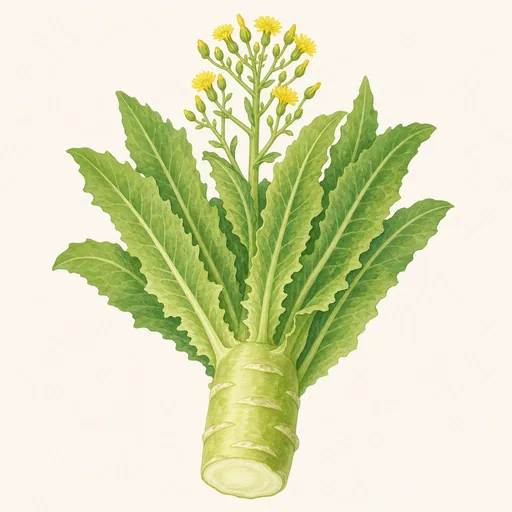
Celtuce
Lactuca sativa var. angustana · Asteraceae
- Start indoors4–6 weeks before the last frostFeb 27 – Mar 19
- Sow outdoors2–4 weeks before the last frostMar 13 – Apr 2
- Plant out1–3 weeks before the last frostMar 20 – Apr 9
- Plant in autumn8–12 weeks before the first autumn frostAug 2 – Sep 5
- Space25–30 cm (10–12 in) apart
- Harvest65–90 days after plantingMay 24 – Jul 29
Description
Celtuce is a type of lettuce grown chiefly for its thick, edible stem rather than for a head of leaves. It is also called stem lettuce or asparagus lettuce. As the plant matures, its upright stem lengthens beneath a cluster of narrow, green leaves. Both the stem and the young leaves can be eaten, although the stem is the main harvest.
The stem has a firm, crisp texture and a mild flavor often compared with lettuce, celery, and asparagus. Its outer layer can become tough or fibrous, so cooks usually peel it to expose the tender center. The peeled stem can be sliced and eaten raw, stir-fried, added to soups, or pickled. Young leaves can be cooked like other leafy greens; older leaves may taste bitter. Celtuce is especially familiar in Chinese cooking, where its crunch makes it useful in quick-cooked dishes.
In the garden, celtuce is a cool-season crop. It grows best in full sun, fertile, well-drained soil, and consistently moist conditions. Seeds can be started indoors or sown directly, with enough space between plants for the stems to thicken. Like other lettuces, celtuce may turn bitter or flower prematurely during hot weather, so spring and autumn crops are often easier to grow than midsummer ones. Gardeners harvest the stems when they are well developed but still tender, before the plant flowers. The leaves can also be picked sparingly during growth.
Unlike lettuce varieties selected for compact heads, celtuce is valued for the portion that might otherwise be discarded. Its combination of leafy greens and a substantial stem makes it a versatile crop for gardeners who enjoy trying vegetables used in East Asian cuisines.
Growing Conditions
40–80 cm (16–31 in) tall, 25–40 cm (10–16 in) wide
- Smallest
- Largest
Full sun, 4+ hours
Tolerates part sun
Moderate
Keep evenly moist, not soggy.
Ideal 10–20 °C (50–68 °F)
Survives down to −5 °C (23 °F).
pH 6–7 · acidic to neutral
Where it Grows
Planting
When to Plant
Plant celtuce during the cool parts of the growing season. In spring, sow seeds outdoors as soon as the soil can be worked, roughly two to four weeks before your average last frost. Seeds germinate best in cool soil, around 50–70°F (10–21°C); germination can be poor when the soil is very warm. You can also start seeds indoors about three to four weeks before you intend to transplant them, then move the seedlings outside after hardening them off. For a fall crop, sow about 10–12 weeks before your average first frost so the stems have time to develop. In places with mild winters, fall sowing may produce a winter crop. Celtuce tolerates some warmth better than many lettuces, but prolonged heat can make it bolt or develop bitter, less tender stems. Check your local frost dates and forecast rather than relying on a fixed calendar date.
How to Plant
Choose a site with full sun in cool weather; a little afternoon shade can help in warmer conditions. Prepare loose, well-drained soil and work in compost before planting. Sow seeds directly about ¼ inch (6 mm) deep, keeping the soil evenly moist until they sprout. Once seedlings have a few true leaves, thin them to about 8–12 inches (20–30 cm) apart, with rows roughly 12–18 inches (30–45 cm) apart. Giving each plant room encourages the thick stem grown for harvest. If you start plants indoors, use individual cells or small pots and transplant while they are still young, handling the roots gently. Set them at the same depth they grew in their containers and water them in well.
Keep the soil consistently moist as the plants grow: dry spells followed by heavy watering can reduce stem quality. A light layer of mulch helps retain moisture and suppress weeds. Avoid burying the crown when mulching, and remove competing weeds without disturbing celtuce’s shallow roots. If you want a longer harvest, make small sowings a week or two apart while temperatures remain suitable. Harvest the stems before a flower stalk develops, when they are thick but still tender.
Growth Timeline
- Germination 3–10 days
- Seedlings indoors 0–4 weeks
- Growing in the garden 65–90 days
- Harvest 1–3 weeks
Planting Calendar
- Start seeds indoors: 4–6 weeks before the last frost
- Sow outdoors: 2–4 weeks before the last frost
- Plant outdoors: 1–3 weeks before the last frost
- Autumn planting: 8–12 weeks before the first autumn frost
- Germination: 3–10 days
- Start indoors: Feb 27 – Mar 19
- Sow outdoors: Mar 13 – Apr 2
- Plant out: Mar 20 – Apr 9
- Autumn planting: Aug 2 – Sep 5
- Harvest: May 24 – Jul 29
Care
Care Calendar
- Feed · Mar 6 – Apr 2
Work compost into the bed before sowing or transplanting. - Thin · Mar 27 – May 7
Thin seedlings to about 10–12 inches apart so stems can thicken. - Mulch · Apr 10 – May 14
Apply a light mulch to keep the soil evenly moist. - Protect · May 8 – Jun 25
Use shade cloth during hot spells to slow bolting.
Watering
Keep the soil evenly moist while celtuce grows. Aim for about 2.5 cm (1 inch) of water per week from rain and irrigation combined, adding more during hot, dry weather. Check the soil a few centimetres down rather than watering on a fixed schedule: water when it begins to dry, but before plants wilt. Water deeply at the base of the plants so moisture reaches the roots, and let the surface drain between waterings. Drip irrigation or a soaker hose helps keep leaves dry and reduces splashing. Avoid both prolonged drought, which can slow stem growth and encourage bitterness, and soggy soil, which can damage roots. Plants in containers dry out faster and may need checking daily. Consistent moisture is especially important as the edible stems thicken.
Pruning
Celtuce does not need routine pruning or pinching; its main crop is the thickening central stem. Leave the growing tip intact, since removing it stops normal stem development. You can pick a few young outer leaves for eating while the plant grows, but take them sparingly so enough foliage remains to feed the stem. Remove yellow, damaged, or diseased lower leaves with clean scissors, particularly if they rest on damp soil. Avoid stripping the plant bare or cutting into the stem. If plants are crowded, thin them early by cutting unwanted seedlings at soil level rather than pulling and disturbing neighbouring roots. Once a flower stalk begins to develop, harvest the stem promptly instead of trying to prune the plant back: flowering stems tend to become tougher and less pleasant to eat.
Weeding
Keep the bed free of weeds, especially while celtuce seedlings are small. Weeds compete for light, water, and nutrients, and dense growth can reduce airflow around the leaves. Hand-pull weeds when the soil is slightly moist, or skim the surface with a hoe while weeds are still tiny. Celtuce has relatively shallow roots, so work gently and avoid deep cultivation close to the stems. Remove weeds before they set seed to make later care easier. Maintain enough space between plants for the leaves to spread without being crowded. A layer of mulch after seedlings are established can suppress new weeds and reduce the need to hoe. If you use a hoe, steady one hand near the crop so you can see exactly where the blade is working.
Mulching
Once seedlings are established and the soil has warmed or settled to a suitable growing temperature, spread a 5–8 cm (2–3 inch) layer of clean straw, shredded leaves, or another loose organic mulch between celtuce plants. Mulch helps conserve moisture, moderates soil temperature, and keeps weeds from germinating. Leave a small gap around each stem so the mulch does not hold moisture directly against it. Apply mulch to moist soil, and water through it as needed; a dry bed will not become moist simply because it is covered. In cool, persistently wet conditions, use a thinner layer if slugs are a problem, and check beneath it regularly. Top up the mulch if it settles or breaks down during the growing season.
Fertilizing
Before planting, work a moderate amount of finished compost into the bed. Celtuce grows best in reasonably fertile, well-drained soil, but heavy feeding is usually unnecessary. If your soil is poor, use a balanced vegetable fertilizer according to its label or a soil-test recommendation. A light side-dressing when stems begin to lengthen may help plants that are pale or growing slowly; water it in and keep fertilizer off the leaves and stem. Avoid repeated high-nitrogen applications, which can encourage lush leaves at the expense of a sturdy edible stem. In containers, nutrients wash out more quickly, so use a modest, label-directed liquid feed if growth slows. Steady watering and adequate spacing are as important as fertilizer for producing tender, well-developed stems.
Pest Management
Inspect the undersides of leaves and the growing centre regularly. Aphids can be rinsed off with a firm stream of water; for persistent infestations, use an insecticidal soap labelled for edible crops, following its directions and harvest interval. Hand-pick slugs and snails in the evening, remove nearby hiding places, and protect young plants with barriers or traps where needed. Lightweight insect netting can help exclude pests if installed before they arrive and secured at the edges. Check seedlings for cutworm damage, and protect them with collars if cutworms are common in your garden. Give plants room for airflow, water at soil level, and remove badly diseased leaves. Rotate crops when possible, and identify a pest before treating: a few holes in outer leaves may not affect the stem harvest.
Harvesting
Harvest celtuce for its stem while it is still tender, before flowering makes it woody or hollow. Depending on the variety and weather, this is often about 60–90 days after sowing. Look for a well-thickened stem, roughly 2.5–4 cm (1–1½ inches) across; stem height varies by variety. Cut the plant at ground level with a clean, sharp knife. You may also pick a few young outer leaves earlier, provided you leave enough foliage for the stem to grow. After harvesting, remove the leaves and peel away the stem’s tough outer skin until the tender interior is exposed. The peeled stem can be eaten raw or cooked. If a plant starts forming flower buds, harvest it soon rather than waiting for a larger stem.
Growing in Containers
Grows well in a pot of at least 10 litres (2.6 US gallons), with drainage holes. Best kept outdoors.
Propagation
From seed
- Sow seeds outdoors in cool spring weather or in late summer for a fall crop.
- Cover seeds lightly with about 1/8 inch (3 mm) of soil.
- Keep the soil evenly moist until seedlings emerge.
- Thin seedlings to about 8–12 inches (20–30 cm) apart.
Companion Plants
Good neighbors
- Radishes: Radishes mature quickly and can be harvested before celtuce needs the space.
- Carrots: Carrots grow mostly below ground and are commonly interplanted with lettuce crops such as celtuce.
Common Problems
- Yellowing leaves
- Sticky residue on leaves
- Black sooty coating
- Curled or cupped leaves
Aphids are small, soft-bodied insects that feed by piercing plants and drawing out sap. The group includes many…
- Flowering too early (bolting)
Bolting is the premature switch from leafy or root growth to producing a flower stalk and seeds. It is a normal part…
- Yellowing leaves
- Spots on leaves
- Fuzzy gray mold
- Wilting
Downy mildew is a group of plant diseases caused by several species of oomycetes, or water molds, rather than one…
- Holes in leaves
- Slime trails
- Stems chewed or cut through
Slugs and snails are soft-bodied mollusks that feed on many garden plants. Snails carry a visible shell; most slugs…
- Bolting: Hot weather and long days can prompt flowering, making the stem tougher and more bitter. Grow it in cool weather and harvest before the flower stalk develops.
- Aphids: These insects cluster on tender leaves. A firm spray of water can help dislodge them.
- Slugs and snails: They chew holes in young leaves, especially in damp conditions.
- Downy mildew: Cool, humid weather can encourage yellow leaf patches and fuzzy growth beneath the leaves. Give plants space for airflow and avoid wetting the foliage late in the day.
- Tipburn: Brown leaf edges can develop when rapid growth and uneven watering interfere with calcium reaching new leaves. Keep soil moisture consistent.
Varieties
Grow this green-stemmed variety in cool spring weather for tender, thick stems.
- green stems
- spring crop
This variety is selected for better performance in warm conditions, though it still benefits from cool growing weather.
- heat tolerant
- green stems
More about varieties
- Spring Tower: An early-maturing selection suited to cool spring growing conditions.
- Summer 38: A selection bred for better performance in warmer weather, though it still grows best without extreme heat.
- Purple Sword: Grown for its upright habit and purple-tinged leaves as well as its edible stem.
Health Benefits
Celtuce is grown mainly for its crisp, edible stem, but its young leaves can also be eaten. Like other lettuce crops, it is high in water and relatively low in calories, so it can add volume and crunch to meals. The stem provides some dietary fiber, which supports normal digestion. Its leaves contribute nutrients such as vitamin K, which helps the body form blood clots, and vitamin A precursors, which support normal vision and immune function. Amounts vary with the variety, growing conditions, and portion eaten; the leaves and peeled stem do not necessarily provide the same nutrients in the same amounts.
Celtuce is best regarded as one vegetable among many, not as a treatment for a health condition. Eating a range of vegetables is a practical way to obtain fiber and different vitamins and minerals. The stem can be eaten raw or cooked, making it an option for adding vegetables to salads, stir-fries, and soups. Peel away the tough outer layer of a mature stem before eating it. If you take warfarin or another medicine for which vitamin K intake matters, keep your consumption of leafy greens reasonably consistent and follow your clinician’s advice.
Fun Facts
- Celtuce is a type of lettuce selected for its thick stem rather than a compact head of leaves.
- It is also called stem lettuce and asparagus lettuce; in Chinese cooking, it is known as wosun.
- The stem’s tough outer skin is usually peeled away to reveal its crisp interior.
- Both the stem and young leaves are edible, though older leaves can taste bitter.
Notice an error or have a question about Celtuce? Contact us