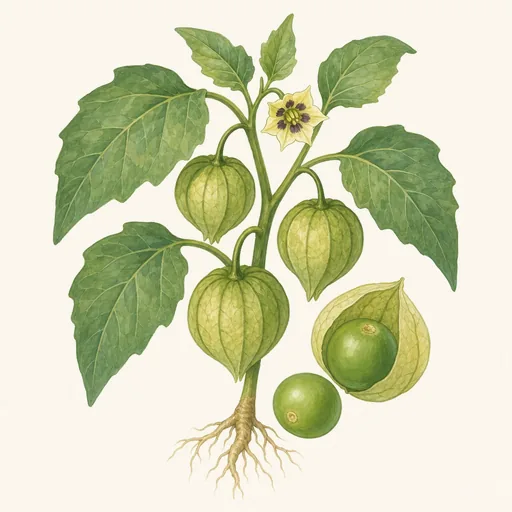
Tomatillo
Physalis philadelphica · Solanaceae
- Start indoors6–8 weeks before the last frostFeb 13 – Mar 5
- Plant out1–3 weeks after the last frostApr 17 – May 7
- Space60–90 cm (2–3 ft) apart
- Harvest70–100 days after plantingJun 26 – Sep 5
Description
Tomatillo is a warm-season vegetable grown for its small, round fruit, which develops inside a papery husk. A member of the nightshade family, it is related to tomatoes but is a different plant. Its fruit is usually green, though some varieties ripen yellow or purple. Beneath the husk, the skin may feel sticky; a quick rinse removes the coating. Tomatillos have a bright, tart flavor and are a familiar ingredient in Mexican salsa verde, sauces, soups, and stews. They can be eaten raw or cooked, with cooking softening their acidity.
The plant is a spreading annual in gardens where winters are cold. It has branching stems, broad leaves, and small yellow flowers marked with dark spots. Give it full sun, fertile, well-drained soil, and regular water, especially while fruit is forming. Plant it outdoors after the danger of frost has passed and the soil has warmed. Space plants generously and consider staking or caging them: mature branches can sprawl and become heavy with fruit. Growing at least two plants from separate seeds usually improves pollination and yields, because many tomatillo plants cannot effectively pollinate themselves.
Fruit is ready to pick when it fills the husk, which may split open. For a sharper flavor, harvest while the fruit is firm and green; fruit left longer on the plant generally becomes sweeter and less tart. Check plants frequently once harvesting begins, as they can produce steadily through warm weather. Remove the husks before using the fruit, and wash away any stickiness. Store unwashed tomatillos with their husks in the refrigerator for about one to two weeks. Like other frost-sensitive crops, tomatillo plants stop producing when freezing weather arrives.
Growing Conditions
0.6–1.2 m (2–4 ft) tall, 60–90 cm (2–3 ft) wide
- Smallest
- Largest
Full sun, 6+ hours
Moderate
Keep evenly moist, not soggy.
Ideal 18–29 °C (64–84 °F)
Survives down to 1 °C (34 °F).
pH 6–7 · acidic to neutral
Where it Grows
Planting
When to Plant
Plant tomatillos outdoors after the last spring frost, once the soil has warmed to at least 60°F (16°C) and nighttime temperatures consistently stay above 50°F (10°C). In many areas, that is about one to two weeks after the usual last-frost date, but local weather matters more than the calendar. Cold soil slows growth, and frost can kill young plants. For a head start, sow seeds indoors six to eight weeks before the expected last frost; set the seedlings outside only after hardening them off gradually for about a week. In regions with a long, warm growing season, you can sow seeds directly outdoors once the soil is warm. Allow enough frost-free time for the variety to mature—often around 75 to 100 days from transplanting. If an unexpected cold night follows planting, cover young plants with frost cloth, removing it when temperatures rise.
How to Plant
Choose a spot with full sun—at least six to eight hours daily—and well-drained soil. Mix in compost before planting, but avoid heavy applications of high-nitrogen fertilizer, which can encourage leaves at the expense of fruit. Tomatillos usually need pollen from a different plant to set fruit reliably, so grow at least two separate plants, ideally of compatible varieties if you are growing more than one variety.
For transplants, dig holes large enough for the roots and set plants at the depth they grew in their pots. If a seedling is leggy, you can remove its lowest leaves and bury part of the stem. Space plants about two to three feet apart, with three to four feet between rows: mature tomatillos spread widely. Install a sturdy cage or stake at planting time to support their branches and keep fruit off the ground. Water thoroughly after planting, then keep the soil evenly moist rather than waterlogged. Once the soil is warm, add a layer of mulch to conserve moisture and limit weeds.
If sowing directly, plant seeds about ¼ inch deep. Keep the bed moist until seedlings emerge, then thin them to the final spacing.
Growth Timeline
- Germination 7–14 days
- Seedlings indoors 5–10 weeks
- Growing in the garden 70–100 days
- Harvest 6–12 weeks
Planting Calendar
- Start seeds indoors: 6–8 weeks before the last frost
- Plant outdoors: 1–3 weeks after the last frost
- Germination: 7–14 days
- Start indoors: Feb 13 – Mar 5
- Plant out: Apr 17 – May 7
- Harvest: Jun 26 – Sep 5
Care
Care Calendar
- Stake · Apr 17 – May 14
Cage or stake plants early to support their sprawling stems. - Mulch · Apr 24 – May 14
Apply mulch once the soil has warmed to retain moisture. - Feed · May 15 – Jun 11
Side-dress lightly when flowering begins, avoiding excess nitrogen. - Protect · Oct 11 – Oct 31
Cover plants on chilly nights to extend the harvest.
Watering
Keep the soil evenly moist while tomatillo plants establish and while fruit develops. Aim for roughly 1 inch (2.5 cm) of water per week from rain and irrigation combined, increasing it during hot, dry weather. Check the soil rather than following a rigid schedule: water when the top inch feels dry, then soak deeply so moisture reaches the roots. Water at the base of the plant, preferably in the morning, to keep foliage dry and reduce disease risk. Drip irrigation or a soaker hose works well. Avoid frequent light sprinkling, which encourages shallow roots, and do not leave plants in soggy soil. Established plants tolerate brief dry spells, but repeated drought followed by heavy watering can stress them and reduce fruit quality. Container-grown tomatillos dry out faster than those in the ground, so check their potting mix often and make sure excess water can drain.
Pruning
Tomatillos generally need little pruning. Their branching growth carries flowers and fruit, so routine removal of side shoots, as sometimes recommended for tomatoes, can reduce the harvest. Remove broken, diseased, or badly crowded stems with clean pruners, and take away leaves touching the soil if they are likely to stay wet. If a plant becomes very dense, lightly thin a few interior stems to improve airflow rather than cutting it back hard. A cage or stakes installed early can support sprawling branches and keep fruit off the ground; tie stems loosely so they can continue to grow. Inspect supported plants periodically, especially after wind or heavy rain, and adjust ties before they constrict stems. Dispose of diseased trimmings instead of leaving them beneath the plant. Healthy plants can otherwise be left to branch naturally throughout the growing season.
Weeding
Keep the area around young tomatillos free of weeds so the plants do not have to compete for water, nutrients, and light. Weed by hand or use a hoe shallowly, especially close to the stems: digging deeply can damage tomatillo roots. Removing weeds while they are small is easier than pulling established ones from among the branches later. After watering or rain, loosen and lift weeds carefully rather than tugging against a plant’s roots. Once the soil has warmed, mulch can suppress many new seedlings, but continue to check openings around the stems and the edges of the bed. Clear weeds before they flower and set seed, including those near cages and paths. Good weed control also improves airflow and makes it easier to spot dropped fruit and pests. Avoid spraying herbicides near tomatillos, where drift can injure their leaves.
Mulching
Spread 2–3 inches (5–8 cm) of clean straw, shredded leaves, or another organic mulch around tomatillos after the soil has warmed and the plants are established. Leave a small gap around each stem rather than piling mulch against it; constant moisture at the stem can encourage rot. Mulch helps the soil hold moisture, moderates temperature swings, suppresses weeds, and reduces soil splashing onto lower leaves. Keep the layer loose enough that water can soak through, and replenish it if it breaks down or blows away. In a cool climate, wait until the ground has warmed before applying a thick layer, since early mulching can slow soil warming. Avoid material contaminated with weed seeds or herbicide residues. As plants spread, check beneath the mulch for fallen ripe fruit and remove damaged or rotting fruit so it does not attract pests.
Fertilizing
Before planting, mix finished compost into the bed and, if possible, use a soil test to guide any additional fertilizer. Tomatillos grow best with adequate nutrients, but excess nitrogen can produce abundant leaves at the expense of flowers and fruit. If a soil test indicates a need, apply a balanced vegetable fertilizer at the label rate before planting. Where growth is pale or weak and the soil is low in nutrients, a modest side-dressing when fruit begins to form may help; keep fertilizer off the stems and water it in. Plants growing strongly in fertile soil may need no further feeding. In containers, nutrients wash out more quickly, so use a potting mix with fertilizer or feed at the product’s recommended rate. Avoid applying concentrated fertilizer to dry roots, and do not assume that poor fruit set calls for more fertilizer: inadequate pollination can be the cause.
Pest Management
Inspect leaves, stems, and fruit regularly, starting with young plants. Flea beetles can pepper seedling leaves with small holes; lightweight row cover protects young plants, but remove it when flowering starts so pollinators can reach the flowers. Handpick large hornworms, and knock small aphid colonies off with a firm spray of water. Check leaf undersides for eggs and insects before damage becomes widespread. Tomatillos rely heavily on insect pollination, so avoid broad-spectrum insecticides, especially while plants are flowering. If a treatment is necessary, identify the pest first, choose a product labeled for edible crops and that pest, and follow its directions. To limit disease, water at soil level, allow airflow around plants, remove badly affected foliage, and clear crop debris at season’s end. Rotate tomatillos away from beds recently used for tomatoes, peppers, potatoes, or eggplants where practical.
Harvesting
Begin checking tomatillos when the fruit fills its papery husk, typically about 70–90 days after transplanting, depending on the variety and conditions. For many green varieties, harvest when the husk is tight and starting to split but the fruit is still firm and green; purple varieties may develop their characteristic color as they ripen. Do not rely on color alone. Twist the fruit gently from the branch or cut its short stem, taking care not to break the sprawling plant. Check every few days during peak production, and collect sound fruit that has dropped to the ground. Discard fruit that is rotten or badly damaged. Leave husks on for short-term storage in a paper bag in the refrigerator, and wash fruit just before use. After removing the husks, rinse off the naturally sticky coating.
Growing in Containers
Grows well in a pot of at least 20 litres (5.3 US gallons), with drainage holes. Best kept outdoors.
Propagation
From seed
- Start seeds indoors 6–8 weeks before the last expected frost.
- Sow seeds about ¼ inch deep in moist seed-starting mix.
- Keep the mix warm and lightly moist until seedlings emerge.
- Harden off seedlings before transplanting them outdoors after frost danger has passed.
- Grow at least two tomatillo plants to support cross-pollination.
Companion Plants
Good neighbors
- Cilantro: When allowed to flower, cilantro attracts hoverflies and other beneficial insects that can help control aphids.
- Marigold: Its flowers attract pollinators and beneficial insects near tomatillos.
Keep apart from
- Potato: Potatoes and tomatillos can host some of the same pests, including Colorado potato beetles.
Common Problems
- Yellowing leaves
- Sticky residue on leaves
- Black sooty coating
- Curled or cupped leaves
Aphids are small, soft-bodied insects that feed by piercing plants and drawing out sap. The group includes many…
- Holes in leaves
- Stunted growth
- Wilting
Flea beetles are a group of small leaf beetles named for their ability to jump when disturbed. Most adults are about…
- Holes in leaves
- Insects visible on the plant
- Stunted growth
The Colorado potato beetle is a leaf-eating beetle that attacks potatoes and other plants in the nightshade family…
- Holes in leaves
- Insects visible on the plant
- Stems chewed or cut through
The tomato hornworm is the caterpillar of a large sphinx moth. Despite its name, it also feeds on other plants in the…
- Flowers or buds dropping
- Distorted new growth
Poor pollination occurs when too little viable pollen reaches a flower’s receptive stigma, or when pollen fails to…
- Poor fruit set: Many tomatillos need pollen from a second, genetically distinct plant. Cool, rainy weather and a lack of pollinators can also reduce harvests.
- Flea beetles: These small insects chew tiny holes in leaves, especially on young plants.
- Aphids and whiteflies: Both feed on sap and can leave sticky residue on foliage.
- Early blight and other leaf-spot diseases: Spots and yellowing leaves are more likely when foliage stays wet and air circulation is poor.
- Fruit splitting: Uneven watering, particularly heavy watering after a dry spell, can cause ripe fruit to crack.
Varieties
Its medium green fruits are a standard choice for salsa verde.
- early
- productive
Its small fruits develop purple color with sun exposure.
- heirloom
- small fruit
Its fruits can be eaten fresh or used in colorful salsas.
- purple fruit
- sweet flavor
It produces relatively large green fruits suited to sauces.
- large fruit
- productive
Its large fruits make it useful for batch salsa making.
- large fruit
- productive
More about varieties
- ‘Toma Verde’: A widely grown green variety with medium-size fruit commonly used for salsa verde.
- ‘Rio Grande Verde’: A green variety valued for its relatively large fruit.
- ‘Purple de Milpa’: Produces smaller fruit that can develop purple coloring, especially where exposed to sunlight.
- ‘Amarylla’: A yellow-fruited variety with a relatively mild, sweet-tart flavor.
Health Benefits
Tomatillos are best known as a food, not a medicine. They bring a bright, tart flavor to salsa verde, soups, stews, and roasted sauces. That acidity can make a dish taste lively without relying solely on added salt. They are also relatively low in calories and provide some dietary fiber, vitamin C, and potassium. Fiber supports normal digestion, while vitamin C helps the body make collagen and supports normal immune function. Potassium is one of the minerals involved in normal muscle and nerve function.
The amounts of these nutrients depend on portion size and preparation, so tomatillos are most useful as one part of a varied diet rather than as a concentrated supplement. Roasting changes their flavor but does not turn them into a treatment for any condition. Claims that tomatillos cure infections, prevent cancer, or provide other specific medical benefits have not been established for ordinary dietary use.
For everyday use, remove the papery husk and rinse off the sticky coating before eating the fruit. The fruit can be eaten raw or cooked. Avoid eating the leaves and other nonfruit parts of the plant.
Fun Facts
- The papery husk is an enlarged calyx—the flower’s sepals—which grows around the developing fruit.
- Tomatillos are related to tomatoes, peppers, and ground cherries, but they are not small green tomatoes.
- A tomatillo fruit often fills its husk as it ripens and may eventually split it open.
- Purple-fruited varieties tend to develop stronger color on parts of the fruit exposed to sunlight.
- Planting at least two genetically distinct tomatillos usually improves pollination and fruit production.
Notice an error or have a question about Tomatillo? Contact us