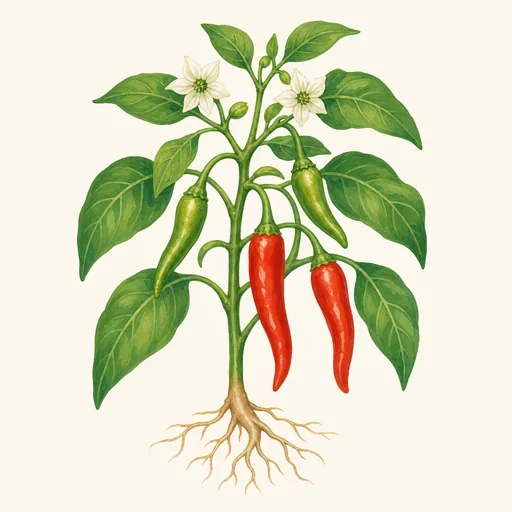
Hot Pepper
Capsicum annuum · Solanaceae
- Start indoors8–10 weeks before the last frostJan 30 – Feb 19
- Plant out2–4 weeks after the last frostApr 24 – May 14
- Space30–60 cm (12–24 in) apart
- Harvest60–100 days after plantingJun 23 – Sep 12
Description
Hot pepper is a warm-season plant grown for its pungent fruits, which are used fresh, dried, or ground into spice. Many familiar hot peppers, including jalapeños, cayennes, and serranos, belong to Capsicum annuum. Other hot peppers belong to different Capsicum species, so the name covers more than one kind of plant.
Plants are usually bushy and upright, with branching stems, pointed green leaves, and small white flowers. The fruits vary widely in size, shape, color, and heat. They may be picked green or left to ripen to red, yellow, orange, or another color, depending on the variety. Their heat comes from capsaicinoids concentrated mainly in the pale tissue that holds the seeds. Heat levels range from mildly spicy to intense and are often expressed in Scoville heat units.
Hot peppers originated in the Americas and are now cultivated in warm regions around the world. They grow best in full sun, fertile, well-drained soil, and consistently warm weather. Frost can kill the plants, so gardeners in cooler climates typically start seeds indoors and transplant them after the danger of frost has passed. Regular watering supports growth, but waterlogged soil can damage the roots. Flowers can pollinate themselves, although insects may also visit them.
Fruit can be harvested as soon as it reaches a usable size or allowed to mature for its characteristic ripe color and flavor. Frequent picking can encourage further production. Handle very hot varieties carefully: their juices can irritate skin and eyes. Beyond their culinary uses in sauces, salsas, and seasonings, hot peppers are valued by gardeners for their colorful fruit and the wide range of flavors available across varieties.
Growing Conditions
45–90 cm (1–3 ft) tall, 30–60 cm (12–24 in) wide
- Smallest
- Largest
Full sun, 6+ hours
Moderate
Keep evenly moist, not soggy.
Ideal 21–29 °C (70–84 °F)
Survives down to 0 °C (32 °F).
pH 6–7 · acidic to neutral
Where it Grows
Planting
When to Plant
Plant hot peppers outdoors after the last spring frost, once the soil has warmed to at least 65°F (18°C) and nighttime temperatures reliably stay above 55°F (13°C). A spell of warm afternoons is not enough: cold soil slows root growth, and frost can kill the plants. If nights are still chilly, keep seedlings indoors or protect newly planted peppers with a row cover. In short-season climates, starting with transplants gives the fruit more time to ripen.
Start seeds indoors about 8–10 weeks before your expected last frost. Hot pepper seeds germinate best in warm seed-starting mix, around 75–85°F (24–29°C); a heat mat can help. Before moving seedlings outside, harden them off over 7–10 days by gradually increasing their exposure to outdoor sun and wind. Choose a mild, overcast day or plant in the late afternoon to reduce transplant stress. Local frost dates are a guide, but current soil and nighttime temperatures are the better signal.
How to Plant
Choose a spot with at least 6–8 hours of direct sun and well-drained soil. Mix some finished compost into the bed before planting, but avoid heavy applications of high-nitrogen fertilizer, which can encourage leaves at the expense of fruit. If growing in containers, use potting mix rather than garden soil and choose a pot of at least 5 gallons (19 L) with drainage holes for each plant.
For transplants, dig a hole about as deep as the root ball and wide enough to fit it without crowding. Ease the plant from its pot, gently loosen tightly circling roots, and set it at the same depth it grew in the container. Fill the hole, firm the soil lightly, and water thoroughly. Space plants about 18–24 inches (45–60 cm) apart, with 24–36 inches (60–90 cm) between rows. A small stake or cage can support plants that become heavy with fruit.
To grow from seed indoors, sow seeds about ¼ inch (6 mm) deep in moist seed-starting mix. Give seedlings strong light after they sprout, and transplant them only after they have been hardened off and outdoor conditions are warm. Keep soil evenly moist while plants establish, then water deeply when the surface begins to dry. Add mulch once the soil is warm to help retain moisture.
Growth Timeline
- Germination 7–21 days
- Seedlings indoors 7–12 weeks
- Growing in the garden 60–100 days
- Harvest 6–12 weeks
Planting Calendar
- Start seeds indoors: 8–10 weeks before the last frost
- Plant outdoors: 2–4 weeks after the last frost
- Germination: 7–21 days
- Start indoors: Jan 30 – Feb 19
- Plant out: Apr 24 – May 14
- Harvest: Jun 23 – Sep 12
Care
Care Calendar
- Protect · Apr 10 – May 7
Cover young plants when nights turn chilly, and uncover them during warm days. - Protect · Oct 11 – Oct 31
Cover plants on cold nights to extend the harvest, removing covers by day. - Stake · Apr 24 – May 28
Support heavily laden plants with a small stake or cage. - Mulch · Apr 24 – May 21
Once the soil has warmed, mulch around plants to conserve moisture. - Feed · May 8 – Aug 6
Feed lightly every few weeks with a vegetable fertilizer, avoiding excess nitrogen.
Watering
Keep hot pepper soil evenly moist, especially from flowering through fruit development. Water deeply when the top 1–2 inches of soil feel dry, then let excess water drain; do not keep roots constantly soggy. An established plant in the ground often needs about 1 inch of water per week from rain and irrigation combined, with more during hot, dry weather. Containers dry faster and may need daily checks. Apply water at the base of the plant in the morning rather than wetting the leaves. Consistent moisture helps prevent flower drop and blossom-end rot, a dark, sunken patch on the fruit that can develop when fluctuating moisture disrupts calcium uptake. If plants wilt in afternoon heat but recover by evening, check the soil before watering again. Reduce watering somewhat as growth slows late in the season, but do not let developing fruit shrivel.
Pruning
Hot peppers generally need little pruning. Remove dead, damaged, or diseased leaves and branches promptly, using clean shears. If lower leaves touch the soil, trim them to improve airflow and reduce splashing onto foliage. Lightly thin crowded branches when necessary, but retain enough leaves to shade the fruit: exposed peppers can develop sunscald. Topping young plants is optional, not a requirement for a good harvest, and may delay fruiting—particularly where the growing season is short. Avoid heavy pruning after plants begin setting fruit. As branches fill with peppers, support them with a stake or cage rather than cutting them back to prevent breakage. When removing diseased growth, disinfect tools between plants and discard affected material instead of leaving it on the bed. Prune when foliage is dry to limit the spread of disease.
Weeding
Keep the area around hot peppers free of weeds, particularly while transplants are establishing. Weeds compete for water, nutrients, and sunlight and can shelter insects that feed on peppers. Pull young weeds by hand or use a hoe gently when the soil surface is dry. Pepper roots grow relatively close to the surface, so avoid deep cultivation near the stem. Check the bed regularly and remove weeds before they flower and set seed. A layer of mulch can suppress new seedlings and make those that do appear easier to pull. Keep paths and nearby planting areas reasonably clear as well, but avoid disturbing pepper roots while chasing every small weed. If using herbicides elsewhere in the garden, shield peppers carefully: drift from broadleaf weed killers can distort or kill their leaves.
Mulching
Once the soil has warmed after planting, spread 2–3 inches of clean straw, shredded leaves, or another suitable organic mulch around hot peppers. Leave a small gap around each stem so damp material does not rest against it. Mulch helps retain moisture, moderates soil temperature, suppresses weeds, and limits the soil splash that can spread some diseases. In cool climates, wait until the ground is warm before applying a thick layer, since mulch can slow spring warming. In very hot conditions, mulch helps keep roots from overheating. Replenish organic material as it breaks down, but do not pile it higher against the plant. If using plastic mulch, ensure water can reach the roots through drip irrigation or planting holes. Remove heavily contaminated mulch at the end of the season if disease has been a persistent problem.
Fertilizing
Start with soil enriched with compost and, if possible, follow a soil test for fertilizer rates. Hot peppers need nutrients, but too much nitrogen encourages leafy growth at the expense of flowers and fruit. If the soil is not already fertile, mix a balanced vegetable fertilizer into the bed according to its label before planting. A modest side-dressing when the first fruits begin to form may help plants growing in poor soil; water it in and keep fertilizer off the leaves and stems. Container-grown peppers need more frequent feeding because watering washes nutrients from the potting mix. Use a diluted, balanced liquid fertilizer as directed and watch how the plant responds. Pale, slow-growing plants may need feeding, while vigorous, dark-green plants with few fruits may be getting too much nitrogen. Do not assume blossom-end rot calls for extra calcium; steady watering is often more important.
Pest Management
Inspect the undersides of leaves and new shoots at least weekly. Aphids, whiteflies, and spider mites may cluster there; a firm spray of water can dislodge small infestations. Handpick larger pests, such as hornworms, when you find them. Thrips can damage flowers and spread viruses, so watch for distorted growth as well as insects. Remove badly affected leaves only if enough healthy foliage will remain. Encourage beneficial insects by growing flowers nearby and avoiding routine broad-spectrum insecticide sprays. If treatment is needed, choose a product labeled for peppers and the identified pest, follow the label, and avoid spraying when pollinators are visiting flowers. Keep plants spaced for airflow, water at the soil surface, and remove diseased plant debris. Rotate planting locations where practical, and do not compost plants with serious or unexplained disease.
Harvesting
Harvest hot peppers once they reach the size and color typical of the variety. Many can be picked green, while leaving them on the plant longer usually brings their mature color and fuller flavor; heat varies by variety and growing conditions, so color alone does not predict pungency. Cut fruit from the plant with clean scissors or pruners, leaving a short piece of stem attached. Pulling can break the brittle branches. Pick regularly to encourage continued production, and collect remaining usable fruit before frost. Wear gloves when handling very hot varieties, and keep your hands away from your eyes and face. Wash tools and cutting boards after use. Store fresh peppers dry in the refrigerator and use them promptly. For longer storage, freeze them or dry them thoroughly using an appropriate food-preservation method.
Growing in Containers
Grows well in a pot of at least 10 litres (2.6 US gallons), with drainage holes. Can be grown indoors as a houseplant.
Propagation
From seed
- Sow seeds indoors 8–10 weeks before the last expected frost.
- Keep the seed-starting mix warm and lightly moist.
- Give seedlings bright light after germination.
- Harden off seedlings gradually.
- Transplant outdoors after frost danger has passed and the soil has warmed.
From cuttings
- Take a healthy, nonflowering stem cutting.
- Remove the lower leaves.
- Insert the cutting into moist, well-draining potting mix.
- Keep it warm and humid in bright, indirect light.
- Pot it up once roots have formed.
Companion Plants
Good neighbors
- Basil: When allowed to flower, basil attracts pollinators and beneficial insects near pepper plants.
- Sweet alyssum: Its flowers attract hoverflies, whose larvae feed on aphids that attack peppers.
Keep apart from
- Potatoes: Potatoes and peppers share pests and diseases, so growing them apart and rotating their planting sites can reduce disease pressure.
Common Problems
- Yellowing leaves
- Sticky residue on leaves
- Black sooty coating
- Curled or cupped leaves
Aphids are small, soft-bodied insects that feed by piercing plants and drawing out sap. The group includes many…
- Pale speckles or stippling
- Yellowing leaves
- Brown or crispy leaf edges
- Fine webbing
Spider mites are tiny, plant-feeding arachnids in the family Tetranychidae, not insects. Several species attack garden…
- Spots on leaves
- Yellowing leaves
- Holes in leaves
- Leaves dropping
Bacterial leaf spot is a name for leaf diseases caused by several bacteria, commonly species of Xanthomonas or…
- Dark sunken patch at the blossom end of fruit
- Rotting fruit
Blossom end rot is a noninfectious disorder of developing fruit, especially tomatoes and peppers, but also eggplants…
- Bleached or scorched patches
- Brown or crispy leaf edges
Sunscald is noninfectious injury caused when direct sunlight heats plant tissue beyond what it can tolerate. It often…
- Blossom-end rot: Dark, sunken spots on fruit bottoms, often linked to uneven watering that disrupts calcium uptake.
- Flower drop: Heat, cold, or other stress can prevent flowers from setting fruit.
- Aphids, spider mites, and thrips: These pests damage leaves; thrips can also spread viruses.
- Leaf spots and root rot: Bacterial or fungal diseases are more likely when foliage stays wet or soil drains poorly.
- Sunscald: Fruit exposed suddenly to strong sun can develop pale, damaged patches.
Varieties
Days are from transplant; harvest green or let the peppers ripen red.
- medium heat
- versatile
Small, crisp peppers work well in fresh salsas.
- hot
- productive
Long, thin fruits can be dried for flakes or powder.
- hot
- good for drying
The wrinkled fruits need a long, warm season to ripen.
- very hot
- fruity
Small, upright peppers grow on plants suited to containers.
- very hot
- compact
Long peppers are commonly roasted and peeled.
- mild heat
- good for roasting
Large, dark-green peppers can be used fresh or ripened and dried as anchos.
- mild heat
- good for stuffing
Pick the thin-walled peppers green for blistering in a hot pan.
- mostly mild
- productive
More about varieties
- Jalapeño: Moderately hot, thick-walled pepper often picked green.
- Serrano: Small, crisp pepper that is usually hotter than a jalapeño.
- Cayenne: Slender, hot pepper commonly dried and ground.
- Thai bird’s eye: Small, very hot pepper widely used in Southeast Asian cooking.
- Habanero: Very hot pepper with a distinctive fruity aroma.
- Ghost pepper: Extremely hot pepper best handled and used with care.
Health Benefits
Hot peppers provide vitamin C and other nutrients, although the amount you get depends on the variety, ripeness, preparation, and serving size. Red peppers also contain carotenoids, some of which the body can convert to vitamin A. As part of a varied diet, peppers can add flavor without relying heavily on salt.
Capsaicin, the compound responsible for much of their heat, has a separate, well-established use in topical pain-relief products. Capsaicin creams and patches may help relieve certain types of nerve pain when used as directed. This does not mean that eating hot peppers has the same effect, and peppers should not be applied directly to the skin as a home remedy.
Researchers have studied capsaicin for possible effects on metabolism and other aspects of health, but evidence is not strong enough to treat hot peppers as a cure or reliable weight-loss aid. Eating them can cause burning, stomach discomfort, or worsen symptoms for some people, particularly those with reflux. Start with small amounts if you are unsure of your tolerance. When handling very hot varieties, wear gloves and keep your hands away from your eyes.
Fun Facts
- Pepper heat is commonly described using Scoville heat units.
- Much of a pepper’s capsaicin is concentrated in the pale tissue that holds the seeds, rather than in the seeds themselves.
- Birds are much less sensitive to capsaicin than mammals and can help disperse pepper seeds.
- Pepper plants are frost-tender perennials, though gardeners often grow them as annuals.
- Many hot peppers change color as they ripen; heat can vary even between fruits of the same variety.
Notice an error or have a question about Hot Pepper? Contact us